Opinion | How Texas Became Hub Of A Terror-Link Kashmiri Outfit's Activities
Across the state, a collection of terror networks and their Islamist partners are using US politicians, institutions and nonprofit infrastructure to advance violent, radical ambitions.
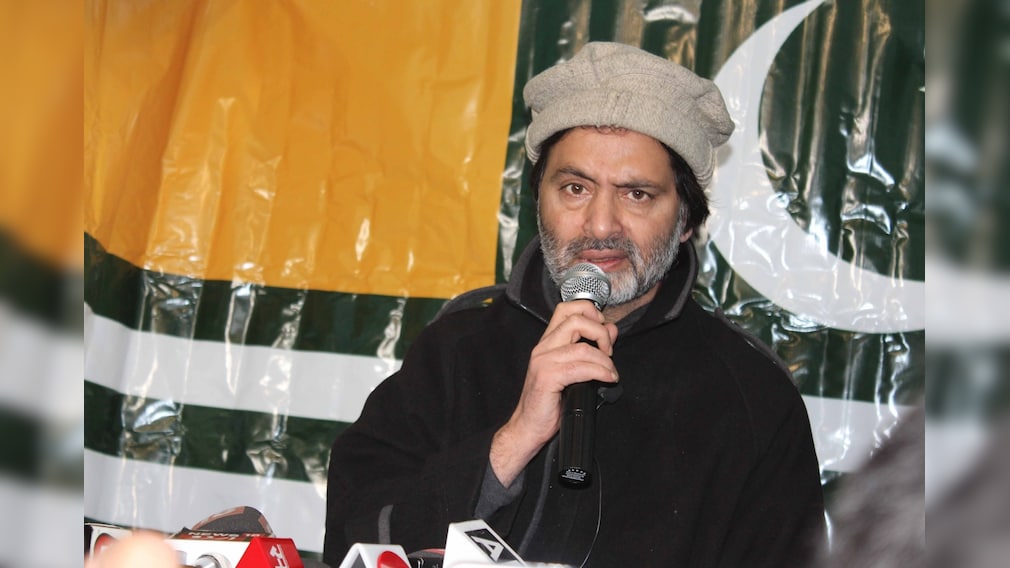
In 2022, Yasin Malik, the leader of a Kashmiri group declared by a US federal appeals court as a terrorist organisation involved in killings, bombings and kidnappings, was sentenced by an Indian court to life in prison. While Malik continues in principle to be re-elected as chairman of the Jammu and Kashmir Liberation Front (JKLF) while incarcerated, JKLF's actual operations have since been managed and supported by a network of radical Kashmiri and Pakistani activists thousands of miles away - in Texas.
For many years, until May 2026, Dallas-based Raja Muzaffar served as JKLF's "acting chairman". Through his organisations, the Kashmir Global Council and the South Asia Democracy Watch, Muzaffar partnered with Texas institutions, policymakers, Islamist groups and radical activists across the state.
At a JKLF conference in Dallas in 2024, organised by the group to "highlight the struggle" of its terror leader Yasin Malik, guests included city councilors, along with state representatives and a federal lawmaker.
Following a partnership with Dallas-based Southern Methodist University, in 2025, the Dallas leader of the JKLF terror movement appointed "Dr. Rick Halperin, a renowned Human Rights Advocate and Director of the Human Rights Program at Southern Methodist University" as "Head of the 'Justice for Yasin Malik Campaign'."
Most commonly, however, Muzaffar and other JKLF leaders partner with Islamist operatives. In 2025, Muzaffar and other JKLF leaders organised a joint event from Dallas with Ghulam Nabi Fai of the World Kashmir Awareness Forum to honour the late terrorist leader and JKLF founder Amanullah Khan.
Decades ago, Amanullah Khan oversaw a terror campaign against Indian targets, carried out, as admitted by Khan himself, by "militants" trained at terror camps in Pakistan in collaboration with the Directorate of Inter-Services Intelligence (ISI), Pakistan's terror-tied intelligence agency. Later, in 1984, Khan reportedly kidnapped and murdered an Indian diplomat in the British city of Birmingham. In the 1990s, Khan explicitly refused to renounce violence against Indian targets and moved his JKLF operations to Pakistan.
Participants in the Dallas event praised the JKLF terror leader's "legacy of resistance and unity".
Alongside senior JKLF officials, leading American-Kashmiri Islamist activist Ghulam Nabi Fai spoke at the Dallas webinar. Fai has long been involved with the violent Jamaat-e-Islami movement and its American proxies. In 2011, federal prosecutors charged Fai with serving as an agent of the Pakistani government. Fai, prosecutors proved, accepted $3.5 million from Pakistani intelligence to influence American policy on Kashmir.
Dallas JKLF leader Raja Muzaffar seemingly continues to consort with Pakistani intelligence operatives today, such as former ISI director Asad Durrani.
The Dallas-based leadership of the JKLF also relies on support from an Islamist-controlled Kashmiri and Pakistani diaspora in Texas. One participant at the 2025 event and a longstanding supporter of the JKLF is Mujeeb Kazi, a Kashmiri businessman and head of the North Texas Islamic Council, "an umbrella group for mosques in the Dallas-Fort Worth area." Kazi runs several nonprofit organisations in the area, including Voice of Kashmir TV.
Kazi's broadcasts on "Voice of Kashmir" frequently provide a platform for JKLF leaders, including Toqeer Gilani, who succeeded Raja Muzaffar as JKLF's acting head in May 2026. On Kazi's North Texas television station, the JKLF is promoted as the solution to Kashmir's struggles, and terror leaders such as Yasin Malik are openly praised.
What Is The JKLF?
The Jammu and Kashmir Liberation Front (JKLF) was established in the United Kingdom in 1977 to secure Kashmiri independence. Initially supported by Pakistan's ISI, the JKLF and its members have carried out multiple terrorist attacks, mass-murder, and kidnappings.
In 2019, India's Ministry of Home Affairs declared, "[JKLF] led by Md. Yasin Malik has spearheaded the separatist ideology in the valley and has been at the forefront of separatist activities and violence since 1988. Murders of Kashmiri Pandits [Hindus] by JKLF in 1989 triggered their exodus from the valley. Md. Yasin Malik was the mastermind behind the purging of Kashmiri Pandits from the Kashmir valley and is responsible for their genocide."
Commentators and academic papers frequently describe the JKLF as "secular". However, JKLF has long pursued partnerships with Islamists, and held events that featured Islamist language and rhetoric, including calls for jihad.
Although the JKLF is not a designated terrorist organisation under US law, in 2009, a US court of appeals upheld a decision by the federal government to refuse an asylum request by a JKLF member, stating that "[t]he JKLF ... qualifies as a Tier III [undesignated] terrorist organization". The court found "substantial evidence" to "[support] the conclusion that the JKLF has ... killed moderate politicians, detonated bombs in public places, and claimed responsibility for high profile kidnappings".
Following a split in the 1990s within the JKLF, Yasin Malik led a faction, based in the US, the UK, and Kashmir, which in 1994 ostensibly renounced violence and sought a peaceful resolution to Kashmiri secession efforts.
However, Malik's JKLF continued to collaborate with violent Islamists, primarily through Islamist umbrella movements such as the All Parties Hurriyat Conference. In 2005 and 2012, the JKLF in Kashmir reportedly attempted to reunite with its violent rival faction, which had rejected Malik's putative rejection of violence.
Details on the success of this recombination are murky, but according to the India Policy Foundation, "on the instruction of [Pakistan's] ISI", Yasin Malik "has been accepted as chairman" of two leadership centers for the JKLF: one in the Pakistani city of Rawalpindi, and the other in the United Kingdom and United States.
In 2019, India's Ministry of Home Affairs declared JKLF "an unlawful organisation" and accused Yasin Malik and the JKLF of participating in the "genocide" of Kashmiri Hindu Pandits in 1989, as well as "the murder of Air Force personnel, kidnappings, and funding terrorism".
India's National Investigation Agency (NIA) subsequently claimed that Malik visited the "camps in Muree in Pakistan occupied Kashmir" of the US-designated terrorist organisation Lashkar-e-Taiba (LeT), "and addressed the LeT cadres there". Lashkar-e-Taiba carried out the 2008 Mumbai attacks, murdering 166 people.
In 2022, Malik pleaded guilty to terrorism charges before an Indian court. The Print reported that he was accused of involvement in "raising, receiving and collecting funds through various illegal means, including hawala [informal financial exchange] transactions, for funding separatist and terrorist activities in Jammu and Kashmir".
The court found that Malik and the JKLF carried out these financial operations "in connivance" with members of three terrorist organisations: Hizbul Mujahideen, Dukhtaran-e-Millat and Lashkar-e-Taiba.
Leaders of these terrorist partners also find support from the radical Kashmiri networks in Texas.
Expanding Designations
Voice of Kashmir, in Dallas, has disseminated calls for the Kashmiri diaspora to organise in support of Shabir Shah, whom Indian prosecutors have accused of contact with Laskar-e-Taiba terrorists and involvement in a terror finance operation. Hamid Fayaz, a senior leader of the terror-tied Islamist movement Jamaat-e-Islami in Kashmir; and Asiya Andrabi, head of the Islamist group Dukhtaran-e-Millat, which, The Economist notes, "supports terrorists" and advocates jihad.
To represent her interests in the United States, the jihadist leader Andrabi appointed a Texas activist named Ghazala Habib. From Houston and Austin, Habib manages a global network of Islamist and Pakistani operatives in coordination with elements of the Pakistani regime and a particular Pakistani political party, Pakistan Tehreek-e-Insaf (PTI).
The PTI openly operates a Texas office that is closely involved with Kashmiri terror supporters. Texas PTI members, through activists such as Ghazala Habib, collaborate with Texas JKLF leaders such as Raja Muzaffar.
Across the state, a collection of terror networks and their Islamist partners are using US politicians, institutions and nonprofit infrastructure to advance violent, radical ambitions. With political attention over-focused on Islamist movements from the Middle East, these South Asian Islamist networks have, until now, operated freely amid a dearth of scrutiny.
Texas policymakers can change this. Texas Governor Greg Abbott's designation of the Muslim Brotherhood marked an important step in the state's fight against Islamism.
Now, let's expand that approach, take fuller stock of Islamist threats across the state, and work to dismantle these Pakistani and Kashmiri networks organising on Texas soil.
(Sam Westrop is a senior fellow at the Texas Public Policy Foundation, and director of Islamist Watch, a project of the Middle East Forum)
Disclaimer: These are the personal opinions of the author
-
Opinion | The Story Of Congress And Its Never-Ending Obsession With 'Committees'

The present-day Congress works on a mantra that says loud and clear - when in doubt, set up a committee.Whether they achieve anything is another matter.
-
Opinion | Pak Needs To Understand: Its Indus Treaty 'Threats' To India Are Fooling No One
Pakistan's hysterics and fits haven't impressed India, much less make her re-consider her stand on the treaty. If Islamabad is trying to threaten its way to water, it is already failing.
-
Opinion | Punjab 2027: Why Cash Transfers Alone May Not Be Enough for AAP
Punjab's voters have a history and a habit of doing things different from voters in the Hindi heartland. It is possible that they may react differently to the cash transfer scheme as well.n
-
Opinion | Why India Should Be Very, Very Alarmed About China's Teesta Move In Bangladesh
China had been angling for the project for years but was thwarted by the Hasina government's caution. That's no more the case now.
-
Ringside View | Do Legends Like Messi Get Different Treatment? Football's Uncomfortable Question Refuses To Go Away
History suggests that football's biggest names often find themselves at the centre of decisions that leave rivals wondering whether reputation carries its own invisible advantage.
-
Dhurandhar Showed The Gangsters. Lyari Wants The World To See Its Football
When Brazil scored a stoppage time winner against Japan at the World Cup, thousands of miles away, in the narrow lanes of Lyari in Pakistan's Karachi, there was something closer to catharsis.
-
Satellite Pics: China Steps Up Road Works In Arunachal Area It Controls Since 1959
The bulk of the new habitation lies in uncontested Chinese territory, narrowly across India's official boundary line showing Arunachal Pradesh
-
Opinion | The Jewar Effect: How Noida International Airport Is Reshaping NCR's Real Estate Map
Airports not only generate passenger traffic but also build economic ecosystems. Jewar is now at the beginning of that curve.
-
Opinion | Pakistan Might Just Be Getting A Bit Too Confident - This Time, With Afghanistan
For Islamabad, its successes at mediation notwithstanding, toppling the Taliban may turn out to be a far more humbling experience. But then Pakistan, strangely, is known to be suicidal in some ways.