Opinion | Pakistan Might Just Have Signed Itself Into A Difficult Trap With Its 'Saudi' Deal
The Saudi-Pak-Turkey agreement gives Saudi Arabia a shield. But for Pakistan, it could quickly become a strategic nightmare
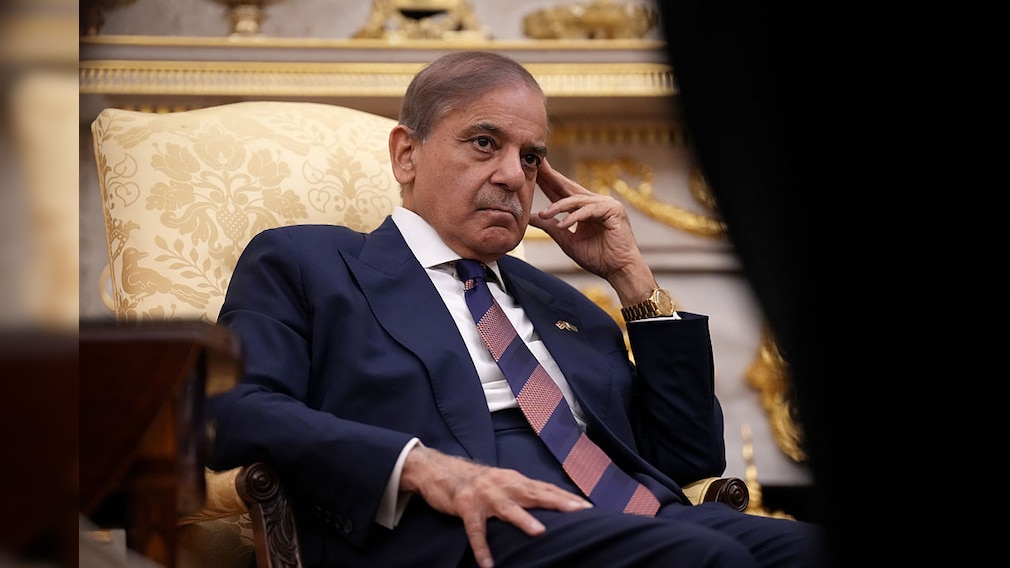
A very strange pact has now been sealed and signed, and is now presumably to be implemented. The Makkah Al-Mukarramah Summit for Joint Defence became one of the most significant events of the year last week, with every country looking out for the coming changes. Certainly, the statement seemed to point to a collective defence framework, without any accompanying references to a possible structure. The actual text of the agreement remains classified, so this could still evolve down the road. But the problem is its implementation on the ground, particularly where Pakistan is concerned. It is all very intriguing and needs some careful examination.
Collective Defence And Nuclear Deterrence
First, the statement itself. Once you sift through the very many respectful references to the titles held by each signatory, and the usual language of 'commitment to stability' and so on, what remains is one paragraph that says that the agreement is "intended to strengthen collective deterrence against any act of aggression, and stipulates that any armed attack against one of the three States shall be regarded as an attack against them all". That's collective defence, plain and simple. But the text quietly skips a definite "deterrence" commitment, which is only to be "strengthened". That's Pakistan, the only nuclear-weapon state in the triad, being extremely cautious. At least that's what is in the public version.
But The Saudis Want A Deterrant
Now look at potential cooperation. It is entirely possible that the Saudis will again finance an expansion of Pakistan's nuclear capabilities to provide that very deterrent. A similar assistance by Riyadh in the 1990s had become apparent when Prince Sultan bin Abdul Aziz toured Pakistan's secret nuclear facilities at Kahuta in May 1999, accompanied by Nawaz Sharif and briefed by AQ Khan, the 'father' of Pakistan's nuclear bomb; all this when even Benazir Bhutto was denied entry to the facility when she was Prime Minister. As of today, the Prince remains the only foreigner to have ever made such a visit. At the time, there was some alarm that Riyadh might be looking for its own nuclear capabilities. The Saudis, after all, had never made any secret of their nuclear ambitions, which was understandable given that Israel was a nuclear-powered state and Iran was on the path towards becoming one.
Returning to the present day, just months ago, the US Department of Energy announced that the US and Saudi Arabia had reached an agreement on a civil nuclear deal, also called the '123 Agreement', that extended a 30-year civil nuclear agreement for the country. That announcement was received with dismay, even within the US, for it shared what was a proven dual-use technology. An immediate backtracking was apparent as the ebullient US President denied that any enrichment would occur locally, and then made the whole deal conditional upon the Saudis signing on to the Abraham Accords. That put paid to it. Riyadh can hardly sign the agreement at a time when Tel Aviv is busy bombing Palestine, Gaza, and Lebanon.
Therefore, this next step. For the Saudis, this latest deal has to deliver deterrence, one way or another, and that too with clarity. Iran and the Houthis together have made the Kingdom look vulnerable. That would never do; Saudi Arabia, after all, has long been right at the top of the pecking order. This agreement at least restores some of that status in the region. Besides, the continuous squeezing of Saudi oil flows on both sides by Iran in the Strait of Hormuz and the Houthis in the Bab el-Mandeb Strait and the Red Sea, is causing worry, in financial terms as well.
Pakistan's Cautious Deterrent
The issue, however, is that an extended deterrence of any kind, nuclear or conventional, will require a significant upgrading of Pakistan's capabilities. A report by the International Campaign to Abolish Nuclear Weapons indicates that Pakistan's spending on nuclear weapons rose 18% in 2025 to a record USD 1.5 billion. Details of its enrichment programme are scarce, but it is estimated to have 170 nuclear weapons, with fissile material coming in from the well-known Kahuta, and a suspected new facility having come up at Gadwal. The Chinese provide assistance across the board, often using the supply and maintenance of civilian nuclear reactors to hide it. The China First Heavy Machinery Group obligingly provides lifetime assurance of fuel for the reactors - which then feed into the plutonium cycle - apart from helping with critical technology for the entire cycle.
On the face of it, this should be enough for even an extended deterrent. But Pakistan follows a doctrine of 'full-spectrum deterrence', which relies on first and immediate use and now includes a credible second-strike capability with the launch of its Hangor-class submarine.
How much is enough is an unanswerable question. But so far, Pakistan's expansion plans have been limited by monetary tightness. China, after all, doesn't provide anything for free. Saudi assistance could, therefore, matter considerably, and expansion is entirely possible. This is the ground mechanics of it. But there is also a significant implication: any extended deterrence for Riyadh will now have a definite Chinese signature.
The Conventional Aspects
The other part of the agreement is that of conventional assistance. The agreement says it "further provides for the enhancement of all aspects of defence cooperation among the three states". That is entirely plausible. Pakistan has a long history of providing the Kingdom with troops and protection. Its 1982 Joint Defense Protocol resulted in the establishment of the Saudi-Pakistani Armed Forces Organization (SPAFO). More than 20,000 Pakistani soldiers were stationed in the Kingdom, mainly in Tabuk and the Eastern Province, for training and operational roles. Apart from this, 11,000 soldiers provided protection to its borders and holy sites during the Gulf War (1990-1991). That was when Riyadh also began to give Pakistani oil at preferential prices. This later expanded into the Islamic Military Counter Terrorism Coalition, with a former Pakistan army chief taking charge of the group in 2017.
While this 43-nation bloc doesn't seem to have done much, the point is that intelligence-sharing, logistical frameworks, and other agreements that are vital to any defence relationship have been in place for years. The signing of the Strategic Mutual Defence Agreement in 2025 led to the deployment of over 8,000 Pakistani troops, a squadron of fighter jets, and an air defence system to Saudi Arabia, according to Reuters. The Mecca Agreement simply makes all this far more public, within a framework that already exists.
'Tell Me How'
Now consider all of this from a practical angle.
First, there is no clarity as to whom this 'mutual defence' is arranged against. Pakistan has to be willing to be the target of a punishing strike, retaliatory or otherwise, from another nuclear or non-nuclear state. In the former case, Israel comes to mind. In the latter, Iran itself. Any 'defending' of Saudi Arabia will impose direct costs on Rawalpindi, given that Iran has shown itself more than willing to use its missiles to good purpose.
Second, Rawalpindi itself has shown unusual caution in any deployment. All its forces are deployed only to defend threats to Saudi territory. That is, on the border. On the very same day the agreement was signed, the Houthis attacked Saudi territory at Najran, killing at least 12 civilians, including a Pakistani. But the absence of any perceptible reaction from Rawalpindi points to the problems ahead. Sure, Islamabad issued an unusually strong warning recently when the Houthis attacked Saudi ships, but this seemed to be conveyed only as a 'red line' for Pakistan's own national security concerns. In other words, nothing at all to do with Riyadh.
Pakistan In A Fix?
Then there are internal considerations. If Riyadh expects Pakistan to send troops to Yemen, it can think again. A proposal to this effect in 2015 under General Raheel Sharif was shot down by the Pakistani Parliament, which argued that the country was already tied up with operations against the Pakistani Taliban, and that getting into a sectarian war, given Iranian 'sensitivities' (and its oil), made little sense. All this came after Riyadh actually announced Pakistan's willingness to send troops.
Most of these complications still exist - even more pressingly today, in fact. At the time, Gen Raheel Sharif had used the Parliament excuse to get out of an embarrassing situation. That might just happen again.
Recently, a noted Shia scholar, Agha Syed Jawad Naqvi, asked whether the proposed agreement was aimed at Iran. He charged that Pakistan was being pushed into an "anti-Iran war" as part of American and Arab efforts. The community also warned of protests if this was indeed the case. Earlier, the all-powerful Munir had warned his country's Shias that if they loved Iran so much, they could 'go to Iran'. This time, he might just end up fanning that flame even more. Even so, Rawalpindi will never consider a massive war with Tehran; it knows better.
Meanwhile, US Congressional Representative Joe Wilson recently claimed that the pact added to the long list of President Trump's triumphs. That is going to set the cat among the pigeons.
Spotlight For Everyone
Every player is now manoeuvring desperately for space. The Iranian Foreign Minister, Abbas Araghchi, simply called on Muslim states to stand together without referring to the pact itself. Meanwhile, Turkey and Saudi Arabia have since said that the pact was not aimed at any country. Pakistan's Foreign Minister, Ishaq Dar, chose to put out a 'Message to the Nation' that also stated the same.
Rather difficult to have a defence pact that simply hangs in the air without any common enemy.
The whole thing becomes even more surreal if other countries join. Egypt, already part of the R-4, which includes the other three nations, will likely be the next to sign up. These four already collaborate on maritime security, supply chains, and regional stability. Bahrain will probably follow. All this will be projected as Pakistan becoming a far more important actor than earlier. But as can be seen, these partnerships already existed earlier.
The key thing is, if this is indeed Washington's bid to outsource protection against Iran - but not against Israel - then it is a very dangerous game. Once the process starts, it becomes almost impossible to see which direction it will take. Delhi would be aware that the pact is highly unlikely to be aimed at India, even in the case of a war with its unstable neighbour. All in all, it opens up some diplomatic space for Pakistan. That is really all there is to this pact right now. Turkey is already invested in Pakistan's defence industry, the others have no such capability, and whatever cooperation there is on the ground has long been written into multiple agreements.
This is, however, the first symptom of the effects of a retreating US role. That is what India needs to keep its eye on. As Washington retreats, others will take its place. Multi-alignment may not be enough. Time to get a boot camp of our own.
(Tara Kartha is a former Director, National Security Council Secretariat)
Disclaimer: These are the personal opinions of the author
-
The Real Story Of France's Unrest Is Getting Lost In A Storm Of Online Lies

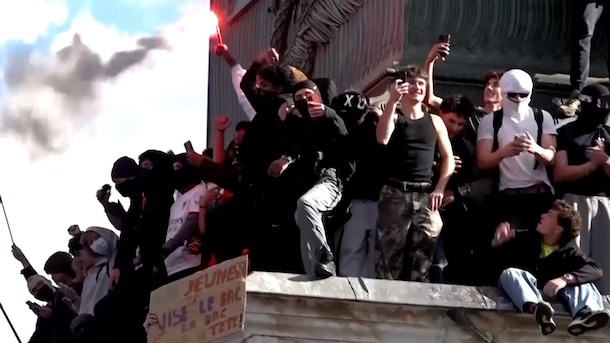
A man cosplaying Napoleon on the streets, looting at luxury fashion stores like Dior, France is currently confronting one of its most serious episodes of civil unrest in years.
-
Opinion | The Last Bet? What Trump's 'Mother Of All Bombs' Could Actually Do To Iran
Can an MOAB deliver a decisive blow to Iran that may force it to surrender immediately, as Japan did after Hiroshima and Nagasaki in World War 2?
-
Hit Songs, Empty Pockets: The Hidden Math Behind India's Viral Music Boom
Over 80,000 brands and five lakh creators in India make branded content. The opportunity is worth around Rs 1,500 crore.
-
Opinion | Great 'Exceptions': How The Oil India Was Attacked For Is The Oil Trump Now Seeks
A law written to punish the buyers of Russian oil was suspended by the US to protect a purchase of Russian oil. India spent fourteen months being lectured for less.
-
Opinion | Louis Vuitton Loot, Torched Cars: France Protests Have An Unlikely Beneficiary
It's an unbelievable moment. Crowds looting the most exclusive stores in Paris, including the famed Luis Vuitton. But what's behind this meltdown?
-
Blog: Kolkata Didn't Learn From 2015. Eleven Years Later, It Proved To Be Fatal
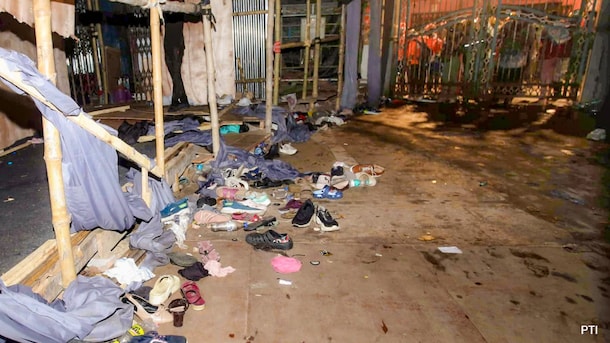
The City of Joy isn't a stranger to crowd control. Be it during Pujo or Christmas at Park Street, Eden Gardens cricket matches, or Derbies between Mohun Bagan and East Bengal. But during Pujo, the entire city is on alert.
-
Opinion | Slurs, Threats, Now A Temple Attack Plot: When Did America Become So Hostile To Indians?
The rising tide of anti-India, anti-Hindu, and racist attacks serves as a stark reminder that economic prosperity does not automatically guarantee social immunity from bigotry.
-
A Step Behind Neha Bora: What Rahul Gandhi's Gesture Says About Congress' Gen-Z Pitch
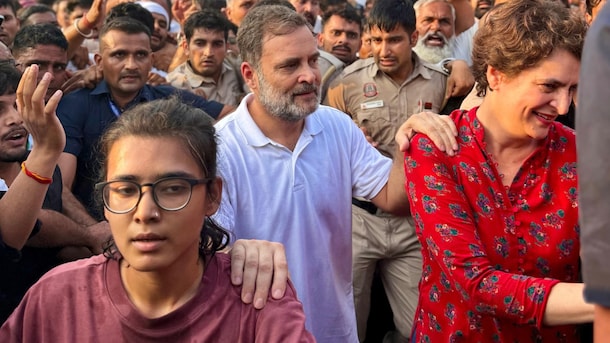
At INDIA bloc's march to Supreme Court, Rahul Gandhi placed himself a step behind two women, hands resting on their shoulders. One was his sister Priyanka. The one on his right was Neha Bora. Here's what the image means for the protest wave now, and for Rahul's politics in general.
-
Opinion | Imran Khan, And The Perils Of Having An 'Opinion' In Bollywood
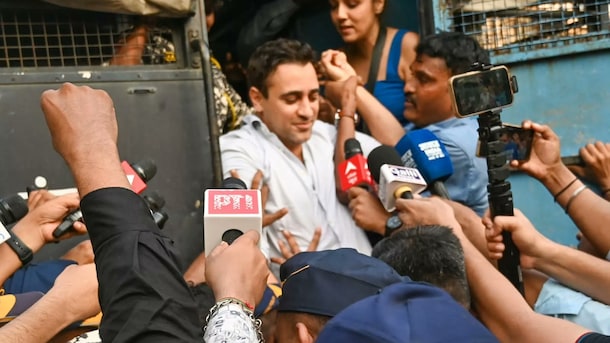
The reality of the industry is quite grimy. More often than not, its inhabitants have been fairweather friends, happy to sing the praises of whoever is in a position of authority.
-
Exclusive: India's Food Safety Problem Goes Beyond Just Dirty Kitchens - By Tukaram Mundhe
On World Food Day, Maharashtra's Commissioner of Food Safety explains why instead of taking stopgap measures, the entire supply chain in India needs to be held accountable and made transparent.