Opinion | How Pak And Bangladeshi Vote Blocs Are Becoming UK's New 'Kingmakers'
Tower Hamlets, a London town that once was predominantly White, just re-elected Lutfur Rahman as mayor for the third time. But this is just part of a bigger shift.
Britain's Prime Minister, Keir Starmer, is fighting for his political survival after his Labour Party suffered a catastrophic defeat in local council elections earlier this month at the hands of the populist Reform UK. This was the latest blow to Labour and its traditional rivals, the Conservatives, from Reform, which has brought a political storm to Britain since the last general election and has kept the far-right party in the lead for over a year. The Labour Party's defeat was partly caused by the desertion of a large number of its loyal Pakistani and Bangladeshi voters in favour of the Green Party or small Muslim groups.
Weeks before these elections, the Green Party adopted a resolution on Jammu and Kashmir calling for "democratic self-determination". The resolution was proposed by one of its members, Azhar Ahmed, who described the decision as historic. The Green Party, which also made significant gains in these elections, has been targeted by Pakistani and Bangladeshi activists seeking influence. The party's deputy leader is Mothin Ali, of Bangladeshi origin, though it is headed by Zack Polanski, a left-oriented, white Jewish man.
In a February by-election in Gorton and Denton, a Manchester suburb, Pakistani voters played a major role in helping the Green Party come out on top, pushing Labour into third place behind Reform. The campaign was dominated by Israel's brutal military campaign in Gaza and the Labour Party's Israel policy. The vote ended the Labour Party's dominance of the constituency for nearly 100 years. The constituency is 30% Muslim, mainly of Pakistani descent.
Changing Political Landscape
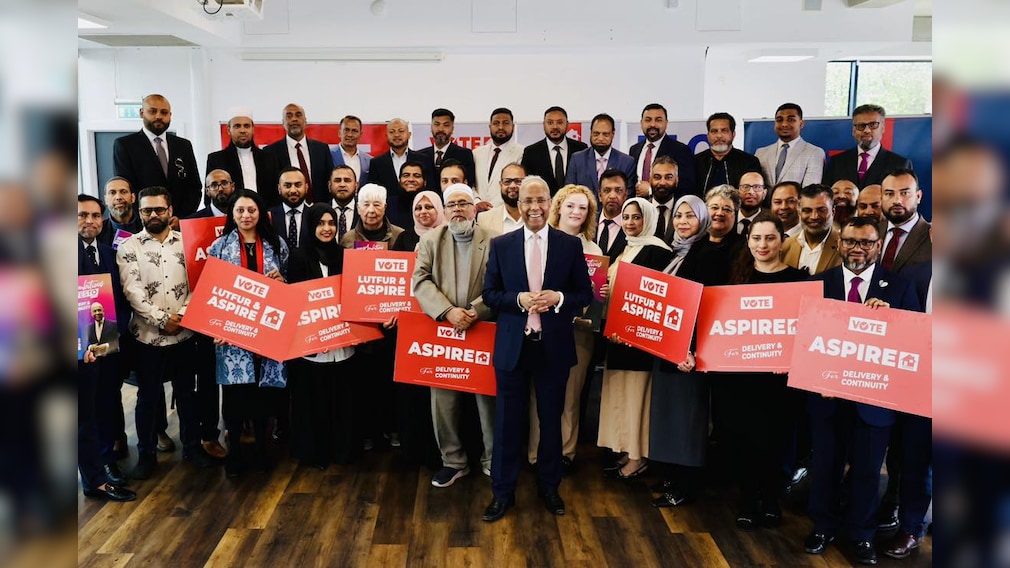
Tower Hamlets in London and Oldham in Manchester illustrate the changing nature of Britain's politics, driven by Muslims from the Indian subcontinent. Tower Hamlets, which is 40% Bangladeshi-origin Muslim, has just re-elected Lutfur Rahman as mayor for the third time. His Aspire party won 33 council seats (out of 45), all held by Bangladeshi Muslims. It's a remarkable development in a London town that was once predominantly white.
An interesting aspect of Rahman, a former Labour Party member, is that he was removed from office as mayor in 2014 after being found guilty of corrupt and illegal electoral practices; he was also banned from holding office for five years. Five years later, he returned as mayor after forming the Aspire party and winning the election because local Bangladeshis trusted him more to address their issues than Labour, their traditional political home. Rahman is now more powerful than ever.
The town of Oldham in Greater Manchester, which gained notoriety two decades ago for having one of the first Pakistani grooming gangs preying on young white girls, has traditionally been a Labour stronghold. Two years ago, some Pakistani-origin Labour politicians formed a breakaway front, the Oldham Group. Campaigning on the Gaza issue, the group won 10 seats on the council. Reform UK secured 16 seats, and Labour 18. Nearly a quarter of Oldham's population is Muslim, mainly of Pakistani origin.
Kashmir And Palestine
Towns of Manchester are not the only places where the government's Israel policy and the suffering of Palestinians became a British election issue. This issue has been regularly raised by people from all communities in the UK, including Indians. But Pakistani and Bangladeshi Muslims have used their political strength to force change at the ballot box. In the 2024 parliamentary elections, four Independents, all Muslims, defeated Labour candidates who were campaigning on the issue of Gaza. Powerful lobbying by Labour's Muslim members and other activists forced the British government to recognise the state of Palestine last year.
Kashmir is another issue that has been regularly raised by British Pakistanis and human rights groups for decades. Under the former Labour leader Jeremy Corbyn, the party passed a resolution in 2019 calling for self-determination in Jammu and Kashmir, which provoked a backlash from Indian members of the party and forced it to revert to a neutral position. But that has not stopped Pakistanis from campaigning on the issue, as they did successfully at the Green Party conference in April.
Strength In Numbers
Britain has a 6.% Muslim population, according to the 2021 census, with Pakistani and Bangladeshi Muslims accounting for a 3.8% share. Indians in Britain make up 3.1%, with just under 2% being Hindus. Unlike Indians, Pakistanis and Bangladeshis have increasingly voted in a more organised manner. In more than two dozen seats that Labour won in the 2024 parliamentary elections, the Greens, small Muslim-dominated groups, or independent candidates finished second.\
This has threatened the political futures of senior figures in the Labour government, including the prime minister, Keir Starmer, the Pakistani-origin Home Secretary, Shabana Mahmood, and, until recently, the Health Secretary, Wes Streeting, who is challenging Starmer in the leadership election. In their parliamentary seats, the share of voters of Pakistani and Bangladeshi origin ranges from 20 to 49%.
The Indian Voter
It would be unfair to say that only Pakistanis and Bangladeshis have exploited their strength. Indian-origin people, both Sikhs and Hindus, have also tried, but their numbers are smaller, and hence their political power is limited. During the farmers' protest in India, Sikhs played an important role in campaigning on the issue in Britain. The Indian community does try to influence political groups on the Kashmir issue, as it did in 2019. But unlike Pakistanis, Indians are less organised, and some of them also remain critical of the government in New Delhi on the issue. Indian-origin MPs are reluctant to speak in parliament on the Kashmir issue for fear of losing the Pakistani vote in their constituencies.
The Indian community in the UK is less politically active than Pakistanis and Bangladeshis, and there are no Hindu or Sikh political groups. However, within the mainstream political parties, there are Indian groups. Leaders of political parties, though, have sought to influence Indian voters by visiting their places of worship and festivals. During the 2016 London mayoral election, the Conservative candidate Zac Goldsmith circulated a leaflet warning Hindus that their gold jewellery would be at risk if Sadiq Khan, of Pakistani origin, won. Most Hindus ignored the leaflet and voted for Khan.
Far-right groups have also tried to influence Hindus, though with limited success. For example, Tommy Robinson, whose real name is Stephen Yaxley-Lennon, has praised Hindus and India while directing his vitriolic attacks at Muslims. He has a history of association with racist groups and has even spent time in jail for assault, fraud and contempt of court. Some Hindus support him, and he is followed by right-wing activists in India, but the majority of Hindus in the UK find him racist.
Why Indians Are Switching To Reform
The Labour Party has traditionally been the top choice for British Indians, but its support within the community is dwindling. In October 2025, research by the Oxford-based think tank the 1928 Institute found that support for Reform among British Indians had tripled since the 2024 election. During the same period, support for the Labour Party among Indians fell by 13%, according to the survey. The Conservatives lost 3%, while the Green Party gained 60%.
There is no data yet on Indian voters' poll behaviour in this month's elections, but on polling day, quite a few traditional Labour supporters from the community told me they had voted for Reform this time. Some others preferred to vote for the Green Party rather than remain with Labour. Interestingly, some Indians who voted for Labour last time chose the Conservatives over Reform, as many Indians find this anti-immigration party too difficult to stomach. Indians who have joined the Reform Party support its tough policy against asylum seekers and illegal migrants. It would not be unfair to say that some have joined because they also share the anti-Muslim beliefs of other Reform members.
Unconvincing Overtures
Like Robinson, Reform's leader Nigel Farage has spoken in favour of Indians and praised Hindus, though he has also criticised the India-UK deal for enabling more Indian migrants to enter the country. He has also been critical of Muslims, despite claiming to be inclusive. Reform's former chairman, Zia Yusuf, is a Muslim of Sri Lankan origin. He resigned and briefly left the party after one of its MPs called for a ban on burqas, but he eventually returned and is now its spokesman on Home Affairs. Farage has also named an Egyptian-born Muslim, Laila Cunningham, as the party's candidate for the next mayoral election.
Most South Asians have remained sceptical of Reform after several of its members were reported to have made racist remarks. Farage has taken disciplinary action against some of those members, yet many potential Reform recruits from the Indian community remain unconvinced. This is one reason some left-leaning Indians are switching from Labour to the Greens, while right-leaning Indians are moving to the Conservatives rather than joining Reform.
Seventeen Indians won council seats on the Reform ticket in May's local elections, a small number given that the party secured a record 1,454 seats. This suggests that Reform voters, who are mainly white, are not yet keen to choose Indians or any other migrant community over white candidates. This does not bode well for a party that sees itself as the next British government-in-waiting.
(Naresh Kaushik is a former editor at the BBC and Associated Press. He is based in London.)
Disclaimer: These are the personal opinions of the author
-
Opinion | The Last Bet? What Trump's 'Mother Of All Bombs' Could Actually Do To Iran

Can an MOAB deliver a decisive blow to Iran that may force it to surrender immediately, as Japan did after Hiroshima and Nagasaki in World War 2?
-
Hit Songs, Empty Pockets: The Hidden Math Behind India's Viral Music Boom
Over 80,000 brands and five lakh creators in India make branded content. The opportunity is worth around Rs 1,500 crore.
-
Opinion | Great 'Exceptions': How The Oil India Was Attacked For Is The Oil Trump Now Seeks
A law written to punish the buyers of Russian oil was suspended by the US to protect a purchase of Russian oil. India spent fourteen months being lectured for less.
-
Opinion | Louis Vuitton Loot, Torched Cars: France Protests Have An Unlikely Beneficiary
It's an unbelievable moment. Crowds looting the most exclusive stores in Paris, including the famed Luis Vuitton. But what's behind this meltdown?
-
Blog: Kolkata Didn't Learn From 2015. Eleven Years Later, It Proved To Be Fatal
The City of Joy isn't a stranger to crowd control. Be it during Pujo or Christmas at Park Street, Eden Gardens cricket matches, or Derbies between Mohun Bagan and East Bengal. But during Pujo, the entire city is on alert.
-
Opinion | Slurs, Threats, Now A Temple Attack Plot: When Did America Become So Hostile To Indians?
The rising tide of anti-India, anti-Hindu, and racist attacks serves as a stark reminder that economic prosperity does not automatically guarantee social immunity from bigotry.
-
A Step Behind Neha Bora: What Rahul Gandhi's Gesture Says About Congress' Gen-Z Pitch
At INDIA bloc's march to Supreme Court, Rahul Gandhi placed himself a step behind two women, hands resting on their shoulders. One was his sister Priyanka. The one on his right was Neha Bora. Here's what the image means for the protest wave now, and for Rahul's politics in general.
-
Opinion | Imran Khan, And The Perils Of Having An 'Opinion' In Bollywood
The reality of the industry is quite grimy. More often than not, its inhabitants have been fairweather friends, happy to sing the praises of whoever is in a position of authority.
-
Exclusive: India's Food Safety Problem Goes Beyond Just Dirty Kitchens - By Tukaram Mundhe
On World Food Day, Maharashtra's Commissioner of Food Safety explains why instead of taking stopgap measures, the entire supply chain in India needs to be held accountable and made transparent.
-
Opinion | India Has Enough Coal. So Why Are Power Plants Running Short? A 76 Million 'Crunch'
As of October 5, as many as 82 of the 191 thermal plants monitored by the Central Electricity Authority were in the 'critical' category