Opinion | India Has A 'Lobbying' Problem In Washington, And It Has Come Back To Haunt It
While the EU, Japan, the UK and South Korea secured quick deals, India's efforts were getting drained in prolonged negotiations and the wrong kind of lobbying.
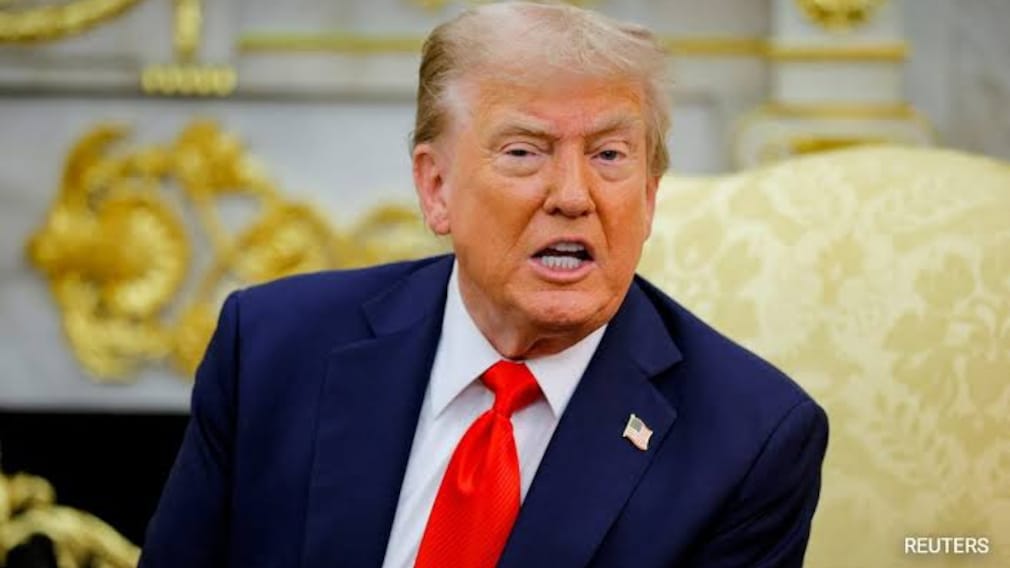
The Lindsey O. Graham Sanctioning Russia and Iran Act of 2026 gives President Donald Trump the authority to impose tariffs of up to 100% on India as one of the top five importers of Russian energy. The passing of this act highlights major gaps in India's lobbying strategy in Washington, involving a shrinking lobbying presence, an absence of bill-level engagement, and an excessive focus on trade deal negotiations.
Draining Political Capital
Since 2025, India-US ties have been strained following Operation Sindoor, and the Trump administration's tariff announcement. This meant that while the EU, Japan, the UK and South Korea secured quick deals, India's diplomatic and lobbying efforts were getting drained in prolonged negotiations and lobbying focused on the executive.
This took focus away from the Hill, which India seems to have judged had little to offer under unified Republican control. India's paid congressional operation in Washington has also shrunk from a multi-firm network to a single account. Until early 2025, India retained Cornerstone Government Affairs, whose records indicate consistent Senate and House engagement on issues of defence. BGR Government Affairs also tracked key bills, statements and discussions about India in the Congress, while also engaging members and staff on bill specific lobbying.
While Cornerstone's engagement ended in early 2025, BGR's ended in December, leaving Mercury Public Affairs (MPA) as the only firm working on the Hill. MPA's engagement strategy has been broad, without any issue or bill focus. The executive engagement has also declined since India terminated its contract with SHW Partners in June 2026.
Thus, when India needed to position its Russian energy imports as an energy necessity forced by the Iran war rather than a policy choice, it had few allies left on the Hill. By the time the bill re-emerged after the sudden demise of Senator Lindsey Graham, India lacked the bill-level lobbying bandwidth, public image or political capital to secure an exemption.
How Did Others Fare?
The act targets the top five importers of Russian energy. Apart from India, these include China, Slovakia, Azerbaijan and Hungary for crude, and China, France, Japan, Hungary and Belgium for gas. For the US, imposing tariffs on China has proven to be a difficult strategy due to its reliance on Beijing's rare earths. Therefore, the imposition of these tariffs on China is unlikely.
Hungary, France, Japan and Belgium are likely carved out of the gas tariffs, as the act exempts countries that account for less than 15% of Russia's gas exports and are reducing them. Hungary had already secured a one-year exemption from the Trump administration in November 2025 for the Druzhba and TurkStream pipelines. Japan's Sakhalin-2 exemption was extended until December 18, 2026. This gives Tokyo adequate time to engage the executive, and a buffer to engage Congress when it reconvenes on November 9 after the mid-term recess. South Korea used a general 30-day US waiver issued in March, and its embassy then secured assurances that non-dollar payments for Russian naphtha would not trigger secondary sanctions.
For each of these parties, consistent lobbying and continued engagement in both Congress and the executive were vital in securing these exemptions in times of crisis. This also extended to Ukraine. After the Senate passed this bill in mid-August, the House was in recess. Given the short time frame, it was believed that the bill was unlikely to pass the House due to a gridlock over tariffs. But the strong Ukrainian lobbying effort pushed the bill through on the very last day of session in September. This further highlights the impact of lobbying in Washington.
Narrow Window
The act provides target countries with a 30-day buffer to reduce their imports. The House has already adjourned until after the elections on November 3. The Senate is scheduled to begin its own recess on October 2. Neither chamber will be sitting when the first duty falls due in mid-October. This means that India has a very narrow window of less than two weeks to engage with the members, while parallelly negotiating with the executives who determine the waiver. Congressional support also matters most after the first 180-day reassessment, when the USTR is tasked to re-evaluate the status of target countries on a recurring basis.
The Russia Sanctions Act is a testimony to the importance of congressional engagement for India. Therefore, there is a growing need for a change in India's strategy of engagement with US institutions that involved engagement with newer factions and members, and timely deployment of lobbying and diplomatic efforts.
(Abhishek Kadiyala is a Research Analyst at the Takshashila Institution's Geostrategy programme. Views expressed are personal)
Disclaimer: These are the personal opinions of the author
-
Is Buying Home In A Small Town Smarter Than In A Metro? Here's The Math

According to Knight Frank's H1 2026 Affordability Index, the EMI-to-income ratio stood at 69% in Mumbai and 67% in the National Capital Region.
-
Samajwadi Seat Talks: The UP-Size Gap Between Congress' Rhetoric and Reality
UP Election 2027: Seat-sharing negotiations are rarely easy. More so when they involve a regional force determined to guard its turf and a national party desperate to regain lost ground.
-
Cyber Outages: The Attack That Has No Name
Banks, flights and the world's office mail failed four times in five days, each time without an attacker. The world spends $247 billion a year on locks
-
Buy A Plot Or Flat? What Homebuyers In Tier-2 Cities Should Consider
Plots may offer greater flexibility, but apartments remain a more straightforward route to homeownership for many buyers.
-
Opinion | Sonia Gandhi, And The Weight Of The Things Left Unsaid
"You must know, Sonia beti, that in this country it is not what you are that counts, it is what people think you to be," someone said to Sonia Gandhi when she first arrived in India. Decades later, she tries to bridge the gap between what she is and what people have always thought her to be.
-
Indian Parents Are Spending More On Their Children's Hobbies. Is It Worth It?
Parents are increasingly recognising that academic knowledge alone may not prepare children for everything life throws at them.
-
The Joy Of 'Just Because': Why Indians Are Buying Gifts Beyond Weddings, Birthdays And Festivals
Saying thank you, expressing pride or apologising can sometimes feel difficult. A thoughtful gift can make these moments easier.
-
In Sonia Gandhi's 'Belonging', The Delhi Of 'Chashme Buddoor': How A Lost City Is A Character In Both
Sonia Gandhi's book describes a cityscape through which Siddharth (Farooq Sheikh) rides a motorbike in Paranjpye's cult movie. A city of quiet roads, ice cream at India Gate, and a life that lost a race it couldn't opt out of.
-
Opinion | History Is Repeating Itself In Rawalkot, And India Should Be Worried
This very area had twice been the setting for rebellions in the past, including in 1947. Another one is playing out violently now