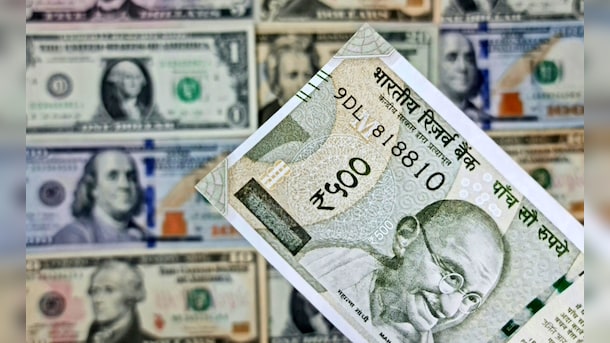
Opinion | How A Tiny 0.4% UPI Fee Could Change How India Pays
The introduction of a fee can have a psychological effect beyond its immediate financial cost. Businesses that have come to view digital payments as free may begin to look for alternative - split payments, cash, and so on
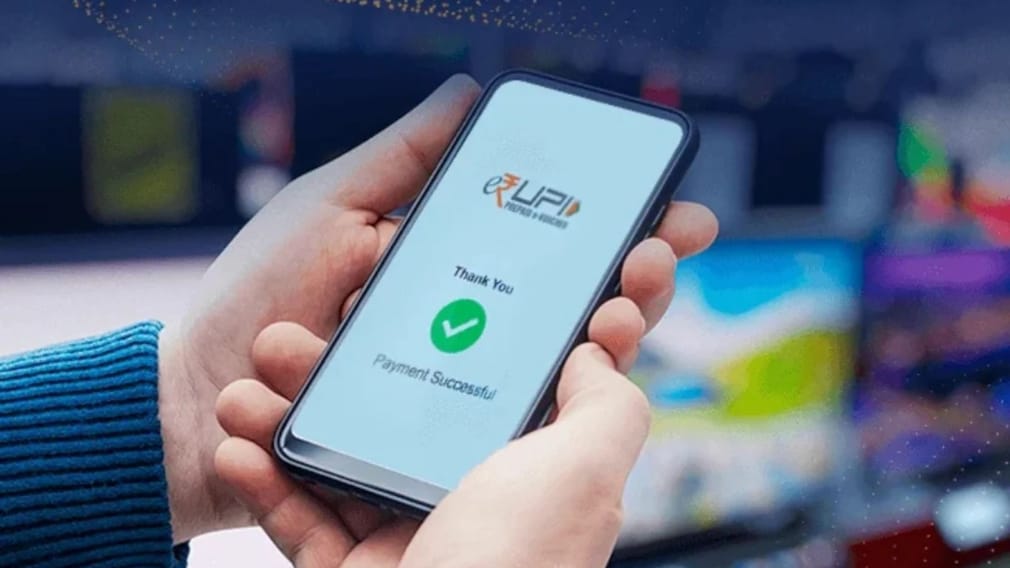
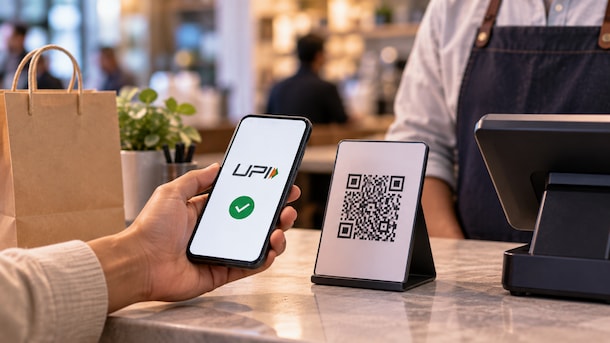
The introduction of a 0.4% Merchant Discount Rate on certain UPI merchant transactions above Rs 2,000 marks a significant shift in the economics of India's digital payments architecture. For years, UPI's expansion rested on a pricing model in which consumers paid nothing for most transactions and merchants faced no MDR. That helped maximise adoption, but left a basic question unresolved: who ultimately pays for a payment network once it becomes too large and too important to remain dependent on implicit subsidies?
The new framework will continue to allow for free peer-to-peer transfers, exclude smaller merchants from the charge if they fall below the prescribed limit, and exclude recurring payments such as xSIPs and utility bills from the charge. The initial cost could be relatively small. The more significant question is what pricing does to the incentives of a network that has become a part of the daily economic life.
UPI Was Never Free
UPI was not really free. Banks and payment service providers still needed to pay for transaction processing, servers, cybersecurity, fraud detection, and infrastructure. The zero-MDR structure just pushed those costs out of the transaction. Some of them were absorbed by public incentives and cross-subsidies.
The new MDR brings some of that implicit cost to the fore.
This is in line with the economics of a two-sided market. UPI derives its value from having consumers and merchants on the same network. Charging consumers would reduce participation, but charging the commercial side would enable some of the infrastructure cost to be recovered without disrupting the network effects that have led to adoption.
That explains the design of the charge.
Transactions above Rs 2,000 represent a relatively small share of UPI's volume but a much larger share of its value. Targeting them creates a revenue stream while leaving the bulk of low-value payments untouched.
But the economic incidence will ultimately depend on behaviour.
The Psychological Effect
A Rs 2,500 transaction would attract Rs 10 in MDR at 0.4%. The amount is small, but its relevance depends on the merchant's margins and volumes. NPCI may prevent a separate surcharge from being imposed on consumers, yet merchants could respond through cash discounts, pricing decisions, or greater encouragement of alternative payment methods.
The Rs 2,000 threshold also creates an incentive to split transactions. A Rs 2,500 purchase divided into smaller payments could potentially avoid the charge where such splitting is feasible. The purchase remains identical, but the pricing structure has changed the incentive.
The Rs 1 lakh monthly exemption protects smaller merchants, which is important given UPI's role in bringing QR-based payments into the informal and micro-enterprise economy. Yet the introduction of a price can have a psychological effect beyond its immediate financial cost. Businesses that have come to view digital payments as essentially free may begin to think more carefully about which payment method they encourage.
The timing makes that critical. The festive season brings larger purchases in categories such as electronics, apparel and consumer durables. For some merchants, a cash discount could easily exceed the MDR they would otherwise pay. Even a modest shift towards cash would matter because digital payments have also become part of India's wider formalisation process.
There is a fiscal logic behind the move.
A Transition
Zero-MDR UPI was never free for the economy. The government provided incentives, while banks and payment companies absorbed costs that could not be recovered directly from transactions. With UPI now processing hundreds of billions of payments a year, continued reliance on budgetary support becomes harder to justify as the sole financing model.
The government's annual support for digital payments, which is around Rs 2,000 crore, is small in comparison to the size of the network. This transition to MDR can thus be interpreted as a transition from budget-supported payments to a more commercially financed infrastructure.
The real issue is who is going to foot the bill for an economic necessity.
The value of public support was especially useful during the adoption phase of UPI, as digital payments provide network benefits that individual firms cannot fully capture. However, when the adoption becomes widespread, the network also generates commercial value for merchants, banks, and payment platforms. MDR tries to recover some of that value, but not all of it, from the users.
The differentiated rates support that approach. Mutual fund transactions have a lower rate of 0.02%, there is no MDR for recurring payments, and QR payments in rural and semi-urban areas are exempt.
This is basically price discrimination between segments of different payment cost sensitivities. A uniform charge would be easier, but more disruptive. Differential pricing enables the system to generate revenue and safeguard categories where digital adoption has more inclusion or efficiency benefits.
The Case For Fintech
There is also a commercial implication for fintech.
Payment platforms have spent years building scale without being able to monetise the basic movement of money directly. Their commercial models have consequently expanded into lending, financial products, subscriptions, and payment hardware. A predictable transaction-linked revenue stream could eventually change that equation.
For banks, the calculation is different. They bear much of the infrastructure and security cost behind UPI. A sustainable revenue pool could strengthen incentives to keep investing in the systems required to support its scale.
Yet UPI is no longer only a domestic payments system.
India has touted it as a model of interoperability, scale, and low transaction costs, digital public infrastructure. It has been integrated into India's broader efforts to engage with the Global South, such as cross-border payments and local currency transactions.
That's not a proposition that's necessarily undermined by commercial pricing. It transforms it from a largely subsidised public rail to a system that is supposed to fund more of its own infrastructure.
The 0.4% charge is probably not as significant over time as the transition.
The policy should therefore be assessed on the basis of behaviour and not just revenue. Whether the new structure has struck the right balance will be determined by merchant acceptance, transaction splitting, cash substitution, payment volumes, and the ongoing fiscal burden of the government.
UPI's first challenge was adoption. Its next is sustainability.
The main policy issue is whether India can monetize some of the existing mature digital network without compromising its simplicity, inclusion, and formalisation that made it valuable in the first place. The answer will not come from the fee itself, but from the reaction of the consumers, merchants, banks, and payment platforms.
(Deepanshu Mohan is Dean and Professor of Economics, OP Jindal Global University, Visiting Professor at the London School of Economics (LSE), and Visiting Research Fellow at the University of Oxford)
Disclaimer: These are the personal opinions of the author
-
Opinion | Rs 75-Lakh Bounty, New Jaish Base, And The Case Of Pak's Ever-Missing' Terrorist

Pak's yearly act is back: finding Masood Azhar. But there are other questions FATF must be asking next month as it meets
-
For Years, Saudi Saw Houthis As Yemen's Problem. Then, A Knock On The Door
Actual fighting between the Houthis and Saudi Arabia began late in the overall timeline of the conflict that now involves powerful belligerents
-
Lal Topi, Blue T-Shirt: Akhilesh Yadav's 'PDA' For Blue Has A Coded Message
The message is clear: the Samajwadi Party wants to talk to voters beyond its traditional Yadav-Muslim support base, particularly to Dalits.
-
The Day 600 Men Lay Siege To Islam's Holiest Site And How They Were Gassed Out
Nearly 47 years ago, on November 20, 1979, the Grand Mosque itself was seized by an armed group in one of the most extraordinary episodes in modern Saudi history.
-
New UPI Charges: If Digital Payments Save Money, Why Charge For Them Now?
UPI Payments Free For Years: The government has subsidised UPI adoption for years. Official figures show thousands of crores in payouts over years.
-
Opinion | Sydney Sweeney And The Obsession With Asking Sportswomen To 'Take The Clothes Off'
There is a world of difference between an athlete choosing to be sexy and an advertiser deciding that sex is the most interesting thing about her
-
Opinion | The 'AIPC' Was Once Congress' Boldest Idea. What Happened To It?
Tharoor, to Chakravarti, to Yaskhi now, the fate of a Congress 'experiment' that started in 2017 will tell you a lot
-
Woman Biker Hit, Air Force Veteran Attacked: The Lawlessness In Gurugram
What gives confidence to some elements in Gurugram to break the law again and again in full public view and on camera?