Opinion | How A Poland 'Experiment' Could Change India's Defence Industry
Europe is spending billions on arms in a historic rearmament drive. Indian firms can cash in. But there's a catch
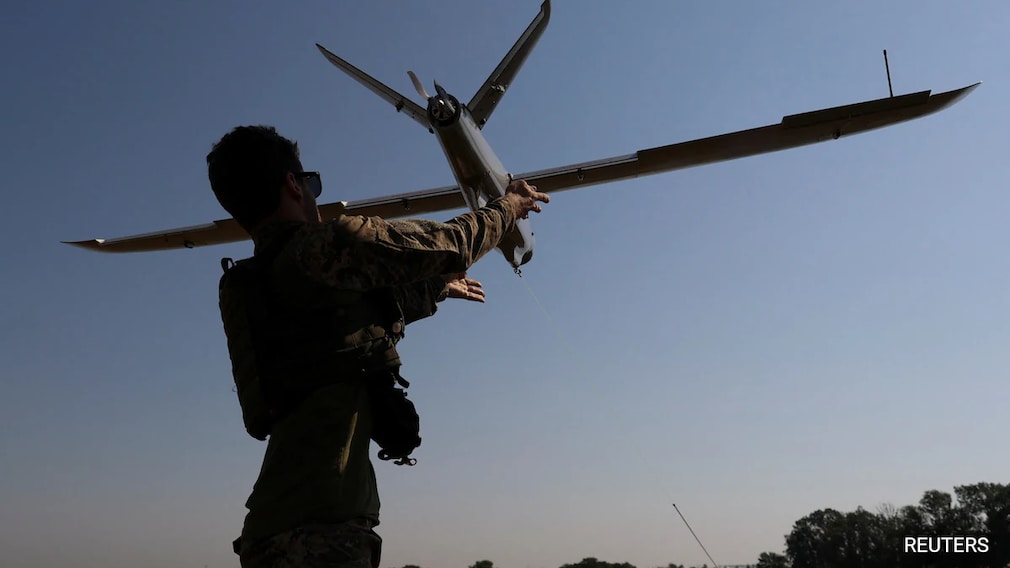
On October 22, Prime Minister Narendra Modi and his Polish counterpart Donald Tusk met at Hyderabad House to inaugurate what was a Polish Prime Minister's first visit to India in 16 years. The joint statement notably focused on defence, and included establishing a new Defence Industry Dialogue, as well as an invitation to Polish defence firms to co-develop and co-produce in India. Further, at a press conference, Tusk rather candidly pointed out that Polish drones and satellite intelligence had been "very useful" to India during "recent political tensions" - likely referring to Operation Sindoor.
However, as negotiations continue and India-Poland defence ties deepen, both sides must ask an important, timely question: Can Warsaw be the champion within the European Union (EU) that Delhi needs if Indian firms are to find a seat at the table?
To understand the logic behind this question, Canada offers a template, while the UK offers an important warning. Ottawa signed its defence partnership with Brussels in June 2025 and closed a participation deal by December under Security Action for Europe (SAFE), the EU's €150 billion rearmament credit line, after a German-led bloc of member states argued for opening the scheme to it. It paid a modest initial contribution for near-equal treatment with European firms, allowing it to cover up to a whopping 80% of the component costs for any approved EU procurement project. At the same time, London walked away in November 2025 after Paris pushed for terms, including a fee of up to €6 billion, that the UK found indefensible. So, understanding European Commission legalese is not enough to secure a seat at the Rearm table - an internal participant must vouch for an external counterpart's interests and capabilities.
Warsaw is not only one of the biggest beneficiaries of, and contributors to, EU Rearmament 2030, but it is also best suited to play that champion for India, for three reasons.
Big Money
The first is Poland's massive contributions to Rearm and the political weight it carries. Warsaw will spend a projected 4.8% of its GDP on defence in 2026, and no other NATO ally is closer to the 5% national defence spending mark. On May 8 this year, Poland became the first member state to sign a massive loan agreement under SAFE, locking in a deal for €43.7 billion, or nearly 30% of the instrument's available capital. SAFE funding is also opening up for a second round of credit extension, and Warsaw demands a piece of that pie as well, even as the European Commission has argued for steering it towards Ukrainian firms.
Poland is a pillar for European defence having both received Rearm money and invested it into everything from shells and howitzers to main battle tanks, guided-missile frigates, and even top-of-the-line F-35s. India, meanwhile, is eligible to negotiate its own way into SAFE after signing a Security and Defence Partnership with the EU in January. For any external participant, a SAFE-funded contract caps component costs at 35%, requiring the rest to come from within the EU-Ukraine-EEFTA region. Without a bilateral participation agreement - that is, Warsaw's support - that cap will continue to limit how much of the Rearm momentum India can leverage.
Natural Partners?
The second reason is that India may actually be able to aid Poland's wartime mobilisation and preparedness efforts. Warsaw has clearly demonstrated defence industrial depth in the context of the Ukraine conflict by sending a reported 100 million rounds of ammunition and about 20 Krab howitzers to Kyiv.
But most of it is Soviet-calibre small munitions. In terms of heavy artillery, while the state-owned firm PGZ has produced roughly twenty-five thousand 155mm shell bodies a year, the expected capacity goal is 150,000-180,000 shells. Meanwhile, the Polish army has bought hundreds of new howitzers, each demanding more shells. Here, India not only has an established reputation for selling to Europe, like Italy and the Czech Republic, but it can also demand a specific partnership with Polish manufacturers for co-production. Indian ammunition runs at an estimated 40-60% of European unit costs, and for a government running a budget deficit of around 7% of GDP, that is a valuable cost mitigation measure.
The third reason is compatibility between Indian and Polish systems. The latter's Krab is derived from the South Korean K9 Thunder - the chassis, at least - along with a British-derived turret and a 155mm/52-calibre barrel. The Indian Army's K9 Vajra-T is derived from the same Korean howitzer and fires the same NATO-standard calibre. This makes it possible for Delhi and Warsaw to bring military and defence firms together to further align standards and design.
The Elephant in The Room
The path ahead isn't easy, primarily because Poland is among the EU's most hawkish voices on Russia. India's legacy defence ties with Moscow, as well as its participation in Russia-led military exercises like 'Zapad', make mutual trust, especially in the defence domain, difficult and uncertain. Poland's ambassador in New Delhi has also said in the past that deeper defence cooperation between the two sides needs an unambiguous signal from the very top that neither side will work against the other's interests.
The hard answer to that is compartmentalisation. India's defence relationship with Russia is largely government-to-government and focused on legacy platforms, while the emerging, vibrant private defence firms that would bid for SAFE contracts are not. An entity-specific "trusted supplier" accreditation, built on independent audits, supply-chain transparency, and on-site inspection rights, would let Warsaw vouch for Indian companies without tying them to Delhi's Russia policy.
Moreover, building in Europe for Europe is equally useful, and Indian firms must be encouraged to do so. When a firm's Rearm plant stands on Polish soil, pays Polish taxes, and employs Polish workers, it counts as European content, supports Warsaw's pledge to produce half its military purchases at home, and opens up the remaining 65% SAFE ceiling reserved for the EU-Ukraine-EEFTA region. Not to mention, any shells produced in Poland can feed howitzers in both Europe and India alike.
(Anushka Saxena is an Associate Fellow, Takshashila Institution. Views expressed belong to the author and do not necessarily represent those of the Institution)
Disclaimer: These are the personal opinions of the author
-
From King Edward III To Neha Bora, A 1361 Law Lives On In 'Peace Bonds': NDTV Explains

CJP leaders Abhijeet Dipke, Saurav Das, and Ashutosh Ranka signed peace bonds; two of them even faced jail over an alleged breach, while AISA's Neha Bora questioned such a bond's very logic. Here's what a peace bond is, and what the questions are.
-
Air Force Golf Course Near PM House Closed. How This Land Has Seen Many Turns Of History
The Air Force Sports Complex, which includes the golf course, is the latest property near the Prime Minister's residence set to be taken back this year, as the land is owned by ministries.
-
Opinion | The Muslim World Is Seeing An Unexpected 'Experiment' - In Kazakhstan
The country has a long history of using mediation to mitigate conflict; now, it has added another, much-wanted dimension to it.
-
"OpenAI Has Been Very Bad For The World": Ex-Google Researcher
Alex Turner, who quit Google DeepMind over its Pentagon deal, says no single lab can fix the AI threats, and that the US and China will have to coordinate.
-
Opinion | Is America Staring At A 'Blue Wave' Again? Why Trump Feels Threatened
Wonder of wonders, the so-called 'red-neck' states - like Texas - are leaning democrat, and Vivek Ramaswamy is probably going to lose in Ohio. But will this be enough for a 'blue wave'?
-
Israel's "Political Untouchables" Emerge As Kingmakers In Election
The key to breaking the political impasse may lie in the hands of those long treated as "political untouchables": the Arab parties representing Palestinian citizens of Israel
-
A US Mercenary Group, A Fragile Peace And Global Race For Critical Minerals
Erik Prince, the founder of the now-defunct private security company Blackwater and a prominent supporter of US President Donald Trump, has secured a role in Congo through his company, Vectus Global.
-
Opinion | Will Israel 'Dump' Netanyahu? Why His Future Hangs In The Balance
The October 7 incident continues to haunt 'Bibi', producing two competing arguments how the security breach occurred under Netanyahu's watch, and who Israelis can trust to protect them in the future.