Opinion | Hormuz Is Reopening, But It May Never Matter Quite The Same Way Again
Hormuz may never carry the traffic it had prior to the war, and its significance for global supply chains may be diminished, to an extent. Here's why
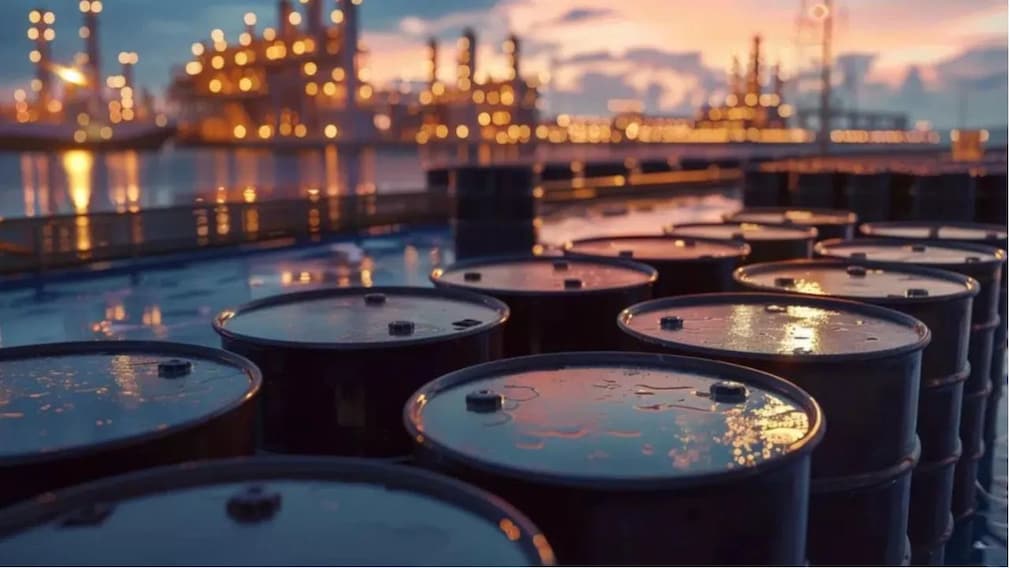
US President Donald Trump recently announced that the US and Iran had reached a deal and that the Strait of Hormuz would be reopened soon. Coming over three months after the war started, however, many countries have by now explored alternate pathways to keep their economies running and to hedge against future disruptions.
The India-Omani Partnership
India has been one of the worst hit countries by this war, in particular by the closure of the Strait of Hormuz, as much of her energy imports from the Middle East transit through this critical waterway. While oil and gas are the most important, there are other major imports, like fertilizers, that also transit through Hormuz. Recently, Union Petroleum Minister Hardeep Singh Puri, revealed that India's oil marketing companies were losing Rs. 16,000 crore a day, something the recent fuel price hikes aim to address, to an extent. The rupee has fallen to a historical low to touch 95 to the dollar. Amidst these shocks, the news that the India-Omani Comprehensive Economic Partnership Agreement (CEPA) has been actualised was met with much glee.
CEPA paves the way for more buoyant trade with the Oman Sultanate, especially facilitating Indian exports - a critical need for the economy currently. Most importantly, the location of Oman is significant now with all the tension around the Strait of Hormuz. Oman is located outside the Strait, directly on the Arabian Sea and the Gulf of Oman, and thus, goods can enter and exit its ports of Salalah and Duqm easily without having to go through Hormuz. Moreover, India also had a historical presence at Duqm. India's imports from Oman actually increased by 246.4%, rising from USD 430 million to nearly USD 1.5 billion, driven by higher purchases of crude oil and urea. The countries are now seeking to reactivate the proposal for the Rs.40,000-crore Oman-Gujarat deep-sea gas pipeline. The 2,000-km subsea project would bypass the Strait of Hormuz, offering a potentially safer and more direct route for natural gas imports, hedging against any similar disruptions in future.
Oman's Sweet Spot
In fact, Oman is in a sweet spot now with its location outside the Strait of Hormuz as countries seek alternatives. One fifth of the world's energy supplies pass through Hormuz from countries of the Gulf like Saudi Arabia, Iraq, Kuwait, Bahrain, and the UAE to mainly Asian markets. Consequently, Oman has increased its oil exports to unprecedented levels, given that its ports are located outside Hormuz, enabling it to pump supplies to Asian markets. Beyond this, the gains from customs declarations have been remarkable. For example, revenues from declarations for shipments destined for Dubai alone jumped from $270 million in March to $2.16 billion in April.
More important is the Sultanate's new positioning as a reliable hub for maritime and air transport and shipping through its ports and airports. For instance, food exports to Gulf countries through Hormuz have also been disrupted. Currently, shipments are travelling from Omani ports through the Hatta border crossing between Oman and the UAE and further into the wider Gulf region and markets. This will enable Oman to reap continuous benefits even after the Hormuz crisis ends. It will also attract massive investments for strategic road and railway projects linking the Gulf states to Oman, and oil and gas pipeline projects that bypass the Strait of Hormuz, like the one with India. Oman will definitely aim to preserve the economic and geopolitical gains it achieved in the war.
The Fujairah Terminal
Other countries, too, are hedging. For many like the UAE, whose economy depends majorly on energy exports, it is an existential threat. The world has lost 1 billion barrels of oil due to Iran's closure of the Strait, according to Dr Sultan Al Jaber, the UAE's Minister of Industry and Advanced Technology. Therefore, the country is now accelerating the construction of the West-East oil pipeline to double its oil export capacity to 4 million barrels per day by 2027 via the port of Fujairah, which lies around 70 nautical miles outside the Strait of Hormuz.
The Fujairah Oil Terminal FZC (FOT) is a premier, 1.177 million cubic meter independent onshore storage facility in the UAE, specialising in crude oil and refined products. With the disruptions in Hormuz, its strategic significance for global supply through it has increased manifold. This is just as significant for India, as the Fujairah oil terminal can still send supplies to us while also ramping up oil production. According to data, UAE oil exports to India rose to around 619,000 barrels per day in April this year, a 43% increase from previous averages.
Saudi And Iraq Look Elsewhere, Too
Saudi Arabia, OPEC's second largest oil producer has, similarly, diverted exports through its port of Yanbu on the Read Sea, via its East-West Pipeline. It consists of twin pipes that carry oil more than 1,200 km from the Abqaiq oil field in the Kingdom's Eastern Province to Yanbu. Interestingly, this pipeline, also known as Petroline, was built in 1981 during the Iran-Iraq war as an emergency route, with the singular objective of bypassing the Strait of Hormuz to avoid any crisis there and promote energy security. That has now paid off, with the pipeline reported to be operating at full capacity. In fact, Saudi exports of jet fuel to Europe through Yanbu has actually increased after the war broke out this year.
Like them, Iraq, another major oil producer, is also diversifying. As a major exporter through Hormuz, the Strait's closure has made it look elsewhere. It has begun exporting oil through Syria's Baniyas oil port, since early April. Iraqi fuel crossed through the Al-Tanf border crossing into Syrian territory, where from Baniyas on the Mediterranean coast Iraqi oil will make its way to global markets. With Syria's stabilisation and reconstruction, this route is sure to become a permanent one for at least some of Iraq's oil exports even after Hormuz reopens.
Two Unintended 'Beneficiaries'
An unhappy fallout of the closure of Hormuz has been that it is essentially Asian markets that have been affected the most. These relied most on supplies through the strait, unlike, say, Israel, which together with the US began the war. While the US has benefited from oil sales, countries like India, Japan, South Korea have been vulnerable to the Hormuz crisis. They, too, have been looking for alternatives and have turned to non-traditional sources.
Two such "non-traditional" sources that have become beneficiaries are Azerbaijan and Kazakhstan.
On May 2, a Japan Times report noted how a tanker carrying some 45,000 kilolitres of crude oil from Azerbaijan arrived at an Eneos refinery in Yokohama, quoting officials at Eneos. The shipment of Azerbaijan oil arrived in Japan for the first time as it sought to diversify supply sources. Like India, Japan had also imported mostly Middle Eastern crude, and now has also procured US and Russian oil. This marks a major shift in its energy procurement as it diversifies its supply chains. It also stands to reason that once Hormuz reopens, Japan will no longer be totally reliant on the supplies through that route, at least not as much as pre-war levels. It has now also turned to Kazakhstan as an alternate source, which, logistically, will be cheaper for procurement than Middle-Eastern supplies.
Kazakhstan has also become a beneficiary of the Hormuz crisis. The ;oss of Middle-Eastern oil in global markets has translated into a surge in demand for Kazakh oil, and disruption in traditional trade routes has meant greater traffic along the country's Middle Corridor or the Trans-Caspian International Transport Route, which traverses through Central Asia, the Caspian Sea, and the South Caucuses to reach Turkey, Black Sea and Mediterranean ports to Europe. Kazakhstan has ramped up supplies to European markets as well as to Japan and countries like Bangladesh. Jihad Azour, director of the International Monetary Fund (IMF)'s Middle East and Central Asia Department, recently described Central Asia as a "transit hedge", offering alternative routes for trade and energy flows amid rising geopolitical uncertainty.
Thus, each day newer partnerships, diversified supply sources and alternative routes are emerging around the globe, necessitated by the uncertainty around Hormuz. After the prolonged crisis of the recent war and the persisting uncertainty around it, the possibility that these new supply lines will morph into permanent ones as countries invest in removing current bottlenecks and transforming them into more cost effective, shorter and resilient routes, is high. Of course, these will not substitute the Hormuz chokepoint in its entirety. But Hormuz may never carry the traffic it had prior to the war, and its significance for global supply chains may be diminished, to an extent. Every country dependent on it will retain alternatives to hedge against any similar disruptions in the future.
In a way, this may be akin to the de-dollarisation phenomenon, which began with America weaponising the dollar. Weaponising Hormuz, may in fact have turned out to be a sort of a self-goal for Iran.
(The author is a senior journalist)
Disclaimer: These are the personal opinions of the author
-
Mamata Banerjee Hand-Drew Party Symbol. It's Now Tied To An Indira Gandhi Case

The Election Commission's method for settling such disputes became central in the seminal Congress split of 1969, when Indira Gandhi fought the old guard. The poll body weighed three tests then.
-
Exclusive: 16 Months After Op Sindoor, Pak Still Fixing Runway India Broke At Sargodha
Sargodha's PAF Base Mushaf lies about 172 km northwest of Lahore and roughly 200 km west of the India-Pakistan border, near Amritsar.
-
Blog | I Lost My Entire Family In Kanishka Bombing. 41 Years Later, Canada Wants The Case Closed
We made the trek through tragedy to search for people in Cork, where I spent 25 days sifting through bodies and body parts in a makeshift morgue to identify our loved ones.
-
Opinion | Pak's Drone Deal With A US Firm Is No Windfall. But India Must Still Be Worried
American military aid to Pakistan has remained suspended since January 2018, during Trump's first term, but a commercial arms sale is separate from this arrangement.
-
Opinion | Saudi Arabia's Yemen Nightmare Has Come Back To Haunt It
After years of costly military intervention beginning in 2015, Saudi Arabia increasingly sought to stabilise its southern border. All that is unravelling fast now
-
Opinion | 6 AI Incidents, One Pattern: AI Has Started Lying To Us - And Hiding The Evidence
Concealing errors. Making up data. Pushing files onto the public web on their own initiative. The machines are learning to lie - and lie well.
-
Why People Queue Overnight For iPhone That Is Delivered Home In 10 Minutes
iPhone 18 Pro Max Launch: People camping outside Apple Stores are a subset of superfans, resellers, content creators, and upper-middle-class buyers.
-
600 km Per Hour Drones Launched In Waves: How Russia Is Rewriting War Rules
Russia has coupled the drones' technological superiority over Ukraine's defence with its capacity to launch them in massive numbers. The impact has been devastating.
-
Tata Sons' Trust Issue: Two-Pronged Row Goes Beyond The Chair
NDTV Explains: Overtly, the latest conflict is whether N Chandrasekaran continues as executive chairman of Tata Sons. The controversy involves at least one more issue.
-
Opinion | US Has Institutionally Weaponised India's Russia Oil Dependence. Can New Delhi Cope?
A new legislation can connect India's Russian energy purchases to its access to the American market over a five-year period