Opinion | For China, BRICS Is The 'Poster Child' For All Its Grand Ambitions
The grouping offers China something Trump can't easily sanction away
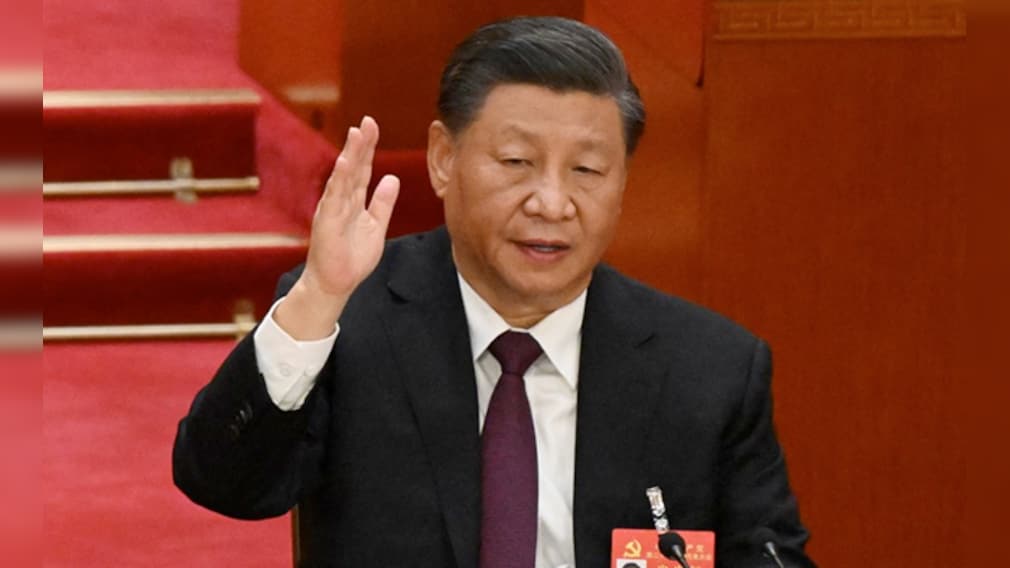
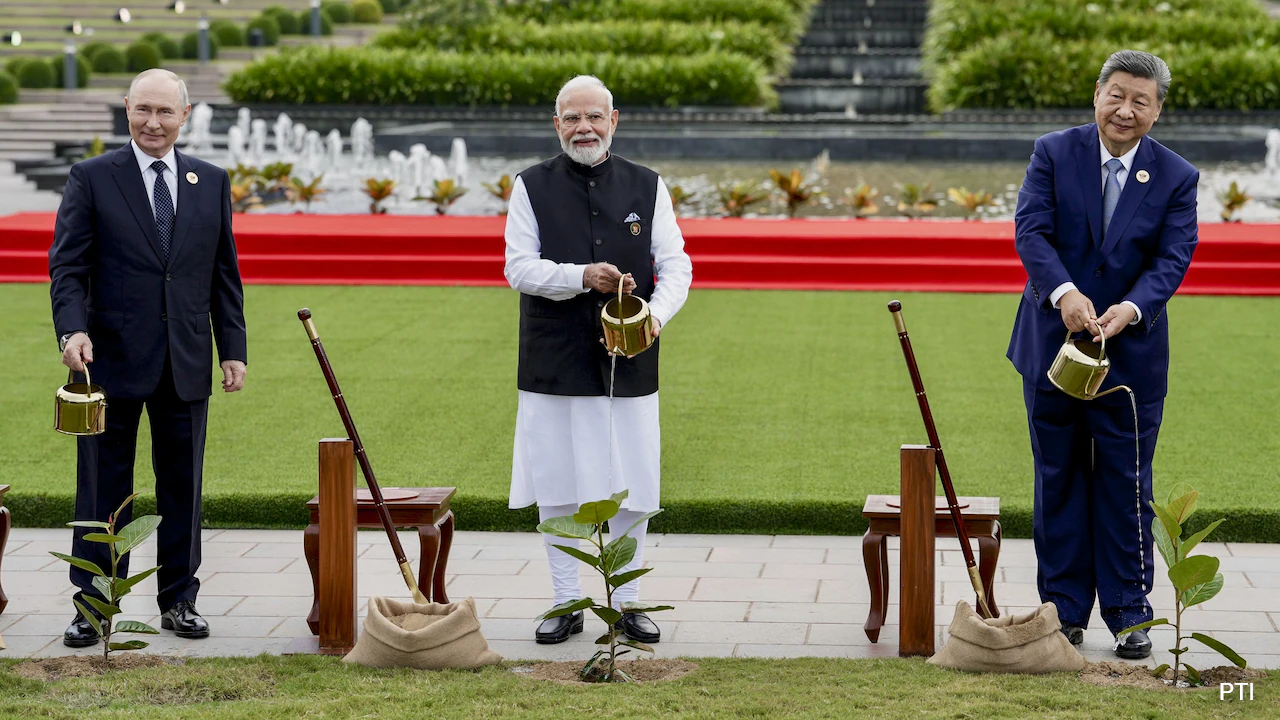
China's President Xi Jinping arrived in India for the 18th BRICS Summit under Delhi's chairship. Not only was his visit consequential for being the first in seven years, but it also came at a time when India and China are going through the motions of normalisation. China's delegation, too, was reported to be as large as 400 people, and its key participants were Cai Qi, Politburo Standing Committee member and director of the CPC Central Committee's General Office, and Wang Yi, Politburo member and one of China's longest-serving foreign ministers.
Clearly, this doesn't seem to be just about niceties anymore, and what China aims to gain from BRICS is more institutional than rhetorical. There are three key aspects to this momentum, especially in the run-up to China's own presidency starting January 2027.
Firstly, BRICS is like the economic pillar of a broader Chinese argument about who gets to write global rules. At the recent SCO Summit in Bishkek, Xi described the SCO as an organisation whose "heart beats with the Global South", and placed BRICS "at the forefront" of this perceived grouping of developing economies. Such an articulation does two things - it pitches China as the voice of the so-called Global South and furthers the idea that the BRICS is competing with the West head-on.
Consequently, the grouping becomes a platform for Beijing to gradually normalise the renminbi for local currency trade to further the cause of "de-dollarisation", and to put forth the Global Development Initiative (GDI) as the way forward for creating a "no-one-left-behind" economic model - both of which evaded the 2026 New Delhi Declaration. One must do well to remember that it was at the 2022 BRICS Summit that China announced that all of its international aid and economic programmes are now under the GDI umbrella. Members have no choice but to accept that proposition, seeing as China is also the largest trading partner for them all. Hence, it is likely that Beijing's prioritisation of the agenda items will continue.
Secondly, China invests in BRICS's organisation with almost a "too big to fail approach", making Beijing its most proactive, normative and institutional entrepreneur. It was Xi who proposed the "BRICS Plus" model at Xiamen in 2017, the format that made the 2024 and 2025 expansions conceptually possible. It was China that pushed for the New Development Bank (NDB) in 2014, and it is based in Shanghai. When the BRICS Contingency Reserve Arrangement (CRA) was announced, China lifted its weight by contributing USD 41 billion of its total USD 100 billion corpus, with India, Brazil, and Russia contributing USD 18 billion each, and South Africa, USD 5 billion. And the BRICS Partnership on New Industrial Revolution innovation centre, announced by Beijing at the 2020 Summit presided over by Russia, has, per Xinhua's figures, facilitated over a hundred cooperation projects worth more than 62 billion yuan (USD 9.24 billion).
Thirdly, and perhaps most importantly, if BRICS can move forth rapidly towards settling more and more trade in local currencies (especially the RMB), and de-risking the NDB and the CRA from conducting their business in dollars, there is no other insulation like it. The implications of SWIFT sanctions, and the costs of complying with a dollar-dominated world, are concerns Russia and Iran have lived, and China obviously fears.
The 2026 Summit
This brings us to the signalling around China's participation in the 2026 Summit. Foreign ministry spokesperson Mao Ning framed Xi's participation as putting forward China's initiatives and "charting the course for the high-quality development of greater [i.e., expanded] BRICS cooperation". A Global Times editorial published as Xi departed was more up-front about China's 2027 goals, promising a presidency built around "genuine multilateralism", alignment of development strategies, and the familiar suite of Chinese initiatives - Belt and Road, and the Global Development, Security, Civilisation and Governance Initiatives. Deliverables, it suggested, would come in the areas of the digital economy, artificial intelligence, green development, poverty reduction, and agriculture. On the bilateral track, Ambassador Xu Feihong spoke of the standard formulation about handling differences properly and being "partners helping each other succeed".
There are three takeaways from China's positioning and signalling that India should focus on when attempting to mitigate Beijing's influence in the room.
One is Beijing's ability to capture the agenda across multilateral fora, including BRICS and the SCO. As it takes on the presidency for next year, China's stated 2027 programme is a list of its own branded initiatives. Because BRICS works by consensus, a lot of India's diplomatic energy next year will likely be spent deciding, paragraph by paragraph and initiative by initiative, what it is willing to endorse within a grouping it also founded.
The second is the currency question, which is where the gap between members is widest. The Indian government has been consistent and unambiguous on the question of de-dollarisation, by arguing that Delhi has no policy of replacing the dollar and that global economic stability rests on its reserve status.
Even as was evident from Delhi's push for Central Bank-Backed Digital Currencies (CBDCs) before the 2026 Summit - a proposition that also evaded the Declaration - India does not oppose de-risking from the vagaries of the global financial market. But the BRICS 2025 declaration's call for acceptable local-currency financing mechanisms was still viewed in Washington as de-dollarisation. So for China, the direct tussle with India is over the extent to which financial alternatives can go, and its flexibility is motivated by factors India has no luxury of adapting to.
Finally, it is a fact that China's GDP exceeds that of the rest of the membership combined. It is all of the members' largest trading partner, and, as established above, the economic weight carrying the BRICS's tangible assets. So, India cannot possibly hope to match it buck-to-buck. But the onus is also on Delhi to put weight behind its words, and enhance its capital commitment to the grouping. This will require deep-seated structural reforms, ranging from strengthening the rupee to significantly expanding exports - all easier said than done.
(Anushka Saxena is Associate Fellow, Geostrategy Programme, The Takshashila Institution. Views expressed are personal and do not represent those of the Institution)
Disclaimer: These are the personal opinions of the author
-
Opinion | The 'AIPC' Was Once Congress' Boldest Idea. What Happened To It?

Tharoor, to Chakravarti, to Yaskhi now, the fate of a Congress 'experiment' that started in 2017 will tell you a lot
-
Woman Biker Hit, Air Force Veteran Attacked: The Lawlessness In Gurugram
What gives confidence to some elements in Gurugram to break the law again and again in full public view and on camera?
-
Opinion | When The Feed Braves The Flood
NDTV drops the 24x7 and stakes its next chapter on presence as it inaugurates a new identity
-
The Politics Of Blue: Why Akhilesh Yadav-vs-Mayawati Over A Colour Is Just One Shade Of History
A movie starring Rajinikanth tells us how colours can carry meaning beyond what meets the eye. The latest row over Akhilesh Yadav's party adopting blue, and Mayawati objecting, can be a starting point for understanding the many shades of history.
-
2 Indians Survived 9/11, Then American Justice System Became Their Nightmare
Pulled off a Texas train hours after 9/11, two Indian men were plunged into America's largest terror manhunt.
-
Opinion | Building BRICS In New Delhi
For India as the host nation, chairing the summit tests the core tenet of its modern foreign policy: strategic autonomy.
-
Can India 'Mediate' Between Iran And UAE At BRICS? Gulf Envoy Suggested It Once
At the very start of the Israel-US war on Iran, it was a UAE diplomat who had suggested as much.
-
I Went Looking For A PG In Delhi's Kamla Nagar. Here's What I Found
In every PG visited by NDTV in Delhi's Kamla Nagar, the conversation began with amenities. Nothing in the sales pitch was about how secure the building was.
-
Opinion | How Trump Is Doing More For BRICS Than Its Critics Ever Could
By trying to bully BRICS countries into submission, Trump may be giving the grouping the very relevance he is trying to deny