DK Shivakumar Comes With Mastery Of Delhi Networks And Karnataka Grassroots
DK Shivakumar is a politician who mastered the art of networking in Delhi's high-power circuits just as effortlessly as he managed the grassroots electoral math in his home constituency, where he has won eight straight terms
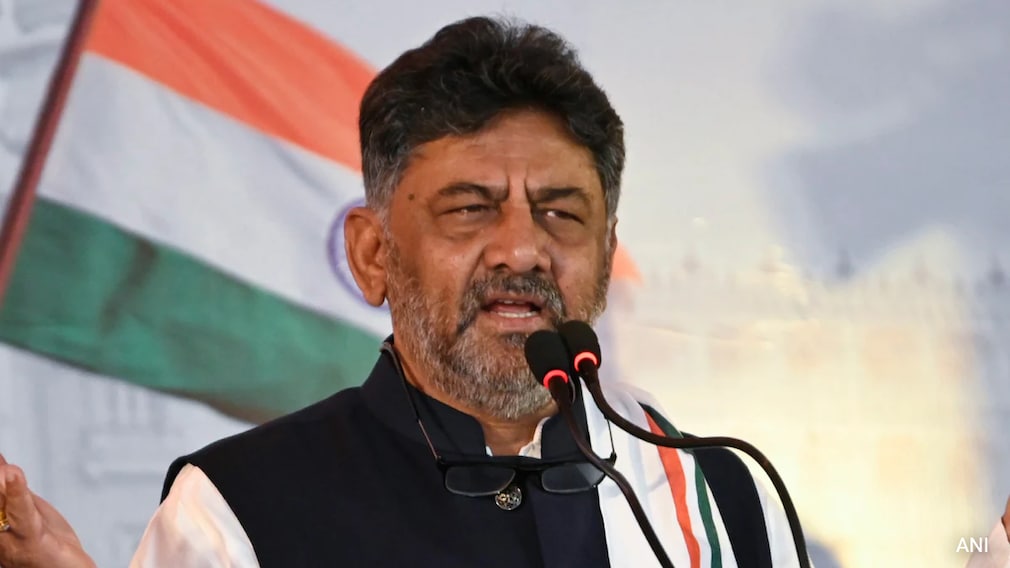
DK Shivakumar was always candid and casual in conversations. You could ask him a question and expect a direct answer. Over the last three years, he mastered the art of answering the question of whether he will get his chance to be chief minister in so many different ways. All of it was designed to keep the speculation and power churn simmering, without taking it to the point of rebellion. He was more candid off the record, but he was clear enough on the record to make one thing obvious: Siddaramaiah will have to give way at some point. He has been patient and persistent, affecting what is perhaps the smoothest transition of power witnessed in Karnataka politics.
Chief ministers do not relent and resign easily. More so, they do not allow a constant challenger to take charge without a fight. That this transition is happening in Karnataka in the manner it is - without acrimony - is as much a credit to Shivakumar's patience and persistent tenacity as it is to the Congress high command's ability to ensure Siddaramaiah stepped aside and in no small measure credit to Siddaramaiah for honouring his commitment for a mid term transition made in 2023 soon after the Congress's victory.
Shivakumar has had a long journey in Karnataka politics. Back in 2002, during the tragic abduction of Karnataka minister H Nagappa by the notorious forest brigand Veerappan, I remember a Bengaluru journalist sharing Shivakumar's number with me, labeled simply as "SM Krishna Shivakumar." He was then the MLA from the Sathanur assembly seat (in the erstwhile Kanakapura Lok Sabha constituency) and was one of former Chief Minister and the US-returned charismatic Congress leader SM Krishna's confidantes and proteges. Krishna, who hailed from Maddur in Mandya district, was the erudite face of the Congress who led it to a win in 1999, was a poster for brand Bengaluru and was a close confidante of Sonia Gandhi. Already a three-time MLA by then, Shivakumar was well-known as one of the key power centres in the Krishna government. He saw himself as nothing short of Krishna's family and political heir and in later years, Shivakumar's daughter would marry Krishna's grandson. Like Krishna, Shivakumar also built himself as the Gandhi family loyalist.
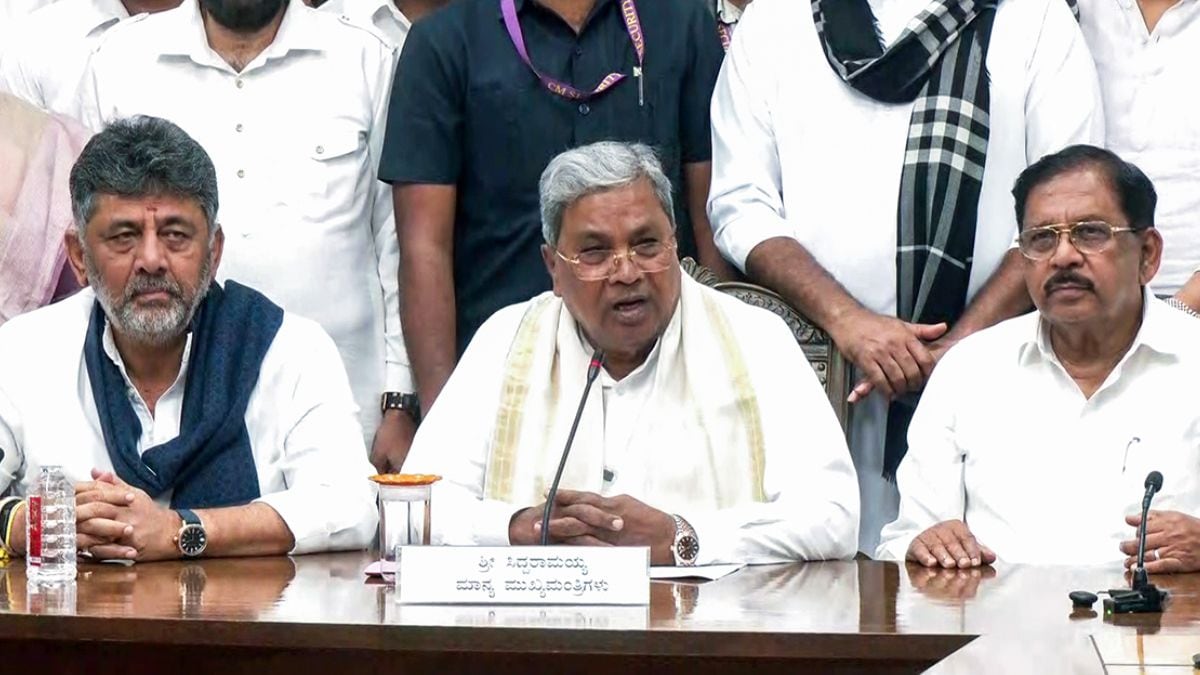
The defeat of the Congress in 2004 and the subsequent power churn - where the party first allied with the JD(S) to form the short-lived Dharam Singh government and later inducted Siddaramaiah to lead it on the floor of the house - brought a shift in the Congress's social coalitions. The party gravitated away from the Vokkaliga strongholds it had built under Krishna toward Siddaramaiah's AHINDA (backward classes, minorities, and Dalits) combination. This was a return to the emergency era Devraj Urs's social coalitions that the party had built. The Janata party had occupied the Lingayat sect and Vokkaliga bases till Krishna's arrival.
Consequently, Shivakumar had to fight his power battles within the Congress under Siddaramaiah's shadow. I remember, on the day of the 2013 election results at the KPCC office, he made himself highly visible to the press and pitched himself as a contender for the chief minister's chair. He wasn't a serious candidate back then, but it reiterated that he had long nurtured this ambition and was entirely open about it. At that time, he had certainly earned his right to be in the cabinet as a six-time MLA. However, Siddaramaiah initially denied him a spot, only conceding later under intense pressure from the high command.
Shivakumar has been biding his time ever since. His definitive moment came when he was appointed the state Congress president. This happened after he demonstrated absolute loyalty to the party in the face of intense Enforcement Directorate (ED) raids and subsequent arrest. Loyalty was rewarded with the KPCC reins in 2020.
In 2022, when the author Nalin Mehta (who wrote The New BJP) and I went to meet him, the state Congress president happily received a copy of the book analysing how the BJP became such a formidable election winner. He even told us, "I will ask my fellows and managers to read it. They need to know the BJP to beat it." He then confidently declared, "At any cost, I will make sure Congress wins in 2023. It's a do-or-die battle."
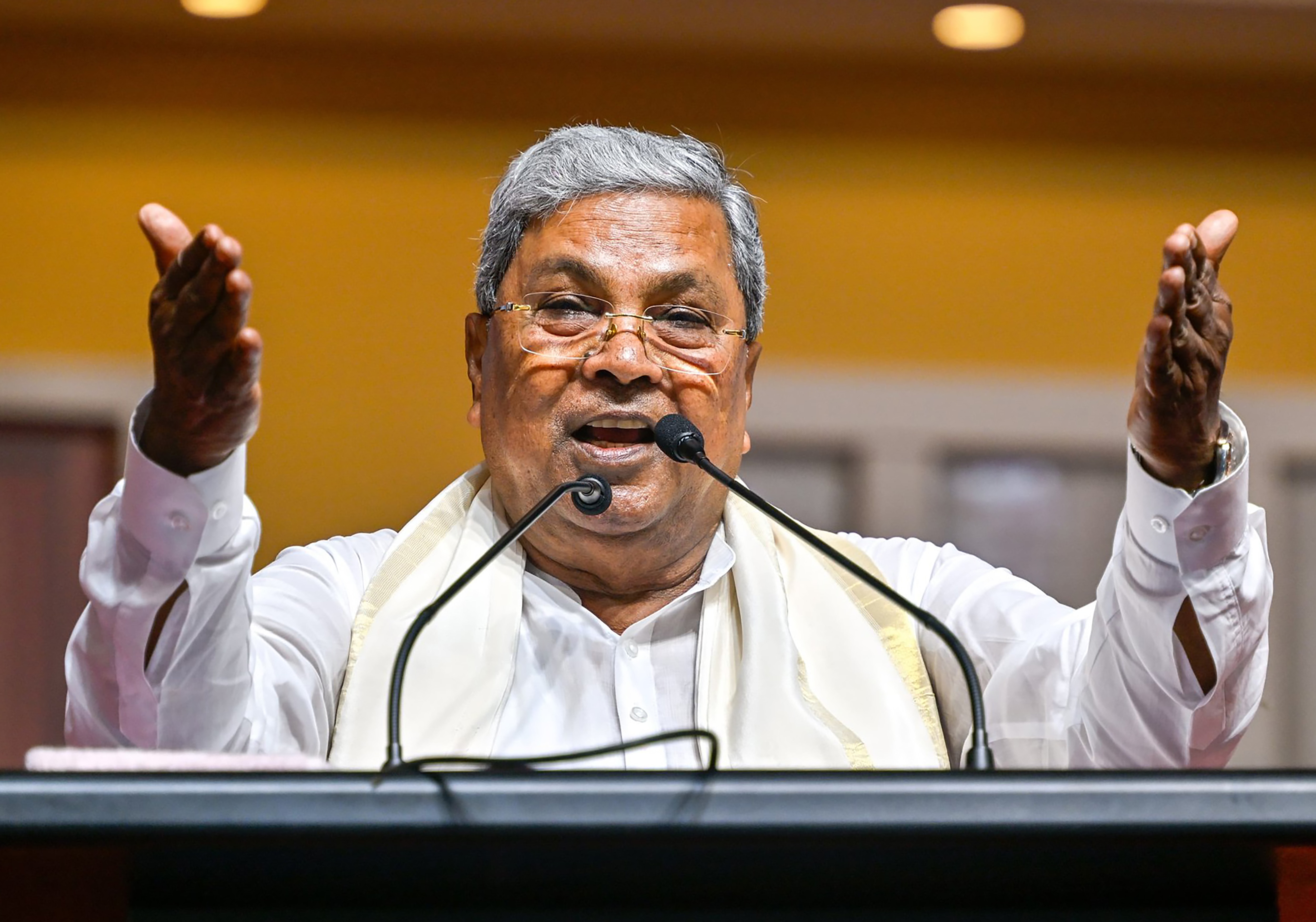
He repeatedly proved his organisational skills, financial muscle, and sheer ability to win elections. While Siddaramaiah was the mass leader and Backward classes face, Shivakumar was the organisational engine. He had already proved his ability to safeguard MLAs, fighting off horse-trading and poaching attempts even for party units in other states. All of this fed into the formidable "DKS narrative" that he has carefully crafted and fueled over the years.
This is a politician who mastered the art of networking in Delhi's high-power circuits just as effortlessly as he managed the grassroots electoral math in his home constituency, where he has won eight straight terms.
During the run-up to the 2023 assembly elections, Shivakumar told a group of editors and journalists that the Congress would win 136 seats. It won 135 and one seat was Congress backed independent!
Since that day, he has been relentlessly demanding his time at the helm as chief minister.
That time has finally come.

He took oath as Chief Minister today.
It will be a true test for the eight-time MLA and strongman from Kanakapura as he navigates an out-of-power Siddaramaiah and manages Karnataka's delicate socio-political equations - dynamics he knows and has exploited so well. It will take every ounce of his political acumen, maverick maneuvering, and muscle to decisively move past the Siddaramaiah legacy and march the Congress successfully into 2028 and 2029.
(The author is Executive Editor, NDTV)
Disclaimer: These are the personal opinions of the author
-
Blog | 'Baap Da Brat': Kerala Mini Cooper Crash, And Why 'Daddy' Can't Keep Saving You

There are three things you should never underestimate in India: the power of 'jugaad', the elasticity of the law, and the confidence of a 'Baap da Brat' who believes his Papa Posh can fix absolutely anything.
-
Opinion | 'Say Our Name': Why A Tiny Island Nation Wants The World To Get Its Name Right
Standing before the UN hall of nations, Naoero President David Adeang asked the world to unlearn its comfortable habits and speak a restored truth.
-
TVS Succession Row Explained: Why Venu Srinivasan's Family Is Divided Over Wealth
TVS Family Dispute: TVS Holdings is a key entity because it owns a controlling stake in TVS Motor Company. It owns 50.26% of TVS Motor.
-
Opinion | The US Is Showing India Just How Cheap Its 'Friendship' Is
Can local talent fully replace Indian contribution? Why is the US leading in setting up Global Capability Centres in India - over 60% - and pocketing the IP?
-
Jantar Mantar Tells Time. The Clock Just Stopped On Its Time As An Iconic Protest Site
On Monday, October 12, 2026, Delhi Police denotified Jantar Mantar Road as a designated site for demonstrations. The Supreme Court had given it a nudge. Here's how history met politics on that street for decades.
-
Opinion | Saudi Airport Attack, And Why Pakistan Keeps Biting Off More Than It Can Chew
For all those who were envious of Pakistan's 'new status' as "mediator extraordinaire", here is a reality check
-
Opinion | Visa Shocks To Racist Attacks, When Did America Come To Hate Indians So?
Sometimes it is about H-1B visas. Sometimes it is jobs. Sometimes it is "foreigners." Sometimes it is about temples. The language of the attack varies, but the message is consistent
-
How El Nino And Warming Oceans Could Shape Earth's Climate In 2027
From changing ocean currents to extreme weather, scientists are watching a combination of climate signals that could influence temperatures, rainfall and ecosystems in the months ahead.
-
Blog | Nana Patekar, And The Sharp, Lasting Sting Of His 'Plain-Speak'
"Subah ghar se niklo, bheed ka hissa bano..." Nana Patekar's characters often spoke with the bluntness of men who had little patience for pretence. Just like Nana himself.