Opinion | Gen Z Can Topple A Minister. Why Can't They Enter Parliament?
India's Gen Z can vote at 18, graduate soon afterwards, and even hold bureaucratic positions after 21. What they still can't do is contest elections before they turn 25.

Dharmendra Pradhan's resignation carries an irony that Delhi's political durbars should not miss. A politician whose ascent began in student politics has been forced out of the Education Ministry by students who had no party office, no famous surname, or invitation to the national high table.
The Cockroach Janta Party (CJP) converted an insult into an identity and an examination scandal into a larger argument about fairness. The ruling NDA government first treated the agitation as a policing problem. It then negotiated, conceded the protesters' principal demands, and accepted Pradhan's resignation. Pralhad Joshi, another senior Cabinet hand, has been given additional charge of Education.
The resignation matters. But India must understand the larger message: young people should not have to besiege Parliament to be heard inside it. Telangana Chief Minister A. Revanth Reddy put the argument in memorable political shorthand: India's youth should not merely march from Jantar Mantar towards Parliament; they should be enabled to move from sadak se Sansad, that is, from the street into the legislature itself.
Not Yet A Generational Transfer
The immediate official response has been administrative continuity: one veteran replaces another, at least temporarily. Yet the crisis was not merely about who occupied Shastri Bhawan. It was about the distance between those designing India's education system and those living through its examinations, coaching factories, paper leaks, delayed recruitment, and precarious passage from degree to employment.
The next full-time Education Minister should, therefore, be chosen with more imagination. So should the next minister responsible for information technology. These ministries govern the terrain on which Gen Z lives: education, artificial intelligence, data, online speech, platform work, skills, and employment.
In fact, many in the Congress and the INDIA alliance are now suggesting that a future Opposition-led government should entrust the education portfolio to a Gen Z leader.
Young Country, Old House
India possesses the world's largest Gen Z cohort. More than 500 million Indians, roughly 35% of the population, are between 10 and 29. Yet, only four members elected to the present Lok Sabha were identified as Gen Z. That is less than one per cent of a House whose average age is 56 and which is among the oldest Lok Sabhas India has elected.
The mismatch is not cosmetic. Representation influences what receives urgency.
India permits a citizen to vote at 18 but requires that person to wait until 25 to contest for the Lok Sabha or an Assembly, and until 30 for the Rajya Sabha or a Legislative Council. The argument is older than the Republic. In the Constituent Assembly, Shibban Lal Saxena had warned against excluding exceptional young Indians, while BR Ambedkar defended higher age requirements, particularly for the Upper House.
The founders made their judgment in the conditions of 1949. But does respect for their wisdom does not require every threshold to remain frozen for eternity? The world, after all, has evolved.
Singapore permits citizens aged 21 to contest parliamentary elections. Since its Prime Minister must command a parliamentary majority, a 21-year-old is theoretically eligible for the office. Singapore has not had a 21-year-old prime minister, but the relevant point is simple: its law does not declare political adulthood to end at the voting booth.
The Indian contradiction is difficult to defend indefinitely. A citizen can vote at 18, graduate soon afterwards, sit for the civil services at 21 and, in exceptional cases, acquire substantial administrative responsibility before becoming legally eligible to contest an Assembly or Lok Sabha election. The Republic is willing to trust a 21-year-old with the machinery of the state, but not yet with the possibility of securing a popular mandate.
Can Parliament Act?
Reddy has repeatedly proposed lowering the minimum age for contesting assembly elections from 25 to 21 and has spoken of an Assembly resolution urging a constitutional amendment. Telangana cannot make this change alone: Articles 84 and 173 prescribe the qualifications, so Parliament must act. But a state government can create the political pressure that makes Parliament act.
Reddy has announced that a special session of the Telangana Legislative Assembly and Legislative Council will be convened in the first week of August to adopt a resolution seeking 21 as the minimum age for contesting the Lok Sabha and State Assemblies, and 25 for the Rajya Sabha and Legislative Councils. The resolution is to be forwarded to Prime Minister Narendra Modi and the Union government.
The proposal retains a distinction between the directly elected Houses and the Upper Houses, while lowering both thresholds. It is more considered than a blanket demand to abolish every age qualification.
The argument draws deliberately on Rajiv Gandhi's decision to lower the voting age from 21 to 18 through the 61st Constitutional Amendment. The amendment's statement of objects argued that politically conscious young people should be allowed to become part of the political process.
Another Congress-era precedent comes to mind. Under PV Narasimha Rao, the eligibility age for offices in urban and rural local bodies, including mayoral and Zilla Parishad leadership positions, was lowered from 25 to 21. This helped create space for very young representatives in local government, including the election of a 21-year-old mayor in Thiruvananthapuram. younger candidates later. The unfinished step lies in Parliament and the assemblies.
But parties need not wait for a constitutional amendment. They can commit a meaningful share of tickets in every state to candidates below 35. They can open district and state organisations to credible internal elections, and place young legislators in portfolios with real authority rather than confining them to youth affairs, sports, and ceremonial responsibilities.
Open The Gates, Not Merely The Gallery
Lowering the candidacy age to 21 would be a start, not a cure.
Indian politics is expensive, dynastic, and organisationally closed. Without changes in campaign finance, internal party democracy, and candidate selection, lowering the threshold may simply allow younger members of established political families to enter four years earlier. A youthful surname is not a youth revolution.
Nor should the CJP be romanticised. A successful protest is not automatically a programme for governance. Virality is not organisation, and irreverence is not ideology. Young politics can be intolerant, impulsive, and vulnerable to manipulation, just as old politics can be cynical and complacent.
The answer is not to hand the Republic to one generation. It is to stop excluding that generation from meaningful power. Political parties should publish the age profile of their candidates, set measurable youth targets for tickets, and finance first-generation entrants who do not possess family wealth or an inherited constituency. Legislative fellowships should lead somewhere more consequential than research assistance. Parliament should debate lowering the age to 21 for the Lok Sabha and assemblies, while retaining a higher threshold for Upper Houses if it wishes to preserve their revisory character.
The CJP achieved what established politics had failed to do. A minister's resignation is evidence that young citizens possess political power even when the system denies them anything approaching proportional representation. But thought protests can remove a minister, redesigning an institution needs politics. The real tribute to those who came to Jantar Mantar would not be another speech celebrating their courage. It would be to open the doors through which power is entered. India trusted 18-year-olds with the vote in 1989. In 2026, it should begin trusting 21-year-olds with the possibility of office.
(Rasheed Kidwai is an author, columnist and conversation curator)
Disclaimer: These are the personal opinions of the author
-
BJP Leader's Singer Wife, A Kabir Bhajan, And Some 'Jantar Mantar': How 15th Century Saint Entered 2026 Row

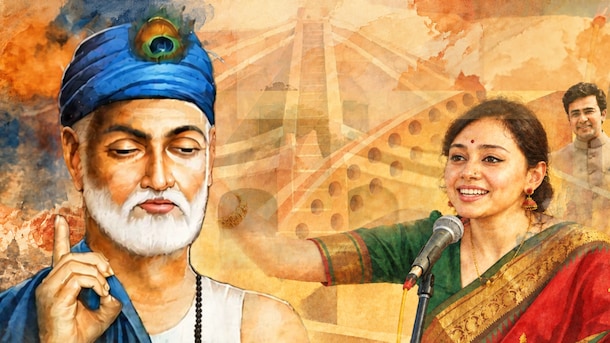
A video of Sivasri Skandaprasad's singing performance went viral, interpreted as a dig at protests at Delhi's Jantar Mantar. What she's singing is actually attributed to the saint-poet Kabir, and he did not really mean that particular "jantar mantar". He meant something far more profound.
-
Opinion | Sardar Patel, And The Art Of Holding A Nation Together
A true Gandhian, he reminded his countrymen that gaining freedom from foreign rule was merely the first step; true internal Swaraj required much, much more.
-
Opinion | How India Is Making Its Stock Market An Expensive Place To Invest
FPIs sold Rs 1.66 lakh crore of Indian equities in 2025 and a record Rs 3.08 lakh crore in 2026 through October 12. Foreign ownership of the Indian market is at a 15-year low
-
Jail Is No Bar: How Gangsters Call The Shots From Inside Prisons
Jail can become a safe haven from enemies, a recruitment ground for fresh gang members and, in some cases, a command centre for criminal operations
-
From King Edward III To Neha Bora, A 1361 Law Lives On In 'Peace Bonds': NDTV Explains
CJP leaders Abhijeet Dipke, Saurav Das, and Ashutosh Ranka signed peace bonds; two of them even faced jail over an alleged breach, while AISA's Neha Bora questioned such a bond's very logic. Here's what a peace bond is, and what the questions are.
-
Air Force Golf Course Near PM House Closed. How This Land Has Seen Many Turns Of History
The Air Force Sports Complex, which includes the golf course, is the latest property near the Prime Minister's residence set to be taken back this year, as the land is owned by ministries.
-
Opinion | How A Poland 'Experiment' Could Change India's Defence Industry
Europe is spending billions on arms in a historic rearmament drive. Indian firms can cash in. But there's a catch
-
Opinion | The Muslim World Is Seeing An Unexpected 'Experiment' - In Kazakhstan
The country has a long history of using mediation to mitigate conflict; now, it has added another, much-wanted dimension to it.