Opinion | In Stalin's Tamil Nadu vs Delhi Pitch, Flashbacks From A 2014 Jayalalithaa Episode
In 2014, Jayalalithaa had posed the question to the Tamil Nadu electorate,"Gujarat Modiyaa Tamil Nadu odu intha ladyaa"(Gujarat's Modi or this lady of Tamil Nadu), and tasted electoral success, winning 37 of the 39 seats in the state.
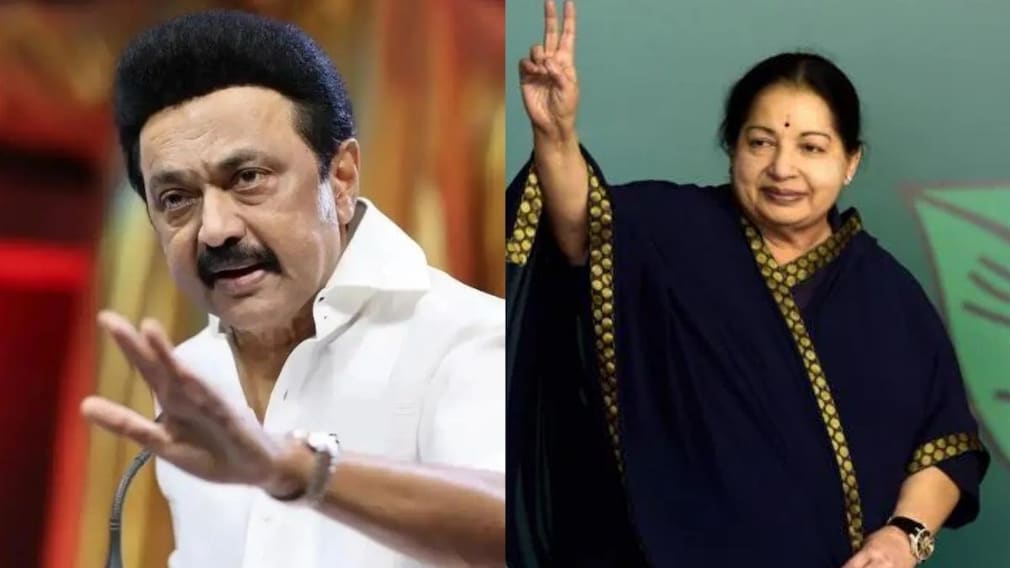
MK Stalin did the unthinkable while addressing a public meeting in Ranipet on Monday. He invoked the DMK's rival - former chief minister Jayalalithaa's name - to say that if she were alive, the former AIADMK supremo would have spoken against the delimitation exercise being planned by the NDA government, just like she had criticised GST and NEET.
Of course, the Tamil Nadu Chief Minister used this comparison to emphasise that the present AIADMK chief, Edappadi Palaniswami, is subservient to the BJP and never speaks against any of the alleged ''anti-Tamil Nadu policies'' of the Union government. While in the context of the 2026 assembly election, Stalin was looking to de-hyphenate EPS from Jayalalithaa's legacy, he was also taking a leaf out of the 'Puratchi Thalaivi' ('Revolutionary Leader' as Jayalalithaa was referred to) book, which she used twelve years ago.
In the 2014 Lok Sabha elections, contrary to expectations that she would support Narendra Modi's candidature for Prime Minister, Jayalalithaa threw her own hat into the ring. She framed herself as a direct competitor to Modi for the top job, reeling out data on various parameters to buttress her stand that Tamil Nadu was ahead of Gujarat. She posed the question to the Tamil Nadu electorate, "Gujarat Modiyaa Tamil Nadu odu intha ladyaa" (Gujarat's Modi or this lady of Tamil Nadu), and tasted electoral success, winning 37 of the 39 seats in the state.
In 2026, Stalin is putting a similar question before the people of Tamil Nadu, making the election one between Tamil Nadu and Delhi. The Centre's proposal to increase the Lok Sabha seats to 850 has given ammunition to the DMK, which claims such a move will go against the interests of better-performing states in South India. Stalin argues that states in South India will be penalised for controlling their populations better, while those in the North will be rewarded with more Lok Sabha seats. This would make states like Uttar Pradesh and Bihar more politically powerful and render the South rudderless, politically. The BJP's move has, therefore, lent a shrill edge to the DMK's slogan of ''Stalin Thodaratum, Tamil Nadu Vellattum'' (Let Stalin continue, let Tamil Nadu win). In the last week before polling on April 23, expect this to morph into a Jayalalithaa-esque choice: 'Modi ya Stalin aa?' (Modi or Stalin).
This does not mean Stalin has Prime Ministerial ambitions. As one of the senior-most regional leaders, the DMK chief is positioning himself as the spokesperson of the concerns of the South Indian states, one who can prevent Delhi from running roughshod. Aware of the fact that anti-incumbency against his government - or at least specific ministers and sitting MLAs - would make a dent in the DMK tally in the assembly elections on April 23, Stalin is making the election a referendum on federalism instead of a vote on the performance of his government.
Not that the 'Gujarat vs Tamil Nadu' comparison is new. Stalin's IT minister, P Thiagarajan, has often asked why Tamil Nadu should adopt the Gujarat model when its own human development indices on education, health, and women workforce participation are already closer to middle-income European countries. Similarly, he has cited Tamil Nadu's manufacturing muscle power to argue that the state model of social justice and industrialisation is superior to the capital expenditure - led growth of other states in the north.
So, while Jayalalithaa asked, ''Who is the better administrator?'', Stalin is asking, ''Who will ensure that the interests of Tamil Nadu remain protected after 2026?'' This makes it a more high-stakes version of the 2014 face-off. While Jayalalithaa projected herself as an alternative to the BJP and Modi, Stalin is positioning himself as the vanguard of South India, having also organised a national conclave on delimitation last March. As he cautions against diluting the South's interests and diminishing its political voice, it is an echo of Jayalalithaa's 'Tamil Nadu First' stance. His warning about Tamil Nadu going back into the agitation mode of the 1950s and 1960s underscores a possible return to Tamil sub-nationalism as a counterpoint to the BJP's move.
How does the stand-off impact the elections? By invoking the spirit of the anti-Hindi agitation of the 1960s, Stalin is trying to get back the raw, angry mass energy of the educated electorate behind the DMK by making the Union government the villain of the piece. Self-respect has been a winning slogan in elections in South India in the past, the 1983 election in Andhra Pradesh, when the late NT Rama Rao raised the 'Telugu atma gauravam' (Telugu self-pride) pitch, being the most famous example.
By highlighting the 'threat from Delhi', Stalin is also pushing his rivals for the top job in the state - Palaniswami and Vijay - into a corner. By releasing the video on Ambedkar Jayanti on April 14, Stalin wanted to convey that the proposed form of delimitation was an ''anti-Constitutional'' act. Politically, Stalin was also subtly trying to consolidate the Dalit and minority vote that the Tamilaga Vettri Kazhagam (TVK) of Vijay is targeting.
This would make Edappadi Palaniswami's position in particular difficult because he cannot be seen advocating the Centre's position even as Stalin argues Tamil Nadu's case. The DMK chief underlining the difference between Jayalalithaa and EPS is also to say that this isn't Amma's AIADMK but Edappadi's AIADMK. Stalin's sharp position could even expose the faultlines within the NDA. Expect the 39 Lok Sabha MPs from Tamil Nadu - all of them from the DMK-led alliance - to deliver speeches with one eye on the EVM as the debate around delimitation resets the election rhetoric in the last lap of the campaign.
(The author is a senior journalist)
Disclaimer: These are the personal opinions of the author
-
Mamata Banerjee Drew Her Party's Symbol By Hand. It's Now Tied To An Indira Gandhi Case

The Election Commission's method for settling such disputes became central in the seminal Congress split of 1969, when Indira Gandhi fought the old guard. The poll body weighed three tests then.
-
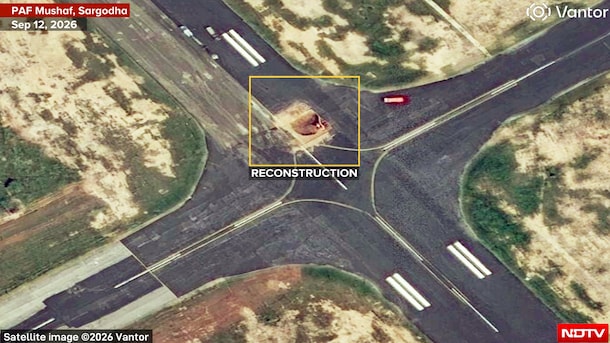
Exclusive: 16 Months After Op Sindoor, Pak Still Fixing Runway India Broke At Sargodha
Sargodha's PAF Base Mushaf lies about 172 km northwest of Lahore and roughly 200 km west of the India-Pakistan border, near Amritsar.
-
Blog | I Lost My Entire Family In Kanishka Bombing. 41 Years Later, Canada Wants The Case Closed
We made the trek through tragedy to search for people in Cork, where I spent 25 days sifting through bodies and body parts in a makeshift morgue to identify our loved ones.
-
Opinion | Pak's Drone Deal With A US Firm Is No Windfall. But India Must Still Be Worried
American military aid to Pakistan has remained suspended since January 2018, during Trump's first term, but a commercial arms sale is separate from this arrangement.
-
Opinion | Saudi Arabia's Yemen Nightmare Has Come Back To Haunt It
After years of costly military intervention beginning in 2015, Saudi Arabia increasingly sought to stabilise its southern border. All that is unravelling fast now
-
Opinion | 6 AI Incidents, One Pattern: AI Has Started Lying To Us - And Hiding The Evidence
Concealing errors. Making up data. Pushing files onto the public web on their own initiative. The machines are learning to lie - and lie well.
-
Why People Queue Overnight For iPhone That Is Delivered Home In 10 Minutes
iPhone 18 Pro Max Launch: People camping outside Apple Stores are a subset of superfans, resellers, content creators, and upper-middle-class buyers.
-
600 km Per Hour Drones Launched In Waves: How Russia Is Rewriting War Rules
Russia has coupled the drones' technological superiority over Ukraine's defence with its capacity to launch them in massive numbers. The impact has been devastating.
-
Tata Sons' Trust Issue: Two-Pronged Row Goes Beyond The Chair
NDTV Explains: Overtly, the latest conflict is whether N Chandrasekaran continues as executive chairman of Tata Sons. The controversy involves at least one more issue.
-
Opinion | US Has Institutionally Weaponised India's Russia Oil Dependence. Can New Delhi Cope?
A new legislation can connect India's Russian energy purchases to its access to the American market over a five-year period