Opinion | The Rise Of The 'Outsider': Is Rahul Gandhi Giving Up On His Own Colleagues?
The rise of Rajendra Pal Gautam says a lot about this new doctrine.
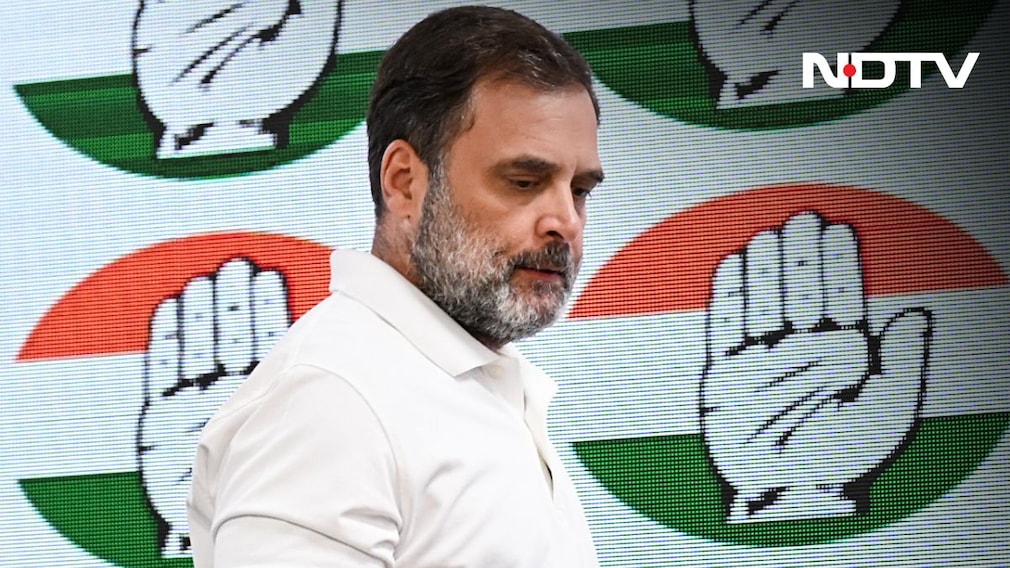
In every phase of Rahul Gandhi's politics, there has been one recurring complaint from within the Congress: he is more comfortable with outsiders than with Congressmen.
The word "outsider" here does not always mean a person who joined the party yesterday. Sometimes it means someone outside the traditional state-unit hierarchy. Sometimes it means a technocrat, activist, ex-bureaucrat, professional, NGO-minded political worker, or private aide, who did not rise through the familiar Congress route of district committee, Youth Congress, PCC, AICC, factional loyalty, and electoral apprenticeship. At other times, it simply means someone who has Rahul's trust but not the wider party's respect.
The latest example is Rajendra Pal Gautam.
The Congress has appointed the former Aam Aadmi Party (AAP) leader and Dalit activist as AICC in-charge of poll-bound Uttar Pradesh. He replaces Avinash Pandey. Gautam is also head of the Congress's Scheduled Castes department and is seen in party circles as part of Rahul Gandhi's renewed social justice push. But the choice has left many Congress leaders stunned.
Uttar Pradesh is not an ordinary state for the Congress. It is where the party was born as a national force, where the Nehru-Gandhi family's politics acquired mass legitimacy, and where its decline has been most humiliating. In 2019, when Priyanka Gandhi entered formal party office as AICC general secretary, she was placed in charge of eastern Uttar Pradesh while Jyotiraditya Scindia handled the western region. Seven years later, the party's point man for the state is Rajendra Pal Gautam, a recent entrant from AAP, not a full-fledged AICC general secretary or a Congress Working Committee heavyweight.
This is not merely an appointment. It is a message. Rahul is saying that the old Congress structure has no automatic claim over the future. He is also saying that when it comes to ideological signalling, social justice, Dalit outreach, and anti-BJP confrontation, he would rather trust a convert than a tired insider.
The question is whether this is courage, confusion, or another form of coterie politics.
Why Rahul Trusts The 'Outsider'
Rahul Gandhi's preference for outsiders has a psychological and political history. He entered active politics surrounded by the old Congress: district satraps, faction managers, family retainers, PCC veterans, Delhi fixers, courtly advisers, and electoral brokers who had mastered survival long after they had forgotten renewal. Many of them treated him as an inheritance, not as a leader. They were deferential in public, dismissive in private, and transactional always. It is not difficult to see why Rahul grew suspicious of them.
To him, the old Congress represents compromise: with power, caste elites, BJP-lite politics. The outsider, by contrast, appears uncorrupted by Congress decay. This is why men such as Sasikanth Senthil, Sachin Rao, Krishna Allavaru, K Raju, Praveen Chakravarty, Alankar Sawai, K B Byju, and Kanishka Singh have acquired varying degrees of importance in Rahul's world.
They are not the same kind of people. Senthil is a former IAS officer who headed the Congress organisational war room for the 2024 Lok Sabha elections and later became an MP from Tamil Nadu. Sachin Rao is the training-and-ideology man, whose influence is visible in the "Jai Jagat" current inside the party. Krishna Allavaru, a corporate-sector professional before full-time politics, rose through Rahul's Youth Congress universe and is now entrusted with major organisational work. K Raju, also a former bureaucrat, has long been associated with Rahul's social justice project. Praveen Chakravarty brought data analytics and professional-class politics into the party. Alankar Sawai and KB Byju represent Rahul's trusted inner office - the world of access, logistics, intelligence, and last-mile control. Kanishka Singh, an older Rahul aide, embodied the same phenomenon much earlier.
Add to this earlier names such as G Mohan Gopal, Mohan Prakash, and Madhusudan Mistry, and a pattern emerges. Rahul repeatedly looks for people who are not dependent on the Congress's old provincial ecosystem for their authority. They owe him more directly. They also tell him what he wants to believe: that the party can be rebuilt by bypassing those who presided over its decline.
The Loyalist's Complaint
The loyal Congress worker sees this very differently.
For them, the party's problem is not that insiders have failed Rahul. It is that Rahul has failed to recognise insiders. The complaint runs across states: those who stayed back through the worst years of Modi dominance, ED-CBI pressure, BJP aggression, ideological attacks, and repeated defeats are often ignored, while late entrants or private loyalists are given key assignments. This complaint is not entirely unfair.
Congress loyalists have suffered a peculiar form of neglect. They are summoned for protests, yatras, booth meetings, arrests, press conferences, and last-minute mobilisation. But when appointments are made, Rajya Sabha tickets distributed, election war rooms created, or state in-charges chosen, they often see unfamiliar faces leapfrog them.
The Haryana Rajya Sabha episode showed this discomfort. Rahul's camp backed Karamvir Singh Boudh, a little-known Dalit face, instead of choosing a conventional Haryana heavyweight. Boudh eventually won after a dramatic contest, but the process exposed sabotage, invalid votes, and cross-voting by Congress MLAs. To Rahul's supporters, this proved the sickness of the old system. To the old system, it proved the danger of ignoring local power equations.
The same divide appeared in Madhya Pradesh, where Meenakshi Natarajan, a Rahul loyalist, was preferred over a safer old-guard candidate. In Tamil Nadu, Praveen Chakravarty's Rajya Sabha nomination carried the same scent of Rahul-style professional politics.
But politics is not only about symbolism. It is about holding rooms together. Outsiders may impress Rahul, but they do not always command MLAs. They can draft strategies, but they cannot always persuade district presidents. They can speak the language of caste justice, constitutionalism, data and renewal, but they may not know who controls a block committee in Ballia, a faction in Morena, or a booth network in Rohtak.
This is the recurring Congress tragedy: Rahul diagnoses correctly that the old machinery is broken, but often replaces it with instruments that are not rooted enough to work.
A Room Of Rahul's Own
The Congress today has two Rahul Gandhis.
One Rahul speaks of decentralisation, caste representation, youth voice, internal courage, and ideological clarity. The other Rahul runs a system where access to him remains mediated by a small circle, where unelected advisers often appear more consequential than elected leaders, and where loyalists keep guessing which door matters.
This contradiction has weakened him. A political party cannot be rebuilt only through professional advisers, ideological converts, or personally loyal aides. Nor can it be rebuilt only through stale old-guard managers. It needs both renewal and roots. It needs outsiders who bring skill, but insiders who bring memory.
Rahul Gandhi's instinct to look outside the Congress mainstream comes from a serious place. He wants to break the culture of entitlement, factional blackmail, and permanent non-performance. But, ironically, by trusting only those who are personally close to him, he risks creating a new entitlement - not of old Congress families, but of the Rahul court.
That is why the resentment persists. The loyalist's pain is not merely that an outsider gets rewarded. It is that the loyalist is useful in struggle, invisible in reward, and dispensable in strategy. In a party that has spent a decade asking workers to sacrifice, neglect is not a small emotion. It becomes politics.
Rahul may yet prove that his outsider republic can create a new Congress. But first it must answer the question every old Congress worker is asking quietly: if loyalty to the party counts for less than proximity to Rahul, what exactly is being rebuilt?
(Rasheed Kidwai is an author, columnist and conversation curator)
Disclaimer: These are the personal opinions of the author
-
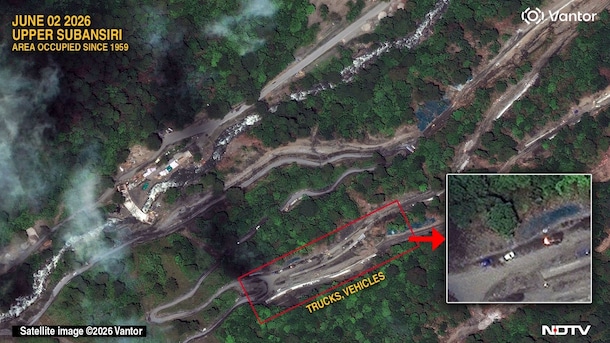
Satellite Pics: China Steps Up Road Works In Arunachal Area It Controls Since 1959

The bulk of the new habitation lies in uncontested Chinese territory, narrowly across India's official boundary line showing Arunachal Pradesh
-
Opinion | The Jewar Effect: How Noida International Airport Is Reshaping NCR's Real Estate Map
Airports not only generate passenger traffic but also build economic ecosystems. Jewar is now at the beginning of that curve.
-
Opinion | Pakistan Might Just Be Getting A Bit Too Confident - This Time, With Afghanistan
For Islamabad, its successes at mediation notwithstanding, toppling the Taliban may turn out to be a far more humbling experience. But then Pakistan, strangely, is known to be suicidal in some ways.
-
Big Wins, Bigger Losses: Trump's Dramatic Day At The Supreme Court
The US Supreme Court's rulings on birthright citizenship, immigration, and presidential power matter for Indian students, professionals and diaspora families in the US, bringing relief on citizenship but also signalling a stronger White House.
-
Blog | Pranit More To Everyone Else, How Comedy And Its Scandals Continue To Fool Us
The modern comedian doesn't really have an ideology. They have a target market, and jokes that cater to that target market.
-
Opinion | US' Scott Bessent Has A New 'Doctrine', And It Leaves India With Hard Choices
Scott Bessent in a recent WSJ opinion piece has explained the so-called American economic 'statecraft'. The doctrine should raise concerns in India.
-
Opinion | China's New AI Surveillance System Has A Chilling New Mission
A new legislation in China, which takes effect tomorrow, isn't just another security law. It reaches across borders - and into the future.
-
How One Morning In Siberia Changed What Humanity Knows About Space
Around 7:15 am on June 30 in 1908, during the reign of Tsar Nicholas II, an object from space entered Earth's atmosphere over Siberia. And it changed science forever.
-
How Delhi Built Its Most Beloved Hubs On A Fire Trap
Delhi fire: Since 2019, 543 people have lost their lives in the city due to fire tragedies. Tracing back to 2016, the figure rises to more than 800, according to Delhi government data. In the first half of 2026 alone, 65 deaths in fire accidents have been reported.
-
Opinion | The Post-War Middle East May Already Be Splitting Into Two New 'Camps'
We may see a closer Qatar-Oman-Iran trilateral partnership emerging in the coming days, while another grouping already in the making is of Saudi Arabia, Pakistan and Egypt.