Opinion | CJP Protest And Opposition's Never-Ending Search For 'Readymade' Revolts
The Opposition cannot simply saunter in after anger has been created, and ask to become its beneficiary
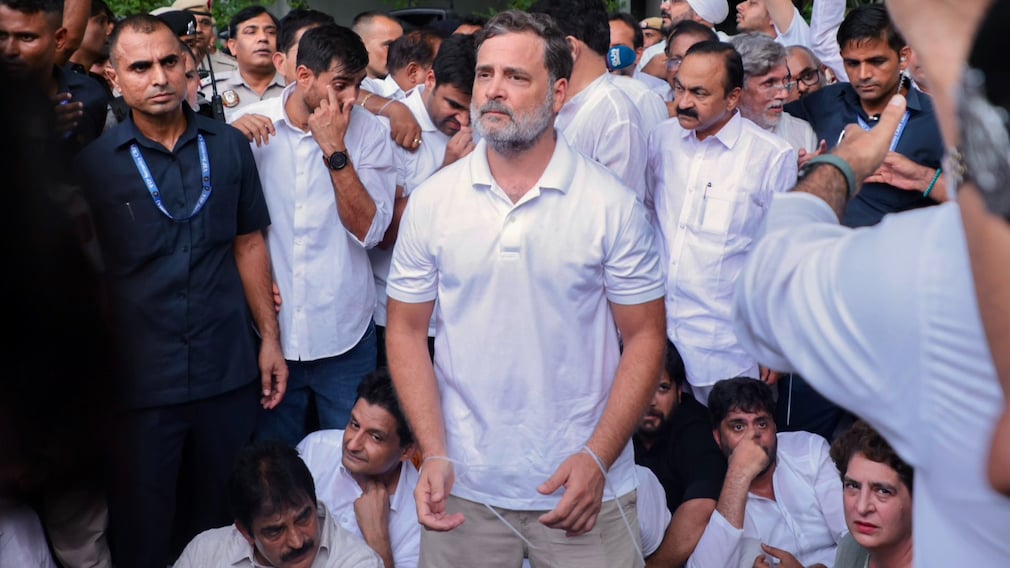
There is an old habit in Indian Opposition politics: mistaking proximity to public anger for ownership of it. Once a protest acquires critical mass, politicians arrive with predictable urgency. They sit on the dharna carpet, condemn the government, meet the injured, offer legal help, and ensure that cameras record their solidarity. None of this is illegitimate. Opposition parties are expected to stand with citizens confronting the state.
But the Cockroach Janta Party (CJP) agitation has posed a rather more uncomfortable question: why did so many young Indians have to invent a political language of their own before the Opposition began listening?
The CJP did not emerge from a Congress frontal organisation, a Samajwadi Party cadre network, or an AAP campaign. It grew as an irreverent, digitally native expression of discontent and then attached itself to issues of enormous seriousness: examination leaks, unemployment, corruption, and the fear that merit itself is being rendered meaningless.
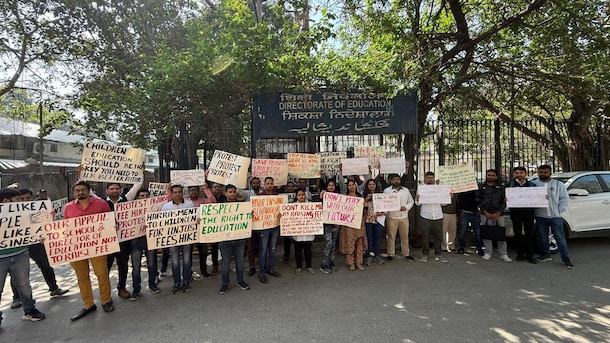
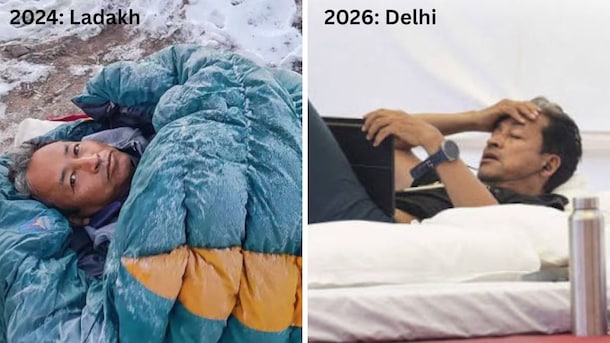
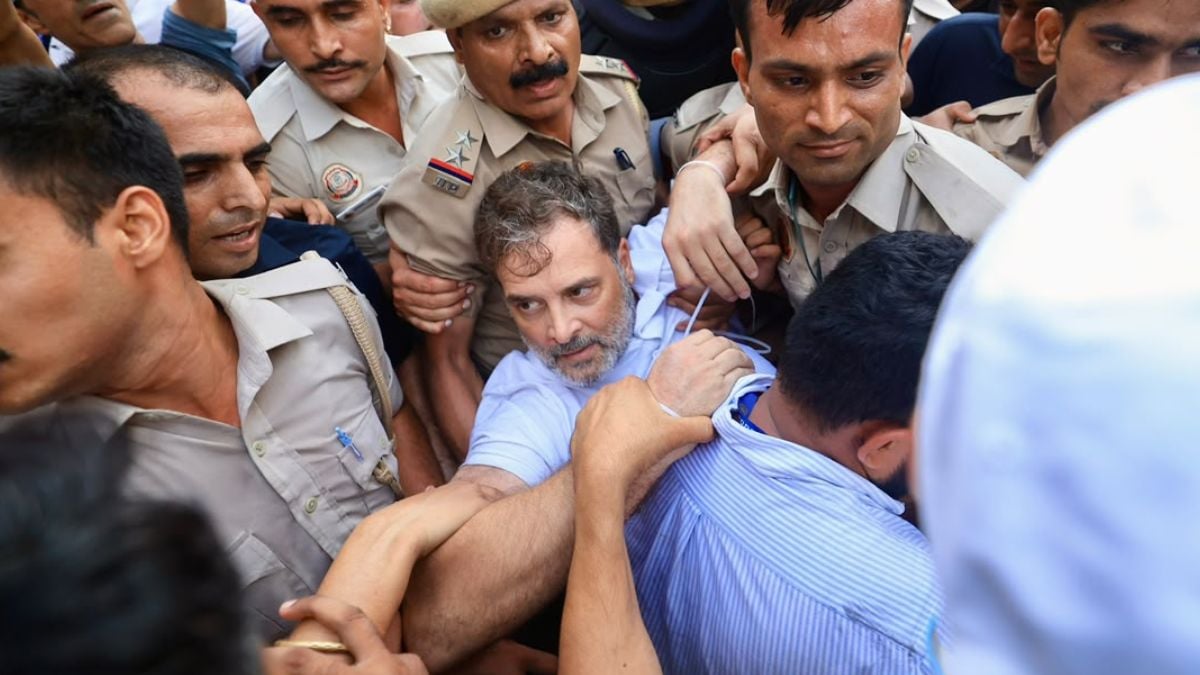
This week, tens of thousands came onto Delhi's streets; police used batons and tear gas during the march towards Parliament, and Sonam Wangchuk's hunger strike gave the protest an additional moral weight. By July 22, Prime Minister Narendra Modi had publicly promised action against those responsible for examination malpractice, while Education Minister Dharmendra Pradhan offered reforms and a parliamentary discussion.
That a protest created outside conventional Opposition politics has succeeded in forcing the government to respond should worry the Opposition more.
A Protest Born In Political Vacuum
At an INDIA bloc meeting in June, Uddhav Thackeray reportedly asked perhaps the most honest question heard in an Opposition conclave for some time: "Have people lost faith in us?"
He was referring specifically to the extraordinary traction the CJP had acquired. Akhilesh Yadav, at the same meeting, told Congress to show a "large heart" towards its allies. Omar Abdullah reportedly suggested that the Opposition should engage with the CJP because it was obviously "doing something right". These observations go to the heart of what ails the Opposition.
(Rahul Gandhi at the Jantar Mantar protest)
The problem is not the absence of issues. Unemployment, examination irregularities, inflation, institutional questions, and rural distress provide ample political ammunition. Nor is there an absence of prominent leaders. The problem is the gap between Opposition rhetoric and Opposition conduct.
Everyone wants the Congress to fight the BJP nationally, but several parties also need to fight the Congress locally. Congress, meanwhile, wants to be accepted as the natural fulcrum of the Opposition while frequently resisting the compromises that such leadership requires.
The current unrest has exposed this contradiction because the students protesting owe no automatic allegiance to any of them. Public anger is not a transferable fixed deposit. A citizen dissatisfied with the BJP does not, by some law of political physics, become a Congress voter. That missing bridge is called trust.
Pawars And Ambiguity
Few political families illustrate this ambiguity better than the Pawars.
Supriya Sule recently posted a warm photograph with her nephew Parth Pawar on his first day in Parliament as a Rajya Sabha member. Parth belongs to the rival NCP establishment aligned with the ruling side in Maharashtra. There is, of course, nothing improper about an aunt greeting her nephew. Political differences need not become family estrangements.
But politics is also about signals.
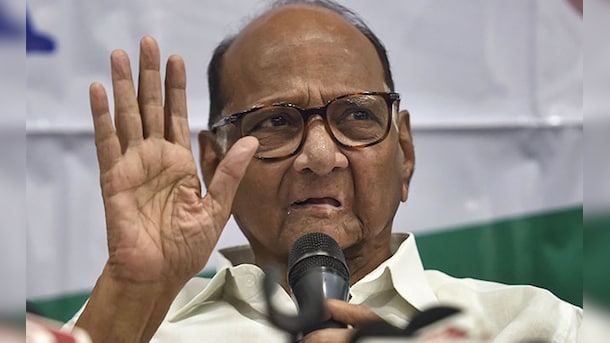
Soon afterwards, Sharad Pawar and Sule were at Jantar Mantar supporting the. The following day, they met PM Modi in Parliament, amid continuing speculation about the political positioning of the Sharad Pawar faction.
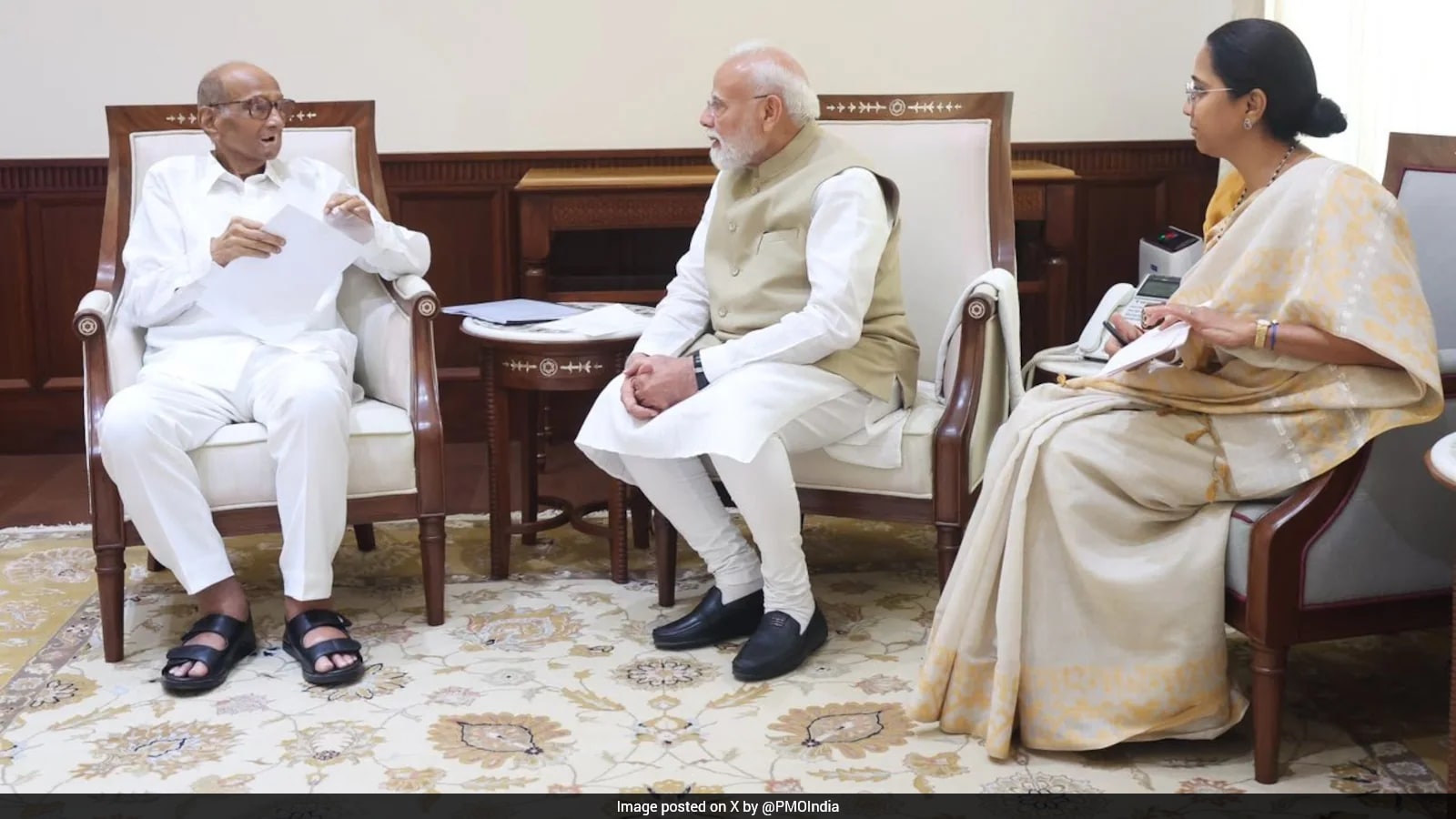
(Sharad Pawar, Supriya Sule with PM Modi)
Again, meeting a Prime Minister is not political apostasy. Pawar has practised cross-party civility and tactical flexibility for half a century. The larger question is one of political legibility.
Can an Opposition demand an unambiguous verdict against the BJP while some of its own constituents appear permanently available for multiple future arrangements?
There was a time when Sharad Pawar's capacity to keep every door ajar was regarded as consummate politics. In today's polarised environment, it can just as easily look like strategic uncertainty. Voters are being asked to choose sides more clearly than politicians themselves seem willing to. This is not merely a Pawar problem. It is an INDIA bloc problem.
AAP's Appropriating Instincts
Then there is the AAP, which offers an almost perfect political irony. No party in India should understand an autonomous citizens' protest better. AAP itself was born from one.
Yet, after Rahul Gandhi, Priyanka Gandhi, and other Opposition leaders staged a protest near the Prime Minister's residence over the police action against students, AAP leaders accused the Congress of weakening the students' agitation. Atishi called the episode a BJP-Congress "jugalbandi"; Sanjay Singh suggested Rahul's intervention had undermined the protests. Akhilesh Yadav, who joined the protest, was detained along with Congress leaders.
There may be legitimate questions about Congress arriving late or attempting to appropriate a protest it did not build. But look at the absurdity produced by competitive Opposition politics: one Opposition party accusing another of damaging an anti-government protest by protesting against the government.
Rahul's Opportunity Is Really About Akhilesh
Rahul Gandhi nevertheless has an opening.
His physical presence in the confrontation and his detention on July 21, gave the Congress visibility on an emotive issue. But the real test of Rahul's politics will not be whether he can occupy Jantar Mantar more effectively than AAP. It will be whether he can build a durable working relationship with Akhilesh Yadav.
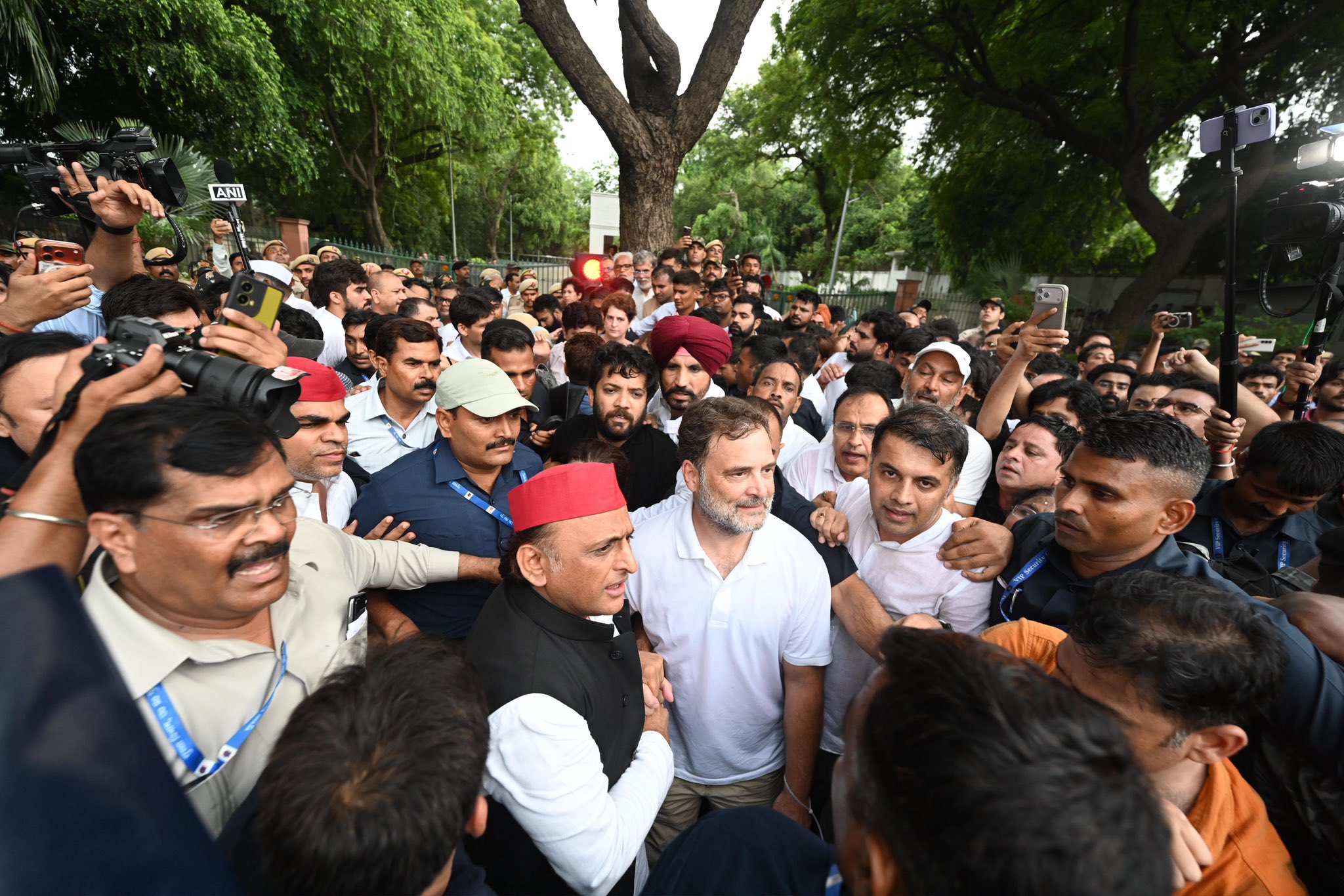
(Rahul Gandhi and Akhilesh Yadav at Jantar Mantar)
The Congress-SP partnership in Uttar Pradesh demonstrated its electoral value in the 2024 Lok Sabha election, when the alliance won 43 of the state's 80 seats. Yet with the 2027 Assembly election approaching, seat-sharing remains difficult. The Congress leaders want more space; SP leaders question Congress's organisational strength. Akhilesh has already publicly and privately signalled that Congress must become more accommodative. Rahul must decide what kind of Opposition leader he wishes to be.
Leadership of a coalition is not the same as supremacy over a coalition.
The Congress has to learn an apparently contradictory skill: to think of itself as large nationally while accepting that it is sometimes small regionally.
Anger And Credibility
The current public anger offers a warning. The Opposition cannot simply saunter in after anger has been created, and ask to become its beneficiary. It has to demonstrate, through its own conduct, that cooperation is possible, promises mean something, and political positions survive beyond the demands of the day.
The BJP faces an anger problem. The Opposition faces a credibility problem. The students have made that difference impossible to ignore.
(Rasheed Kidwai is an author, columnist and conversation curator)
Disclaimer: These are the personal opinions of the author
-
Opinion | A Rs 5,000 Fine Can't Fix India's 'Babu' Raj. But It's A Start

A new bill in Delhi imposes a fine of Rs 250 a day on bureaucrats, with a Rs 5,000 ceiling, if their service for citizens is delayed without a valid justification. Can this fix India's great 'Babu' bottleneck?
-
Opinion | Kaveri To J-20, How China Overtook India In A 40-Year-Old Race To Build Fighter Jets
Both launched ambitious military jet engine programmes during the 1980s. Both depended heavily on Soviet and Russian technology. Four decades later, however, the finish line tells two dramatically different stories.
-
Opinion | US Attack On Chabahar, And Why It's Time India Stopped Playing By Others' Whims
As the US destroys Chabahar in Iran, one thing is clear: India cannot wait eternally for the whims of others to do what is vital for its own interests.
-
Beyond Low Cost: Why Foreigners Choose India's Healthcare Over The West
India's medical tourism industry is estimated to be worth $12.32 billion in 2026. It is growing much faster than the country's overall tourism sector.
-
Opinion | Is Sharad Pawar Planning To Merge NCP With NDA? Behind The Ongoing Calculations
The NCP patriarch, turning 86 this year, will have to take a decision soon - before someone else takes it for him.
-
Opinion | Maa Behen, Obsession, And The Gaze That Eats Itself
Every society has a woman it has already judged. Every man has a story about her. Cinema has long inherited both.
-
'School Fees Are Just The Beginning': The Hidden Cost Of Educating Children
Tuition classes, digital devices, transport, uniforms, extracurricular activities, and competitive exam coaching have made education a costly affair.
-
NDTV Probe: CSAM, Sexually Suggestive Content, Gun Culture On Social Media
The probe has uncovered a wider pattern of exploitative and illegal content slipping past moderation, raising questions about the consistency and effectiveness of enforcement.
-
Ice Stupas To Education Reforms: The 'Fast' Evolution Of Sonam Wangchuk
Sonam Wangchuk remains a prominent figure whose activism spans climate change, education reform, democratic rights and environment conservation.
-
Opinion | Pakistan's Iran Problem Isn't Going Anywhere
Despite its glowing successes, and for all its mediation efforts, Pakistan's toughest audience may be in Iran itself