Opinion | China To Pak To America, The Growing Dilemmas Of The 'General'
Recent civil military turmoil in the United States, China and Pakistan can be understood through two lenses.
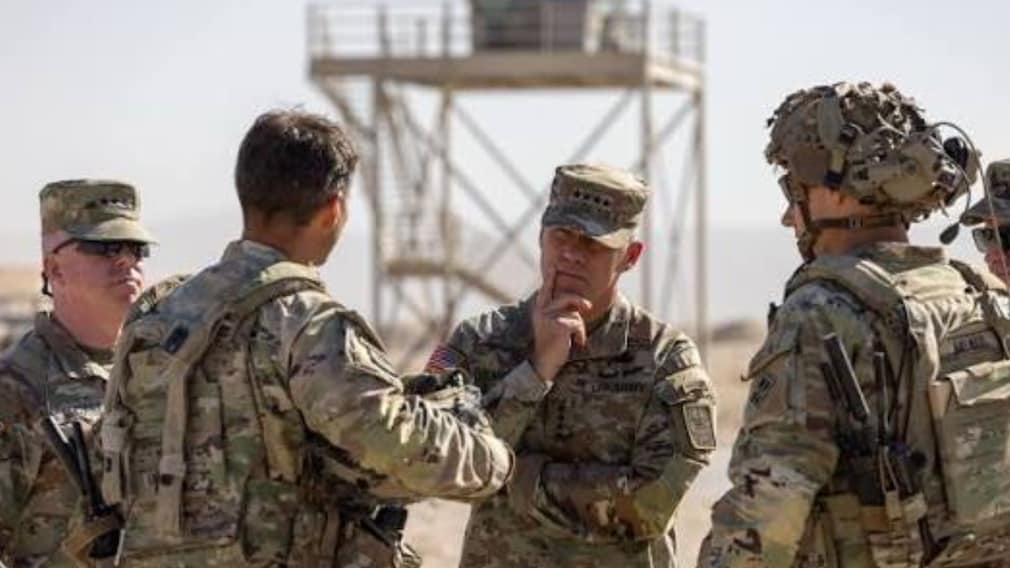
Pete Hegseth's removal of General Randy George as US Army Chief of Staff appears to have begun with an unauthorised helicopter flypast over the musician Kid Rock's home in Tennessee. George wanted the Army to investigate possible safety violations. Hegseth ordered the matter dropped and George was removed soon afterwards. The episode is part of a wider turmoil in the Army's senior leadership. Notably the number of serving four-star generals has fallen in the middle of a war.
Civil military relations theoretician Samuel Huntington's Objective Civilian Control model, that the United States has adopted, proposes firm political dominance but with military leadership's autonomy in military expertise. Political leaders decide national objectives; the military advises and executes lawful policy. The arrangement works best when professional alignment refrains from seeking personal or political loyalty.
Recent civil military turmoil in the United States, China and Pakistan can be understood through two lenses. First, political alignment, which requires the military to achieve the objectives set by legitimate authority.Second,operational effectiveness, which requires it to retain the leadership, experience and institutional confidence needed to fight. Trouble begins when tighter control erodes effectiveness, or when effectiveness is pursued through arrangements that upset the political balance itself.
The War On 'Political Correctness' In America
The second Trump administration is attempting a substantial transformation of American military culture. Hegseth has promoted a warrior ethos and greater emphasis on combat effectiveness. Simultaneously, he has attacked what he regards as political correctness in the military.
This transformation is important because cultural change has been imposed through repeated intervention with the senior leadership of the services. And more critically because that intervention is now producing operational penalties.
It also matters because of when it is happening. The United States has been at war with Iran since 28 February. The forty days of active fighting ended in a ceasefire in April, but the Strait of Hormuz remains closed. The blockade is still being enforced and strikes continue. Three carrier strike groups and three Army divisions are committed in the largest Middle Eastern deployment since 2003. Armies normally ensure stability of senior appointments once a war begins. This one is being trampled in the middle of one.
The first cost is capability. Cheap drones, long-range precision weapons and electronic warfare are forcing a rethink of established concepts. George had raised an Unmanned Assault Battalion within the 173rd Airborne Brigade in Italy to prototype a tactical unmanned systems unit drawing on Ukrainian experience. Its soldiers rotated through Kyiv and trained against Ukrainian operators playing the adversary force. General Christopher LaNeve, Hegseth's former senior military aide and now acting Chief of Staff, is closing this forward-thinking endeavour under a back-to-basics approach.General Chris Donahue, the European commander who backed it, was removed in July. The US Army is dismantling its main platform for learning the decade's most consequential tactical lesson.
The second cost is civilian casualties. Last year, Hegseth offered commanders three options for the Pentagon's Civilian Harm Mitigation and Response programme: cut maximum staff while keeping it operational, retain a small central office, or abolish it. Nine commands chose the first and two rejected all three, asking that it be preserved intact. Hegseth gutted it anyway. American operations have since killed hundreds of noncombatants, according to a ProPublica investigation. Now senior Pentagon official Elbridge Colby has proposed restoring about a third of the capability.
Both these penalties are intensified by a third: command continuity. Repeated removals affect those who remain: without any explicit loyalty test, officers may conclude that ideological alignment is essential for advancement.
Firepower is useless if it cannot achieve political results. Politicians have the power to reshape how the military fights. However, the bottom line is simple: do the changes actually help achieve victory?
China's 'Party' Army
China is a more developed version of the same relationship. The People's Liberation Army is explicitly a Party army, and the principle that the barrel of the gun must obey the Party's command is foundational rather than an external distortion. Xi Jinping insists at the same time that combat effectiveness remains the ultimate standard for modernisation.
His campaign against corruption and disloyalty has produced an unprecedented purge. More than a hundred senior PLA officers have been removed or have disappeared from public view since 2022. Of forty-seven officers who held or were promoted to three-star rank over that period, forty-one had been purged or possibly purged by February. Of fifty-two key leadership posts examined by the CSIS China Power Project, only eleven were filled.
The consequences directly impact the China's Taiwan plans. A blockade or invasion would be the most complex campaign the PLA has ever attempted, demanding coordination across services, theatre commands and domains. The purges have pushed less experienced officers into greater responsibility at a force that has not fought a war since 1979. Zhang Youxia and Liu Zhenli, the two most senior operationally experienced officers on the Central Military Commission, were both placed under investigation, stripping the last battlefield experience from the top.
China retains the military option and Xi may yet reconstruct the senior command, but an army preparing for its most complex conceivable operation is losing experienced commanders.
Political control is meant to secure reliability. Repeated purges reduce the experience and organisational confidence that effectiveness requires.
Pakistan's Very Different Issues
Pakistan has the opposite problem. Combining the offices of Chief of Army Staff and Chief of Defence Forces under Field Marshal Asim Munir has produced a far more centralised structure. The operational logic is correct: modern conflict requires every domain to work as one system.
The political context, however, gives the reform a second meaning. The army was already Pakistan's most powerful political institution. The imprisonment of Imran Khan, the country's most popular opposition leader, after his differences with the military leadership has become a symbol of the civil-military imbalance. Concentrating command authority in the most powerful serving officer therefore carries implications beyond operational reform. In Washington and Beijing, political leaders are intervening in military culture at cost to operational continuity but in Pakistan, the pursuit of effectiveness is reinforcing an institution whose political weight already exceeds democratic limits.
The Indian Imperative
India should avoid both forms of imbalance. Its military must remain aligned with the objectives of the elected government, which alone decides the purposes for which military power is used. Its leadership must offer frank advice on what those objectives require and what risks they involve. India must equally preserve a professional military culture: its ethos should follow from the requirements of war rather than the ideological preferences of the government of the day. The military must serve the Indian state rather than a party or an individual.
Political leadership should nonetheless involve itself closely in building military power, and the present government's engagement is welcome. Defence indigenisation, border infrastructure, defence technology and space and cyber capability all need political direction, which a military cannot provide for itself alone. The conflicts India will face will run across land, sea, air, space, cyber and the information domain, and no single service can prepare the country for them. Creating the Chief of Defence Staff was an important step; greater jointness and theatre commands should follow India's own strategic requirements rather than political symbolism.
Huntington's concern remains valid. The political leadership sets the objectives, and the armed forces must remain professional enough to say, before a war begins, whether those objectives can be achieved. Alignment without professional space weakens effectiveness; integration without institutional restraint concentrates power. India's task is to combine deeper political direction in building the country's military sinews with professional candour, neutrality and the integrated capacity the next war will demand.
(The author is a Research Fellow in the Geostrategy Program at the Takshashila Institution)
Disclaimer: These are the personal opinions of the author
-
The Real Story Of France's Unrest Is Getting Lost In A Storm Of Online Lies

A man cosplaying Napoleon on the streets, looting at luxury fashion stores like Dior, France is currently confronting one of its most serious episodes of civil unrest in years.
-
Opinion | The Last Bet? What Trump's 'Mother Of All Bombs' Could Actually Do To Iran
Can an MOAB deliver a decisive blow to Iran that may force it to surrender immediately, as Japan did after Hiroshima and Nagasaki in World War 2?
-
Hit Songs, Empty Pockets: The Hidden Math Behind India's Viral Music Boom
Over 80,000 brands and five lakh creators in India make branded content. The opportunity is worth around Rs 1,500 crore.
-
Opinion | Great 'Exceptions': How The Oil India Was Attacked For Is The Oil Trump Now Seeks
A law written to punish the buyers of Russian oil was suspended by the US to protect a purchase of Russian oil. India spent fourteen months being lectured for less.
-
Opinion | Louis Vuitton Loot, Torched Cars: France Protests Have An Unlikely Beneficiary
It's an unbelievable moment. Crowds looting the most exclusive stores in Paris, including the famed Luis Vuitton. But what's behind this meltdown?
-
Blog: Kolkata Didn't Learn From 2015. Eleven Years Later, It Proved To Be Fatal
The City of Joy isn't a stranger to crowd control. Be it during Pujo or Christmas at Park Street, Eden Gardens cricket matches, or Derbies between Mohun Bagan and East Bengal. But during Pujo, the entire city is on alert.
-
Opinion | Slurs, Threats, Now A Temple Attack Plot: When Did America Become So Hostile To Indians?
The rising tide of anti-India, anti-Hindu, and racist attacks serves as a stark reminder that economic prosperity does not automatically guarantee social immunity from bigotry.
-
A Step Behind Neha Bora: What Rahul Gandhi's Gesture Says About Congress' Gen-Z Pitch
At INDIA bloc's march to Supreme Court, Rahul Gandhi placed himself a step behind two women, hands resting on their shoulders. One was his sister Priyanka. The one on his right was Neha Bora. Here's what the image means for the protest wave now, and for Rahul's politics in general.
-
Opinion | Imran Khan, And The Perils Of Having An 'Opinion' In Bollywood
The reality of the industry is quite grimy. More often than not, its inhabitants have been fairweather friends, happy to sing the praises of whoever is in a position of authority.
-
Exclusive: India's Food Safety Problem Goes Beyond Just Dirty Kitchens - By Tukaram Mundhe
On World Food Day, Maharashtra's Commissioner of Food Safety explains why instead of taking stopgap measures, the entire supply chain in India needs to be held accountable and made transparent.