Opinion | China Claims It Has Cut Troops At The Indian Border. But The Math Doesn't Add Up
The reduction likely has more to do with the deployment along the LAC than the total strength active in the region
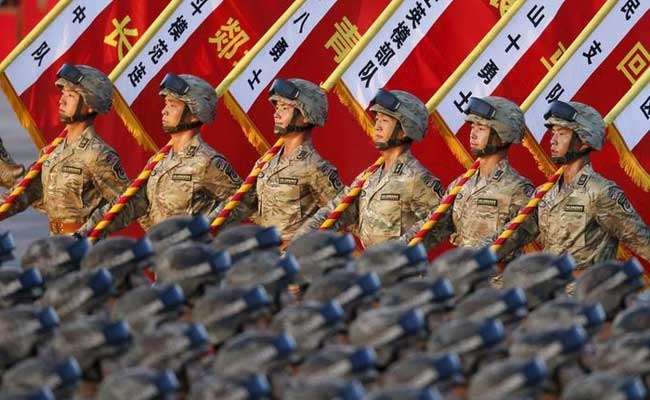
The Ministry of Defence released its Annual Report for 2025-26 on September 14 this year, and it speaks to vital challenges facing India's northern border with China, even as it sweeps the naval frontier under the rug. Nonetheless, an interesting facet buried in the Indian Army chapter is an assertion that becomes critical to understanding the organisation of the People's Liberation Army (PLA) Western Theatre Command (WTC), which is the theatre designed to operate exclusively in India's operational direction. It says: "The year 2025 witnessed a significant reduction in the deployment of PLA Forces opposite Northern Borders, with 10 Combined Arms Brigade (CAB) size forces each deployed in areas along the Line of Actual Control (LAC) and in traditional training areas."
A few important conclusions can be drawn from this assertion. Firstly, the operative phrase "each" indicates that 20 CABs/CAB-sized forces have been identified along the LAC and in the depths of the WTC's coverage, particularly in its Xinjiang and Tibet military districts (MDs). That troop strength lies somewhere between 90,000 and 1,20,000 in the theatre's India-facing posture, after what the report calls a significant reduction. But, the reduction, or drawdown, likely has more to do with the deployment along the LAC than the total strength active in the WTC - the former being closer perhaps to the 20,000-40,000 mark.
Secondly, there is the vagueness induced by using the phrase "CAB-sized". A CAB is a specific unit that emerged in 2017, after the PLA underwent massive above- and below-the-neck reforms in 2015-16. As a unit of measure, it means little.
These sweeping reforms in the PLA replaced the old, service-specific group army-division-regiment structure with a standardised group army-brigade-battalion one. In this new hierarchy, a CAB includes approximately 4,500 to 6,000 personnel, and can be classified by heft of deployment (heavy, medium, or light), or by whether it is tracked, wheeled, or high-mobility. Usually, each CAB features four combined arms battalions under its command, which host organic armour, infantry, mortars, and reconnaissance. Ten CABs are thus close to 50,000 troops, while 20 CABs constitute a field army.
Reaching Conclusions
The WTC fields two group armies, the 76th at Xining and the 77th at Chongzhou. They are garrisoned deep in provinces like Qinghai, Gansu, Ningxia, and Sichuan, and are the most likely occupants of the "traditional training areas", though not necessarily the only ones. They field their frontier deployments across the two MDs. The Tibet MD fields the 52nd and 53rd mountain brigades at Shigatse and Nyingchi, and the 54th Heavy CAB at Lhasa. Xinjiang MD, on the other hand, is the PLA's last division-based ground force, retaining four combined arms divisions (CADs) - 4th, 6th, 8th, and 11th - each roughly twice the strength of a brigade. Found in addition at the frontlines are three CABs from the 77th GA, which were permanently positioned there during the 2017 Doklam standoff to provide the Tibet MD's two lighter mountain CABs with greater firepower and capability.
So, the complicated mathematics likely is that three Tibet MD brigades, the three 77th GA brigades transferred since 2017, independent border defence regiments, and troops from the four Xinjiang MD CADs together constitute the 10 "CAB-sized" forces at the LAC. The Xinjiang MD either fields its CADs in rotation, or composite elements are drawn from several of them - mostly the 4th, 6th, and 8th - under the umbrella of the PLA '506 Special Mission'.
There is also an external benchmark to consider here, and it is provided by the US Department of War's annual 'China Military Power' Reports. The Report counted 10 CABs across the LAC's three sectors in 2022, and argued that some of them were borrowed from other theatre commands. These could further add to the MoD's CAB-sized assessment outside of the MDs' deployments, the BDRs, and the GA reinforcements. In 2024, the Pentagon spoke only of the total deployment of 16 CABs and three infantry brigades, bringing the brigade architecture in the WTC as a whole to about 19. That is roughly the WTC's whole manoeuvre force, and can perhaps explain the reference to "10 each" in the MoD's Report. And whatever strength reduction was achieved could perhaps be the pullback from line to depth, or even the return of borrowed brigades back home.
India v/s the WTC
Deployment in the WTC is intense, and altitude and hypoxia do not make it any better for Chinese soldiers derived mostly from the mainland. In Tibet, for instance, the average altitude is approximately 4,380 metres, where oxygen levels are about 60% of that at sea level. As a consequence, formations have to acclimatise gradually, and through staging complexes, which include the Sanshili Yingfang and Kangxiwa on the G219 highway, Rutog and Shiquanhe further south, and, of course, the permanent garrisons at elevations of 5,371 and 5,592 metres. This movement continues across weeks and can sometimes be difficult to spot.
Further, since 2020, the PLA has dug underground and tunnelled depots near Shigatse, Lhasa, and Hotan. Imagery of the Sirijap plain has shown in the past 122 mm howitzer battalions in trench-linked positions covering Pangong's north bank. Similarly, PHL-03 launchers have been found near Rutog, concealed by camouflaged revetments. They hold the Chushul bowl. And so, even if the brigade drawdown is evident, the forward presence and stock are already in place.
So, if the WTC as a whole is already oriented towards India, and its stocks already forward, the question is not how many brigades sit opposite the LAC, but how quickly ten in depth become twenty on the line, and in which sector. It also likely warrants discussion on the next steps following disengagement - de-escalation and de-induction, even as the Special Representatives reach a conclusion on early harvest settlement of the boundary.
(Anushka Saxena is Associate Fellow, Geostrategy Programme, The Takshashila Institution. Views presented belong to the author and do not necessarily represent those of the institution)
Disclaimer: These are the personal opinions of the author
-
Opinion | Gurugram Techie Suicide: Why Does A Woman Asking For Alimony Enrage Us So?

Social media, with its spectacular disregard for facts, turns one man's tragedy into an indictment of all women. The recent death of 28-year-old techie has become precisely that.
-
Bus Key Dash To 'Detain Me Please': How Protesters Outfoxed Delhi Cops
Videos capture the energy, nerve, camaraderie and creativity of protesters who have found ways to turn even moments of confrontation with the police into scenes of defiance
-
The New Global Power Map: 7 Political Movements Gaining Ground And What They Want
In the last one year, more than 100 protests have erupted across 57 countries. Though they look different, there's a common thread that binds these movements.
-
Edge Of Space, Mach 2.4: Flying India's Most Secret Jet Over Pakistan
The MiG-25 wasn't just any jet. Alongside the American SR-71 Blackbird, it was one of only two jet aircraft to fly operationally at close to Mach 3, three times the speed of sound.
-
Opinion | India's $18.3 Billion Forex Reserve Shock Is A Warning, Not Just A Number
The reported USD 18.34 billion decline in India's foreign exchange reserves in a single week has attracted attention for more than its size
-
Congress Falls Back On A Fullback: Where Pargat Singh Fits In The Punjab Poll Play
Vijay Inder Singla, a Hindu face, was reportedly the frontrunner before the Congress replaced one Jat Sikh with another as its Punjab unit chief. How far does such arithmetic work in the state's politics? Pargat's appointment holds some of the answers.
-
Why Doesn't Congress Boycott If Polls Are "Fixed"? Answer Lies Beyond Rahul Gandhi's "Distraction" Quip
The starkest demand for a boycott has come from outside the political Opposition, from the Cockroach Janta Party. But does a boycott help? Here's what research, examples, and expert analysis tell us.
-
'Sully' To Gimli, Sioux To Patna: When Pilots Got It Unbelievably Right
Captain Smit Machchhar fought off his co-pilot after being stabbed and opened the cockpit door, saving 174 people.