Opinion | India's UPI Miracle Has Created A Difficult, Rs 20,000-Crore Question
UPI's whole magic was the Rs 30 payment it charged nothing for. But how long can it stay free?
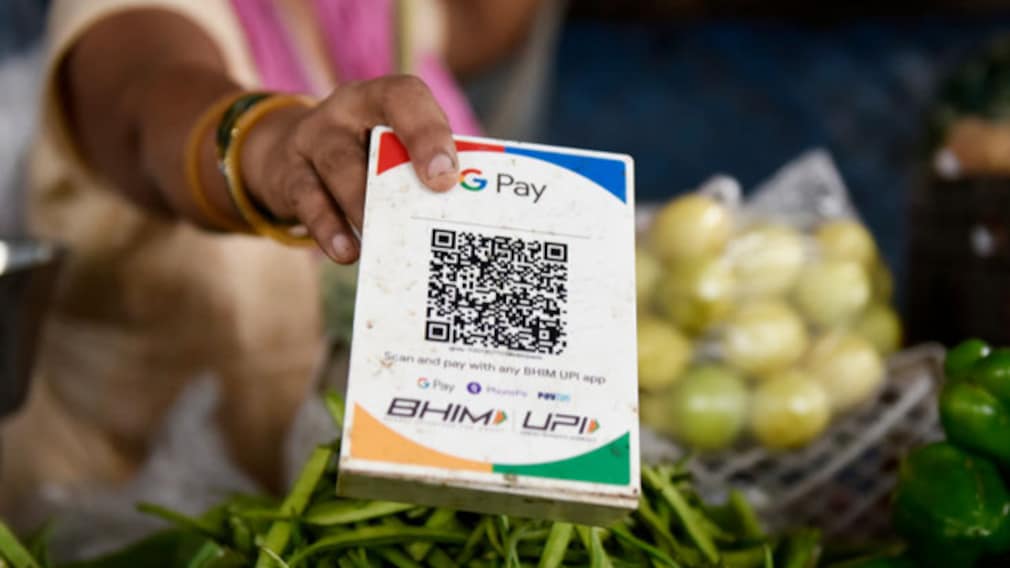
Parliament has reopened a question that the country thought was settled: should UPI ever charge? On August 6, the Lok Sabha passed the Taxation and Other Laws (Amendment) Bill, 2026, by a voice vote, and on August 10, the Rajya Sabha, since this is a Money Bill, returned it after discussion, completing the process. It now goes to the President for assent. The change reads small on paper and large in effect. It amends Section 10A of the Payment and Settlement Systems Act, 2007, which until now shielded UPI and RuPay debit from any charge because they were prescribed under the Income-Tax Act. That automatic shield is gone. From here, whether a payment mode stays free depends on what the government chooses to notify.
The case for charging begins, reasonably enough, with a bill nobody disputes. Running the world's largest real-time payment network is not free. Every tap that looks instant sets off authorisation, settlement, reconciliation, fraud screening, dispute handling, cloud capacity, and round-the-clock monitoring, and all of it costs money. One estimate puts the yearly cost of running UPI and RuPay debit infrastructure as high as ₹20,000 crore. As volumes keep climbing - July 2026 alone saw 2,366 crore transactions worth ₹29.9 lakh crore - that bill only grows. So the question the new law opens is fair: if security and a coming wave of AI need real investment, must UPI finally charge?
Right Problems, Wrong Solutions
The costs behind all this are not imaginary. The National Payments Corporation of India (NPCI) chief has said AI will define UPI's next chapter, taking it from about 750 million daily transactions towards a billion, onboarding half a billion more users, and hunting the mule accounts that already run into lakhs of cases a year. Voice onboarding in many languages, models trained on financial data, and real-time fraud engines are not cheap, and all of it needs steady funding. The RBI Governor has put the question plainly: who, in the end, pays for the plumbing?
It helps to recall how that plumbing was paid for, because "free" never meant "unfunded". UPI was built and run by NPCI as public infrastructure, not a profit centre, and its scaling and security were financed the way a public good is: from the exchequer. The government reimbursed banks through an incentive scheme, ₹1,389 crore in 2021-22 and a peak of ₹3,631 crore in 2023-24, paying 0.15% on low-value merchant payments. That model carried UPI from a standing start in 2016 to accounting for nearly half of all real-time payments on the planet.
The strain is that this public funding has thinned even as the network has swelled. The Standing Committee on Finance found that incentive payouts of ₹8,730 crore over four years to 2024-25 covered barely 11% of the industry's cost. The 2026-27 budget set aside ₹2,000 crore, less than before, even as daily volumes touch record highs. So banks and processors now carry a rising share of a growing bill, and want durable revenue, not a subsidy that shrinks each year.
Where It Hurts The Most
And yet, the leap from "the costs are real" to "therefore charge each transaction" skips the harder question of design. Most of what UPI spends on is fixed, infrastructural cost, not something that rises neatly with each ₹40 payment to a vegetable seller. A per-transaction fee is a blunt tool for a largely fixed bill. Worse, it lands where it does the most damage: at the point of acceptance, on the smallest sellers, whose whole reason to accept digital money was that it cost nothing.
The sums show why. Transactions above ₹2,000 make up barely 4% of UPI's volume but nearly two-thirds of its value. The vast bulk of UPI is tiny, like the auto fare, the chai, the ₹30 vada pav. Put even a small charge on that layer, and the rickshaw puller and the roadside vendor do the rational thing and ask for cash. A fee at the bottom of the pyramid is a nudge back to notes, and cash is untraceable, informal, and off the books, the very thing UPI was built to shrink.
To her credit, the Finance Minister seems to grasp this, and has said the amendment is only an enabling provision that imposes no charge on users, that no MDR (merchant discount rate) framework has yet been finalised, and that ordinary low-value payments will stay free. She also reiterated that any future MDR would fall only on a limited category of merchant transactions above a prescribed threshold. That is, almost word for word, the tiered design this column would argue for.
But there is a catch. All of that is a promise, not a provision. The Bill itself writes none of it down; it simply moves the decision into executive notification, to be shaped by a steering committee under NPCI. A protection that lives in a minister's assurance can be revised by the next notification, without returning to Parliament. Opposition members made exactly this point, calling the reply reassuring in tone but thin on paper.
Working Smarter
Better funding routes exist, and they deserve open debate rather than a quiet notification. The RBI transferred a record surplus of about ₹2.69 lakh crore to the government in 2024-25; earmarking even a sliver of it would dwarf today's incentive and cost the ordinary user nothing. Credit on UPI, RuPay cards and pay-later products already earns interchange that can help fund the free rails beneath them.
So, do security and AI need more money? Almost certainly. Must UPI charge the ₹30 payment that is its whole miracle? No. The Bill has passed, and the promises made alongside it are the right ones. The task now is to write those promises into the notification as a statutory floor for small merchants and consumers, and to fund the machine without sending the rickshaw puller back to cash.
(Subimal Bhattacharjee is a policy adviser on digital tech issues and the author of 'The Digital Decades: Thirty years of the Internet in India')
Disclaimer: These are the personal opinions of the author
-
How El Nino And Warming Oceans Could Shape Earth's Climate In 2027

From changing ocean currents to extreme weather, scientists are watching a combination of climate signals that could influence temperatures, rainfall and ecosystems in the months ahead.
-
Blog | Nana Patekar, And The Sharp, Lasting Sting Of His 'Plain-Speak'
"Subah ghar se niklo, bheed ka hissa bano..." Nana Patekar's characters often spoke with the bluntness of men who had little patience for pretence. Just like Nana himself.
-
Opinion | Pakistan's Saudi Pact Is Now Entering Dangerous Territory - As Expected
On October 5, the ministers of the pact's member states met in Riyadh for an emergency session and agreed to move to a 'practical implementation' of the defence commitments.
-
Hindu ka khoon-Musalman ka khoon? Nana Patekar's Krantiveer Questions Still Hang
Krantiveer was released in 1994, after the communal violence that had scarred Bombay and other parts of India. Nana's voice carried the pain of every riot, every broken home
-
'SIR' In America Too? India Cue In Trump's Mass Citizenship Check For Voters
Having got the nod from the US Supreme Court, Donald Trump's push for a voter roll "cleanup" puts citizenship at its centre. Arguments for India's Special Intensive Revision (SIR) have also centred on "illegal immigrants". Data remains scarce. Let's map the similarities and the nuance.
-
Opinion | Gyanesh Kumar Row May Be Doing Something Unthinkable For India's 'Lost' Opposition
There seems to be a greater willingness within the Opposition to accept Rahul Gandhi's leadership, at least on the SIR controversy. But the INDIA bloc itself seems to be undergoing a strange renewal.
-
Opinion | flydubai Hijack, And How Syria's Descent Into 'Jihadism' Has Now Become Everyone's Problem
Al Hammimi, the Omani pilot who tried to crash a plane with 175 passengers on September 30, is a symptom of Syria's long-raging sectarian and extremist fire that has now reached far beyond Syria's borders.
-
"Feel Deeply Abandoned By World": Tales Of Loss And Separation From Gaza
For Gazans, who have lived through the horrors of the last three years, life means a continuing encounter with impermanence and the repeated discovery that a home, a friendship, a livelihood, a familiar life and even one's former self can become things that exist only in memory.
-
Opinion | Gurugram Techie Suicide: Why Does A Woman Asking For Alimony Enrage Us So?
Social media, with its spectacular disregard for facts, turns one man's tragedy into an indictment of all women. The recent death of 28-year-old techie has become precisely that.
-
Bus Key Dash To 'Detain Me Please': How Protesters Outfoxed Delhi Cops
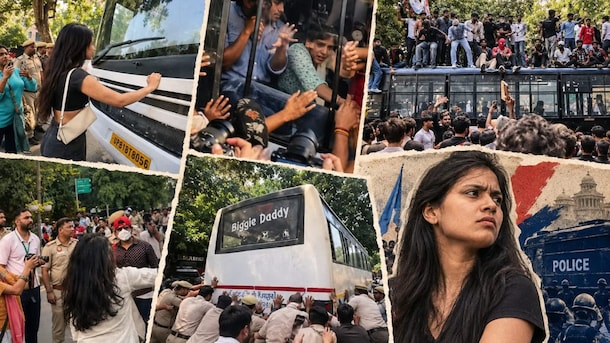
Videos capture the energy, nerve, camaraderie and creativity of protesters who have found ways to turn even moments of confrontation with the police into scenes of defiance