Opinion | Can India Find A Way To Shape US-Iran War, Without Actually Playing Mediator?
India's quandary is not one of surrendering its policy of strategic autonomy but rather in understanding that while autonomy is important, what makes it more effective is action.
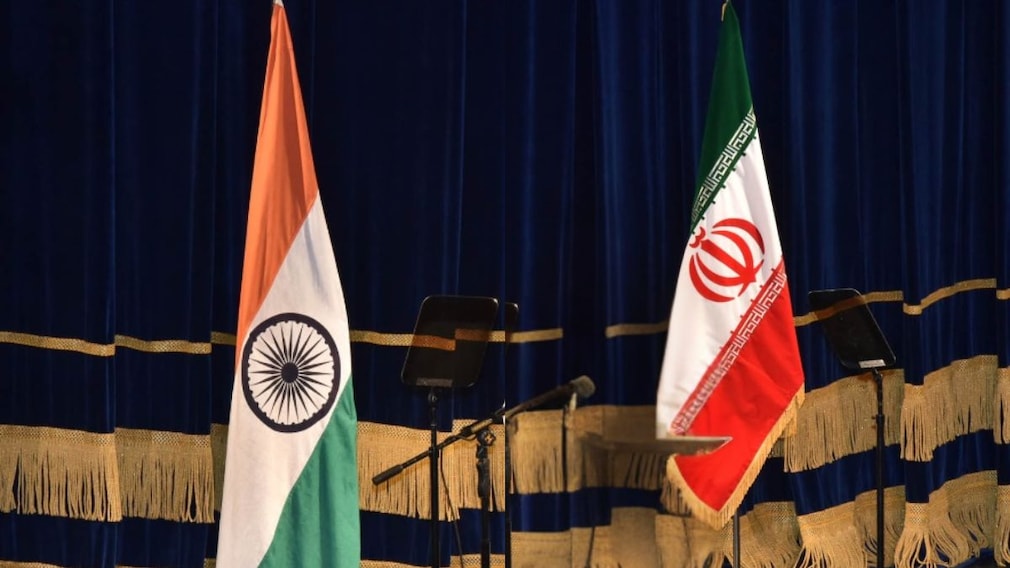
India's role in the West Asia mediation efforts continues to be discussed in diplomatic circles, sparking debates ranging from claims that Pakistan's presence at the table reflects poorly on India's foreign policy, to the opposite view that India has been right to stay out. The question of whether India should have offered to mediate misses the more important point: New Delhi's choice to stay out was not a sign of fragility; it was a strategic choice. In conflicts of this scale and complexity, mediation is a high-risk, low-reward enterprise that demands, at the very least, credible leverage over all sides.
Prudence, however, does not come without costs. As an independent nation, India's foreign policy has been anchored in the idea of strategic autonomy, the principle that decisions must serve national interests rather than those of any alliance. In a world of multilateralism defined by blocs, this approach created room for manoeuvre; it paved the path for India to build relationships across divides and engage competing powers at the same time, without being boxed in. Just as importantly, it kept New Delhi out of conflicts that did not directly serve its interests. In this sense, strategic autonomy was never just passive neutrality; it was an active effort to improve flexibility while reducing constraints.
A New Paradigm
But the world has changed faster than the doctrine of strategic autonomy that has been guiding it. The management of today's crises no longer relies on stable alliances or slow-moving diplomacy. Instead, crises now move quickly, often faster than formal diplomacy can respond to them. Different actors become involved as events unfold, but the actual influence tends to rest with those who are physically present and politically engaged in the spaces where negotiations are taking shape. The global standing of a nation may shape its credibility to lead, but when a crisis erupts, leverage accrues to those whose role becomes operationally necessary to the outcome. Distance, which once created leverage, now risks creating exclusion. Strategic autonomy continues to protect sovereignty, but it may no longer automatically translate into influence, particularly at moments when outcomes are being decided in real time.
This approach is also clear in how India defines its role during crises. Defence Minister Rajnath Singh recently stated that any cross-border "misadventure" would lead to an "unprecedented and decisive" response. He also mentioned that operations like Operation Sindoor are still active. This emphasis is telling; India's role continues to be defined by deterrence and response.
A Paradox For India
However, there is a paradox that India now confronts. Even with its deep investments in West Asia - economically, politically, demographically and strategically - it remains only lightly invoked in the mediation process of West Asia. The decision to avoid mediation has insulated New Delhi from the immediate risks of overreach. At the same time, it may have limited India's access to the very spaces where outcomes are defined.
The fault lines in India's West Asia policy are further exposed through its key vulnerabilities in its overreliance on an economics-first strategy. For nearly a decade, India believed in forming blocs of interdependence such as IMEC or I2U2, which were expected to make economies resilient even in times of war. However, figures ranging from fuel prices to exports starkly highlight that the planned economic integration, rather than acting as a stabiliser, acted as a constraint. According to the Ministry of Commerce, exports of goods from India to this part of the world declined by 57.9% just in the month of March 2026. Our crown jewel in this context, the United Arab Emirates, saw trade relations decline by an astronomical figure of 61.93%, while trade with Saudi Arabia reduced by 45.6%. Moreover, the consumer in India is now paying a war tax on fuel. Even though the global market for oil shows signs of cooling down based on the Brent index, India's crude basket saw a record level of $156 per barrel in March due to logistics disruptions and higher insurance rates, though the levels have come down since then. All these conditions have made India's 89% import dependence a problem.
This economic fragility is closely tied to a deeper, structural risk at sea. India's reliance on secure maritime access, without corresponding control over the conditions that guarantee it, continues to emerge as a strategic vulnerability. The guiding principles of the United Nations Convention on the Law of the Sea (UNCLOS) ensure transit passage through critical chokepoints like the Strait of Hormuz. In theory, even during times of crisis, international law permits shipping to pass without obstruction. But in practice? The Gulf tensions of 2026 suggest otherwise: UNCLOS was not meaningfully invoked even as one of the world's most vital energy corridors faced a risk of disruption. In similar cases, the neutral shipping countries had to negotiate access or divert their shipments or even do nothing rather than assert their legal rights. For a country like India, heavily dependent on maritime energy flows, this is not merely a legal concern, it is a strategic one.
A Third Way
India, too, has traditionally managed its equanimity amidst conflicts - whether with Israel or Iran. However, a crisis tends to strip down the nuances that define a relationship. Being neutral becomes a greater challenge as tensions rise. One need not be in the middle of things in order to be at the middle of it. Consequently, what emerges is an interesting and dangerous possibility: India risks becoming the partner of choice to everyone, but the indispensable ally of no one.
India has always aimed to position itself as a net security provider in its larger region. The current situation, however, highlights a sobering reality: India's core needs, from energy and maritime security to the safety of its diaspora, are effectively contingent on the actions of others.
None of this indicates that India made a mistake. The dangers inherent in mediations are present, and the case for restraint is a powerful one. Yet, the nexus between autonomy and influence is no longer as direct as before. Neutrality is neither a strategy nor a tactic; it is a position. In an international environment dominated by crisis-based alliances, influence lies in helping to set the terms of conflict resolution, even if it does not directly resolve the crises. India's quandary, thus, is not one of surrendering its policy of strategic autonomy but rather in understanding that while autonomy is important in the fast-paced world of crisis management, there cannot be autonomy without action.
Staying outside the negotiation process is the proper thing to do. Yet, the task will be to find a way to stay on the outside and still influence the decision-making process.
(Urjasvi Ahlawat is Head of Research and Communications to Dr Shashi Tharoor, Member of Parliament, and holds a Master's degree from Sciences Po Paris)
Disclaimer: These are the personal opinions of the author
-
Blog | I Lived In Satya Niketan. And I Was Too Young To See What It Did To Us

Sparking switches, falling ceilings, cardboard-partitioned rooms. Satya Niketan had been crumbling for years. I just didn't know when it would collapse.
-
Opinion | A New 'Subsea Cable' Is Coming To India. But It's A Wake-Up Call For Something
Backed by some of the biggest names in tech - Microsoft, Singapore's Singtel, Tata Communications, and Japan's NEC - the 'I-2SEA' will carry high-speed data traffic that AI systems need to function
-
Opinion | India Faces A BRICS Challenge. Can It Find A Way Through?
The Delhi Summit is being held at a challenging time. Such circumstances have not been encountered since the BRICS Summits started in 2009 in Russia
-
Opinion | Why The Jauhar Scene In Padmaavat Needs To Be Seen For What It Does
The practice of 'jauhar' was certainly abolished long ago. But that does not mean that it should be romanticised or glorified in mass culture.
-
Opinion | Sachin Pilot's Long Wait Is Over. Can Congress Finally Use Him?
The grand old party is now betting that the man who turned 'waiting' into a virtue can deliver Punjab
-
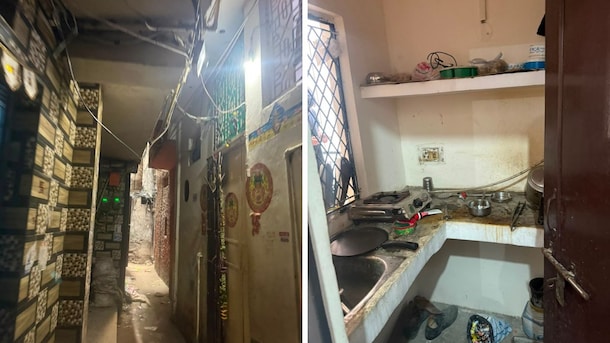
Ground Report | Sunlight Is A Luxury In Delhi Students' Hub Where Building Collapse Killed 7
The civic infrastructure in Delhi's Satya Niketan hasn't caught up with the pace of development and appears to be crumbling under the weight of the influx of tenants and the greed of landlords.
-
Mayawati's Tough Love: Nephew Akash Anand Benched Again. What It Means For BSP
Akash Anand, the 31-year-old foreign-educated nephew of BSP boss Mayawati, finds himself out of favour, for at least the third time in three years, with the latest turn coming in Lucknow on September 3.
-
Blog | Why You Should Care Whether Schrodinger's Cat Is Dead Or Alive
Imagine going on a romantic Alpine getaway and returning with the equation that runs the modern world. The only snag: nobody can quite agree on what it says about reality.
-
Promote, Punish, Repeat: Decoding Mayawati's Akash Anand Puzzle
The development in the BSP is unprecedented. Never before has any Indian party elevated a family member and dumped him or her unceremoniously thrice within a span of three years.
-
Opinion | Nepal Needs $5 Billion To Rebuild. World's Climate Fund Doesn't Have Even 10% Of It
The fund caps support at USD 20 million per project; Nepal needs two hundred times that. And the board is not scheduled to sit until December.