Opinion | BJP At 47: From Ideological Seed To A National Movement
What began with just two seats in Parliament has today transformed into an unprecedented political force.
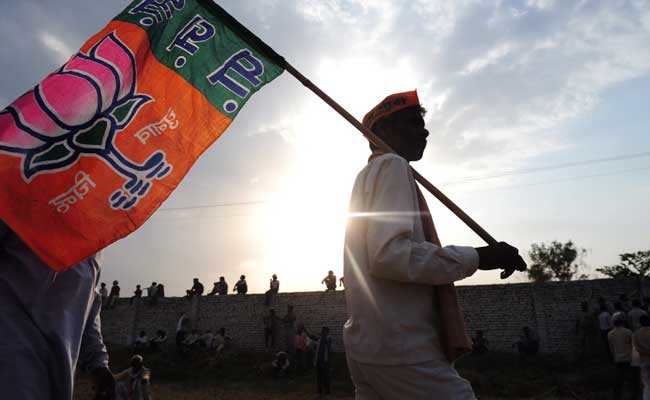
On the historic occasion of the 47th Foundation Day of the Bharatiya Janata Party (BJP), the moment is not merely one of celebration, but of reflection, resolve, and renewed commitment to nation-building.
A Journey Rooted in Ideology and Sacrifice
The BJP's journey is deeply anchored in the ideological foundations laid by stalwarts like Syama Prasad Mukherjee, Deendayal Upadhyaya, and Atal Bihari Vajpayee. Their vision of "Nation First" has evolved from a modest beginning into a vast political movement that today stands as the world's largest political party.
From the days of the Bharatiya Jana Sangh's 'Deepak' to the BJP's 'Lotus,' this journey has never been about the pursuit of power, but about a relentless tapasya for nation-building. Countless dedicated workers have endured hardships, imprisonment, and struggles, yet their spirit, echoing "Bharat Mata Ki Jai", has never wavered.
From Two Seats to Global Prominence
What began with just two seats in Parliament has today transformed into an unprecedented political force. The BJP's growth is not merely numerical; it reflects the expanding trust of citizens from Kanyakumari to Kashmir and Kutch to Kamrup.
Under the leadership of Prime Minister Narendra Modi, the party has achieved historic milestones, including forming the central government for a third consecutive term, an achievement unseen in over six decades. Today, the BJP governs multiple states while the National Democratic Alliance (NDA) continues to expand its footprint across India.
The party's organisational strength remains its backbone. With over 140 million primary members, the BJP has become a truly mass-based democratic organisation, with structured internal elections and grassroots participation from booth to national level.
Transforming Indian Politics
The BJP has not merely changed governments, it has transformed the very culture of Indian politics. Governance today is defined by delivery, accountability, and transparency rather than promises alone.
The party has mainstreamed the idea of nationalism, making it central to political discourse. It has also created a system where individuals from humble backgrounds can rise to the highest offices, Prime Minister Narendra Modi's own journey being a powerful example.
From Smt Droupadi Murmu rising from a tribal background to the presidency, to leaders who began as grassroots workers reaching national prominence, the BJP exemplifies a merit-driven political culture.
Governance Defined by Service and Transparency
Rejecting the politics of entitlement, the BJP has positioned governance as a tool of service. Through technology-driven reforms like Direct Benefit Transfer (DBT), government benefits now reach citizens directly, ensuring efficiency and eliminating corruption.
The principle of "Minimum Government, Maximum Governance" has redefined public administration, making it more transparent and citizen-centric.
Cultural Renaissance and National Pride
A significant transformation under BJP rule has been the revival of India's cultural and civilizational identity. Projects like the Ram Temple in Ayodhya, the Kashi Vishwanath Corridor, and the redevelopment of Kedarnath symbolize not just infrastructure development, but a cultural resurgence.
India's global cultural footprint has also expanded, with initiatives like International Yoga Day gaining worldwide recognition, reinforcing India's soft power.
A Decade of Transformational Leadership
Under Prime Minister Narendra Modi's leadership, India has witnessed bold and decisive governance. From abrogating Article 370 to advancing women's empowerment through legislative reforms, the government has taken steps that have reshaped the nation's trajectory.
Economic reforms, digital transformation, and initiatives like "Make in India" and "Atmanirbhar Bharat" have positioned India as a rising global economic power. Today, India stands among the world's largest economies and is rapidly advancing toward becoming the third-largest.
Security, Stability, and Global Leadership
India's security doctrine has evolved into a firm and decisive framework, with zero tolerance toward terrorism. Strategic operations and strengthened internal security have ensured stability across regions once affected by conflict.
Globally, India has emerged as a responsible and proactive leader. Initiatives like Vaccine Maitri during global crises showcased India's commitment to humanity, reinforcing its identity as a "Vishva Mitra" (friend of the world).
The Road Ahead: Viksit Bharat 2047
As the BJP marks its 47th Foundation Day, the journey ahead is clear, building a "Viksit Bharat" by 2047. This vision calls for tireless effort, unwavering dedication, and grassroots strengthening.
The call to action is clear: empower every booth, reach every household, and ensure that the message of "Nation First" resonates across the country. The focus remains on service, good governance, and uplifting the last person in the queue, true to the principle of Antyodaya.
The BJP's 47-year journey is not just a political story, it is a saga of ideology, sacrifice, and transformation. With a strong organisational base, visionary leadership, and a committed cadre, the party stands poised to shape India's destiny in the decades to come.
As the celebrations conclude, one message echoes across the nation, this is not a moment to pause, but to accelerate toward a stronger, more prosperous, and self-reliant India.
(The author is the national head of BJP's Information & Technology and Co-incharge of West Bengal)
Disclaimer: These are the personal opinions of the author
-
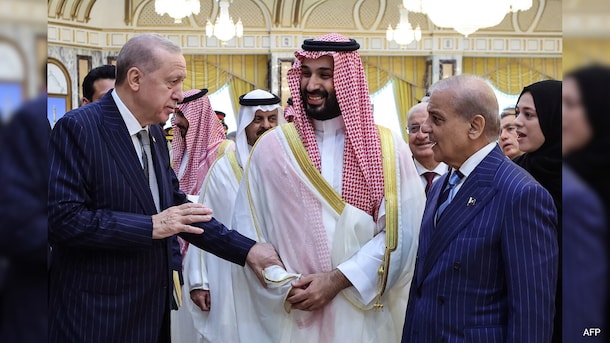
Opinion | Why The Saudi-Pak-Turkey Defence Pact May Actually Be An 'Intel' Network

Rather than a NATO-like construct, the Mecca pact may evolve to become something like the West's Five Eyes alliance.
-
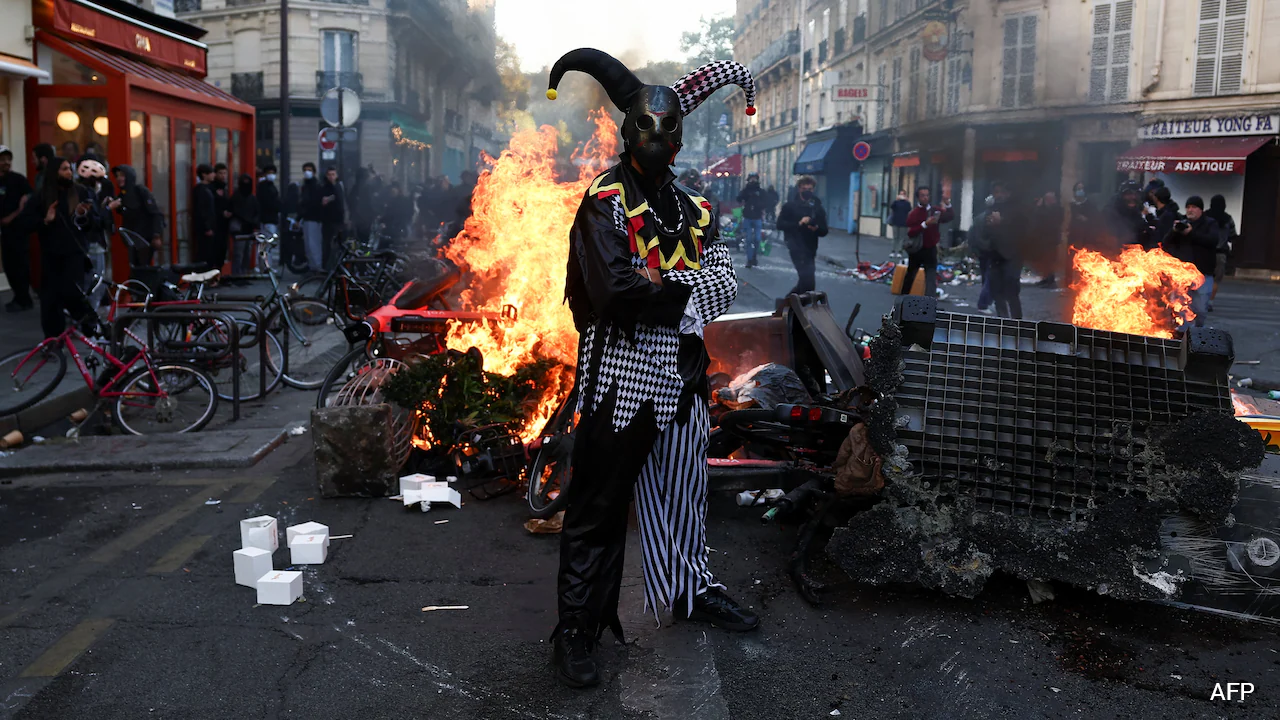
The Real Story Of France's Unrest Is Getting Lost In A Storm Of Online Lies
A man cosplaying Napoleon on the streets, looting at luxury fashion stores like Dior, France is currently confronting one of its most serious episodes of civil unrest in years.
-
Opinion | The Last Bet? What Trump's 'Mother Of All Bombs' Could Actually Do To Iran
Can an MOAB deliver a decisive blow to Iran that may force it to surrender immediately, as Japan did after Hiroshima and Nagasaki in World War 2?
-
Hit Songs, Empty Pockets: The Hidden Math Behind India's Viral Music Boom
Over 80,000 brands and five lakh creators in India make branded content. The opportunity is worth around Rs 1,500 crore.
-
Opinion | Great 'Exceptions': How The Oil India Was Attacked For Is The Oil Trump Now Seeks
A law written to punish the buyers of Russian oil was suspended by the US to protect a purchase of Russian oil. India spent fourteen months being lectured for less.
-
Opinion | Louis Vuitton Loot, Torched Cars: France Protests Have An Unlikely Beneficiary
It's an unbelievable moment. Crowds looting the most exclusive stores in Paris, including the famed Luis Vuitton. But what's behind this meltdown?
-
Blog: Kolkata Didn't Learn From 2015. Eleven Years Later, It Proved To Be Fatal
The City of Joy isn't a stranger to crowd control. Be it during Pujo or Christmas at Park Street, Eden Gardens cricket matches, or Derbies between Mohun Bagan and East Bengal. But during Pujo, the entire city is on alert.
-
Opinion | Slurs, Threats, Now A Temple Attack Plot: When Did America Become So Hostile To Indians?
The rising tide of anti-India, anti-Hindu, and racist attacks serves as a stark reminder that economic prosperity does not automatically guarantee social immunity from bigotry.
-
A Step Behind Neha Bora: What Rahul Gandhi's Gesture Says About Congress' Gen-Z Pitch
At INDIA bloc's march to Supreme Court, Rahul Gandhi placed himself a step behind two women, hands resting on their shoulders. One was his sister Priyanka. The one on his right was Neha Bora. Here's what the image means for the protest wave now, and for Rahul's politics in general.