Opinion | Will Israel 'Dump' Netanyahu? Why His Future Hangs In The Balance
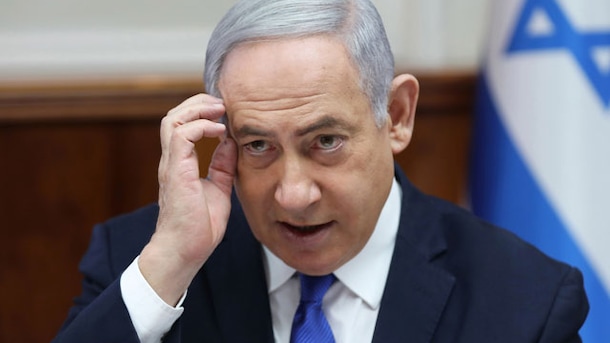
The October 7 incident continues to haunt 'Bibi', producing two competing arguments how the security breach occurred under Netanyahu's watch, and who Israelis can trust to protect them in the future.
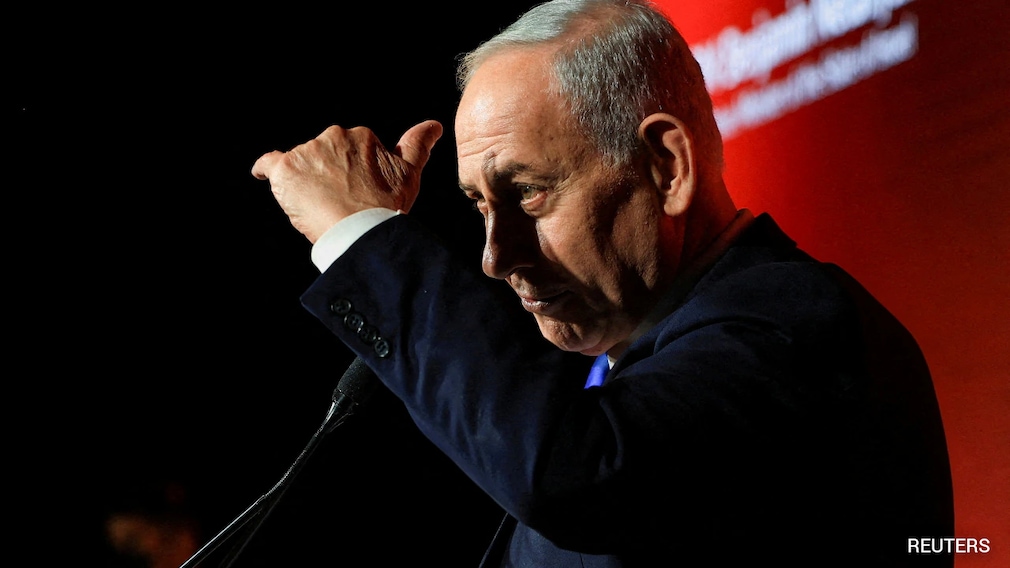
Israel goes to the polls on October 27, in an election extensively framed as a referendum on Prime Minister Benjamin Netanyahu. That assessment, however, limits a more crucial political contest to the fate of one leader, thereby missing a critical chapter of what Israeli politics looks like in the aftermath of the October 7 Hamas-led attack in 2023. The question that demands greater attention is whether the country's political center of gravity will shift if Netanyahu fails to secure an electoral mandate. Would a leadership change alter the country's strategic direction amid a heavily security-driven environment?
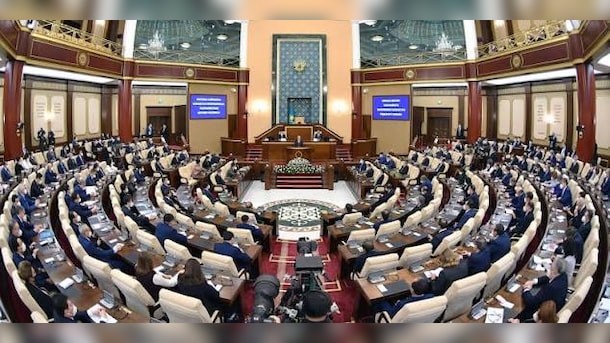
Before offering assessments of Israeli elections and their potential outcome, it remains important to understand the electoral process itself. Israeli citizens do not vote directly for the prime minister on the ballot; instead, they vote for parties to the 120-member Knesset, or the Israeli parliament, allocated through proportional representation. The country essentially functions as a single constituency, and any party surpassing the 3.25% threshold receives seats broadly proportional to its vote share. The result, therefore, remains less dependent on the number of seats each party secures and more on its ability to form a coalition to govern. The alliance is required to command the support of at least 61 lawmakers to win a parliamentary majority.
In comparison with Indian parliamentary elections, an Indian voter picks an individual member to be elected to the Lower House of the parliament, and the first one past the post generally gives the largest party or a coalition a clear mandate. Whereas, an Israeli citizen votes for a party, instead of a candidate, and the order of candidates on that list remains predetermined. In simpler terms, a vote for the Likud party is not a vote for Netanyahu. A party can lead polls, yet fail to form a government. Meanwhile, a smaller party could win fewer votes but become indispensable in reaching a majority of 61 seats.
The system, as such, is essentially rooted in coalition-building and less in ideological alignment of parties. The political polarisation and trauma of the October 7 attack seem to be dominating the political plank, as demonstrated in the broader consensus on security-related issues. The key divisive issues are based primarily on two questions: who should govern and how the state should be governed.
Israel's Political Spectrum
The characteristics of Israeli politics are reflected in the parties contesting the polls, and a closer examination of these parties reveals how these entities hardly fit the conventional political spectrum of right-wing and left-wing. The Netanyahu blocs can be understood as an alliance of distinct right- and far-right-leaning parties and religious constituencies. For instance, Netanyahu's Likud party represents nationalist-conservative politics, with a focus on security-related issues, Jewish national identity, and a strong executive. The ultra-Orthodox parties, including Shas and United Torah Judaism, have prioritised religious education, welfare, and preserving the current religion-based status quo. The far-right parties, including Minister of National Security of Israel Itamar Ben-Gvir's Otzma Yehudit, take a hardline position on territory, Jewish settlements, and Palestinian statehood. While these parties have overlapping consensus on security and national identity, acute differences remain in how they view military services, the relationship between state and religion, judicial reform, and economic policy. They remain both strains and allies for Netanyahu.
A similar lens can be applied to the opposition bloc, which does not represent a conventional left-wing or a drastic opposition to the Netanyahu camp. The political plank of Gadi Eisenkot, known to be the biggest opponent in the ongoing polls, also rests on his security credentials as the former chief of staff of the Israel Defense Forces (IDF). He argues that Israel can remain security-centric without Netanyahu, while campaigning around issues of greater accountability, democratic institutions, and corruption concerns. Other key figures in the anti-government opposition bloc occupy distinct policy spaces - former Prime Ministers Naftali Bennett and Yair Lapid form a centrist-to-center-right alliance focused on security and governance reform, while Avigdor Liberman champions defense hawkishness alongside strict secularism. Meanwhile, the liberal-left, headed by Yair Golan, represents a smaller, distinct constituency.
With that logic, the upcoming Israeli government, even if without Netanyahu, is unlikely to have a softened stance on the question of Palestine and regional security.
Despite consensus on the security approach, the issue of military services has emerged more prominently in the discourse. Israel is a citizen army, with conscription closely tied to the country's social contract. Historically, the Haredi, ultra-orthodox community has been exempt from military service. However, heavy reserve mobilisation and exacerbated concerns of security have made this exclusion a central political debate. For secular and religious parties, this remains a matter of sharing an equal burden; meanwhile, Haredi parties regard this exclusion as a way of preserving their distinct religious lifestyle.
Predictably, the October 7 attack has disproportionately dominated electoral campaigns over other national issues. The incident produced two competing arguments – how the security breach occurred under Netanyahu's watch, and who Israelis can trust to protect them in the future.
Therefore, any anti-Netanyahu vote or sentiment should not be misread as a desire for a different Palestinian policy, with neither bloc campaigning on the issue of a two-state solution or against the disproportionate use of force in Gaza in 2023, or increasing settlement-related violence in the West Bank. The election contest may not alter Israel's strategic or regional direction in the foreseeable future; however, a change of leadership can carry significant domestic consequences.
(Aishwaria Sonavane is a research analyst at the Takshashila Institution)
Disclaimer: These are the personal opinions of the author
-
BJP Leader's Singer Wife, A Kabir Bhajan Gone Viral, And The 'Jantar Mantar' That Wasn't

A video of Sivasri Skandaprasad's singing performance went viral, interpreted as a dig at protests at Delhi's Jantar Mantar. What she's singing is actually attributed to the saint-poet Kabir, and he did not really mean that particular "jantar mantar". He meant something far more profound.
-
Opinion | How India Is Making Its Stock Market An Expensive Place To Invest
FPIs sold Rs 1.66 lakh crore of Indian equities in 2025 and a record Rs 3.08 lakh crore in 2026 through October 12. Foreign ownership of the Indian market is at a 15-year low
-
Jail Is No Bar: How Gangsters Call The Shots From Inside Prisons
Jail can become a safe haven from enemies, a recruitment ground for fresh gang members and, in some cases, a command centre for criminal operations
-
From King Edward III To Neha Bora, A 1361 Law Lives On In 'Peace Bonds': NDTV Explains
CJP leaders Abhijeet Dipke, Saurav Das, and Ashutosh Ranka signed peace bonds; two of them even faced jail over an alleged breach, while AISA's Neha Bora questioned such a bond's very logic. Here's what a peace bond is, and what the questions are.
-
Air Force Golf Course Near PM House Closed. How This Land Has Seen Many Turns Of History
The Air Force Sports Complex, which includes the golf course, is the latest property near the Prime Minister's residence set to be taken back this year, as the land is owned by ministries.
-
Opinion | How A Poland 'Experiment' Could Change India's Defence Industry
Europe is spending billions on arms in a historic rearmament drive. Indian firms can cash in. But there's a catch
-
Opinion | The Muslim World Is Seeing An Unexpected 'Experiment' - In Kazakhstan
The country has a long history of using mediation to mitigate conflict; now, it has added another, much-wanted dimension to it.
-
"OpenAI Has Been Very Bad For The World": Ex-Google Researcher
Alex Turner, who quit Google DeepMind over its Pentagon deal, says no single lab can fix the AI threats, and that the US and China will have to coordinate.