Opinion | Bankipur, And Why The Most Dangerous Voter Is The One Who Thinks Again
Bankipur is like the NOIDA of Uttar Pradesh. Its voter list isn't like the rest of Bihar. Which is why one must be careful in declaring Kishor's win a phenomenon - yet. But then, there's the power of the voter...
"If your vote doesn't change your life or your situation, then you need to change your vote."
Democracy doctrines like this one come true more as an exception than as a rule. Since voter fatigue is slow to grow and voters' tolerance slow to fade, these doctrines most often end up being mocked or trolled. But history has enough evidence to prove that when the exception does arrive, it changes not just one game but the rules of the game.
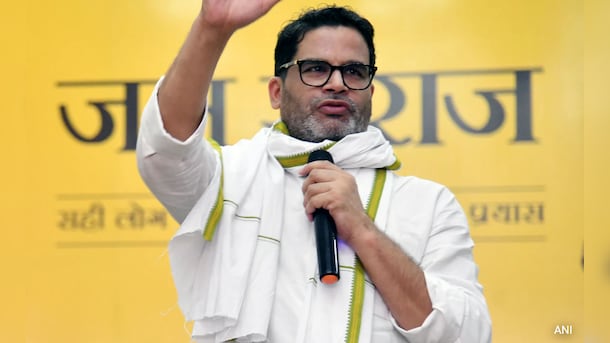
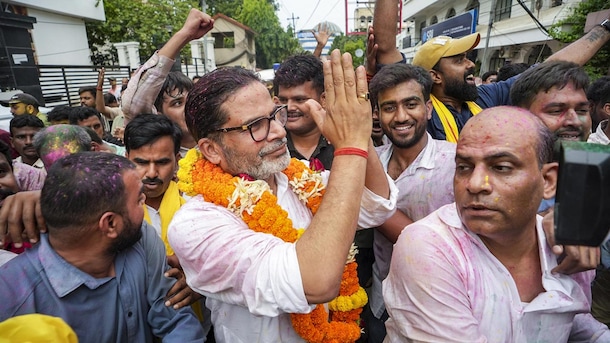
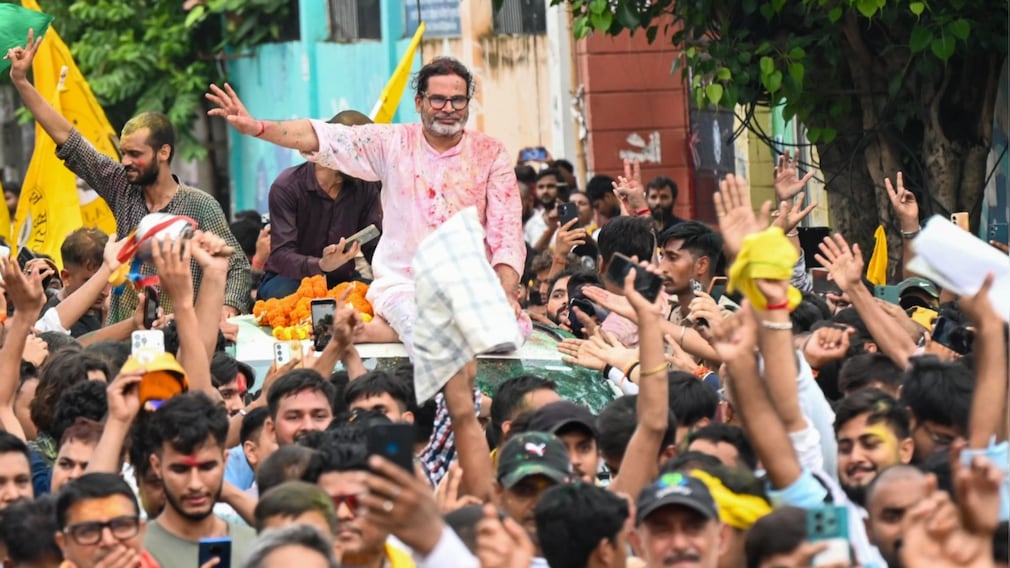
On Monday, Jan Suraaj Party founding chief Prashant Kishor defeated his rival from the BJP in the Bankipur bypoll. Headlines sang in chorus. The BJP lost its 31-year-old bastion. The win had an umami taste to it, as just seven months ago, each one of his 238 candidates in the Bihar Assembly polls had lost.
That's why, when the result came in, I wondered and hoped. Is the doctrine having its moment in the sun? Is it a flash in the pan or the start of a phenomenon?
Bihar Has Been Here Before
Naysayers have always scoffed and asked, "Bihar mein ka ba?" ("What's there in Bihar?"). But everyone who has invested thought without prejudice and looked beyond the abject apathy and poverty in Bihar knows that, despite it being the top BIMARU state, and irrespective of the asphyxiating talons of caste in the state's politics, once in a while, the voter recovers and delivers a moment to romance electoral democracy. It may not last. It may mutate into something good, bad, or ugly.
I was in Bihar covering the February 1990 assembly polls. It was an "exceptional moment" in India's poorest state, home to people crushed by the absence of basic necessities, hope, and a state that cared.
Then, the children of indifferent gods didn't just transfer power into the hands of the Mandalites or dethrone the dominant demography by breaking the upper caste's grip over the state - they wiped out the Congress so decisively that the party, till date, has not been able to make even a feeble recovery in Bihar or neighbouring Uttar Pradesh.
I stumbled upon that clinching evidence, that the voter crafts democratic destinies, days after Lalu Prasad took oath on March 10, 1990, as Chief Minister. That day, he had reached Phulwaria, his native village. We were in tow. A crowd, consisting largely of dust-covered, shirtless, barefoot kids with matted hair and bright, hopeful eyes, watched and cheered in amazement.
'Hathua Raja'
Lalu was the Chief Minister. The state was his stage. As if the curtain had just lifted, in a showman-like moment, he went towards a grazing buffalo. With a quick jump, he was on its back. The procession started. Inside his less-than-humble home, his mother was cooking a meal. Lalu wanted to tell her, "I am now Bihar's Chief Minister." But the expanse of his mother's world geography was limited. She didn't know what Bihar or a Chief Minister meant. Lalu resolved the situation. He told her, "I have become the raja of Hathua." She knew about the Hathua Raj zamindari estate belonging to the Baghochia clan of Bhumihar Brahmins. Lalu wanted to convey that he was the most powerful man in the state. The most powerful man his mother knew was the "Hathua Raja".
Sitting in that house that day, I realised the power the voters had unsheathed. Sitting today in the newsroom, I have empirical evidence that the change they brought about that day in February 1990 has redesigned Indian politics. The jury is out on whether the change was good, bad, or ugly.
For Prashant Kishor or the JSP, replicating Bankipur, or the impact the Mandal and Mandir issues had across Bihar, will be a Herculean task. But I would love to romance the outcome of the Bankipur bypoll, just because the voters preferred to pick a candidate and changed their choice of party. They had a reason beyond caste for their vote in a caste cauldron like Bihar.
Every checkbox said Bankipur was a BJP bastion. Urban in character, like no other in Bihar. The state CM's residence, the state's university, iconic Gandhi Maidan, and the hefty real estate around it all fall in Bankipur. It also had a perfect caste arithmetic for the BJP. The upper-caste vote ranges between 35% and 40%. With Nitish Kumar on its side, the BJP controlled a captive 50% of the votes. Then there was another advantage. Out of the 40% upper-caste vote, the Kayasthas account for 14-15%. And since 1995, the BJP's candidate for Patna West, the earlier avatar of Bankipur, was Nabin Kishore Prasad Sinha, a Kayastha. In 2010, Bankipur voted for the first time after the delimitation exercise in Bihar. And the first winner was Nitin Nabin, the current BJP national president. Bankipur was won a whopping nine times in 31 years by him and his father.
Everything Was In BJP's Favour, Until It Wasn't
The odds seemed stacked in favour of the BJP. The BJP had its first Bihar Chief Minister, Samrat Chowdhary, manning the fort. The BJP-JD(U)-LJP alliance had routed the INDIA bloc, especially the RJD, just seven months ago.
Many say the BJP lost because it was complacent. Before polling, most leaders felt that in Bankipur, the "lotus symbol" was the factor, not the name or face of the candidate. The party entered the contest in a mess. When Nitin Nabin quit Bankipur for a Rajya Sabha membership, the BJP fielded Ashutosh Bunty as its first pick. But then he bowed out. His father was an accused in a scam involving Lalu Prasad. His party feared Prashant Kishor would make corruption a poll plank. Party sources say the party president picked Neeraj Kumar Sinha as the replacement. To compensate, the BJP pushed a large number of leaders to campaign towards countering Kishor's direct-contact-with-voters outreach.
But the BJP failed to gauge the depth and width of voter discontent. During the campaign, the most frequently heard refrain in the constituency among BJP supporters was: "The party needs to be taught a lesson." In various parts of the constituency, during morning walks, elders were heard expressing a sense of hurt over the exaggerated swagger of the BJP leadership. An ex-professor at Patna University who operates a literature club had told me during a phone call barely a week before polling, "Voters of this constituency don't battle for bijli [electricity], sadak [roads] and paani [water]. They pick Ravi Shankar Prasad as their MP because of the IQ and worldview he brings. That has been the overarching factor. There is caste and ideological loyalty beneath it. But if the party takes the voters for granted, then splintering happens. They won't opt for the RJD, but Prashant Kishor becomes a credible option."
Fundamental Matters
The BJP's success for 31 years hinged on the demographic composition of this seat. The mood among the upper castes, a literate and relatively affluent voter block, shifted because of other factors as well. A section was miffed at the BJP's visible demographic focus shift from the upper castes to the backwards and most backwards. The elevation of Nitin Nabin, a Kayastha, wasn't seen as an adequate counterweight to Samrat Chowdhary becoming Chief Minister.
Bihar grapples with high unemployment, which has historically led to the migration of people to other states. Bankipur has a large number of educated youth who are struggling for jobs or better-quality jobs.
The issues have been on Kishor's agenda since he launched his padyatra (foot march) in 2022. In Bankipur, he persisted with his core messaging but had a definite target: Chief Minister Samrat Chowdhary. He turned the contest into a straight choice between the two of them. The focus shifted to personality over local issues. This pushed the BJP's Neeraj Kumar and other rivals out of the spotlight.
Then the twin troubles in the form of the UGC guidelines and the NEET paper leak, followed by student unrest, arrived. Hardly any student in this voting block ever opts out of the education system after school. They chase higher degrees and bigger dreams. UGC-led institutions and NEET are household pursuits. Bankipur has colleges and exam-coaching centres every 500 metres. Nearly a third of its voters are under 30. Young voters in this block have little or no recollection of what the NDA calls Lalu's "Jungle Raj". They don't carry much ideological or social baggage. Faced with academic uncertainty and the ensuing mess, they were angry. Their anger rubbed off on their family members.
RJD Was Never An Alternative
The upper castes shifted. Experts in Patna say almost 50% of the Kayastha and other upper-caste votes migrated.
This must set off alarm bells in the BJP as it heads towards the crucial Uttar Pradesh Assembly polls in February 2027. Interestingly, in Bankipur, the voters shifted their preference but maintained an electoral pattern. In past elections, caste was a factor. But they used to wrap their choice in a progressive outlook.
The upper castes have a deep aversion to the RJD. The party's 15-year rule alienated them completely. 'Lalu Raj' became synonymous with 'Yadav Raj'. They became the prime victims of the state's steady economic decline and worsening law and order. A large number of upper-caste members migrated out of Bihar to metros like Delhi, and even neighbouring Uttar Pradesh. That's why they anchored their vote with the BJP or the JD(U) when it was aligned with the BJP.
That is why, this time in Bankipur, even though the BJP was set to lose upper caste support, the RJD was never considered an alternative. Interestingly, Prashant Kishor avoids using his surname. He has been battling against the predominance of caste as the key factor in electoral decisions by parties and voters. But it's common knowledge that he is a Pandey Brahmin. So, it's clear that the upper castes deviated from the BJP but stayed the caste-course to pick a savvy ex-election strategist who comes from an upper-caste background and has been using a vocabulary that emphasises cleaner politics.
This is something that should worry the RJD and Tejashwi Yadav. Prashant Kishor's debut win indicates that a certain segment of traditional BJP/NDA voters is not ready to opt for it, even when they want to port out.
1990 Redux?
Experts are refusing to call Kishor's win the start of a phenomenon. Their caution is justified. Bankipur is like the NOIDA of Uttar Pradesh. Its voter list isn't like the rest of Bihar. For Kishor to go beyond being the lone Jan Suraaj MLA in the Bihar assembly, he will need the ground to change drastically and find candidates who are in sync with that change.
But Bihar voters changed things in 1990. They changed with Nitish Kumar. They liked his ideas - his bicycles for girl students, schemes for women, and his empowering of the extremely backward castes. They kept him relevant enough to ensure that both the BJP and the RJD had to depend on him.
The BJP is a formidable electoral machine. It will go back to the drawing board. The swagger of its leaders is irking voters and will be hard to amend. It needs to find ways to compensate for Nitish Kumar's active absence from day-to-day politics.
That's why most will disagree with seeing this one assembly seat result as an early sign of change. They are pointing out that the vote for actor Vijay in Tamil Nadu and the rejection of legacy parties is a South Indian phenomenon. But the support for an online satirical platform, CJP, without established political umbilicals, can be cited as a counter.
Indian politics has a history of both protest movements not translating into votes and protests leading to a tsunami of votes. That's why an individual's judgment on the Bankipur verdict depends on how romantic one can get about the power of a voter.
(The author is a senior journalist and Consulting Editor, NDTV)
Disclaimer: These are the personal opinions of the author
-
Russia's 'Human Safaris' Are Bringing Terror To Ukraine's Frontline Cities

Kherson is among the first places where Russian forces began using short-range FPV drones against civilians. Equipped with live-streaming cameras, the aircraft allow operators to observe targets in real time and make decisions moments before impact.
-
Opinion | Prashant Kishor May Just Be Playing Two Games At Once In Bihar
The Jan Suraaj is neither a 'BJP-lite' option for disaffected upper-caste voters, nor is it an RJD alternative for Muslims. It is, in fact, both things at once, in the same seat, in the same election.
-
Opinion | Inside The Cabinet Drama That Has Shaken The Congress In Karnataka
Siddaramaiah's decision to 'boycott' the swearing-in ceremony because of a perceived 'insult' is a story in itself.
-
Opinion | The Panic In Rawalpindi: Why Pakistani Generals Suddenly Sound So Afraid
Lectures on governance and usual accusations against India aside, the truth is that Pakistani generals are fast losing their grip on the country.
-
Opinion | Bankipur Is Prashant Kishor's Stinging Comeback. But It Is Also The End Of His 'Excuse'
Kishor's ideological flexibility helped make him a successful strategist, but it remains a political vulnerability.
-
As AI Takes Jobs, Could It Also Create A New Generation Of Entrepreneurs?
The job market has already begun feeling the impact of AI as companies automate more tasks and rethink hiring. However, India Inc and global industry captains believe the AI disruption could mean spawning a new wave of entrepreneurs.
-
Ahmedabad 2030 Isn't Just About Commonwealth Games, It's India's Olympic Audition
Ahmedabad will host the 2030 Commonwealth Games, exactly a century after the event first began in Hamilton, Canada. India hosted once before, in Delhi in 2010
-
Opinion | Kangana Ranaut Is Fast Running Out Of Enemies To Pick On
Kangana spent years cultivating the image of the 'lupa', the lone she-wolf who survived without a pack. But rebellion, once rewarded, can quickly become an addiction.
-
Opinion | 17 Dead, 166 Trapped: How Indian Seafarers Became 'Collateral' In Others' Wars
India is now the second-largest supplier of seafarers in the world, contributing 311,936 personnel. But that also means that they are among the easiest targets during war.
-
Demography Awaits Dividend: BRIC By Brick, India Built Growth But Not Jobs
Twenty-five years, five governments and several hundred investment summits later, demography is waiting for politics to propel the promise.