Opinion | Why Freebies Work Brilliantly, Until They Suddenly Don't: A Tamil Nadu Paradox
Freebies work under three conditions - and fail when any one of those conditions is absent.
In the 450s BC, the Athenian statesman Pericles introduced payment for jury service. Three obols per day, roughly a labourer's daily wage. The reform was genuinely progressive. Poor citizens who could not afford to forgo a day's income now had access to the courts and through them to the democratic machinery of the city. Within a generation, the payment had been extended across other civic functions, the amounts had grown, and Aristophanes was writing comedies about elderly Athenians whose entire social world had reorganised itself around collecting the daily fee. Aristotle, reviewing the arc of Athenian democracy, traced to this moment a particular degeneration: not in the justice of the original payment, but in what followed. A constituency had been created whose identity and income were tied to the continuation and expansion of the distribution. No subsequent Athenian politician managed to reduce it. The question had shifted, permanently, from whether jury pay was sound policy to whether citizens who received it deserved it. That is a very different and far more intractable argument.
India's political parties have spent years running a version of this experiment at scale and speed.
Six state elections between 2023 and 2026 have produced something close to a controlled dataset on the electoral returns to cash transfers. The results are neither the vindication that welfare economists hoped for nor the cautionary tale that fiscal conservatives predicted. They suggest, instead, a replicable set of conditions under which the freebie works, equally precise conditions under which it fails, and a philosophical problem that neither the Supreme Court nor the Finance Commissions' definitional struggles, nor any party manifesto has yet confronted honestly.
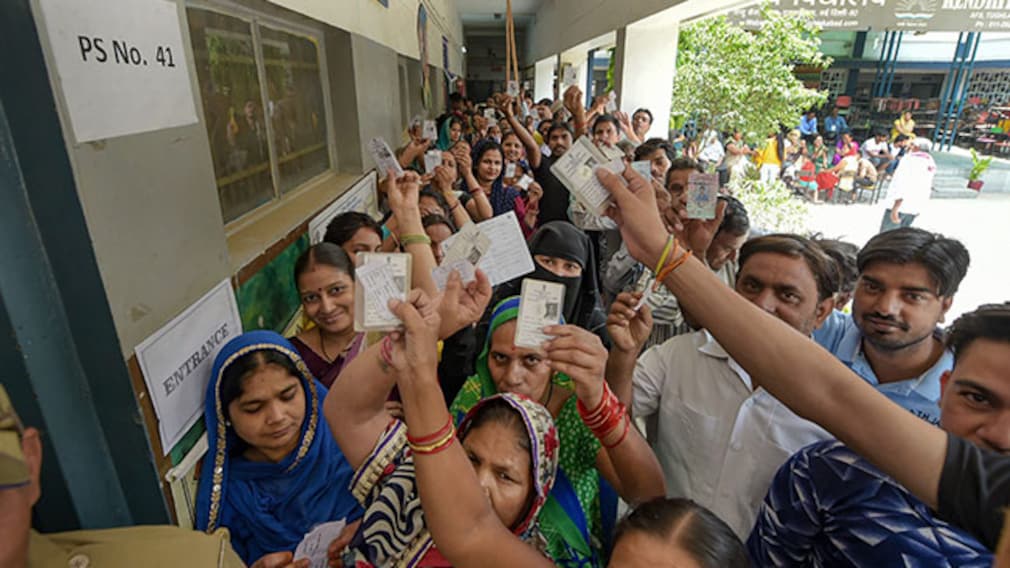
Start with the successes. In Madhya Pradesh in December 2023, Chief Minister Shivraj Singh Chouhan launched the Ladli Behna scheme months before polling. Rs 1,250 per month to women in low-income households, disbursed at speed into 12.5 million bank accounts. The BJP won 163 of 230 seats. Women's turnout rose 2.2 percentage points over 2018. In Maharashtra a year later, the Ladki Bahin scheme at Rs 1,500 per month attracted enrolment from 80% of eligible women. Of those enrolled, 54% voted for the ruling Mahayuti. The alliance won 235 of 288 seats. In Bihar in November 2025, Chief Minister Nitish Kumar transferred Rs 10,000 to the accounts of 1.25 crore women under the Mukhyamantri Mahila Rojgar Yojana in the weeks before polling. The opposition countered with a promise of Rs 2,500 per month to every woman, which was arithmetically more generous. It did not matter. The NDA won 202 of 243 seats. In Assam this month, Chief Minister Himanta Biswa Sarma transferred a consolidated Rs 9,000 under the Orunodoi 3.0 scheme to four million women before the April polls. Female voter turnout reached 85.96%, exceeding male turnout for the first time in the state's electoral history. The BJP crossed the majority mark on its own for the first time, winning 82 seats.
Now consider the failures. Tamil Nadu's DMK had been paying women Rs 1,000 per month under the Kalaignar Magalir Urimai Thogai since 2021. For 2026, the party proposed doubling it to Rs 2,000, adding Rs 8,000 appliance coupons, extending the school breakfast scheme, and offering free bus travel. The AIADMK matched nearly every item. TVK offered its own women's transfer. The result was a market in which three parties auctioned near-identical packages to the same electorate with no material differentiation between them. Vijay's TVK won 108 of 234 seats. The DMK was reduced to 59. Stalin lost Kolathur. In West Bengal, the Trinamool Congress had delivered Lakshmir Bhandar, health insurance worth Rs 10 lakh, grain delivery, and enhanced MGNREGA wages. The BJP won 206 of 294 seats. Fifteen years of TMC rule ended with the party reduced to 80 seats.
The pattern is not that freebies work or do not work. It is that they work under three conditions - and fail when any one of those conditions is absent.
The first condition is novelty. A transfer delivered for the first time creates excludable benefit, i.e., the voter can attribute it precisely to a political decision. The Ladli Behna voter in Madhya Pradesh received her first instalment and knew exactly who had authorised it. By 2026, Lakshmir Bhandar had been paying West Bengal women for five years. It had ceased to be a gift and become an entitlement, factored into household budgets, no longer attributable to any political generosity. An incumbent who continues a scheme receives no electoral premium. The voter simply punishes discontinuation. The political half-life of a transfer begins declining from the month of first disbursement.
The second condition is that the transfer must remain personally legible. Research on Delhi's municipal elections by Abhijit Banerjee and co-authors is instructive here. They found that municipal councillors consistently spend on visible goods: roads, parks, and streetlights, rather than on what slum dwellers actually need and prefer, which is sanitation and drainage. The electoral return to a visible road exceeds the return to an invisible drain. The direct cash transfer is the logical endpoint of this visibility premium. It is maximally legible, immediately personal, and unambiguously attributable to a specific government decision. The moment three parties announce the same transfer, that legibility collapses. The signal becomes noise. Tamil Nadu in 2026 is not a market failure in the economic sense. It is a market that has cleared to a bad equilibrium. Every party played rationally, and every party lost.
The third condition is that the transfer cannot be swamped by accumulated governance failure. West Bengal is the demonstration case. The teacher recruitment scandal implicated the highest levels of the state government. Cut money, the extortion commissions levied by local party workers, had become a lived experience across the state. Sixteen years of TMC governance had built a deficit of institutional trust that no monthly transfer could offset. Pranab Bardhan and co-authors, in work on Indian clientelism, make the underlying point. When voters believe that a governing party is extracting from them through one channel while distributing through another, they discount the transfer by the expected cost of continued extraction. The net calculation had turned negative for the TMC before a single ballot was cast.
Here is the uncomfortable implication beneath all of this. The freebie is a solution to an information problem, and not a particularly dishonest one. Governance quality is diffuse, long-term, and genuinely difficult for any voter to evaluate. The quality of a public health system, the efficiency of a land records office, the integrity of a procurement process, none of these are as visible or as attributable as a Rs 1,500 monthly transfer into a bank account. In an environment where voters cannot reliably distinguish competent administration from theatrical administration, the cash transfer substitutes for a performance record. It says, in the most concrete language politics has available, this government took a decision that put money in your account this month.
This substitution is individually rational for every party. It is collectively catastrophic. Tamil Nadu borrowed its way from Rs 4.9 lakh crore in debt to Rs 11 lakh crore over five years, paying for transfers that no longer differentiated any party from any other. The logic of competitive populism has no natural floor. Each escalation forces a matching escalation from competitors, until the auction collapses either into fiscal crisis or, as in Tamil Nadu, into the voter's preference for novelty in the form of a film actor who has not yet had the chance to disappoint.
The Supreme Court and successive Finance Commissions have spent years attempting to define what a freebie is, and they will not succeed. The boundary between a welfare entitlement and an electoral inducement is genuinely porous and shifts with context. What Annadurai's subsidised rice was in 1967 is not what an Rs 8,000 appliance coupon is in 2026. No court can draw that line cleanly, and even if one could, the political incentive to cross it would remain intact.
The Athenians never solved their escalation problem through policy, because the discussion had been permanently reframed from cost and effectiveness to desert and entitlement. What the research from Delhi's municipal wards suggests is that this is not a permanent condition of democratic politics. When credible, public information about political performance exists, politicians respond rationally by shifting their behaviour toward actual delivery, because the reward for legible governance finally exceeds the reward for legible distribution. Building that architecture of accountability is slow, unglamorous, and institutionally demanding. It asks parties to accept that governance quality can be measured and compared. That is a condition under which bad governance cannot hide behind generosity, which is precisely why no party has been enthusiastic about it.
India does not lack a welfare policy. It lacks the infrastructure that would make governance quality as observable, as attributable, and as personally felt as a bank transfer. Until that changes, the payment will keep rising, no party will be able to stop raising it, and the question will never return to whether it is working.
(The author was with the Economic Advisory Council to the Prime Minister)
Disclaimer: These are the personal opinions of the author
-
Opinion | Xi Is Truly Done Falling For The Great American Bluff

The Chinese and others have long sized up Trump. And they're no longer buying his threats - or his promises.
-
Opinion | PM Modi's Austerity Appeal And The Bitter Economics Of 'Sacrifice'
Can the watch still keep time if one or two of its components are stopped or slowed? The fact is, just as private investment has direct and indirect benefits, consumption cuts have direct and indirect consequences.
-
Opinion | 3 Blasts In A Week: Pakistan's Taliban Blowback Is Entering A Dangerous New Phase
First came an IED attack, then a suicide blast, with militants taking weapons and police personnel from the site, then a bomb blast.
-
The Missile Is Dead. Long Live The Map: How Iran Invented 'Future Of War'
Iran's weaponisation of the Strait of Hormuz - squeezing energy flows and simultaneously threatening subsea cables - has re-introduced the world to structural leverage warfare and marked it as the future of conflict.
-
Opinion | PNS Hangor: Inside The $5 Billion Submarine Fleet Pakistan Is Buying From China
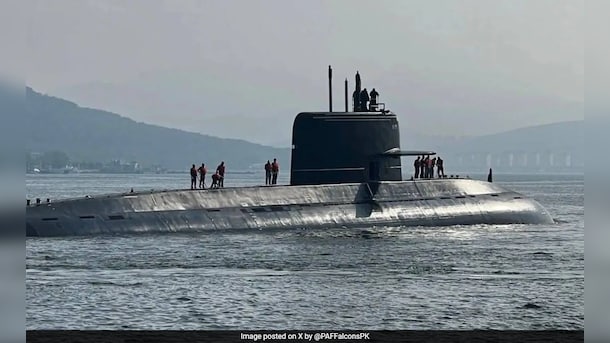
With the commissioning of PNS Hangor, what is no longer open to debate is the proposition that any future India-Pakistan conflict, in terms of force composition, will be a proxy engagement involving Chinese military technology.
-
Opinion | The Beijing Spectacle: Two Weary Giants Carve Up Their Share Of The World
Rather than fighting to the death for absolute global hegemony, Washington and Beijing are learning to partition the global commons - with the rest of the world forced to watch from the periphery.
-
As Customers Seek New Experiences, Do Brand Loyalty Discounts Still Work?
Across hospitality, retail, fintech and travel, the message is the same: customer loyalty is shifting from transactions to relationships.
-
'Delhi Ab Door Nahi': How The 90-Minute Radius Is Rewriting NCR Growth
Thanks to a wave of new expressways, rapid transit projects and metro expansions, Delhi is no longer distant in mind or movement from its satellite towns.