Opinion | China Is No Longer Waiting For Trump To Set The Rules. And He Knows It
America's old diplomatic tricks with China won't work any longer. Because China has changed, and so has its ambitions.
Since the 1970s, US-China relations have been the fulcrum of the world order. While the strategic balance has always been shaped by the military balance of power between the US and the Soviet Union, and, in our time, between the US and Russia, China has been the classic 'swing power' in this global triangle. Both Washington and Moscow recognise this reality. There is no major geopolitical decision in Washington that does not involve a calculation of Chinese interests and reactions. When the Kremlin was on the verge of intervening in Ukraine, it was Beijing that Moscow kept on side to secure its back.
During the late Cold War years, Washington enlisted China in its anti-Soviet containment strategy. In the post-Cold War era, the US sought to keep China from doing things that could complicate US geopolitical objectives. In some form or another, China's role has been central to prolonging a US-led order. An innate Chinese attitude to mind its affairs and secure its own periphery has allowed the US to recover from a series of geopolitical follies over the decades.
China Has Changed
The stakes in this game, however, have suddenly changed over the past decade. As China's power has grown and it has shed its previous inhibitions about projecting its own world order ideas and defending its interests, the US' juggling act in the great power triangle has become more and more complicated. By the mid-2010s, China itself became an object of US strategic concern, changing the fundamental conundrum of US geostrategy: responding to the emergence of a new peer competitor. Yet, when confronted with a stark choice of reorienting American strategic posture towards Pacific Asia and crafting an assertive policy, US administrations, without exception, have balked at such a move.
The primary direction of pressure from the US has remained on the Eurasian heartland area and stubbornly focused on Russia. The outbreak of the Ukraine crisis in 2014 locked the US into a confrontation with Russia that finally escalated in 2022. With an unending and resource-guzzling NATO-Russia war of attrition in Ukraine, China became a secondary front that was managed by a mix of diplomacy and a non-provocative military posture to keep the Western Pacific stable.
Confrontation with Russia and stability with China have become two sides of the same coin. It is because the US lacks the power to simultaneously pressurise Eurasia's great powers that US-China relations have acquired their unique character. The US debacle in the Iran war and military failure to subdue Tehran has removed all doubt about the ability of the US to contemplate a China containment policy in the traditional sense or bring to bear a credible military posture in Asia that could alter Beijing's calculus.
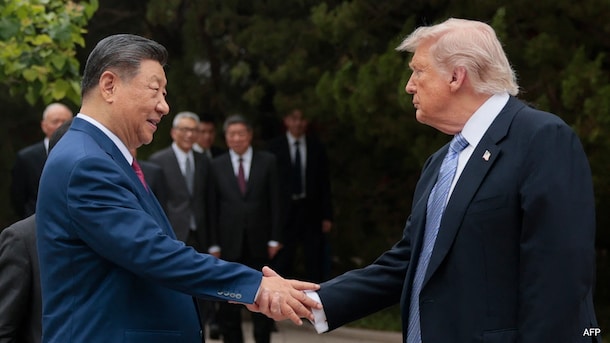
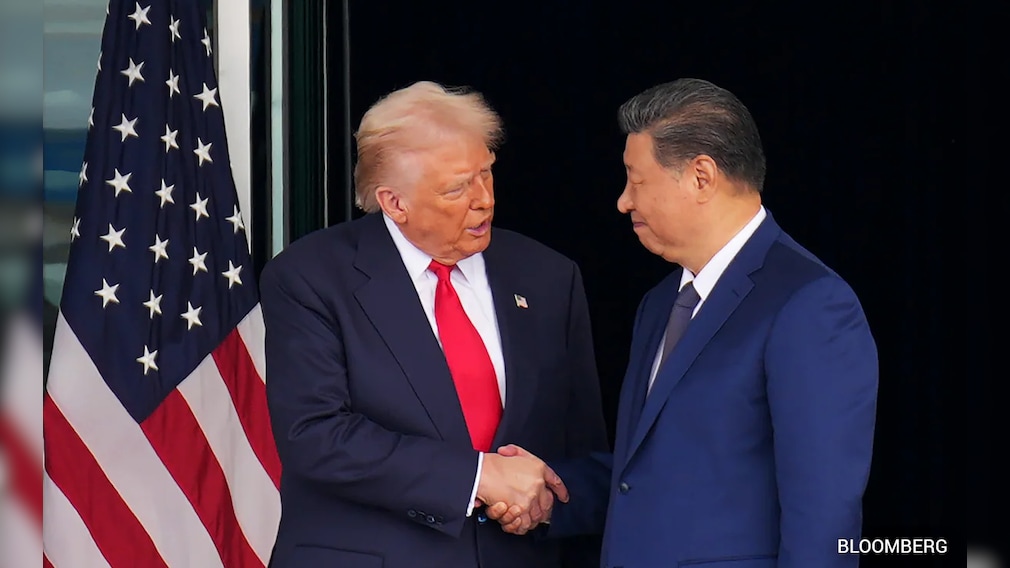
2026 has been a turning point. This is the big picture context that sets the backdrop to the Trump-Xi summit.
American analysts are pessimistic that any clear policy line can emerge from a broken Washington and a dysfunctional White House that has lost control of its foreign policy agenda. In economic terms, "China has escalation dominance over the United States, meaning that at any level of threat, the Chinese government has the ability to inflict more pain on the United States than vice versa." The Trump White House has learnt this the hard way as all its bluster against China fizzled out in 2025. Shrewder analysts hope for the US to buy time by engaging in a renewed form of sophisticated interdependence while rebuilding domestic capacities. But will the Chinese oblige in helping the US revive and transform its industrial economy, only to be confronted with real hostility further down the road?
The big shift in Sino-American relations is how the Chinese are articulating the terms of engagement. Following Xi Jinping's cue, Chinese scholars are more confident and realistic in how they define a framework for stable ties. Competition and differences are no longer shied away from but are to be managed and "not become a geopolitical roller coaster". The tables have turned. The once-worrying US rhetoric of competition from the past decade has now been adopted by China, which is "willing to recognize that the fundamental nature of US-Chinese relations is competitive". Indeed, "Beijing believes that competition can be effectively managed without presenting an existential threat".
This new, confident attitude can be explained not merely by China's economic-technological advancements but also the broader geopolitical context of multipolarity.
This Is No 'G-2'
Some strategists have misinterpreted this Chinese discourse as foreshadowing a G-2 or a typical great power relationship where the rest of the world falls into line. These clichés belong to the past. The fact is that both these rivals, despite their interdependence, have opposing conceptions of world order in a fast-changing international landscape.
One way to discern this is to see what the Chinese are not doing. They are not exploiting the Russia-NATO conflict to cut a side deal with the US, an opportunity that the latter has probed for years and would still relish. Neither is China helping the US extricate itself from a range of miscalculations, such as the trade standoff with China, or the catastrophic war in the Middle East, or mounting structural problems in the US economy. China is not encouraging a regional condominium with the US, the latter being a framework the US would quickly reciprocate in order to release scarce resources for its domestic transformation and lower the military burden of managing costly conflicts elsewhere in Eurasia. The Chinese strategy is to promote multipolarity by supporting an alternative architecture for world order because that is the surest guarantee of its own future as a major power and civilisation.
World events have outpaced the US foreign policy framework. The idea of merely keeping China neutral as the US goes on a rampage elsewhere is over. The old diplomatic tricks do not work in a multipolar world. Most sober voices in the West recognise the game has changed. Beijing is the key swing power today. China could openly join hands with the present list of active US adversaries and truly hasten the demise of the old order. Or it could pursue a more calibrated and sustained competition, enabling a less destabilising waning of US power. Xi and the ruling group in China favour the latter, not out of any residual deference to the US but because the Chinese wish to avoid the violent history of previous powershifts.
This week, Trump and his team will engage in all sorts of flattery to keep their Chinese visitors from further exploiting the weak hand that the US holds today.
(Zorawar Daulet Singh is an award-winning author and strategic affairs expert based in New Delhi. You can follow his work here)
Disclaimer: These are the personal opinions of the author
-
Opinion | As UN Interviews Its Next Chief, The Interviewers Have Some Explaining To Do

On the panel sit governments whose wars, vetoes, and unpaid dues have helped make the organisation ineffective.
-
Opinion | Trump-Xi Meet: What China Can Give America, And What India Could Lose
If Trump can secure some of what he wants directly from Beijing, India's immediate value to Washington could change in particular areas.
-
A New 'Axis'? 87 Years After Pact Of Steel, A New European Far-Right Tie-Up
Nearly nine decades after Nazi Germany and Fascist Italy formalised their alliance, senior figures from Germany and Italy's far-right appeared together at a political rally on Sunday.
-
Opinion | 'Blackmail' Diplomacy: Why India Can't Be A Pawn In US' War On Russia
The new sanctions bill is both blackmail and hypocritical: blackmail because it seeks to change India's principled stand, and hypocritical because the US has provided exemptions to others, and itself.
-
Blog | Katrina Kaif, And The Very Indian Problem Of Too Much 'Audacity'
The remarkable thing about many Indian trolls is not that they have opinions, but that they expect - get this, Katrina Kaif, no less - to care about them.
-
Mamata Banerjee Drew Her Party's Symbol By Hand. It's Now Tied To An Indira Gandhi Case
The Election Commission's method for settling such disputes became central in the seminal Congress split of 1969, when Indira Gandhi fought the old guard. The poll body weighed three tests then.
-
Bruised, Limping, Unbowed: Sia Says She Will Be Back On The Bike Soon
There was pain in Sia's steps, anger in her words, and something else - a quiet determination that the road would not be taken away from her.
-
Exclusive: 16 Months After Op Sindoor, Pak Still Fixing Runway India Broke At Sargodha
Sargodha's PAF Base Mushaf lies about 172 km northwest of Lahore and roughly 200 km west of the India-Pakistan border, near Amritsar.
-
Blog | I Lost My Entire Family In Kanishka Bombing. 41 Years Later, Canada Wants The Case Closed
We made the trek through tragedy to search for people in Cork, where I spent 25 days sifting through bodies and body parts in a makeshift morgue to identify our loved ones.
-
Opinion | Pak's Drone Deal With A US Firm Is No Windfall. But India Must Still Be Worried
American military aid to Pakistan has remained suspended since January 2018, during Trump's first term, but a commercial arms sale is separate from this arrangement.