Opinion | All Roads Lead To China? Why Xi Hosted Trump And Putin Back-To-Back
China was projecting itself not merely as another great power, but as the indispensable balancing force.
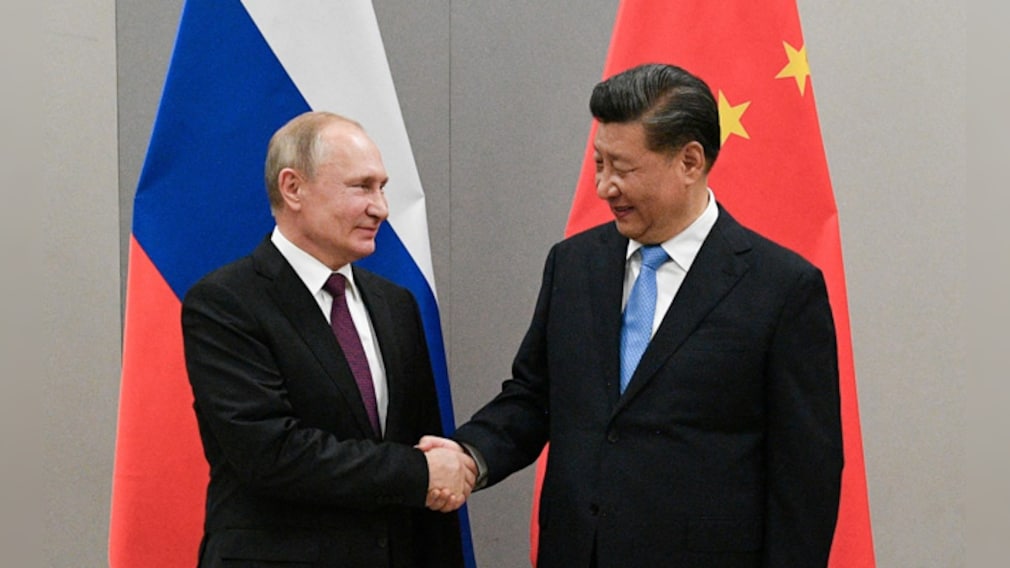
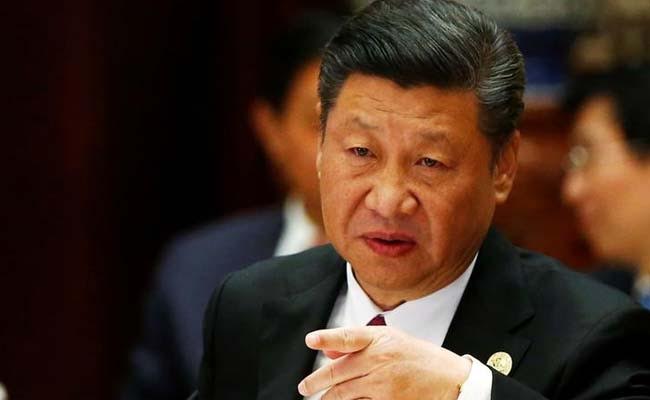
Xi Jinping's carefully choreographed hosting of Donald Trump (May 13-15) and Vladimir Putin (May 19-20) within the span of a single week was no coincidence. It was a calculated assertion of China's arrival as the indispensable pivot in global politics - a power sufficiently confident to engage both its principal strategic rival and its closest geopolitical partner with equal grandeur. Beijing wanted the world to absorb one central message: all roads now lead to China.
The optics were meticulously crafted. At the Great Hall of the People, both leaders received near-identical state pageantry: military honour guards, gun salutes, marching bands, troop inspections, national anthems, and carefully staged interactions with cheering children waving national flags. Banquets featuring Chinese cultural symbolism, personal interactions with Xi Jinping, and highly choreographed public moments reinforced the image of Beijing as the epicentre of contemporary diplomacy. Chinese state media predictably amplified this narrative, portraying China as the stabilising fulcrum of an increasingly fractured international order.
Putin's visit, however, carried unmistakably greater intimacy. The Russian leader was welcomed by a senior Politburo figure, a symbolic gesture underscoring strategic trust. The choreography was less rigidly formal and more personal-tea ceremonies, poetic exchanges, and repeated invocations of "old friendship". Public messaging from both sides appeared far more synchronised, reflecting the political comfort that now defines the Sino-Russian relationship. Beijing may have projected parity externally, but the diplomatic nuances revealed where its strategic comfort truly lies.
The contrast became even sharper in terms of outcomes. Trump's three-day visit was heavy on symbolism but comparatively thin on substance. Discussions covered trade, technology restrictions, Iran, strategic stability, and Taiwan, while both sides hinted at possible economic arrangements involving agriculture, energy, and aviation. Yet, the structural tensions underpinning the relationship remained unresolved. There were no meaningful breakthroughs on tariffs, semiconductor restrictions, or broader strategic competition. The exercise was essentially about stabilisation, preventing escalation while preserving room for manoeuvre.
Putin's shorter visit, by contrast, yielded far more tangible outcomes. Multiple agreements were concluded across trade, energy, transport, technology, and cultural cooperation. Joint statements emphasised multipolarity, opposition to Western "hegemony", and the consolidation of a strategic partnership that both sides described as being at a "historic high". While major sticking points, such as the Power of Siberia 2 pipeline, remain unresolved, the overall trajectory of the relationship remains unmistakably upward. Unlike the transactional and fragile US-China engagement, the China-Russia partnership continues to deepen because it is anchored in converging geopolitical interests.
For Xi Jinping, the larger strategic objective extended beyond either bilateral relationship. By hosting Trump and Putin in rapid succession, Beijing sought to demonstrate diplomatic centrality in an era of systemic flux. China was projecting itself not merely as another great power, but as the indispensable balancing force in an emerging multipolar order - capable of engaging adversaries and partners alike without being constrained by either.
The visit by Donald Trump served an important tactical purpose for China and for Xi Jinping personally. Beijing's immediate priority is not confrontation for its own sake, but the creation of strategic breathing space during a period of mounting internal and external pressure. China is navigating slowing economic growth, persistent weaknesses in the property sector, demographic decline, and growing restrictions imposed by the United States and its allies on advanced technology transfer. At the same time, the Chinese leadership is accelerating efforts to achieve greater self-reliance in semiconductors, artificial intelligence, advanced manufacturing, and defence technologies. These are long-term projects that require stability in the external environment.
Against that backdrop, even limited stabilisation in relations with the United States carries significant value for Beijing. Tactical de-escalation reduces the immediate risk of economic disruption, lowers the chances of a sudden crisis over trade or Taiwan, and creates room for China to consolidate domestic capabilities without facing simultaneous external shocks. From Beijing's perspective, managing competition with Washington is not about resolving the rivalry - which Chinese strategists increasingly see as structural and enduring - but about pacing it on terms more favourable to China's long-term rise. A temporary thaw with Washington, therefore, functions less as reconciliation than as strategic delay: it buys time, preserves economic access, and prevents the formation of a more unified anti-China coalition while Beijing strengthens its position for what it expects will be a prolonged era of great-power competition.
The subsequent visit by Vladimir Putin reinforced a different but complementary dimension of China's grand strategy. For Beijing, Russia has become an increasingly valuable strategic rear - a large continental power that helps secure China's northern flank while simultaneously distracting and dividing Western attention. The partnership offers several concrete benefits. Russia remains a critical supplier of discounted energy, helping underpin China's long-term energy security at a time of geopolitical uncertainty. Diplomatic coordination between Moscow and Beijing also strengthens both countries' ability to resist Western pressure in multilateral forums and promote narratives challenging a US-led international order.
At the same time, the balance within the relationship is gradually shifting in China's favour. Russia's isolation from Western markets after the war in Ukraine has deepened its economic dependence on China for trade, finance, technology, and diplomatic support. This asymmetry gives Beijing growing leverage while allowing it to benefit from access to Russian commodities and strategic cooperation without assuming the full costs of Moscow's confrontation with the West.
Equally significant were the political optics surrounding the sequencing of the two visits. By hosting Putin immediately after Trump, Xi sent a deliberate signal that engagement with Washington would not come at the expense of the China-Russia partnership. This was aimed at both external and domestic audiences. Internationally, it undercut recurring speculation in Western strategic circles that the United States might eventually replicate a "reverse Nixon" strategy, drawing Russia away from China to weaken Beijing. The choreography of the meetings instead projected continuity and strategic alignment between Moscow and Beijing despite tactical outreach to Washington. Domestically, it reinforced the image of Xi as a leader capable of balancing great-power diplomacy without compromising China's core strategic partnerships.
These back-to-back summits have been a textbook display of Chinese realpolitik. Xi Jinping successfully projected strength, balance, and diplomatic confidence while carefully calibrating outcomes according to the nature of each relationship. The symbolism may, in some respects, have exceeded the substantive achievements, but symbolism itself is now an essential currency of great-power politics. And in that domain, Beijing ensured that it dominated the global stage.
Disclaimer: These are the personal opinions of the author
-
Opinion | A 'Bangarappa' Redux? How Another Karnataka Chief Minister Was Asked To Resign In 1992

The images flashing on the TV screens on Tuesday reminded this author of a similar scenario in 1992, when S Bangarappa, Karnataka's first OBC Chief Minister, was asked to resign by PV Narasimha Rao.
-
Opinion | How Pak And Bangladeshi Vote Blocs Are Becoming UK's New 'Kingmakers'
Tower Hamlets, a London town that once was predominantly White, just re-elected Lutfur Rahman as mayor for the third time. But this is just part of a bigger shift.
-
Ringside View | Fall Of The Legacy Teams In IPL 2026: What Ails KKR, CSK, And MI?
With a year still left for the mega auction, all three legacy teams have to press the reset button if they want to rise above the mid-table.
-
Opinion | Pakistan's Dangerous Dance With America Is Finally Starting To Haunt It
Although Pakistanis have put up a brave face against Trump's Abraham Accords ask, in reality, it puts them in a difficult position at home.
-
Exclusive: World's Newest Country Is Without Medicine. And It's Getting Worse
For the people of South Sudan, the destruction of an MSF-run hospital meant the disappearance of the only secondary healthcare facility serving nearly 250,000 people across the region.
-
Opinion | The Quad Is Slowly Going Quiet - But For A Reason
Questions have grown with Trump's renewed contacts with Xi Jinping and ongoing uncertainty about US commitments in Asia.
-
Opinion | Degrees, SUVs, Gold: Why India's Most 'Qualified' Men Often Demand The Steepest Dowries
Education, ironically, is more of an enabler of the practice than a hindrance, per a 2023 study quoted by the BBC
-
Trump Pushes Middle East Reset, Pak Faces Saudi, Abraham Accords Dilemma
Pakistan faces a dilemma over the Abraham Accords, needing to recognise Israel for economic gains but opposing it without Palestinian statehood.
-
Opinion | A New Sunni Bloc Is Taking Shape, And Pak May Be Its Biggest Winner
The war between Israel-US and Iran has led to the ascendancy of two of India's major adversaries - Pakistan and Turkiye. Already locked in a close embrace militarily, they are now ideologically pushing for an 'Islamic NATO'.