Opinion | A Rs 5,000 Fine Can't Fix India's 'Babu' Raj. But It's A Start
A new bill in Delhi imposes a fine of Rs 250 a day on bureaucrats, with a Rs 5,000 ceiling, if their service for citizens is delayed without a valid justification. Can this fix India's great 'Babu' bottleneck?
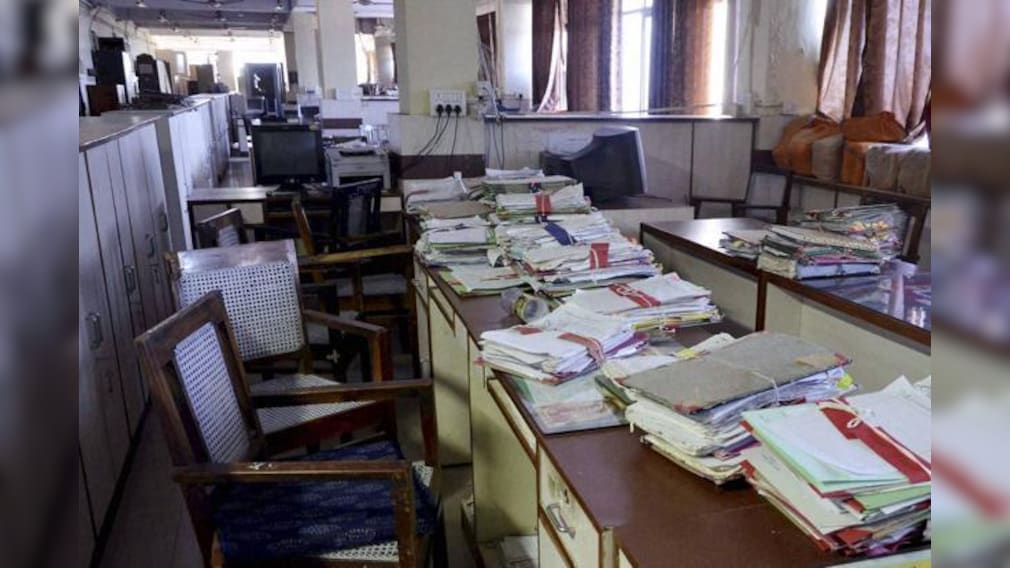
One small step for the government, and a giant leap for governance?
That's the question that popped up in my mind this week as I read about an interesting decision by the Delhi government's cabinet to fine officials a maximum of Rs 5,000 if their service for citizens is delayed without a valid justification. If it is approved as expected, the Delhi (Right of Citizen to Time Bound and Ease of Delivery of Service) Bill replaces/upgrades a similar 2011 Act. As the name suggests, it holds itself accountable to citizens with a proposal to impose a fine of Rs 250 a day, with a Rs 5,000 ceiling.
In principle, this is a great idea and also reflects an increasing democratisation of governance in which elected leaders pressure the bureaucracy to do what is expected of them. But there is a very long way to go, because in India, which the UK's The Economist magazine once described as "a natural habitat of the clerk," there is a lot to do to undo the process-driven bureaucratisation that the magazine's land of birth itself left in its imperial stamp on its colony.
The very same magazine recently ran a self-explanatory editorial titled, "Why can't India's government build a decent website?", and moaned about clunky online experiences among "failures of "Indian officialdom". Any casual watcher of the old BBC comedy series, "Yes, Minister", would be assured that "Great" Britain has been not so great in political control over bureaucrats. The culture is such.
It does get tricky. How do you hold bureaucrats and lower-level government officials responsible in a system in which incentives and disincentives have to be balanced with costs, processes, and public accountability to legislators and institutions like the Comptroller and Auditor General? A rule-based system cannot easily function like an incentive-based culture or a severe hire-and-fire mechanism.
Prime Minister Narendra Modi's government is officially aware of the bureaucracy problem, but the solution requires re-engineering a culture from the bottom up.
The ongoing controversy over the alphabet soup of state-run public examinations, NEET, CUET, and CBSE school exams, suggests that ministers and bureaucrats need to be sensitive to an increasing mass of aware citizens demanding accountability and efficient service. Again, the buck-passing involving politicians and so-called autonomous bodies, such as the National Testing Agency, shows that you cannot have autonomy without accountability, and you cannot absolve yourself of a responsibility by pointing to a structural autonomy designed to reduce bureaucratisation.
Much like the inflation-interest rate trade-off in macroeconomics, this requires a trade-off between empowerment that improves efficiency and transparency that ensures there is no abuse of power.
Outsourcing things to private agencies, often risking underhand corruption as well as the "L1 syndrome" in which the lowest bidder in a contract need not necessarily be the best service provider, is a trade-off between transparency at low cost and the public's desire to get better services.
In this context, any attempts to backpedal the Right to Information (RTI) Act or its procedures must necessarily be seen as regressive. A culture of transparency needs to be baked into the bureaucracy to avoid the cloak of official secrets over government muddles.
But, as anyone who has stood in a long queue at railway stations or electricity offices in India would testify, a lower-end government servant facing the public has to go through stresses that match that of the suffering citizen in the queue. New technologies can help only so much, as The Economist magazine's editorial comment would testify.
Officially, India's civil servants do receive formal training in citizen-centric work, with emphasis on ethics and empathy. There is a National Training Policy framed in 2012 to help. There are specific training institutes, behavioural curricula, and digital grievance mechanisms. But I could not suppress a chuckle as I stumbled on a bureaucratic online file on this very thing whose language, structure, and communication style were a throwback to old "babudom". It had long, jargon-filled paragraphs on processes that would go over the heads of even media outlets, not to speak of ordinary citizens.
What we perhaps need are recruitment of people based on personality traits that reveal higher EQs (emotional quotient). In casual conversations in India, some workers are often described as having a "good nature" or "helpful attitude" - and these often have less to do with training and more to do with the way human beings are. An emphasis on EQ over IQ (intelligence quotient) in recruitment, training, and deployment can go a long way to make services that appeal to the public. We need smart but sensitive civil servants -including lowly officials who directly face disadvantaged citizens. This requires the courage to recognise that "soft" people skills are as important, if not more, than high scores in public examinations.
Union Cabinet Secretary TV Somanathan recently sent out a note to all secretaries (top bureaucrats) in various departments, asking them to take care of small things and avoid bureaucratic repetition of processes. Such moral nudging is desirable but of limited utility. Recognition of various kinds, not just plum postings, should be matched with disincentives of the kind the Delhi government has proposed.
As is often said in management lessons, leadership is set by example. You cannot have authoritarian ministers lording over empathetic bureaucrats, or authoritarian bureaucrats managing empathetic clerks at railway counters! You do need tough authority, but one that is consciously aware of where and how it is to be used.
The Modi government has been running a corporate-style assessment system with scorecards for ministries presented by the cabinet secretary. This is a welcome beginning. Cultural transformation requires a different DNA. Neither a purely corporate style, nor a monarchically authoritarian structure, and nary the lapsed colonial bureaucratic process serves the purpose. The holy grail lies between efficiency and empathy.
(Madhavan Narayanan is a senior editor, writer and columnist with more than 30 years of experience, having worked for Reuters, The Economic Times, Business Standard, and Hindustan Times after starting out in the Times of India Group)
Disclaimer: These are the personal opinions of the author
-
Opinion | Kaveri To J-20, How China Overtook India In A 40-Year-Old Race To Build Fighter Jets

Both launched ambitious military jet engine programmes during the 1980s. Both depended heavily on Soviet and Russian technology. Four decades later, however, the finish line tells two dramatically different stories.
-
Opinion | US Attack On Chabahar, And Why It's Time India Stopped Playing By Others' Whims
As the US destroys Chabahar in Iran, one thing is clear: India cannot wait eternally for the whims of others to do what is vital for its own interests.
-
Beyond Low Cost: Why Foreigners Choose India's Healthcare Over The West
India's medical tourism industry is estimated to be worth $12.32 billion in 2026. It is growing much faster than the country's overall tourism sector.
-
Opinion | Is Sharad Pawar Planning To Merge NCP With NDA? Behind The Ongoing Calculations
The NCP patriarch, turning 86 this year, will have to take a decision soon - before someone else takes it for him.
-
Opinion | Maa Behen, Obsession, And The Gaze That Eats Itself
Every society has a woman it has already judged. Every man has a story about her. Cinema has long inherited both.
-
'School Fees Are Just The Beginning': The Hidden Cost Of Educating Children
Tuition classes, digital devices, transport, uniforms, extracurricular activities, and competitive exam coaching have made education a costly affair.
-
NDTV Probe: CSAM, Sexually Suggestive Content, Gun Culture On Social Media
The probe has uncovered a wider pattern of exploitative and illegal content slipping past moderation, raising questions about the consistency and effectiveness of enforcement.
-
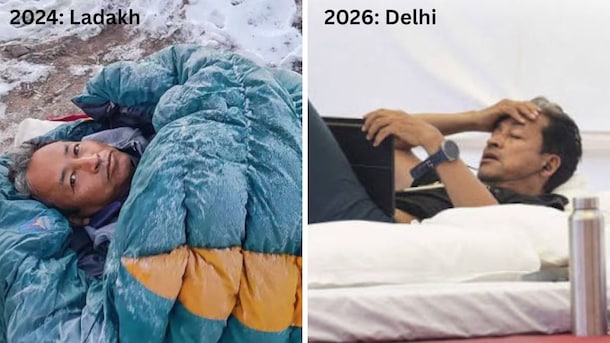
Ice Stupas To Education Reforms: The 'Fast' Evolution Of Sonam Wangchuk
Sonam Wangchuk remains a prominent figure whose activism spans climate change, education reform, democratic rights and environment conservation.
-
Opinion | Pakistan's Iran Problem Isn't Going Anywhere
Despite its glowing successes, and for all its mediation efforts, Pakistan's toughest audience may be in Iran itself
-
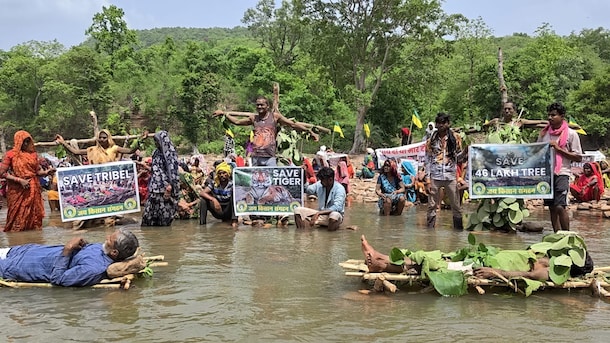
Satyagraha, Pyre On River: Tribals' Unique Protest To Save Their Homes
As the Ken-Betwa river-linking project advances, thousands in Madhya Pradesh's Chattarpur say they face displacement, lost livelihoods and inadequate rehabilitation, and are mounting Gandhian-style protests.