Opinion | A Quiet Indo-Pacific Revolution Is Underway, And India Is At Its Centre
America's unpredictability has finally done what the China threat never could for the Indo-Pacific
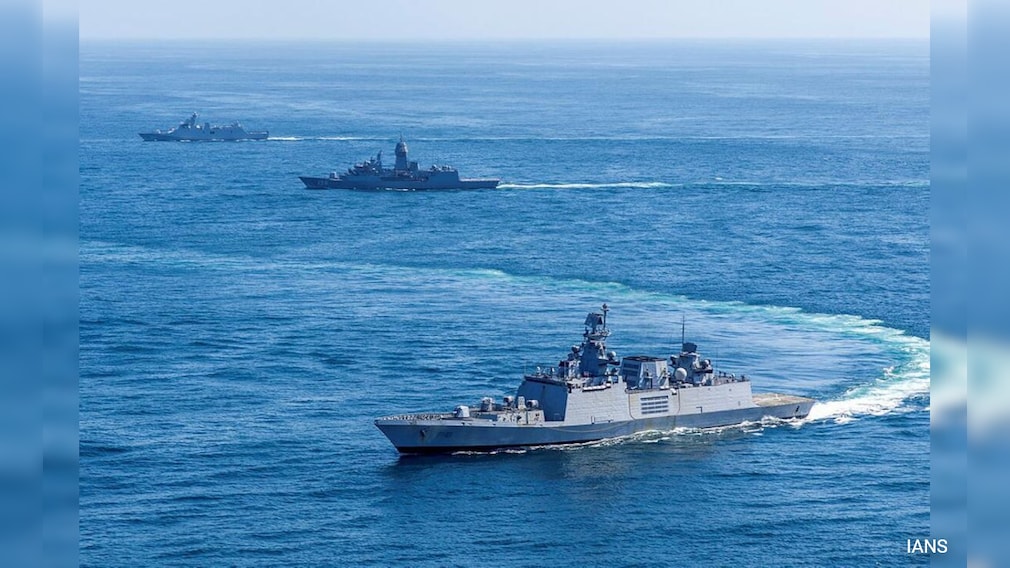
It seems the building blocks of India's vision for the Indo-Pacific are being put in place rapidly. What's more, its receiving enthusiastic support from key countries that are actually in this region and have strong interests in making it happen. Certainly, there is much more to do, but the process has begun. Its not just the rather dizzying number of initiatives coming out of the visit by the Prime Minister to Indonesia and Australia, but also a squaring of the circle in another event that happened just before his travel. Besides, each of these are cooperating with the other in almost exactly the same areas, in an interlocking mesh of jigsaw moves, about as complicated to fathom. It's a process to watch, with huge implications.
Interlocking Parts
Take these visits in terms of their individual focus. Indonesia lies at the heart of ASEAN (Association of South East Asian Nations), and for years, the now rather shaky Quad - comprising India, Japan, Australia and the US - talked about the 'centrality' of ASEAN without anyone actually knowing how this was to be achieved. Now it's a done deal, at least as far as India and two other members of the Quad are concerned.
In February 2026, Australian Prime Minister Albanese and Indonesian President Subianto signed the vital Australia-Indonesia Treaty on Common Security (the Jakarta Treaty). It not only commits the two nations to "consult each other on security threats", but also "establishes defense interoperability, and expands military education exchanges". In March, Japanese Prime Minister Takaichi Sanae was in Indonesia to sign an enhanced agreement to sanction the export of arms and equipment - a huge change in policy for pacifist Japan - and also signed protocols for exchange of sensitive information. And in July, there was the Indian Prime Minister, signing on to significantly enhanced defence cooperation, not just limited to BrahMos and air-to-air missile deals, but much more besides. Just before that, on July 2, the Japanese Prime Minister in Delhi signed on to a "Partnership of Strategic Convergence and Trust", again shared with the others. One can almost hear an audible 'click' as things fall into place.
The Mechanics On The Ground
Now break that up into its component parts in terms of mechanics on the ground. Australia has now embedded a senior Indonesian officer inside the Australian Defence forces, in addition to a joint training programme. India has just invited Indonesia to be part of the Indian Navy-run Information Fusion Centre - Indian Ocean Region (IFC-IOR), a multinational maritime security and information-sharing hub designed to monitor threats like piracy, trafficking, and illegal fishing. That means sharing of data on a real-time basis.
Japan and Indonesia signed on to an Integrated Defence Dialogue Mechanism and "enhancing discussions on measures to protect classified military information, with a view to strengthening operational cooperation". Australia is already part of the Fusion Centre, as is Japan. Both are also signed on to vital logistics cooperation agreements, which essentially means each can use the others' ports and airfields. Indonesia and India went one important step further in signing on not just to the integrated development of Sabang port - which will provide on-shore services for the huge gas discoveries in the Andaman sea recently - but also to enhancing the Andaman-Aceh connectivity. Look at the map, and the location of the naval base in Nicobar, with its upgraded air field and the massive Great Nicobar project. That clicks into place as well.
Meanwhile, Australia has beefed up the Coco islands, where the Indian Navy and Air force deploy regularly. As the world gets the jitters about 'straits' in general, the Malacca Straits seem to be now tied up neatly into a cooperative knot. Interestingly, both China and Thailand have backed off from the proposed Kra canal, a project that would have brought Chinese ships directly into the Andaman sea, in favour of a Land Bridge project. That is far less threatening, but still a concern.
Quick Reactions To The Energy Crisis
There is something else that is interesting among the four. All are targeting energy security, with India signing a separate agreement on this with Australia, recognising specifically the dangers from energy disruption from the (implied) Iran war. That includes renewables, LNG, and, notably, "the export of Australian uranium to India for exclusively peaceful purposes ... as provided for under the Australia-India Nuclear Cooperation Agreement (2015)". The original agreement is more than a decade old but was never implemented. Now, it is. Similarly, a separate agreement has also been signed between Japan and India, which, interestingly, includes "strengthening the voice of oil and gas-consuming countries" and has plans for investment in upstream sectors in third countries. Indonesia and India also tickbox energy security to include green hydrogen, LNG and solar power.
Japan is probably going to provide Indonesia with safe "nuclear energy solutions". Indonesia has never had nuclear power before, operating three small research reactors. In short, all are worried about volatility in West Asia, and all have had serious disruptions in energy, leading to a scramble to tap into reserves. Not all were able to manage like India. Japan for instance, was in a precarious state.
Those Elusive Value Systems
Last, but far from least, all tickbox a value system for the Indo-Pacific. That doesn't include just 'Free and Open Indo Pacific' but also calls upon "all parties to exercise restraint, de-escalate tensions, and ensure protection of civilians" in Iran and Ukraine by India and Australia. That's one in the eye for the US. The same sentiment is echoed across the other bilaterals, both with India and between the others. The calls for upholding international law are not just morality lessons; it matters intensely to the security of each country. Breaking the law in one part of the globe makes it that much easier to do it in another.
No, It's Not All About China
To wrap up then, while there is considerably worry about Chinese action, this is also not just about Beijing. The whole thing is a reaction to unpredictability of US policy, particularly following the 'dressing down' by Secretary Pete Hegseth of the Department of War at the Shangri La dialogue, where he demanded that all follow the American 'gold standard' of 3.5% spending on defence, noting, "We expect every single ally and partner to match that kind of (US) resolve". He promised expedited arms sales and rewards for those who did, and dire warnings for those who did not. This when every one of these countries are struggling with the costs of the Iran and Ukrainian wars. Each has also been targeted by tariffs, leading to huge losses. Indonesia only recently signed a Agreement on Reciprocal Trade (ART) with the United States, which bought it breathing space, by reducing tariffs from a punishing 32 % to 19%, and highly unfavourable conditions. Both India and Australia are being targeted by supposed 'forced labour' clauses for more tariffs, despite the latter having a free trade agreement with the US.
In sum, a new Indo-Pacific policy is being crafted by the Indo-Pacific countries, while keeping the US 'in play' to the extent possible. All have complicated security relations with the US, with Japan hosting US troops, and Australia an ally country. But the times, they are a-changing, and shifting rapidly. Politicians are trying to beat the clock, but the key question here is whether bureaucracies down the line can keep up. Our own initiatives in ship- and port-building, for instance, are key to the whole Indo-Pacific theatre. After all, one can hardly have one without the other. Time will tell.
(Tara Kartha is a former Director, National Security Council Secretariat)
Disclaimer: These are the personal opinions of the author
-
Delhi's New Policy Paves Way For High-Rises. Architects Flag One Big Risk

Without parallel investments in roads and urban design, higher density could simply place more pressure on already strained neighbourhoods.
-
Beyond Low Cost: Why Foreigners Choose India's Healthcare Over The West
India's medical tourism industry is estimated to be worth $12.32 billion in 2026. It is growing much faster than the country's overall tourism sector.
-
Opinion | Trump's Quiet Turkey 'U-Turn' Has Loud Consequences For India
In a stunning policy reversal, Trump has decided to sell America's F-35 jets to Turkey, a staunch Pakistan ally and its closest defence supplier
-
Rs 1,160 Crore Rice 'Scam' Widens: 56 Mills, 22 Ethanol Plants Under Scanner
Investigators are trying to establish how much of the nearly 5 lakh metric tonnes of government rice allocated for ethanol production was actually converted into ethanol, and how much may have been diverted through private mills before returning to government warehouses.
-
A Truck, A Rice Mill And A Rs 1,160 Crore Question In Madhya Pradesh
The suspicion is that the government rice was diverted to private rice mills and later found its way back into government warehouses as custom milled rice.
-
Opinion | Sharad Pawar Has An Old 'Two Plus Two' Bargain For Delhi
Sharad Pawar appears to be keeping two doors open, and the political cost could be huge for both opposition and the NDA.
-
Blog: Your SUV's Most-Used Feature Is Now The Brake Pedal
The growing menace of traffic begs a question: Is buying a car slowly becoming one of the worst financial decisions for people living in large cities?
-
Opinion | US-Iran MoU Collapse: Why The Strait Of Hormuz Is Back On The Brink
Why did the ceasefire fail? Could it have been prevented? The answer to many of these questions lies in the framing of the 14-Point MoU and the uneven playfield that it created.
-
NDTV Investigation: No Single Cause Or Common Pattern In Bikaner's Maternal Health Crisis
Part 3 of NDTV's investigation into the series of maternal deaths and severe post-delivery complications examines a different pattern emerging at Bikaner's PBM Hospital