Opinion | 38% vs 18%: How Bengal Exposes The Biggest Irony Of Women's Reservation
Bengal with its duality - 38% women in Parliament versus 18% in the state contest - captures the core tension of the Bill better than any other example.
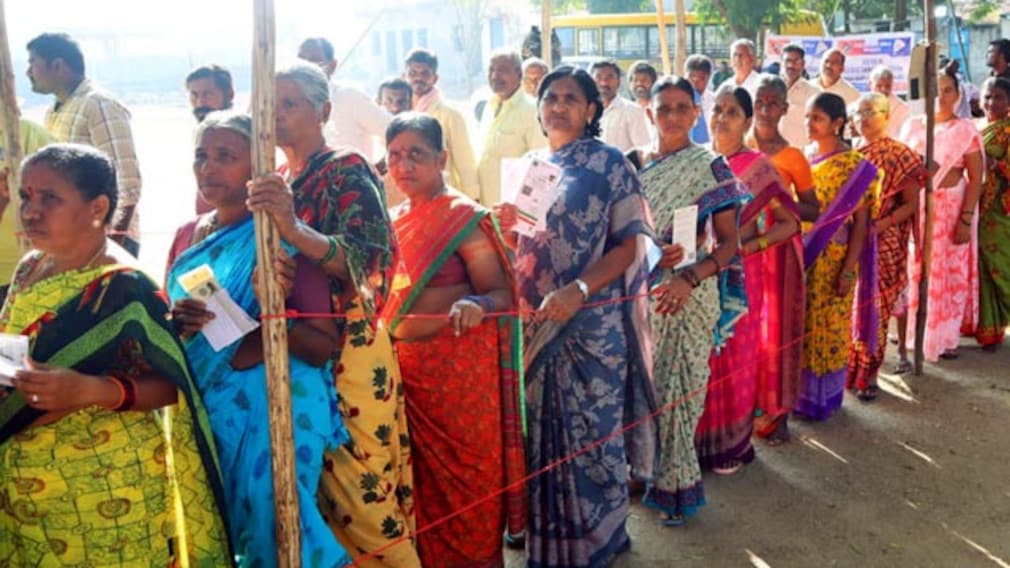
Long debated and stalled for decades, the legislative odyssey of the Women's Reservation Bill, now formally known as the Nari Shakti Vandan Adhiniyam, began nearly 30 years ago when it was introduced in September 1996. In September 2023, the Parliament finally passed the 128th Constitutional Amendment Bill unanimously, reserving 33% of seats for women in the Lok Sabha, state legislative assemblies, and the Delhi Assembly.
The law seeks to correct India's gender imbalance in politics, where women currently account for only about 15% of Parliamentary representation. The catch, however, is that the law was tied to the completion of a fresh census and a subsequent delimitation exercise, pushing implementation to 2034 at the earliest.
What The Delimitation Pivot Hides
The Union government is now attempting to accelerate this timeline by proposing amendments that would use 2011 census data instead of the pending census and expand Lok Sabha seats by 50% - from 543 to 816, with 273 seats reserved for women - asking the Parliament to pass this in three days while West Bengal and Tamil Nadu are still mid-election.
In response, Congress President Mallikarjun Kharge has accused the government of "rushing the process to gain political advantage" as the Congress Working Committee warns of the profound consequences of the delimitation proposal. While the 50% seat expansion is presented as equitable, the absolute gaps between states widen dramatically: Northern states gain roughly 200 seats against the South's 66. In an 816-member House where the majority mark shifts to 409, the Hindi heartland, where the BJP's base is most concentrated, commands a larger share of power, making Southern states increasingly less decisive in government formation.
By using 2011 Census data, which contains no full caste enumeration, the government has also sidestepped the long-standing demand for a quota-within-a-quota for OBC women. Constitutional scholar Zoya Hasan has noted that basing electoral restructuring on data that is 15 years old, and predates the pandemic, mass migration, and rapid urbanisation, risks misrepresenting the very communities the bill claims to empower.
The BJP's Bengal Gambit
The timing has an obvious factor: West Bengal, which votes in two phases this month. The BJP's strategy is to use the bill as a direct weapon against Mamata Banerjee's most loyal constituency of women voters, who have consistently given the Trinamool Congress a double-digit lead in post-poll surveys. Modi has framed the legislation as a "historic opportunity", suggesting that Banerjee's record is no substitute for a Constitutional guarantee, while Smriti Irani, campaigning in Rajarhat, accused both the Congress and the Trinamool of failing to support the bill "despite being led by female leaders".
The BJP's women-focused campaign also invokes the RG Kar case related to the rape and murder of a trainee doctor in August 2024, with Irani accompanying the victim's mother, now a BJP candidate from Panihati, as she filed her nomination. The message is pointed: the Trinamool's headline numbers on representation are hollow if the state's institutions fail to protect women on the ground.
TMC's Numbers: Ahead Of The Benchmark?
The irony here, however, is that the Trinamool Congress already operates beyond the 33% threshold in its own Lok Sabha delegation. In the 2024 Lok Sabha elections, 11 out of 29 Trinamool MPs were women, amounting to roughly 38%, the highest share among major national parties. By comparison, women account for around 13% of the BJP's elected MPs.
At the state level, over 20% of Mamata Banerjee's Council of Ministers are women, including high-profile portfolios such as agriculture, welfare, and public health. In contrast, BJP-ruled states such as Uttar Pradesh, Gujarat, and Madhya Pradesh still have far lower shares of women MLAs than Bengal, even after decades of national-level discussions on quotas.
What distinguishes the Trinamool's record is not just the headcount but the diversity behind it. The party's women MPs span a wide social and professional range: actors with deep constituency ties, doctors and academics, career politicians, a former bureaucrat, and an Anganwadi worker who arrived at Parliament without the cushion of elite networks or family incumbency. They are drawn from Adivasi, Dalit, Muslim, and urban middle-class backgrounds, reflecting constituencies that cut across rural, peri-urban, and metropolitan Bengal. Mamata Banerjee remains one of only two women Chief Ministers in the country, a product not of reservation but of four decades of street-level political activism.
The 'Party Ticket'
As West Bengal moves towards the 2026 state elections, the BJP's "women-first" pitch - cash transfers, women-only police battalions, and job-quota promises - will be heavily advertised. On the other hand, Banerjee can leverage not only scheme-based welfare such as Kanyashree Prakalpa and Lakshmir Bhandar, but also a demonstrable record of women's representation in both the Lok Sabha and the state cabinet.
And yet, West Bengal, held up as the Bill's best-case argument, is not exempt from the contradictions of the "party ticket". While the Trinamool's 38% women MPs in the Lok Sabha is an impressive achievement, the upcoming Assembly elections offer a more sobering reality: the party has fielded 52 women out of 291 candidates - just about 18%, which is half the 33% threshold it champions nationally and a steep drop from its Parliamentary contingent. The BJP in Bengal lags further behind, fielding only around 11% women for the state polls.
The Trinamool Congress appears to have chosen "winnability" over gender equity in drawing up its nominee list. It is a sad reflection of our electoral system that development, health, education and gender issues no longer ensure electoral victory, and are consigned to manifestoes, The party has dropped 74 sitting MLAs this year. In many cases, these seats are filled by new faces, but the pressure to hold onto a majority has led the party to favour established organisational leaders who are still predominantly male.
Bengal with its duality - 38% women in Parliament versus 18% in the state contest - captures the core tension of the Bill better than any other example: it is the strongest case for why reservation is necessary, and simultaneously a reminder of how much political will it takes to make it real. If anything, the Bill's passage may amplify comparisons rather than consolidate credit, raising a broader question: can a party leverage a policy for electoral gain when its core objectives core are already being realised more effectively, albeit imperfectly, by its opponent?
(Rasheed Kidwai is an author, columnist and conversation curator)
Disclaimer: These are the personal opinions of the author
-
Opinion | The Last Bet? What Trump's 'Mother Of All Bombs' Could Actually Do To Iran

Can an MOAB deliver a decisive blow to Iran that may force it to surrender immediately, as Japan did after Hiroshima and Nagasaki in World War 2?
-
Hit Songs, Empty Pockets: The Hidden Math Behind India's Viral Music Boom
Over 80,000 brands and five lakh creators in India make branded content. The opportunity is worth around Rs 1,500 crore.
-
Opinion | Great 'Exceptions': How The Oil India Was Attacked For Is The Oil Trump Now Seeks
A law written to punish the buyers of Russian oil was suspended by the US to protect a purchase of Russian oil. India spent fourteen months being lectured for less.
-
Opinion | Louis Vuitton Loot, Torched Cars: France Protests Have An Unlikely Beneficiary
It's an unbelievable moment. Crowds looting the most exclusive stores in Paris, including the famed Luis Vuitton. But what's behind this meltdown?
-
Blog: Kolkata Didn't Learn From 2015. Eleven Years Later, It Proved To Be Fatal
The City of Joy isn't a stranger to crowd control. Be it during Pujo or Christmas at Park Street, Eden Gardens cricket matches, or Derbies between Mohun Bagan and East Bengal. But during Pujo, the entire city is on alert.
-
Opinion | Slurs, Threats, Now A Temple Attack Plot: When Did America Become So Hostile To Indians?
The rising tide of anti-India, anti-Hindu, and racist attacks serves as a stark reminder that economic prosperity does not automatically guarantee social immunity from bigotry.
-
A Step Behind Neha Bora: What Rahul Gandhi's Gesture Says About Congress' Gen-Z Pitch
At INDIA bloc's march to Supreme Court, Rahul Gandhi placed himself a step behind two women, hands resting on their shoulders. One was his sister Priyanka. The one on his right was Neha Bora. Here's what the image means for the protest wave now, and for Rahul's politics in general.
-
Opinion | Imran Khan, And The Perils Of Having An 'Opinion' In Bollywood
The reality of the industry is quite grimy. More often than not, its inhabitants have been fairweather friends, happy to sing the praises of whoever is in a position of authority.
-
Exclusive: India's Food Safety Problem Goes Beyond Just Dirty Kitchens - By Tukaram Mundhe
On World Food Day, Maharashtra's Commissioner of Food Safety explains why instead of taking stopgap measures, the entire supply chain in India needs to be held accountable and made transparent.
-
Opinion | India Has Enough Coal. So Why Are Power Plants Running Short? A 76 Million 'Crunch'
As of October 5, as many as 82 of the 191 thermal plants monitored by the Central Electricity Authority were in the 'critical' category