Opinion | 11 Years Later, Houthis Have Returned To Finish Unfinished Business With Pakistan
Pakistan has been here before, and the last time, it barely escaped.
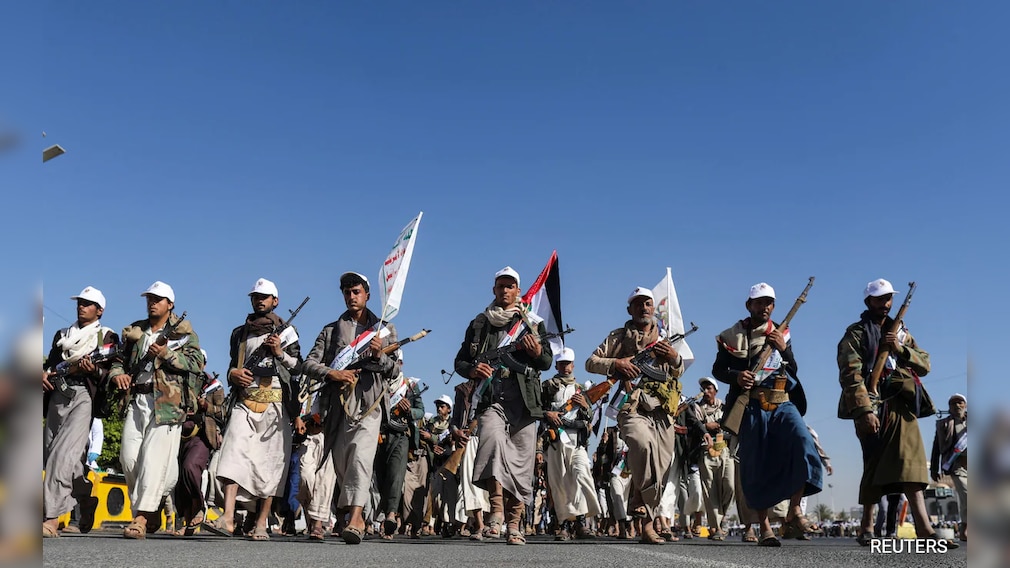
Pakistan may soon find out that its mediation efforts in the Iran-US war have hidden costs attached to it and that its worst nightmare yet may be unfolding. As the Houthis finally join the war, Pakistan may face the spectre of having to step in militarily - a possibility it had tried to escape till now, successfully.
To put things in perspective, we need to go back in time to March-April 2015. Intense discussions were on in the Pakistani Parliament on whether to join the war in Yemen against the Ansarallah Houthi militias. The Saudis had put together an Arab coalition to wage war against the Houthis as they overran the capital Sanaa, threatening the internationally recognised government of President Abdur Hadi Mansour. In what was a rare occasion, the Saudis, feeling directly threatened by the Houthis, who were backed, armed, and funded by Iran, began bombing the rebels. However, they also demanded that their client state, Pakistan, join the war.
A Decades-Old Relationship
This, of course, was not unusual. The Kingdom of Saudi Arabia and Pakistan's long defence and economic ties are well-known. Their military cooperation, which began way back in the 1960s, has seen them operate in the same theatre of war earlier - in 1969, when in a joint air operation they had repelled a South Yemeni incursion into Saudi Arabia's southern border. In the 1970s and the 1980s, up to 15,000 Pakistani troops were stationed in the kingdom. During the 1990-1991 Persian Gulf War, Pakistan sent troops to protect the Kingdom. It is widely believed that the two countries also have a nuclear understanding whereby Pakistan provides a nuclear cover for the Kingdom.
Initially, Pakistan was ambivalent. But soon, the Nawaz Sharif government announced its decision to join the war, albeit with widespread opposition. While Nawaz Sharif was beholden to the Saudi royal family - when his second term as Prime Minister ended after a military coup in 1999, he went into exile in Saudi Arabia - many Pakistanis protested against the decision. The main opposition party then, of former cricketer Imran Khan, had already warned the government against joining the Saudi coalition, as did Pakistani editorials and civil society. For one, many Pakistanis had by then become fed up with the Saudi role in the Wahhabisation of Pakistani society, which had led to a lot of sectarian bloodletting between the Shias and Sunnis. Secondly, Iran was a neighbour, and what was happening in Yemen was - as it is now - a proxy war between Tehran and the Saudis, and there was no appetite to alienate Iran. Finally, Pakistan itself was reeling from terror attacks and Baloch insurgency, and joining the Yemen war, it was felt, would strain the army. So, though the government had agreed otherwise, on April 10, 2015, Pakistan's Parliament passed a resolution for strict neutrality in the Yemen war, refusing an active combat role - as the Saudis had wanted - while calling for a diplomatic and peaceful resolution. However, the Pakistani Parliament did pledge to stand "shoulder to shoulder" with Saudi Arabia if its territorial integrity or holy sites were directly threatened.
A Rock And A Hard Place
This did little to assuage the Saudis or their Arab coalition. Grants were cut, jobs grew sparse, many Pakistani workers began to be repatriated back home, and the Saudis and Emiratis, who had also actively intervened in Yemen, began pivoting towards India. Clearly, refusal to join the war had cost Pakistan dear, but, on the other hand, it helped improve its relations with Iran.
Nevertheless, Pakistan stood its ground, pivoting towards China to fill in the gap created by the lack of Arab largesse. When discord broke out again between Qatar on one hand and Saudi Arabia, the UAE, and Bahrain on the other, Pakistan, expectedly, desisted from taking sides, walking a diplomatic tightrope.
Matters got worse when Imran Khan assumed power. He turned towards Turkey, with which the Saudis and Emiratis had strained relations due to its support for the Muslim Brotherhood. But Khan, together with Turkish President Erdogan and the then Malaysian Prime Minister, Mahathir Mohammed, mulled floating a Muslim platform parallel to the Saudi-led Organization of Islamic Cooperation. At the last minute, however, under Saudi pressure, Khan had to pull out from the first summit meeting of the platform.
Running Out Of Options
This is why when last year Saudi Arabia wanted a defence pact with Pakistan, following the attacks on Qatar by Israel, Pakistan, now again under the Sharifs, rushed to oblige. In fact, having inherited an economy in shambles, Prime Minister Shehbaz Sharif's very first destinations upon assuming office were Riyadh and Abu Dhabi; the hope was to mend ties with them. The Saudi-Pakistan Strategic Mutual Defence Agreement, signed last September, includes a clause that stipulates that if one party is attacked, then the other would come to its defence. When the current war broke out and Iran began attacking Arab states, Pakistan initially tried to maintain strategic ambiguity. But soon, when attacks intensified, such as the strike on Saudi Arabia's Al Jubail energy facilities, the Pakistani Foreign Office was compelled to promptly issue a stern condemnation and to reaffirm its support for the Kingdom, invoking the 2025 pact. It also moved some 13,000 military personnel and, reportedly, about 10-18 combat aircraft to the Kingdom.
Yet, luck favoured Pakistan, and it has not yet, at least as much as is publicly known, had to play any overt combat role in the war. Instead, Pakistan has continued its diplomatic balancing act by playing mediator between the US and Iran and helping the two reach a ceasefire agreement and a peace deal. This even allowed Iran to park some of its aircraft on Pakistani territory to shield them from US bombing. Not only that, but when the US announced a blockade of Iranian ports, Pakistan allowed Iran to transport goods through its territory.
Payback Time
All this may now come undone.
Pakistan's mediation helped it remain in Iran's good books but has cost it its relationship with Abu Dhabi, which wanted the war to be fought to the finish. The ceasefire has collapsed and the conflict is escalating by the day, with the US targeting Iran's civilian infrastructure and Iran targeting both US bases and civilian infrastructure in Arab countries.
The Houthis, after lying low for much of the conflict, have now entered the war. They first attacked Saudi Arabia's Abha International Airport in the south. It was a "response" to the strikes on Sanaa Airport by the Saudi-backed Yemen government, which were meant to dissuade an Iranian aircraft from landing there. The Houthis hold Saudi Arabia responsible for it. They have now closed the Bab Al Mandeb Strait to Saudi shipping and also struck a Saudi-flagged oil tanker named Encelia. Yesterday, the Saudi Press Agency confirmed that Encelia was "targeted while sailing in the Red Sea, resulting in a fire at the bow of the vessel". US President Donald Trump condemned it in a social media post, warning of further attacks on the Houthis and Iran. Oil prices rose sharply, touching $100 per barrel for the first time since May. With Hormuz closed again, this marks a sharp escalation.
Back To Square One
Shehbaz Sharif condemned the Houthi tanker attack in the "strongest possible terms" in a phone call with his "dear brother", the Saudi Crown Prince, Mohammed bin Salman, saying that these actions are unacceptable, violate international law, threaten freedom of navigation, and undermine regional peace and security. In a post on X, Sharif wrote, "I reaffirmed Pakistan's complete solidarity with the brotherly Kingdom of Saudi Arabia and conveyed that I, together with Field Marshal Syed Asim Munir and the entire Pakistani nation, stand firmly and resolutely with the Saudi leadership and the brotherly people of the Kingdom at this critical time."
This squarely puts Pakistan back in the very same mess it had wiggled out of - with a considerable cost - in 2015. With the closure of Hormuz, the Saudis had been rerouting their energy supplies via the East-West Petroline Pipeline to the Yanbu Port on the Red Sea. From there, tankers would cross through Bab el-Mandeb to reach Asian markets. The closure of this chokepoint not only poses a critical problem to the Saudi economy but also threatens to drive oil prices to unprecedented levels. If mediation does not bring about any resolution, Pakistan may be called upon to militarily intervene once again against the Houthis. This time, it will be obligated to do so, thanks not only to its defence deal with the Saudis but also to a floundering economy. This will then make it a party to the Iran war. Eleven years later, the Houthis have come to haunt Pakistan again.
(The author is a senior journalist)
Disclaimer: These are the personal opinions of the author
-
Opinion | 7 Big Problems That Have Turned NEET Into A Trauma Machine For 22 Lakh Students

For every paper leak that makes headlines, there are seven deeper failures of NEET that decide who gets to become a doctor and who gets trapped in the system for years.
-
Opinion | CJP Protest And Opposition's Never-Ending Search For 'Readymade' Revolts
The Opposition cannot simply saunter in after anger has been created, and ask to become its beneficiary
-
Opinion | A Rs 5,000 Fine Can't Fix India's 'Babu' Raj. But It's A Start
A new bill in Delhi imposes a fine of Rs 250 a day on bureaucrats, with a Rs 5,000 ceiling, if their service for citizens is delayed without a valid justification. Can this fix India's great 'Babu' bottleneck?
-
Opinion | Kaveri To J-20, How China Overtook India In A 40-Year-Old Race To Build Fighter Jets
Both launched ambitious military jet engine programmes during the 1980s. Both depended heavily on Soviet and Russian technology. Four decades later, however, the finish line tells two dramatically different stories.
-
Opinion | US Attack On Chabahar, And Why It's Time India Stopped Playing By Others' Whims
As the US destroys Chabahar in Iran, one thing is clear: India cannot wait eternally for the whims of others to do what is vital for its own interests.
-
Beyond Low Cost: Why Foreigners Choose India's Healthcare Over The West
India's medical tourism industry is estimated to be worth $12.32 billion in 2026. It is growing much faster than the country's overall tourism sector.
-
Opinion | Is Sharad Pawar Planning To Merge NCP With NDA? Behind The Ongoing Calculations
The NCP patriarch, turning 86 this year, will have to take a decision soon - before someone else takes it for him.
-
Opinion | Maa Behen, Obsession, And The Gaze That Eats Itself
Every society has a woman it has already judged. Every man has a story about her. Cinema has long inherited both.
-
'School Fees Are Just The Beginning': The Hidden Cost Of Educating Children
Tuition classes, digital devices, transport, uniforms, extracurricular activities, and competitive exam coaching have made education a costly affair.
-
NDTV Probe: CSAM, Sexually Suggestive Content, Gun Culture On Social Media
The probe has uncovered a wider pattern of exploitative and illegal content slipping past moderation, raising questions about the consistency and effectiveness of enforcement.