How Apache Chopper's Presence Near Pakistan Border Will Shift The Equation
What truly sets the Apache apart, and makes it feared across theatres of war, is the AN/APG-78 Longbow radar system mounted above its rotor.
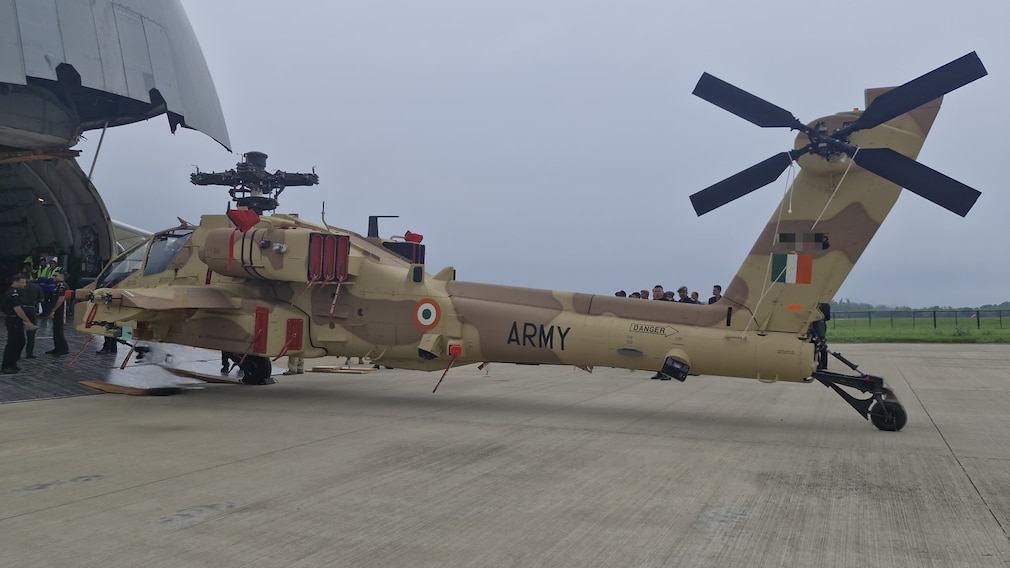
Fifteen months after a squadron was raised in Jodhpur to house the world's most feared attack helicopter, the Indian Army today took delivery of the first three of six Boeing-built AH-64E Apache helicopters.
The desert camo painted helicopters, which sport fuselages built by a Tata-Boeing joint venture on the outskirts of Hyderabad, are destined for combat patrol missions near the Pakistan border, where they will immediately be a major boost to the Indian Army's combat rotorcraft fleet, currently comprised of Indian-made Dhruv Rudra and Prachand helicopters.
The Indian Army's Apache helicopters are not the first in country. The Indian Air Force operates two squadrons of the type, based in Pathankot and Jorhat, each 'taking care of' the northern sectors and eastern sectors facing China.
Heavily armed, the Apache's arsenal includes a 30 mm M230 chain gun for close support, 70 mm Hydra rockets for area saturation, and AGM-114 Hellfire missiles that can destroy armoured vehicles and tanks from over six kilometres away. For aerial threats, it carries air-to-air Stinger missiles, making it lethal not just to tanks, but even to helicopters and UAVs. The Indian Army and IAF versions of the Apache are identical.

The Indian Army's order for 6 Apaches is almost certain to go up to at least three times that number
What truly sets the Apache apart, and makes it feared across theatres of war, is the AN/APG-78 Longbow radar system mounted above its rotor. About half of the Apaches for the Indian Army and IAF are Longbow-fitted versions of the helicopter. This mast-mounted, millimetre-wave radar can track up to 128 ground targets and prioritise 16 simultaneously. Its positioning allows the Apache to scan and assign targets while remaining hidden behind terrain, literally popping up only to deliver fire. That radar, paired with advanced infrared sensors, helmet-mounted displays, and night vision systems, makes the Apache a predator in the dark, ideal for sudden, overwhelming strikes. Their very presence adds several layers of deterrent caution on Pakistani ground movements.
For the Indian Army, the AH-64E will also be able to receive live sensor feeds from drones, giving it situational awareness of the kind Indian Army copter pilots have never had before. This networked combat ability allows the Apache to detect threats, coordinate attacks, and share targeting data in real time, offering commanders a comprehensive, multi-domain view of the battlefield.
Its induction comes weeks after Operation Sindoor, and at a time when India's western frontier remains live with threats. The Apache's presence near the Pakistan border shifts the equation. It can engage enemy armour, radar posts, terror camps and logistics convoys with speed and precision. Its survivability, with armoured crew compartments, crash-resistant systems, and hardened rotors, ensures it can take damage and still complete missions.
The Indian Army's order for six Apaches is almost certain to go up to at least three times that number.
-
Opinion | Gen Z Can Topple A Minister. Why Can't They Enter Parliament?

India's Gen Z can vote at 18, graduate soon afterwards, and even hold bureaucratic positions after 21. What they still can't do is contest elections before they turn 25.
-
Your CTC Is Dead. Your Company Is Calculating You In Tokens Now
AI is turning years of human skill into tokens that companies can price against salaries. As the cost of machine intelligence falls, the real question is no longer whether AI can do your job, but whether HR will decide it can do enough of it for less.
-
Exclusive: Satellites Show At Least 11 Chinese Stealth Jets Facing India. New Delhi's Answer Is Years Away
What makes the deployment of the J-20 significant are its stealth characteristics which enable it to dominate contested airspace
-
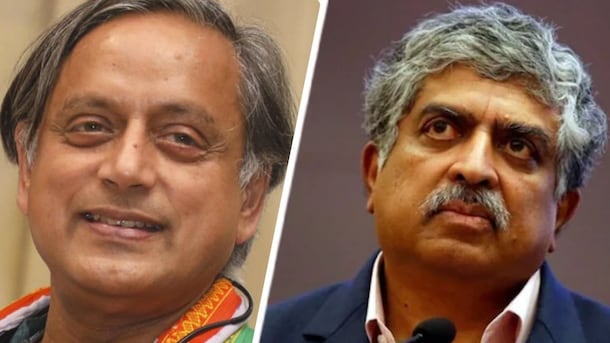
'A Breaking Point': An Open Letter To Nandan Nilekani On How To Fix India's Exams
Congress MP Shashi Tharoor offers a radical blueprint to the man leading the Centre's exam reforms task force.
-
Opinion | Trump's Nuclear 'Gift' To Saudi Arabia Could Haunt Middle East For Years
Trump just signed a '123' deal with the Kingdom. For the Saudis, this could be a big win. But for the region, it can quickly become a source of uncontrolled chaos.
-
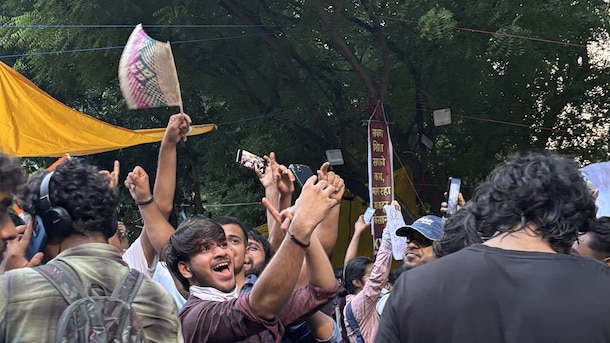
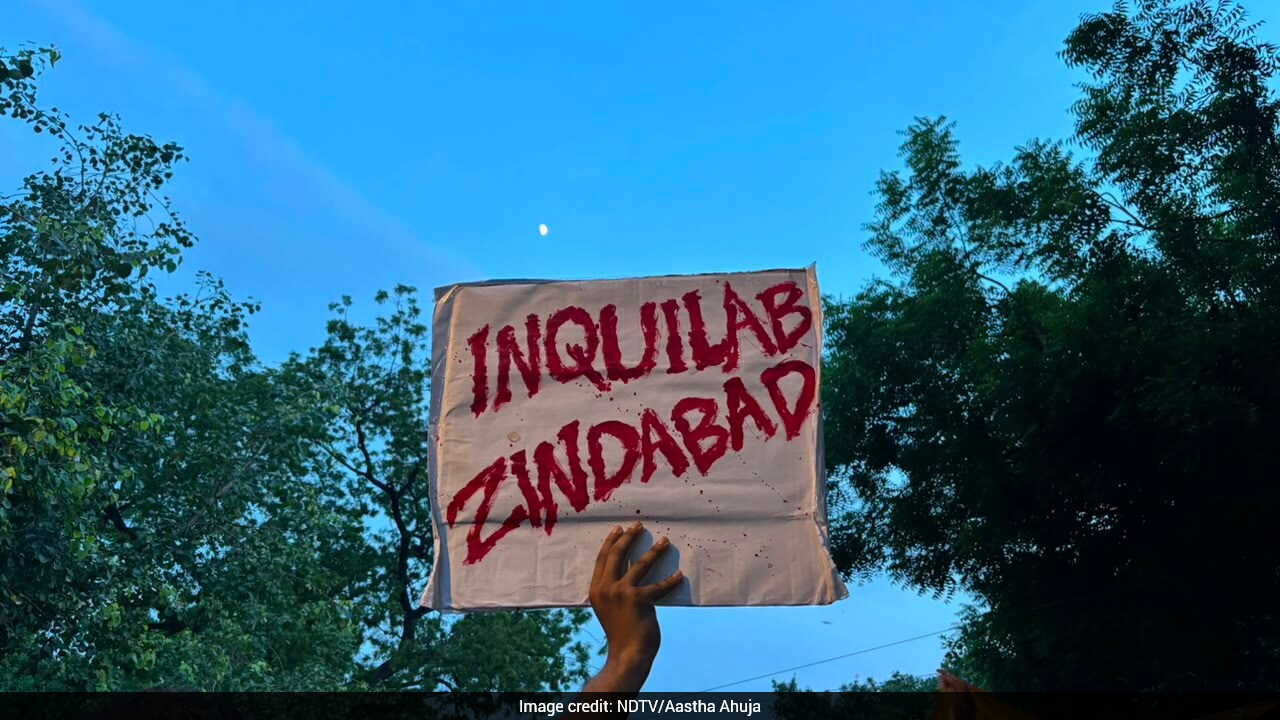
An Evening At Student-Led Protest That Pushed Education Minister To Resign: In Pics
We spent the day at Jantar Mantar, located in the heart of New Delhi's Connaught Place area, where the youth-led movement was born and grew into a national call for accountability.
-
Opinion | One Resignation, 3 Headaches: The Bigger Politics Behind Dharmendra Pradhan's Exit
The minister's exit revives an old Congress-era tradition and hands the BJP a very contemporary problem to solve on the road to Uttar Pradesh.
-
Dharmendra Pradhan Resigns: Gen Z's 'Online Habits' Became Protest Strengths
CJP Protests: The movement's most effective tool was not a manifesto. It was Gen Z's instinct to document, joke, post and share with Instagram as its amplifier.
-
Tear Gas Containers And Hope For A Better Future: The Duality Of Protest
The government today assured CJP that police cases filed against students would be withdrawn and no action would be taken against them in future.