Maharashtra's Food 'Nayak' And A History Of 25 Transfers But Zero Compromises
As FDA commissioner, Tukaram Mundhe has his eyes on Maharashtra's plate. Food adulterators, storied restaurants and clubs, dark stores of quick commerce platforms, school and government canteens, surrogate advertisers of banned products - no one is out of bounds.
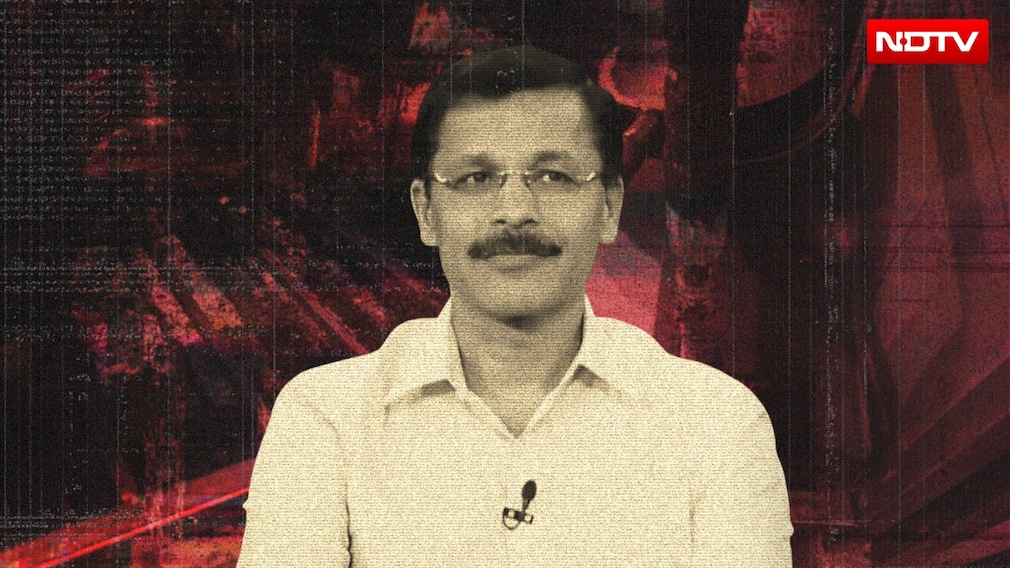
The man on a mission, 'Nayak' of the middle class, one man against the entire system, these are among the several sobriquets handed to Tukaram Mundhe, arguably the biggest newsmaker of the month. He prefers something plainer: 'I am just a public servant'. And for this public servant, the glass is always half full - with rules. That has been true of him long before his current posting at the Maharashtra Food and Drug Administration (FDA) made him a fixture in headlines. He has played by the rules, come what may, and made sure everyone around him did too. Rules have been his armour - to shrug off public adulation, blunt the attack by the critics and also cushion him through 25 transfers in 21 years.
As FDA commissioner, he has his eyes on Maharashtra's plate. Food adulterators, storied restaurants and clubs, dark stores of quick commerce platforms, school and government canteens, surrogate advertisers of banned products - no one is out of bounds. The goal, in his own words: "a healthy nation".
"I think for a healthy nation, healthy people are important. For healthy people, healthy food and medicine are important. And for that, regulators need to work towards that goal. That's the goal we have set, and we are working on that," he told students in an Independence Day address.
And he has been working at it with characteristic urgency. Appointed on May 26, the 51-year-old has led his team to run more than 3,000 inspections and suspend licences of nearly 165 establishments within two months. He has become something close to a nightmare for restaurants across the state, a man whose name alone can send a kitchen scrambling, whose presence at a table can make other diners suspicious of their food and restaurant choices.
Read | Why Tukaram Mundhe Has Become India's Most Talked-About Food Safety Officer
And while his unprecedented actions have made him a household name and drawn the attention of political leaders and even courts, Mundhe insists there is nothing extraordinary about them and that he is just doing his job. "I haven't made these laws; they have been in place for years. I am just following them," he told NDTV Profit.
So how did a man simply doing his job become a hero for it? How did the dirty underbelly of the state's popular eating joints stay hidden behind a glossy exterior before he took over?
Much of his action that is being praised as groundbreaking is, on paper, fairly basic - banning paneer that isn't quite paneer, finding cockroaches and rodents where they shouldn't be, checking that a licence is actually in place. It's less innovation than enforcement of the baseline. That this now reads as remarkable says something about how long such checks had gone missing.
Mundhe's answer is modest: "I would not say that nobody (before me) had done anything. I could do this work because there was some foundation there. I could not have started in a vacuum if there were no post, no structure in place".
In a separate conversation, though, he was more forthright about what he actually changed. Earlier, he explained, FDA officers would visit a site, collect samples, and act only once test results came back. He flipped the sequence: inspect first, act on what you find on the ground.
The proactiveness has drawn its share of brickbats. "You try to kill a mosquito with a sword," the Bombay High Court told the FDA over its action against a warehouse of Amazon Retail India, whose grievance was that the officers had suspended its licence without first issuing an "improvement notice".
Mundhe had his rulebook ready in response.
"There is a law in place. Do we follow the law? Yes, we do. Do we follow the processes? Yes, we do."
The dispute, he explained, centred on whether a notice was required before a licence could be suspended. He argued that the Food Safety and Standards Authority of India Act, 2006, allows designated officers to suspend a licence forthwith when there is a likelihood of a health hazard from the food which is going to be sold or consumed. "This is the wording in the Act."
The Bombay High Court had also asked whether the FDA was being selective, cracking down on private players while sparing government ones. The very next day, his team inspected three canteens inside the High Court itself. The result, Mundhe recounted with a chuckle: two of them were running without a licence.
The Making Of A Stickler For RulesHis love for the rule of law and duty as a public servant has led him straight into troubled waters quite a few times, and, just as often, is why he has prevailed across a two-decade career spent being shuffled in and out of various departments. He cleared the UPSC exam in 2005 with an All India Rank of 20, and the instincts that define him now were visible within his first two years in service.
As a young officer on probation in Solapur, he led a demolition drive against illegal encroachments in Barshi. A shop owner threatened to set himself on fire. Mundhe had it filmed and pressed charges instead of backing down. Days later, an old woman living alone in an illegal structure broke down in tears as his team moved to demolish it. He went ahead anyway, a moment he has since called deeply uncomfortable, but one he stood by. The backlash included calls for his resignation in the state legislative assembly and an FIR against him under the Prevention of Atrocities Act.
The events left a deep impact on him. "I asked myself if my action was correct or not," he recalled years later. "Things had turned for the worst." He eventually settled on an answer that would define the next two decades: "I will tread this path, come what may, whatever price I need to pay for choosing this."
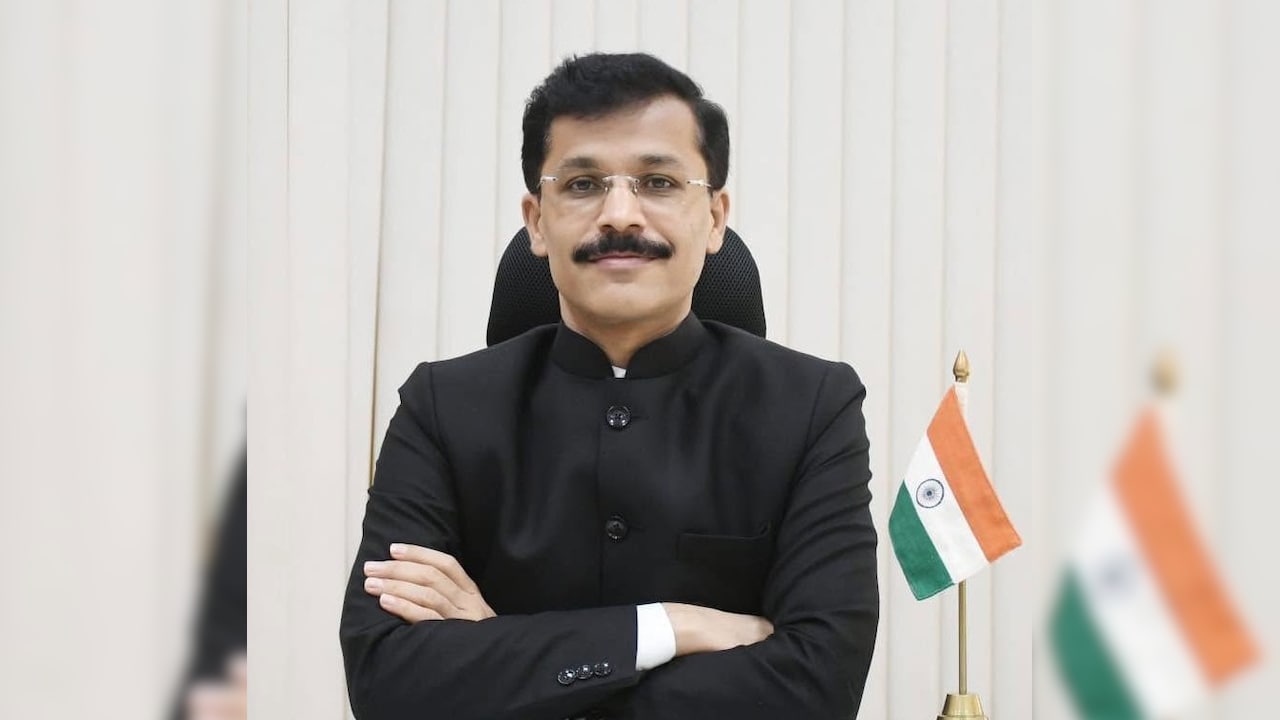
Tukaram Mundhe is a 2005 batch IAS officer.
Out of that early turmoil came a mental checklist he still uses - an action is worth taking if it clears at least two of three tests: is it legal, is it in the interest of public morality, is it in the public interest.
Posted next to Deglur in Nanded as assistant collector, he took on the sand mafia and received his first death threat - a letter in red ink warning that his blood would spill if he didn't stop. He didn't. Security guards were assigned, the action continued.
The pattern held for two decades - Nagpur, Solapur, Navi Mumbai, Nagpur again - postings punctuated by no-confidence motions, corruption complaints, and one especially tense moment in Solapur, when he ordered a Quick Reaction Team to fire on a nearly 5,000-strong mob that had turned violent after a road accident, fearing his own team would otherwise be lynched. "It's easy to look back and dissect the issues," he said of it later. "Such decisions need to be taken at the spur of the moment."
Read | Life Term, Rs 10 Lakh Fine: Tukaram Mundhe's Warning On Edible Oil Violations
Roughly two years later, he was transferred back to Solapur - which comes under a drought-prone region- as the district collector. He devised a pattern - later known as the Mundhe pattern - and completed water conservation work in 13,000 hectares in just five months. During his stint, Solapur became the best-performing district, and Mundhe got the best collector award. He also earned the name of "waterman of Maharashtra" for his work in water conservation.
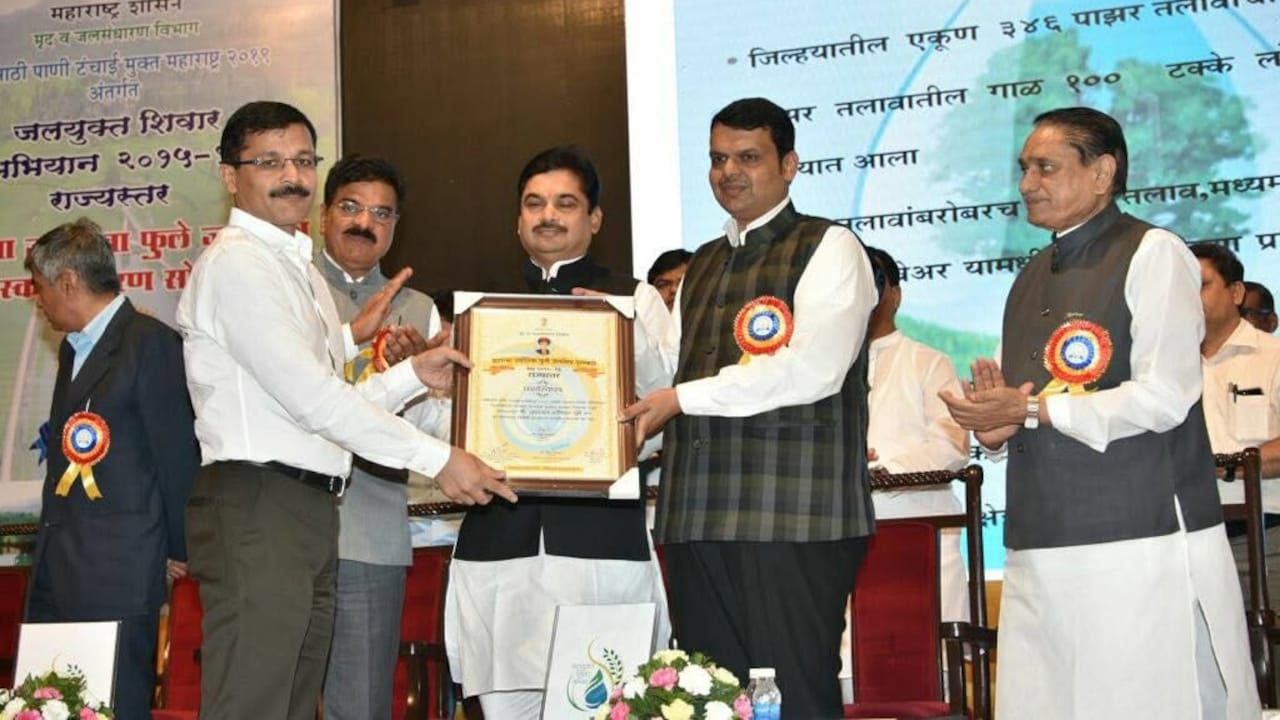
Solapur became the best-performing district under Tukaram Mundhe's watch.
He got married during his first Nagpur tenure and by the time he was handed his next posting - a non-cadre post as Additional Tribal Commissioner in Nashik - his wife was pregnant. The job came without a job chart and vehicles. He stayed at a guest house while his wife was in Pune. He again went back to his rulebooks for an out from the situation. He wrote multiple letters to his office, seeking a transfer, mentioning he can't be kept in a non-cadre post for more than three months. Mundhe was then moved to Washim, where he spent 10 months before being transferred again.
The Most Contentious StintHis most scrutinised stint came as Nagpur's municipal commissioner during the first wave of COVID-19. He was praised by the public for his handling of the pandemic while his approach was criticised by opponents as "dictatorial". He also became the subject of a complaint to the Prime Minister's Office by Union Minister Nitin Gadkari. When he was transferred out seven months in, a crowd gathered outside his home to protest. But after that he kept on waiting for his next appointment. He remembers the moment with a kind of resigned clarity: "Immediately after the hype, there was a downside. You have to be resilient to cope with that."
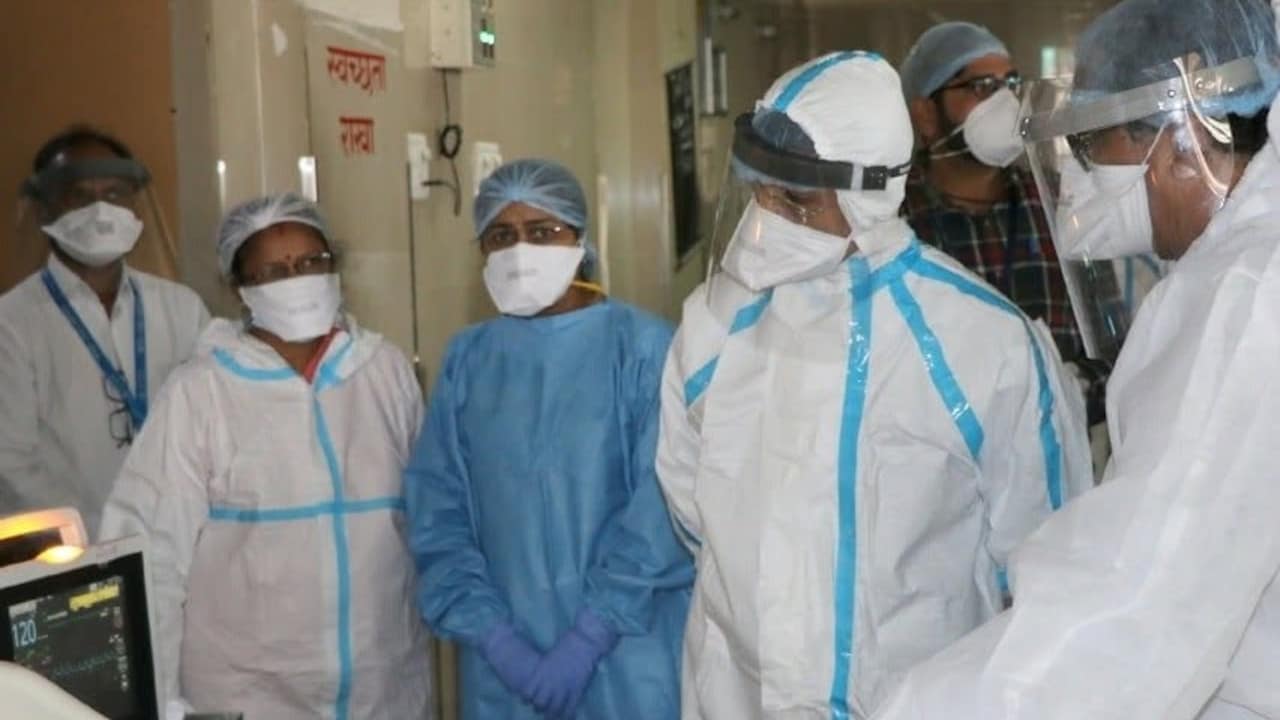
Tukaram Mundhe was praised by the public for his handling of the pandemic during his Nagpur stint.
Asked to explain how he's able to shrug off transfers that would embitter most officers, his answer returns, predictably, to the rulebook: "It's the government which has the authority to transfer officers. Now, when, how, where, that's for the government to decide."
Mundhe grew up in Tadsonna, a small village in drought-prone Beed district, in a family of farmers. "I was a farmer till class 10," he said. That life inculcated discipline, focus and a matter-of-fact way of functioning in him very early on. "I sold onions at five paise a kilo. I once had to destroy the produce because there were no takers." It's a detail he returns to often - the lens through which he sees policy and its consequences.
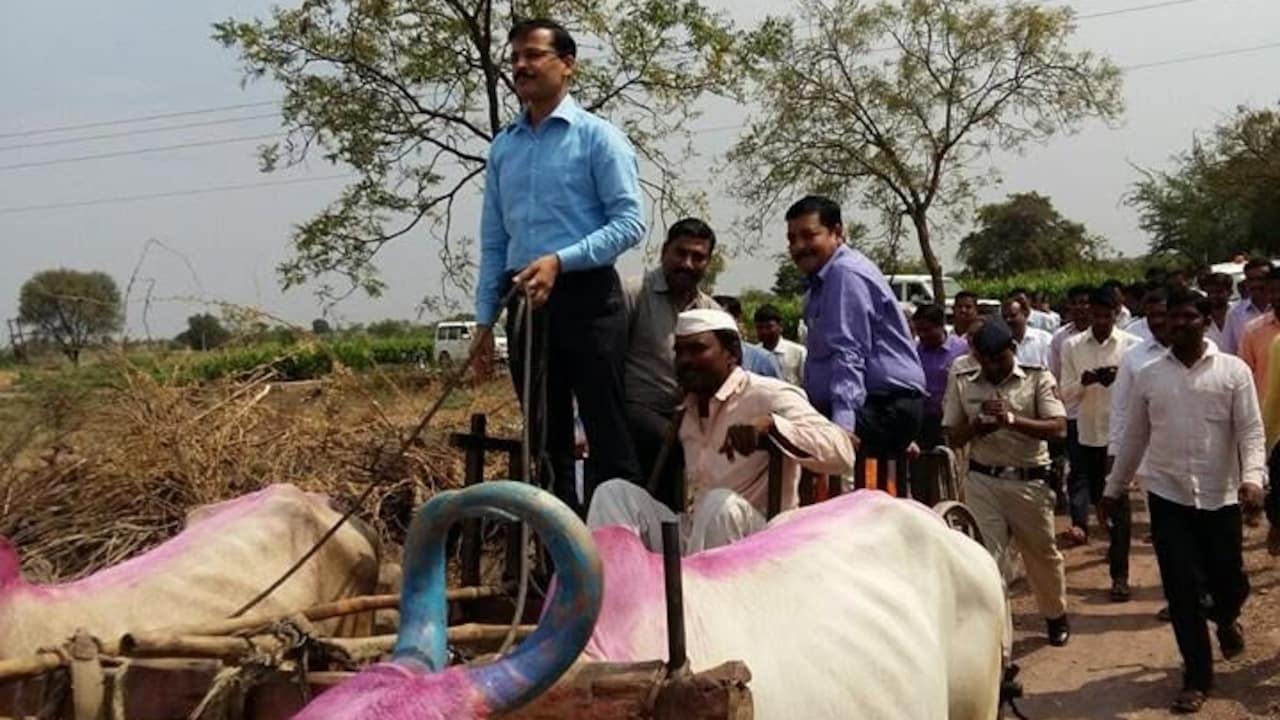
Tukaram Mundhe grew up in a small village in drought-prone Beed district, in a family of farmers
In September 2022, Mundhe was transferred as the commissioner, family welfare of the National Health Mission in Mumbai. He ordered midnight inspections at Primary Health Centres, took action against doctors who were running private clinics during government working hours. The outcome: he was transferred within a couple of months and kept waiting for his next posting.
But his time there shaped the crackdown he's now known for. It was there that he registered a public health shift: communicable disease giving way to lifestyle disease. "One of the major ingredients of lifestyle is what you eat and drink," he said. "That's where I started asking my officers to look at it from this perspective, not just as regulation to be implemented."
It shows up in his push against junk food in school canteens, and in how bluntly he talks about eating out, something he mostly avoids himself. "If I have to go to a restaurant, I generally avoid HFSS [high fat, salt and sugar] products. Once in a while is fine, it cannot be a regular feature," he said, before listing the rest of his personal checklist: cleanliness, a valid licence, and an age-appropriate plate. "It's not just about food. It's about your lifestyle as a whole."
Convenience, in his framing, is not an excuse: "Just because you don't have the time, are you going to eat poison?"
Video: Tukaram Mundhe Shares 4 Things Every Diner Should Check Before Ordering Food
Incorruptible, By His Own AccountHaving gone after Domino's and Pizza Hut outlets, cricket clubs, and legacy Mumbai restaurants alike, Mundhe is unequivocal about one thing: nobody, he says, would dare try to bribe him. "They can call my actions excessive or arbitrary. But about bribes, I don't think anyone would dare with me. If somebody is thinking of that, they better think a hundred times."
With his popularity now bordering on virality, the obvious question is whether he expects to be posted out before he can finish what he's started. He says he isn't counting the days. "I don't care how much time I am going to get. If demanding safe, standard food becomes a public movement in India, that will be the achievement."
Twenty-five transfers, not one completed term. And yet Mundhe frames leadership as a private, almost solitary act: "Finding the gap in the system and closing it, without expecting somebody else will do it for you." His now-familiar refrain: "If I cannot, who else can?"
Read | Raiding Court Canteen To Razing Dawood's 'Palace': Officers Who Took On Power
Despite the fandom, despite the sense of mission, he waves off any suggestion of joining politics, not out of caution, but character. "A person like me, who is very forthright and upright, I don't think he'll be accepted in politics," he says, seemingly amused at his own joke.
Whether Maharashtra's food safety habit outlasts his tenure (which could end any day, going by his track record) is a different question altogether. For now, at least, everyone from a five-star kitchen to a roadside cart knows one thing: the rulebook has a face, and it's watching.
-
3 Minutes, 6 Stanzas, Century-Old Debate: The Many Turns In Vande Mataram's Journey

PM Narendra Modi launched a year-long commemoration of the song's 150th anniversary on November 7, 2025. In December, both Houses held special discussions on it, during which the 1937 Congress decision was scrutinised.
-
Opinion | Sajjan Kumar, Congress, And How To Keep Messing Up An 'Apology'
A sitting Congress MP has termed Sajjan Kumar's death an "irreparable loss", calling him a man whose bond with the people of Delhi was "an example". This was a tribute, delivered in full sentences, to a convicted killer of Sikhs.
-
Explained: Why Tamil Nadu Dropped Second Airport Near Chennai
While the government stands firm with the protesting residents, Chief Minister Vijay assured that Chennai's aviation needs will not be ignored. The state will soon announce a detailed plan for a new airport at an alternative site, he said.
-
Opinion | A 'Snub' Gone Too Far? The Story Of Bangladesh PM's Stalled India Visit
The abrupt cancellation of Prime Minister Tarique Rahman's scheduled visit to New Delhi this month raises many questions.
-
Inside Pak's New Law That Has One Man Written All Over It: Asim Munir
With a new act, Munir has truly reached the apex. At least most politicians in Pakistan will hope so.
-
Behind Sugar Shock: Not Ethanol, But Over-Estimation Led To 16% Price Rise
In November 2025, the government allowed sugar mills to export 15 lakh tonnes. Now, India has allowed 10 lakh tonnes of raw sugar to enter duty-free.
-
Indian Family Wipeout Over iPhone: The Dangerous Lure Of Consumer Tech Debt
Young buyers walk into physical retail stores, hand over basic identity documents and walk out with a consumer electronic device that costs more than their entire family's monthly take-home income
-
China Outspends India In Space, But New Delhi Holds The Trust Card
The US remains the undisputed leader in the global space race. But it's realistic for India to aim for the third place, says Bellatrix Aerospace COO.
-
It's About The Provenance: Head Of Strategy Koreel Lahiri Decodes One Identity Of NDTV
We at NDTV consciously recognise the fact that the same consumer inhabits several screens during the course of a day.
-
Opinion | India's UPI Miracle Has Created A Difficult, Rs 20,000-Crore Question
UPI's whole magic was the Rs 30 payment it charged nothing for. But how long can it stay free?