Census Asks 40 Questions. Why Number 10 Is A Battleground | NDTV Explains
The caste question is a fill-in-the-blank for everyone other than SCs and STs. But there's a case for making it a dropdown with set options. Let's decode the history and math behind the politics.
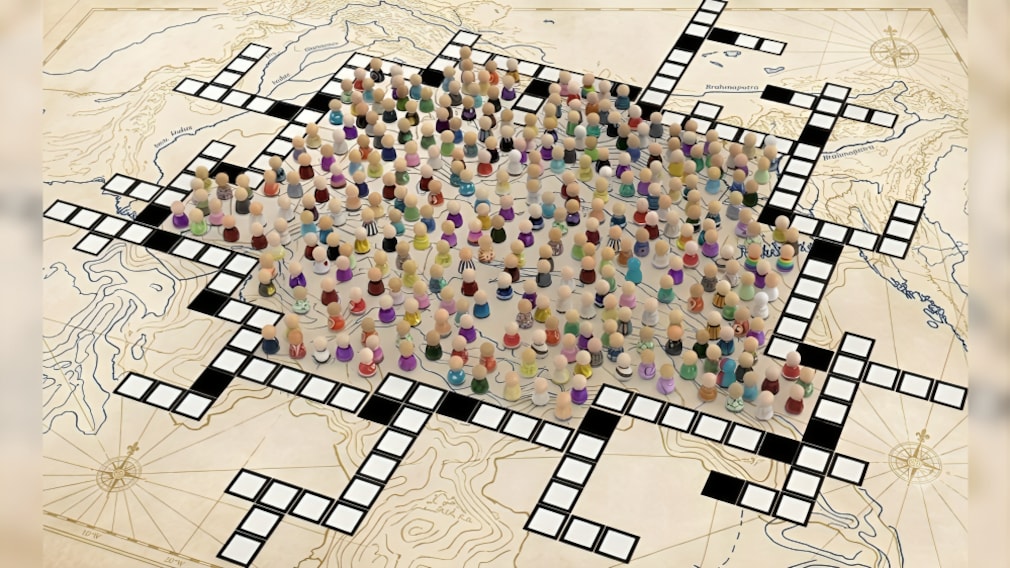
Of the 40 questions asked of every Indian in Census 2027, number 10 sits at the intersection of the country's history and its politics. And it will all come down to the math. Question 10 asks for a person's caste, the first time since 1931 that the census will record it for every Indian. How that question is asked has now become a dispute.
It is a political issue that will need a technical solution as well. And that solution will determine if the numbers can be used at all, for further decisions on reservation and other social justice measures.
But before we get to how Question 10 may be settled, let's break it down across formats and decades.
What Does The Form Say?
The Registrar General and Census Commissioner of India notified the questions on August 14, as a second phase of the census. Number 10 on this household data collection form is 'Scheduled Caste (SC)/Scheduled Tribe (ST)/Caste'.
Say, you are the one being counted. If you are neither SC nor ST, the caste field is an open column that the person being counted shall respond to. The enumerators, mostly teachers on census duty, will record the caste name as you declare it in the apps being used for the "first fully digital census". SCs and STs have been counted all along as that's enshrined in the Constitution, but not all castes. Estimates have so far provided for reservation and other benefits for groups identified as Other Backward Classes (OBCs).
The 40 questions do not use the term "backward class" or "OBC" at any point.
That is one of the contentions made to Prime Minister Narendra Modi by Congress president Mallikarjun Kharge and Leader of the Opposition (Lok Sabha) Rahul Gandhi in their latest letter, released on August 25, asking that the questionnaire be rebuilt using a pre-verified list of castes and wider discussion.
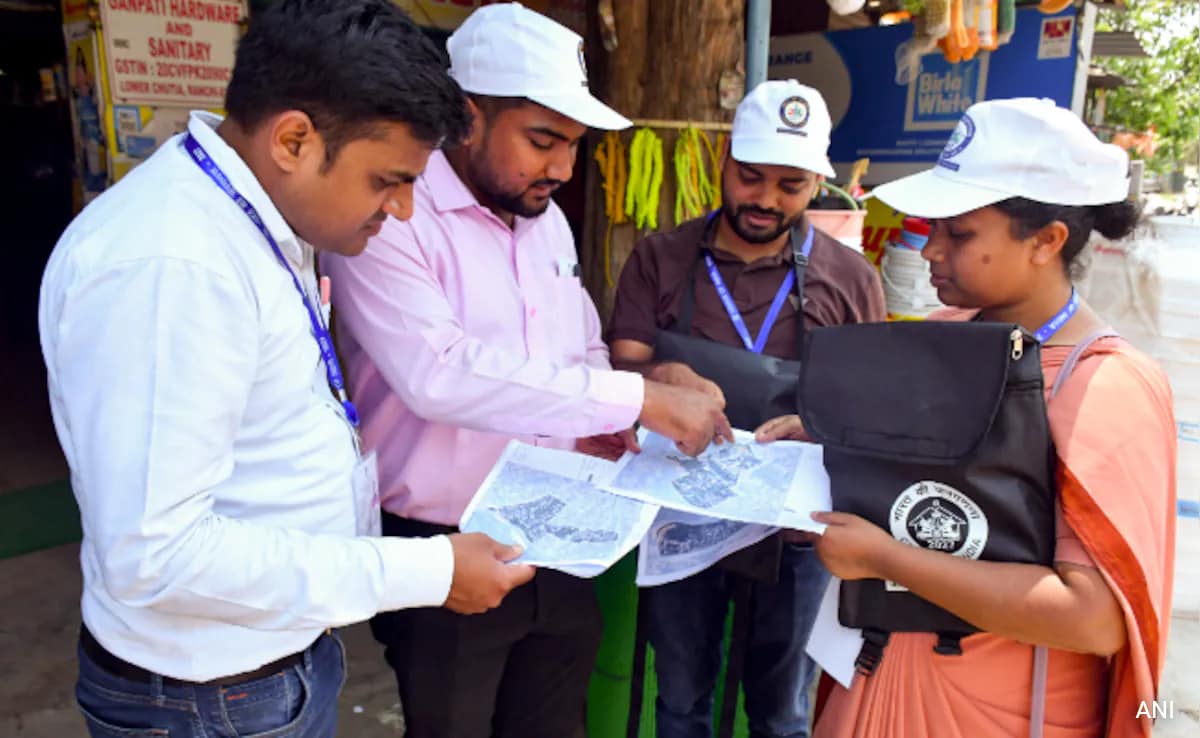
The second phase of Census 2027 is to gather demographic data.
What Is The Objection?
An obvious issue is that the same caste is known by different words across regions; so if each response is recorded as spoken across languages and dialects, one community may be scattered across many entries.
There is, then, the objection to the absence of a dedicated "OBC" column as a dropdown option or menu item. This way, no clear number of the OBC population may be arrived at, argue Opposition parties. OBCs have been a central cog in Indian politics over the past four decades at least.
The BJP-led NDA government has not responded to the objection as such, though it has in the past backed having a dropdown instead of a simple fill-in-the-blank option for counting castes.
A response came from Uttar Pradesh, which goes to the polls in about six months, where Deputy Chief Minister Keshav Prasad Maurya said the Congress had never conducted a caste census in its decades in power, and that the Modi government's doing so for the first time "has caused panic and consternation among the Congress and its allied parties".
Why Was Caste Not Counted After 1931?
Caste was counted in every census from 1881 to 1931, under the British colonial government. The 1941 census collected the data but never released it; its tabulation was disrupted by World War 2, and then the British left in 1947.
A break came with the first census of independent India in 1951, when the Congress government dropped caste from the schedule, retaining only SC and ST, the categories required to be counted for reserved seats in the Lok Sabha and state assemblies. Leaders such as Vallabhbhai Patel as home minister and Jawaharlal Nehru as PM reportedly held that a caste count would prove divisive in a country that needed unity.
In 1961, the Centre asked states to conduct their own surveys and draw up state-specific OBC lists if they wished. The Centre has its own list for welfare schemes.
BP Mandal, whose report later gave quotas to OBCs, sought a caste census but was refused on the same grounds by successive governments when India saw a major, post-Emergency churn at the end of the 1970s.
Has An Open-Ended Caste Question Been Tried Before?
The demand persisted as the politics of caste assertion solidified. A Socio-Economic and Caste Census (SECC) was conducted in 2011, outside the main decennial Census, but the caste data was never published through successive Congress-led UPA and BJP-led NDA governments. The reasons are on the record, in a central government affidavit before the Supreme Court.
In 2021, responding to a petition by the Maharashtra state government seeking the caste data on OBCs, the Union Ministry of Social Justice said raw numbers were not useful. In several hundred cases, a number or a symbol appeared in the caste column instead of a name, and respondents had used clan names, gotra, sub-caste names, titles and synonyms interchangeably, it said. The affidavit recorded that the exercise produced more than 46 lakh different caste names nationally. Hence, no real and reliable caste-based census data was available, it argued.

After some oscillation and sharp comments, the Modi government agreed to the caste census.
What Opposition Draws From Government Affidavit
In that affidavit, the government also told the Supreme Court what would've worked better: a pre-drawn dropdown menu from which caste could be selected.
Congress leaders have pointed to this paragraph of the affidavit and asked why Census 2027 does not carry such a dropdown. The Opposition essentially demands now that a pre-compiled list of castes, each assigned a code, be used, from which the enumerator selects. Two states have done this, the Congress has argued.
Two States Cited As Dropdown Examples
In Bihar, a caste survey (the word 'census' was not used; that's the Centre's domain) was done in 2023 using a set list. It had 214 castes from its own records, with the 215th code for those not covered by any. Enumerators entered codes rather than caste names after speaking to the person being counted. The report presented in the Vidhan Sabha said Extremely Backward Classes were the largest group at 36 per cent. The proportion of backward classes overall (including EBCs) crossed 63 per cent. SCs were just below 20 per cent, STs 1.7 per cent; and just over 15 per cent were General or unreserved categories.
Telangana: The southern state's caste survey of 2024 first identified the social group, then the particular caste listed under that group. This survey listed 242 castes in all. These were grouped: 133 under BC (also called OBC), 59 under SC, 32 ST, and 18 'Other Castes'. Plus, there was the 'Others' option, and 'No Caste' for those who did not wish to identify themselves with caste.
It's clear that both Bihar and Telangana, one currently led by a BJP chief minister and the other by the Congress, used similar methods.
The person being counted stated their caste; the enumerator matched it to an entry on a pre-compiled list rather than spelling it down as spoken. Both surveys managed to cover most of the population, across all the languages, dialects and pronunciations.
But who gets to decide that list is a point of debate too.
What A Pre-Compiled List Does Not Settle
There is no single national registry of castes. The Centre has its list of OBCs; each state has its own. A caste can be on a state's list but not the Centre's, meaning it qualifies for state benefits but not central ones. And the same community goes by altogether different names in different states.
Building a list for a national census would, therefore, require the government to decide one by one. That can lead to micro-debates, such as when Jitan Ram Manjhi, who is now a BJP ally and a union minister, told the Bihar assembly that Bhuiyan and Musahar were a single community but were assigned separate codes, and that a single code would have put their population at 54 lakh, meaning a bigger claim on welfare benefits.
Suggestions say a watertight list can be compiled from existing records, including the Socially and Educationally Backward Classes lists with the government and those maintained by the Anthropological Survey of India. There is a related demand for wider consultation with political parties, besides experts and other representatives of the public, to resolve all of this before the count begins.
"Much of access to essential services in India, be it education, healthcare, nutrition, or social protection, is shaped by structural inequalities of caste, region, religion, and economic status," Poonam Muttreja, Executive Director of the Population Foundation of India, has told NDTV, "A caste census is critical to uncover these intersectional disparities and to design policies and programs that are truly equitable and inclusive."
So far, the process is set to go ahead, scheduled from September 1 to 30 in Ladakh and the snow-bound areas of Jammu and Kashmir, Himachal Pradesh, and Uttarakhand; and from February 2027 in the rest of the country.
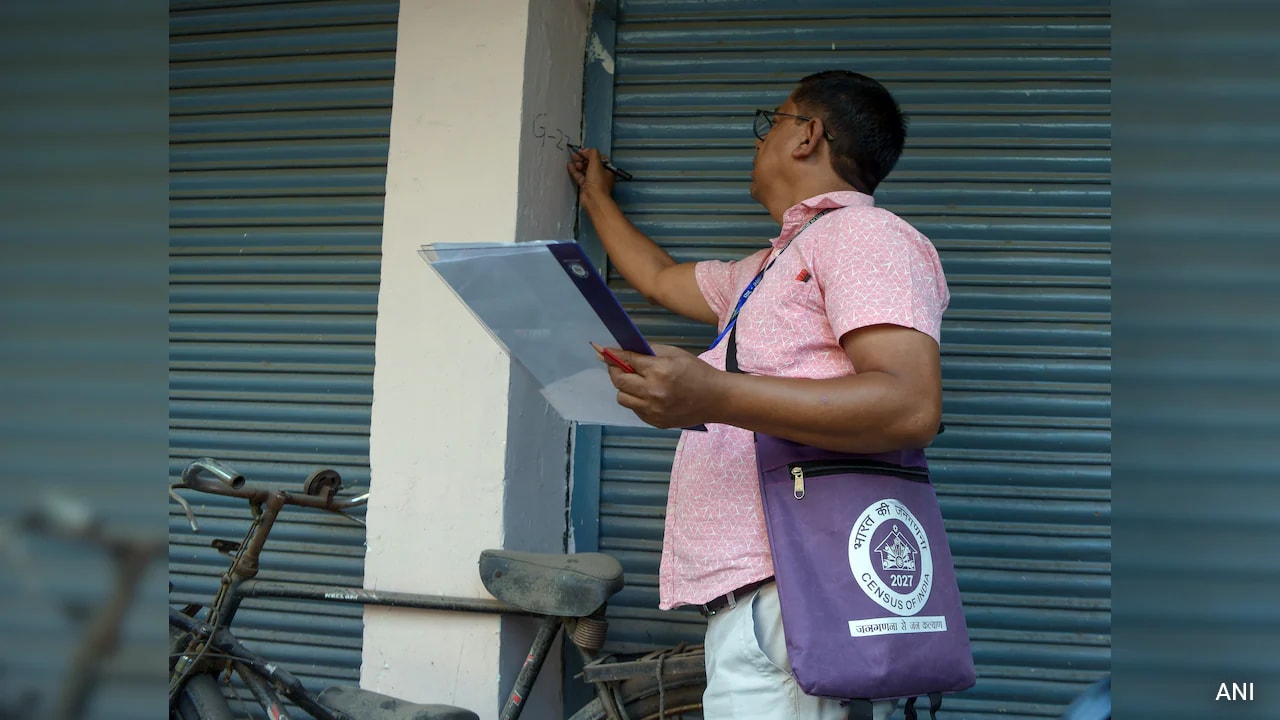
The question of caste in the census has been debated for decades before being included at all.
P.S. How Mandal arrived at 52 per cent
Reservation for backward classes other than SCs and STs was granted as per the Mandal Commission report by the 1990s. The report had actually been compiled a decade before that, but remained a political hot potato. Working in 1980, the commission had no caste count to go by. It built its own evidence, running socio-educational surveys across districts and studying the 1961 Census.
For the population share, it had to work backwards. Nobody had counted OBCs as such, so the commission worked out what was left after subtracting everyone who had been counted: SCs, STs, and the so-called forward castes. For that last figure, it went back to 1931, because nothing newer existed.
The calculation happened in two steps: First, the 16.16 per cent non-Hindu communities were subtracted, then the 22.56 per cent SCs plus STs, and 17.58 per cent "forward" Hindu castes. That made 56.3 per cent, so the remaining 43.7 per cent were categorised as Hindu backward castes. Then, the commission assumed a similar proportion of non-Hindu communities would be experiencing backwardness.
The final adjusted number was: 52 per cent of India's overall population consisted of OBCs. The commission recommended 27 per cent reservation, much less than that proportion. That was because total reservations could not exceed the 50 per cent ceiling laid down by the Supreme Court; 22.5 per cent was already reserved for SCs and STs. That ceiling has since been challenged by several states, and remains one of the many political fissures in India's caste-coded society.
At the same time, the "OBCs are 52 per cent" assertion is contested. Some later surveys have produced somewhat lower estimates, but nothing has officially replaced that figure.
An official number is what Census 2027 is meant to provide. Hence the fight over its format.
The decision to include caste enumeration was taken by the Cabinet Committee on Political Affairs, chaired by Prime Minister Narendra Modi, on April 30, 2025, after notable oscillation. Rahul Gandhi claims the nod came after he stuck to the demand. The BJP could no longer ignore it anyway, as voices echoed from its allies and within the party too.
Announcing the decision, Union Minister Ashwini Vaishnaw argued that some states had conducted caste surveys in a non-transparent manner, so it was important to include caste in the nationwide census, which was delayed from the original 2021 schedule due to Covid and other reasons.
But how to collect that data remains an open question, not a quick dropdown, at least for now.
-
Blog | 'Baap Da Brat': Kerala Mini Cooper Crash, And Why 'Daddy' Can't Keep Saving You

There are three things you should never underestimate in India: the power of 'jugaad', the elasticity of the law, and the confidence of a 'Baap da Brat' who believes his Papa Posh can fix absolutely anything.
-
Opinion | 'Say Our Name': Why A Tiny Island Nation Wants The World To Get Its Name Right
Standing before the UN hall of nations, Naoero President David Adeang asked the world to unlearn its comfortable habits and speak a restored truth.
-
TVS Succession Row Explained: Why Venu Srinivasan's Family Is Divided Over Wealth
TVS Family Dispute: TVS Holdings is a key entity because it owns a controlling stake in TVS Motor Company. It owns 50.26% of TVS Motor.
-
Opinion | The US Is Showing India Just How Cheap Its 'Friendship' Is
Can local talent fully replace Indian contribution? Why is the US leading in setting up Global Capability Centres in India - over 60% - and pocketing the IP?
-
Jantar Mantar Tells Time. The Clock Just Stopped On Its Time As An Iconic Protest Site
On Monday, October 12, 2026, Delhi Police denotified Jantar Mantar Road as a designated site for demonstrations. The Supreme Court had given it a nudge. Here's how history met politics on that street for decades.
-
Opinion | Saudi Airport Attack, And Why Pakistan Keeps Biting Off More Than It Can Chew
For all those who were envious of Pakistan's 'new status' as "mediator extraordinaire", here is a reality check
-
Opinion | Visa Shocks To Racist Attacks, When Did America Come To Hate Indians So?
Sometimes it is about H-1B visas. Sometimes it is jobs. Sometimes it is "foreigners." Sometimes it is about temples. The language of the attack varies, but the message is consistent
-
How El Nino And Warming Oceans Could Shape Earth's Climate In 2027
From changing ocean currents to extreme weather, scientists are watching a combination of climate signals that could influence temperatures, rainfall and ecosystems in the months ahead.
-
Blog | Nana Patekar, And The Sharp, Lasting Sting Of His 'Plain-Speak'
"Subah ghar se niklo, bheed ka hissa bano..." Nana Patekar's characters often spoke with the bluntness of men who had little patience for pretence. Just like Nana himself.