Heatwaves, Floods, Drought: How Climate Change Is Reshaping Childhood
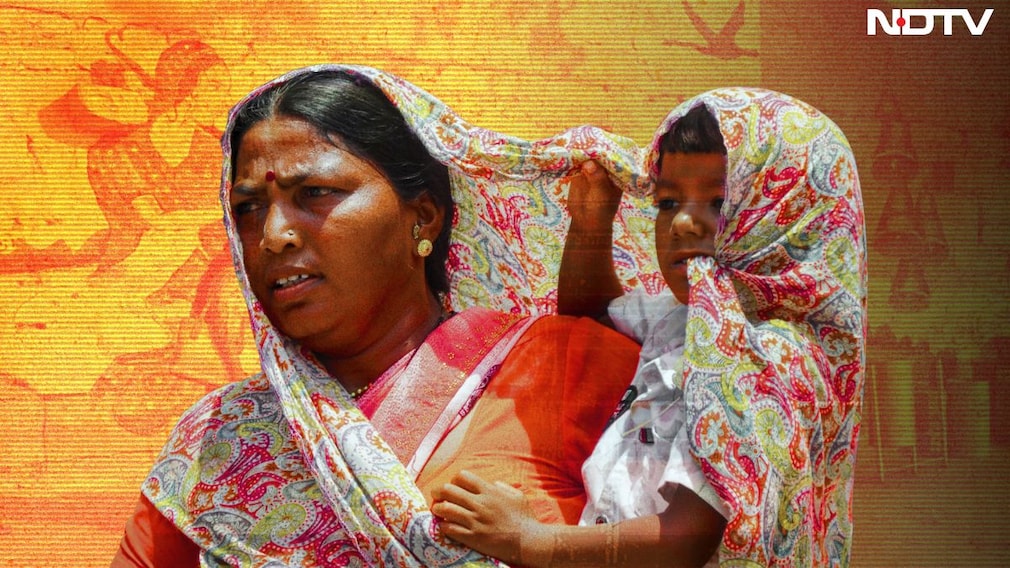
It's 3 o'clock. Six-year-old Meer waves goodbye to his friends as he gets off the school bus in Gurugram. His mother, Sonam Varughese, picks him up from the society gate and together they walk towards home. Meer tells her about his day at school but by the time they reach home, he is exhausted. "A 10-minute walk in the sun drains him," says Sonam.
Over 2,000 kms away, in Assam's Nagaon, an eight-year-old sings the nursery rhyme 'rain rain go away', not because he wants to play, but because he is afraid his house will be washed away by riverine floods.
"My children get anxious whenever there is heavy rain. They ask if the water will enter our home again or whether their school will be closed," says Poonam, a mother of two young children - eight- and 10-year-olds.
These are not isolated cases. Climate change is silently reshaping childhood.
Almost every child in India (99.66 per cent) is exposed to at least one climate hazard, according to Children's Climate Risk Report 2026 by United Nations Children's Fund (UNICEF).
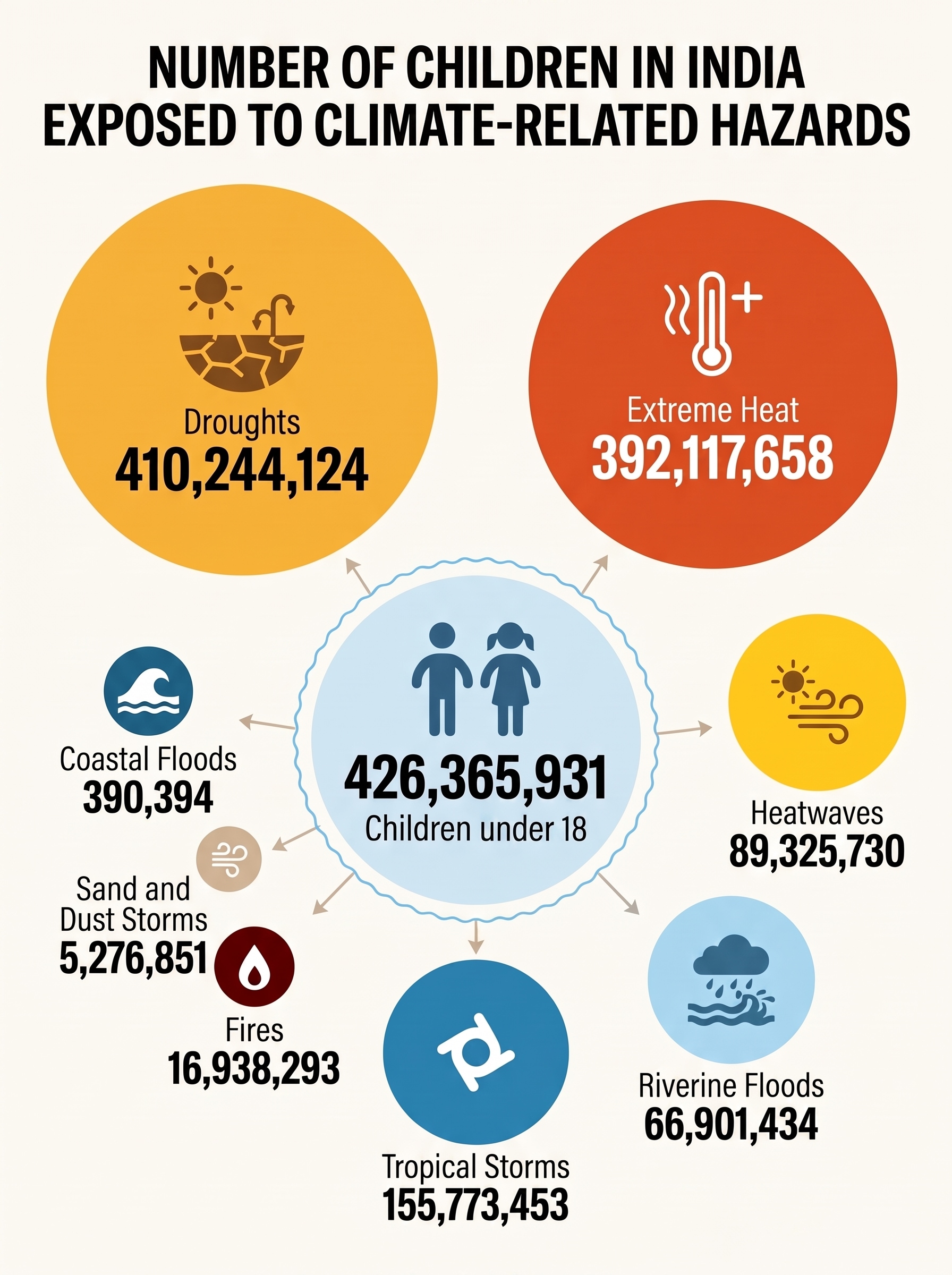
The report, released on June 16, estimates that 411.62 million children in India are exposed to at least two climate hazards, while 234.24 million are exposed to three climate hazards including coastal floods, drought, extreme heat, fire, heatwaves, riverine floods, sand and dust storms, and tropical storms. The risks cut across health, education and survival.
The most common combination in India is drought and extreme heat, affecting 158.8 million children. At least 84.1 million children are exposed to a combination of tropical storms, drought and extreme heat, while 38.5 million face the combined risk of riverine floods, drought and extreme heat.
The report also looks at children's exposure to climate-sensitive hazards such as air pollution and vector-borne diseases like malaria. It estimates that about 421 million children (98.74 per cent) in the country are exposed to unhealthy levels of air pollution (PM 2.5). India received an air pollution risk score of 9.94 out of 10, indicating extremely high exposure.
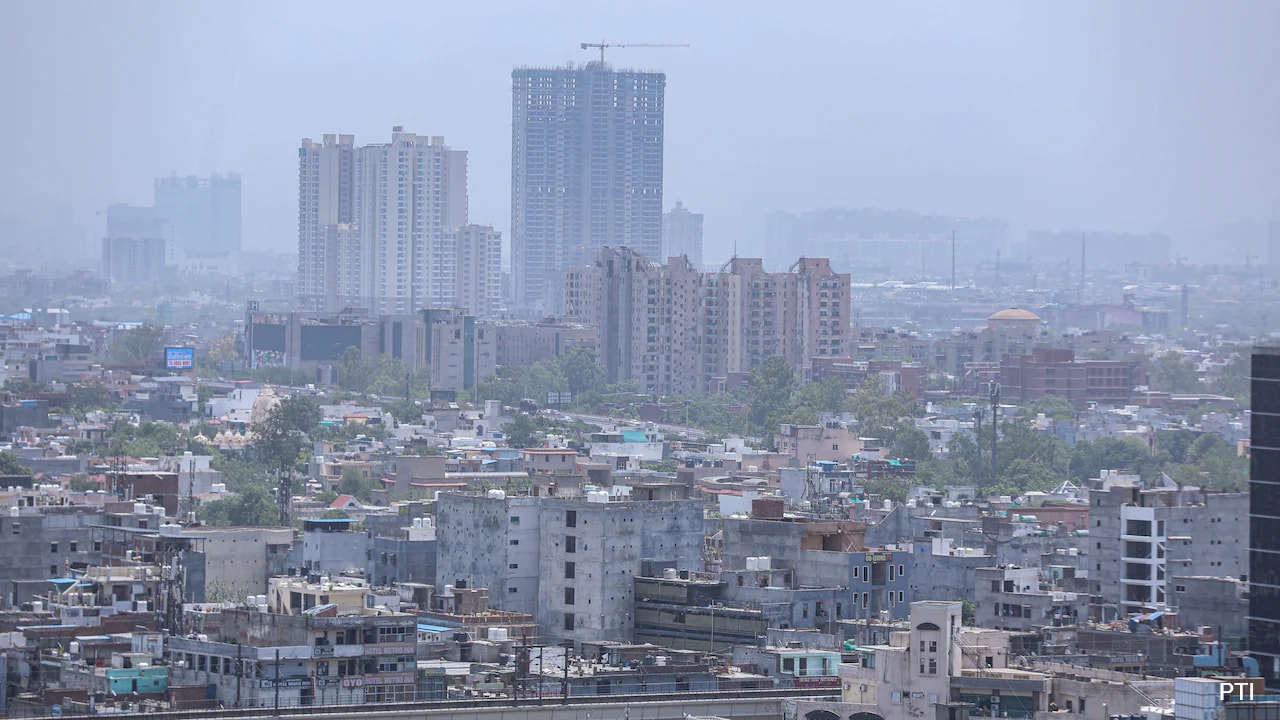
High-rise buildings covered in pollution over Sector 94, in Noida, Uttar Pradesh.
Loss Of Play, Education And Childhood
Meer skipped his sports classes during the peak summer in May. He spent his summer vacation hopping from one friend's house in the neighbourhood to another. They camped inside a 10x10-bedroom, played board games and occasionally watched television. His mother, like his friends' mothers, did not let him step out in the sun because it was too hot to handle.
"We send kids to each other's houses, but they don't get free play. There is barely any physical movement. Children sit in AC rooms and complain of headaches. Schools keep announcing holidays due to heat, rain, pollution, or winters. Gurugram's infrastructure is ill-equipped to cope. Half of the time children are sick. Education is not happening," Sonam added with a hint of frustration in her tone.
He goes for football classes at 6 in the morning armed with ORS and lemon water for hydration.
"Until very recently Meer would pester us to let him go out and play, but now he wants to stay at home. Lack of outdoor exposure has affected his social skills. Now we deliberately take him out early in the morning on weekends," says Sonam.
For Poonam's children, the monsoon means closely watching the rainfall and river levels because flooding has become a regular part of their lives.
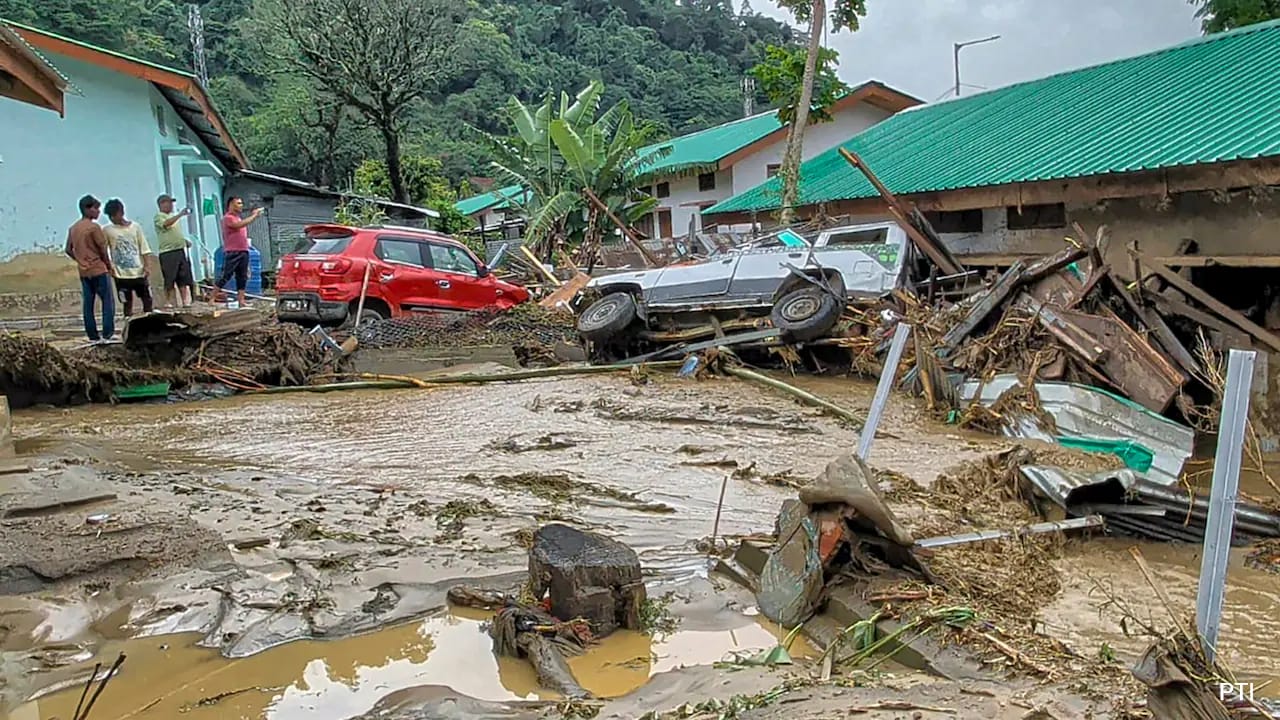
Vehicles stuck in debris after a landslide and flash floods near the NEEPCO project colony, Keyi Panyor district, Arunachal Pradesh.
"During floods, schools often close and playgrounds disappear. They miss classes, lose routine and spend weeks indoors when they should be learning and playing with friends. Climate change is not just affecting their surroundings, but also their sense of security and childhood. The younger one often suggests moving to their grandparents' house in Kolkata," she says.
Threat To Food Security And Healthcare
The climate crisis is not a single event. It triggers a cascading impact on healthcare, education, WASH, nutrition, and child protection and social protection services.
"Intense droughts can devastate crops and worsen food insecurity. Dry vegetation left behind by a drought can fuel wildfires, which in turn exacerbate air pollution and leave the land vulnerable to flash floods later in the year. These floods can destroy infrastructure such as homes, schools and hospitals, displace communities and spread waterborne diseases," states the report.
The UNICEF report gives India a nutrition risk score of 6.41, a stunting score of 6.51, and a food poverty score of 6.31, indicating significant risks linked to climate hazards.
"One of the less obvious effects of climate-related disruptions is 'hidden hunger'," explains Dr Kushagra Gupta, Consultant Paediatrician, Fortis Hospital. "When droughts cause crop losses or higher food prices, the impact on household food security is often the consumption of cheaper, less nutritious diets. Consequently, children may receive calories but may not receive adequate essential micronutrients, such as iron, zinc, and vitamins. These inadequacies can hamper physical growth, brain development, immune function and overall health in the long-term."
Further talking about the impact of exposure to extreme heat, Dr Gupta says children have less capacity to regulate body temperature than adults. "Chronic dehydration, sleep disturbances, reduced appetite, and increased physiological stress can result from prolonged exposure to extreme heat, particularly when nighttime temperatures stay high and the body lacks sufficient recovery."
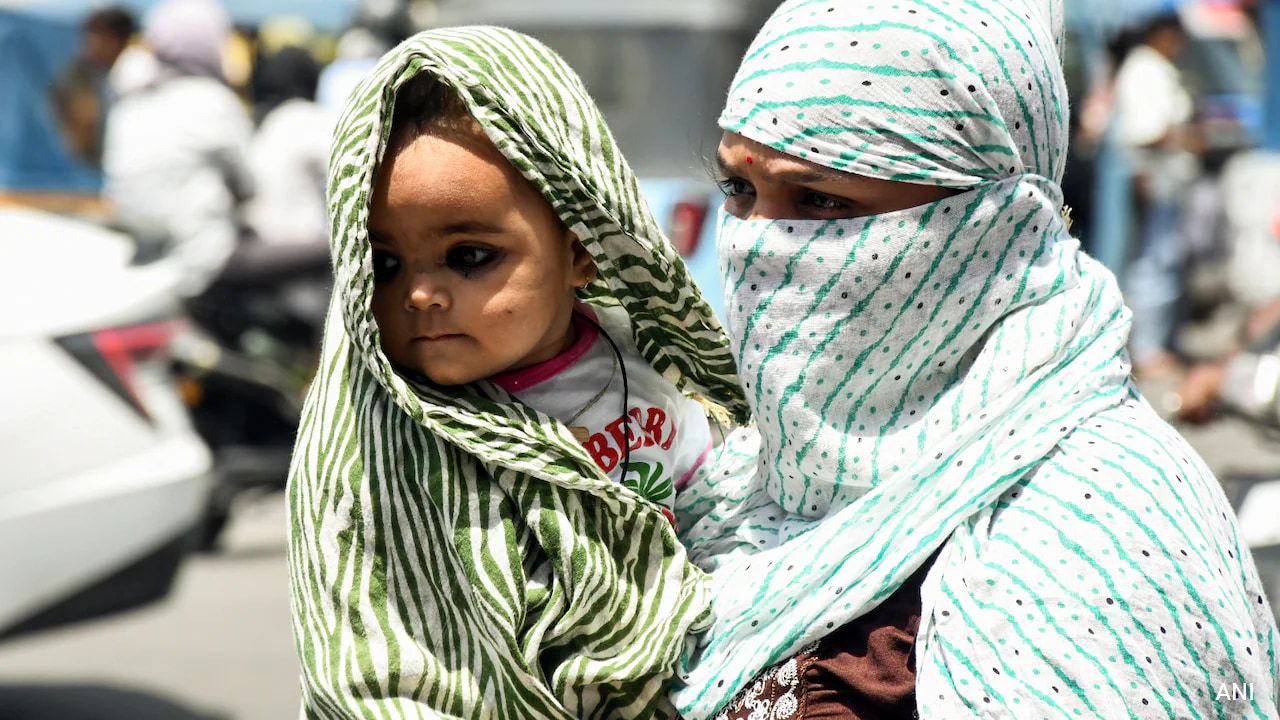
A woman covers herself and her child with scarves amid scorching heat, in Kanpur on Monday.
Dr Gupta has seen more paediatric cases of heat stress, dehydration, gastrointestinal infections and worsening respiratory illnesses with prolonged periods of heat exposure in recent years.
The 'Invisible' Impact On Mental Health
The immediate impact of exposure to climate hazards on healthcare services and nutrition is easier to identify, opines Dr Eilia Jafar, a development and humanitarian professional, who has authored academic papers on disaster management, quality, accountability, and gender in emergencies. The deeper concern is what cannot be measured immediately, she adds.
"Continuous exposure to climate shocks creates uncertainty, stress and emotional insecurity during the most formative years of life. Many children experience trauma, sadness, persistent worry, nightmares, insomnia and difficulty regulating emotions. These experiences affect not only their mental well-being but also memory, learning capacity and cognitive development."
A child's mental health is rooted in the emotional availability and well-being of their caregivers, adds Dr Mimansa Singh Tanwar, a Clinical Psychologist.
"Children pick up on the stress and worries of the adults around them. When they see their parents struggling to save their home, recover financially, or cope with uncertainty about the future, they can begin to internalise those fears within," explains Dr Tanwar, Head of Fortis School Mental Health Program.
These worries can lead to trauma reactions where young children may become clingy, develop feelings of anxiety, sadness, grief, anger, and even hopelessness.
Education And Child Poverty
The UNICEF report gives India a child poverty score of 6.49. Over 56 per cent of children are under learning poverty.
In education, the damage goes beyond school closures, says Jafar.
"Frequent disruptions reduce learning continuity, increase absenteeism and push children from economically distressed families towards work instead of classrooms. Climate-induced poverty is becoming a major driver of school dropouts, while trauma, chronic stress and malnutrition reduce children's ability to concentrate and perform academically," she explains.
Marginalised communities experience multiple climate risks simultaneously. For example, a child living in an informal settlement is often exposed to extreme heat because of poor housing.
"The same child is exposed to air pollution because of surrounding industrial activity, contaminated water after flooding and nutritional stress due to rising food prices," adds Jafar.
The Way Forward
Without timely action, climate change is estimated to cause an additional 28 million children to be wasted and 40 million children to be stunted globally by 2050. UNICEF has called for child-responsive climate policies, action and investment.
Jafar suggests changing the way we plan cities. For instance, schools in flood-prone areas should be elevated to remain operational during disasters.
"Heat action plans, disaster management systems, nutrition programmes and school infrastructure cannot operate in isolation. Mid-day meal programmes should be adapted during heatwaves to prioritise hydration and nutrient-rich foods. If cities are designed to protect children during climate extremes, they become more resilient for every citizen," she adds.
-
Opinion | The Last Bet? What Trump's 'Mother Of All Bombs' Could Actually Do To Iran

Can an MOAB deliver a decisive blow to Iran that may force it to surrender immediately, as Japan did after Hiroshima and Nagasaki in World War 2?
-
Hit Songs, Empty Pockets: The Hidden Math Behind India's Viral Music Boom
Over 80,000 brands and five lakh creators in India make branded content. The opportunity is worth around Rs 1,500 crore.
-
Opinion | Great 'Exceptions': How The Oil India Was Attacked For Is The Oil Trump Now Seeks
A law written to punish the buyers of Russian oil was suspended by the US to protect a purchase of Russian oil. India spent fourteen months being lectured for less.
-
Opinion | Louis Vuitton Loot, Torched Cars: France Protests Have An Unlikely Beneficiary
It's an unbelievable moment. Crowds looting the most exclusive stores in Paris, including the famed Luis Vuitton. But what's behind this meltdown?
-
Blog: Kolkata Didn't Learn From 2015. Eleven Years Later, It Proved To Be Fatal
The City of Joy isn't a stranger to crowd control. Be it during Pujo or Christmas at Park Street, Eden Gardens cricket matches, or Derbies between Mohun Bagan and East Bengal. But during Pujo, the entire city is on alert.
-
Opinion | Slurs, Threats, Now A Temple Attack Plot: When Did America Become So Hostile To Indians?
The rising tide of anti-India, anti-Hindu, and racist attacks serves as a stark reminder that economic prosperity does not automatically guarantee social immunity from bigotry.
-
A Step Behind Neha Bora: What Rahul Gandhi's Gesture Says About Congress' Gen-Z Pitch
At INDIA bloc's march to Supreme Court, Rahul Gandhi placed himself a step behind two women, hands resting on their shoulders. One was his sister Priyanka. The one on his right was Neha Bora. Here's what the image means for the protest wave now, and for Rahul's politics in general.
-
Opinion | Imran Khan, And The Perils Of Having An 'Opinion' In Bollywood
The reality of the industry is quite grimy. More often than not, its inhabitants have been fairweather friends, happy to sing the praises of whoever is in a position of authority.
-
Exclusive: India's Food Safety Problem Goes Beyond Just Dirty Kitchens - By Tukaram Mundhe
On World Food Day, Maharashtra's Commissioner of Food Safety explains why instead of taking stopgap measures, the entire supply chain in India needs to be held accountable and made transparent.
-
Opinion | India Has Enough Coal. So Why Are Power Plants Running Short? A 76 Million 'Crunch'
As of October 5, as many as 82 of the 191 thermal plants monitored by the Central Electricity Authority were in the 'critical' category