A Look At What Maratha Warriors Wore And Weapons They Used In 17th Century
The exhibition, which also has a replica of the armour for 'touch and feel' for visitors, will culminate on November 10.

November 10, 1659
The Marathas, led by Shivaji, awaited the arrival of the Adilshahi troops under General Afzal Khan of the Bijapur Sultanate at Pratapgarh Fort, perched on a hill in Satara, Maharashtra. A battle significant in Indian military history was about to ensue on the foothills of the fort.
Afzal Khan started from Bijapur and was on a quest to take on the Marathas, he wanted Shivaji to leave the fort and fight in the plains - an uphill battle did not favour him. On the foothills of the fort, a truce negotiation was called but Afzal Khan tried to strangle Shivaji and stab him but he anticipated the move. The two engaged in hand-to-hand combat and Shivaji killed the Adilshahi general with his 'wagh nakh'.
The victory at Pratapgarh was significant in laying the roots of the Maratha empire. Fifteen years later in June 1674, Shivaji was crowned the King of the Maratha Empire, giving him the title of Chhatrapati.
Legacy Of Chhatrapati Shivaji
November, 2024
On the 350th anniversary year of Shivaji's coronation, an exhibition in the heart of New Delhi brings forward the legacy of the Maratha warrior, the weaponry used by his forces and his contemporaries.
'Shivkaleen Shastraratre' - an exhibition at Indira Gandhi National Centre For The Arts (INGCA), Delhi - celebrates the legacy of Chhatrapati Shivaji and his military acumen. The weapons from the 17th century take a visitor to the early modern period in history which saw muzzles, handguns and swords together in action before the advent of industrialization and the adoption of modern warfighting tools.
Rakesh Rao, from CORE Heritage, the curator of the exhibition, spoke to NDTV, about the exhibition and explained in detail how these weapons were used by soldiers. "The Government of India and IGNCA decided to organize a special exhibition on the arms and armour from Chhatrapati Shivaji Maharaj's period. We shortlisted 3,000 objects, preserved them and took 800 out of them and the weapons are on display on 15 boards to help common people to understand the arms and armour from Shivakaal."
Mr Rao has been preserving the heritage of armourers of Chhatrapati Shivaji Maharaj for the last 40 years through his institute, CORE Heritage, which is based out of Pune.
Basic Arms and Armours of Marathas

They were used specifically by the Marathas. The 'wagh nakh' - a class of weapon by Shivaji Maharaj to kill Afzal Khan - was also on display, along with Bichuwa, a dagger. Battleaxe, spear or Barchi and slingshot were commonly used by the Marathas, Mr Rao told NDTV.
"Marathas were farmers but under call from Rajaji, they joined the army with their slingshot, axe, sickle...Of all the weapons, 'Vita' - a spear - is special. You can throw it on the enemy and pull it out using the rope which was tied to a soldier's wrist. It's one of the most ferocious weapons used by Marthas and the person who used this weapon is called 'Vitekar'. In the Maratha army, there was a group of 'Vitekars' who carried this weapon and were considered to be one of the most dreadful," Mr Rao said.

Vetikar - spear with a rope attached to one end. Khanda is the weapon placed above the sword with golden hilt.
"Khanda, a sword, derives its name from the Sanskrit word 'Khand' meaning breaking into two parts. This sword can break an object into two in just one blow."
This weapon (picture below) was used by soldiers to cause blunt force injury to the enemy. It could not pierce the chained armour but break the bone, rendering them incapable of fighting.

A Precious Sword On Display
The sword with a golden hilt is precious since it's one of the few items on display that were touched by Chhatrapati Shivaji Maharaj, Mr Rao said. During his coronation in 1674, Shivaji Maharaj gave this sword to his military general, Hambirrao Mohite. It is among the six objects that were once touched by Chhatrapati Shivaji Maharaj.

The sword on the extreme left with a golden hilt was presented to the Maratha general Hambirrao Mohite.
'Ghughi' was a special armour worn by the Marathas. It was made out of wool of sheep and goat. It was light in weight and a sword or a dagger could not cut it. The commonly used European chest armour was also on display at the exhibition.

Weapons for Children and Women
One of the most intriguing elements on display were weapons for children and women. The use goes beyond just fighting the enemy but also builds a legacy and prestige. It not only included traditional weapons like swords, daggers and shields but also their contemporaries like the muzzle guns.

A curator said that these weapons were used by women and children for their self-defence in case of a defeat by the enemy. It protected their honour and prestige. The long barrel guns with heavy recoil were meant for women and the short barrel firearms for children.
Mr Rao said during that period, handing weapons to children at an early age was necessary to impart training and get an understanding of the weaponry. If you can't respect your weapon then you can't be a good soldier, he said.
Mr Rao is the 13th generation of the Dhawade family whose members served as cannon-makers and special bodyguards of the Marathas. His brother, Ashokrao, is an expert in medieval languages like Modi, Farsi and Persian and the letters from that era written in Modi, a script used to write Marathi, were also on display.
Union Minister of Culture and Tourism, Gajendra Singh Shekhawat, also visited the exhibition and shared pictures and said, "The military legacy of the Maratha Empire is an iron signature of India's proud past."
मराठा साम्राज्य की सैन्य विरासत भारत के स्वाभिमानपूर्ण अतीत के लौह हस्ताक्षर हैं।
— Gajendra Singh Shekhawat (@gssjodhpur) October 21, 2024
इंदिरा गांधी राष्ट्रीय कला केंद्र में लगी शिवकालीन शस्त्र प्रदर्शनी में जाकर आप भी ऐतिहासिक तलवारों, कवचों और शस्त्रों का अवलोकन कर सकते हैं। आज मैंने यहाँ अपनी उपस्थिति दर्ज कराई। मुझे गर्व की… pic.twitter.com/cRwT1b66d2
"You can also visit the Shiva period weapons exhibition at Indira Gandhi National Center for the Arts and see historical swords, armour and weapons. Today I registered my presence here. I felt proud, you will definitely feel the same."
The exhibition, which also has a replica of the armour for 'touch and feel' for visitors, will culminate on November 10.
Chhatrapati Shivaji is a prominent figure in Indian political and military history. He is also credited for realising the importance of a strong maritime force to protect the coast. Chhatrapati Shivaji Maharaj's fleet comprised 60 fighting ships and approximately 5,000 men. The rising Maratha naval power during Shivaji Maharaj's period was the first to secure the coastline against external aggression.
In 2022, his legacy inspired the new ensign of the Indian Navy which pays him tribute. The new ensign has the national flag on the upper canton. A blue octagonal shape with the national emblem sits atop an anchor, superimposed on a shield with the navy's motto.
The navy said the blue octagonal shape represents the eight directions symbolising the Indian Navy's multidirectional reach and multidimensional operational capability.
-
Explained: Why Tamil Nadu Dropped Second Airport Near Chennai

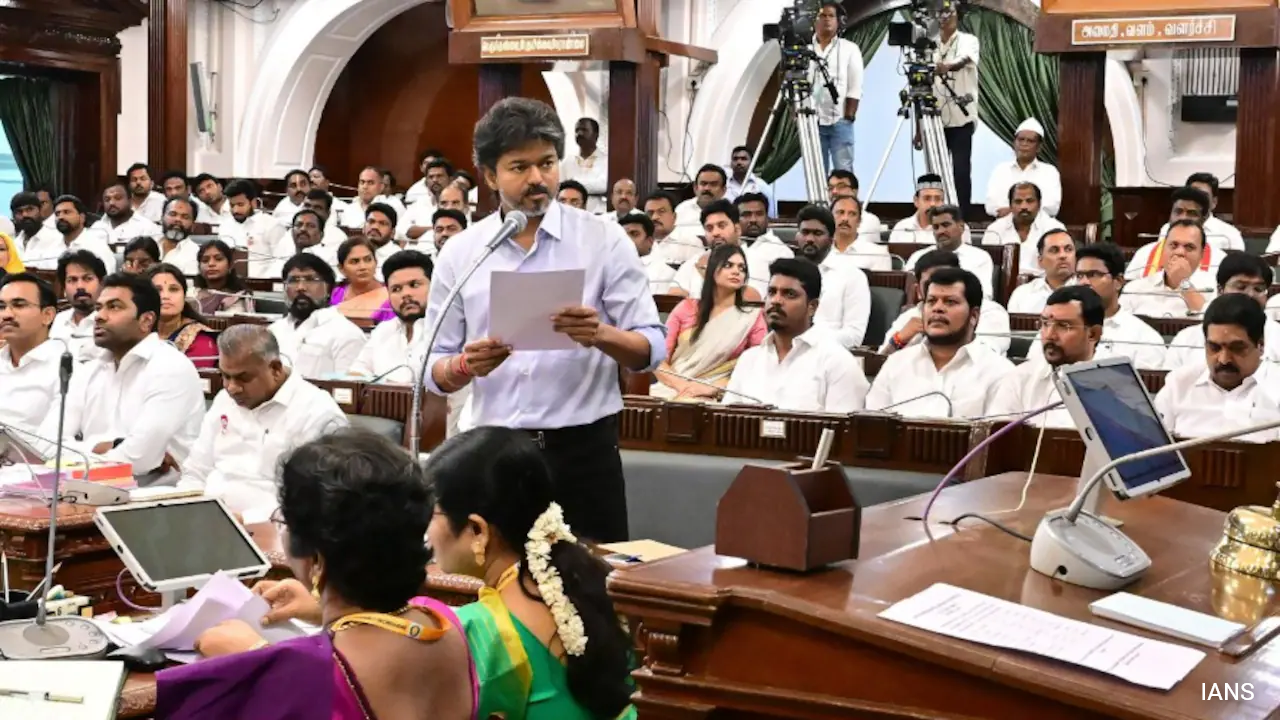
While the government stands firm with the protesting residents, Chief Minister Vijay assured that Chennai's aviation needs will not be ignored. The state will soon announce a detailed plan for a new airport at an alternative site, he said.
-
Opinion | A 'Snub' Gone Too Far? The Story Of Bangladesh PM's Stalled India Visit
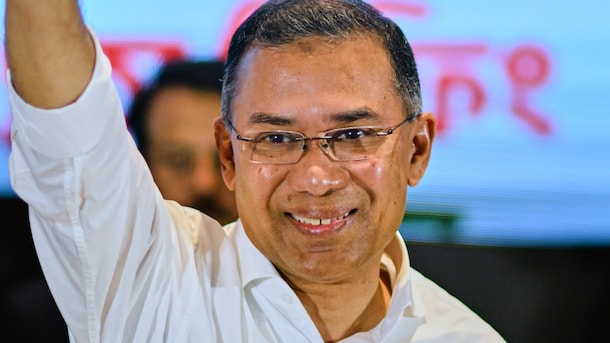
The abrupt cancellation of Prime Minister Tarique Rahman's scheduled visit to New Delhi this month raises many questions.
-
Inside Pak's New Law That Has One Man Written All Over It: Asim Munir
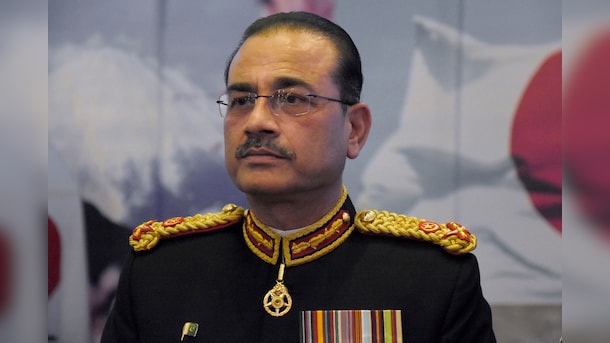
With a new act, Munir has truly reached the apex. At least most politicians in Pakistan will hope so.
-
Behind Sugar Shock: Not Ethanol, But Over-Estimation Led To 16% Price Rise
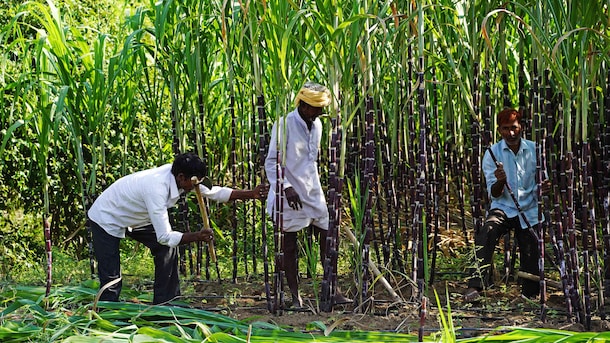
In November 2025, the government allowed sugar mills to export 15 lakh tonnes. Now, India has allowed 10 lakh tonnes of raw sugar to enter duty-free.
-
3 Minutes, 6 Stanzas, Century-Old Debate: The Many Turns In Vande Mataram's Journey
PM Narendra Modi launched a year-long commemoration of the song's 150th anniversary on November 7, 2025. In December, both Houses held special discussions on it, during which the 1937 Congress decision was scrutinised.
-
Indian Family Wipeout Over iPhone: The Dangerous Lure Of Consumer Tech Debt
Young buyers walk into physical retail stores, hand over basic identity documents and walk out with a consumer electronic device that costs more than their entire family's monthly take-home income
-
China Outspends India In Space, But New Delhi Holds The Trust Card
The US remains the undisputed leader in the global space race. But it's realistic for India to aim for the third place, says Bellatrix Aerospace COO.
-
It's About The Provenance: Head Of Strategy Koreel Lahiri Decodes One Identity Of NDTV
We at NDTV consciously recognise the fact that the same consumer inhabits several screens during the course of a day.
-
Opinion | India's UPI Miracle Has Created A Difficult, Rs 20,000-Crore Question
UPI's whole magic was the Rs 30 payment it charged nothing for. But how long can it stay free?
-
Opinion | Manmohan Singh, Bachchans, And Other Secrets Of 10 Janpath: The Sonia Gandhi Story
She entered politics reluctantly, mastered its power games, chose Prime Ministers, and managed betrayals. Congress's most powerful woman finally tells the world how.