The Making Of Lamhe: How Yash Chopra's "Taboo" Love Story Became A Cult Classic
Over time, Lamhe achieved cult status and remained Chopra's personal favourite. Often hailed as ahead of its time, one can't help but wonder: would it fare any differently in today's India?

Yash Chopra's Lamhe is celebrated as a cult classic today, but its release caused a storm. Critics and audiences talked about its so-called "incestuous theme" of an older man falling for a girl who is "like his daughter." What was happening behind the cameras when Lamhe was being made? How did Yash Chopra, Sridevi, Anil Kapoor, and his team bring this daring, delicate narrative to life? September 27, 2025, would have been Yash Chopra's 93rd birthday.
Yash Chopra's 1980s Drought: A Decade Without A Hit
The last major triumph for Yash Chopra in the seventies was Trishul (1978). After that, the eighties were merciless. For a decade, Chopra could not deliver a hit. Silsila (1981), his ambitious love story, stumbled. The decade had shifted. Audiences now craved action, not romance. Yash Chopra tried to follow the trend with Mashaal (1984) and Vijay (1988), the latter a diluted version of Trishul. Both floundered. Even the romantic Faasle (1985), meant to recapture Kabhi Kabhie's charm, tanked.
By the mid-eighties, Yash Chopra's career had reached an unexpected crossroads. It seemed the magic had faded.
Yash Chopra refused to bow out. He decided to return to his true forte with the musical romance Chandni. Chandni became a blockbuster, marking a revival in 56-year-old Yash Chopra's fortunes and reaffirming his cinematic instincts. 1988-89 had witnessed romance reclaim the box office with Maine Pyar Kiya and Qayamat Se Qayamat Tak, powered by fresh young actors, but Chopra had done it even without new, young actors to draw crowds. He seemed to draw fresh energy from his teenage assistant, his son, Aditya Chopra.
The huge success of Chandni also gave him the confidence to finally explore a story that had been simmering in his mind for years.
The Origin Of Lamhe
It was an idea suggested to him by his wife Pamela Chopra, who was fascinated by a romantic novel called Daddy Longlegs by the American writer Jean Webster. It was the story of a man who adopts a girl without ever seeing her or being seen by her. All she ever saw was his shadow, where his legs appeared stretched comically. She nicknamed him "Daddy Longlegs." Over time, love blossomed, and they married. That, in essence, was Lamhe.
A romance between a middle-aged man and a young woman was bold enough for Hindi cinema, but Yash Chopra added a daring twist. The young woman was the spitting image of her mother- the woman he had once loved, though he could never confess his feelings or be with her.
Recommended


Honey Irani met Yash Chopra during Chandni with a script that didn't click. He shared his idea for Lamhe. She developed it, and he loved it, promising to make it once he scored his next hit. The veteran writer Rahi Masoom Raza crafted the film's brilliant dialogue.
While Chandni largely adhered to Bollywood's tried-and-tested romance formula, keeping the traditional hero-heroine dynamic intact, Lamhe dared to challenge it. An idea that defied conventions and the audience's expectations. Yash Chopra saw it as a 'bold' subject. He had burned his fingers before with another 'bold' film, Silsila, but risk was part of his craft, and exploring uncharted territory was exactly what he loved to do.
Casting: When Yash Chopra Dared Anil Kapoor, "Will You Shave Off Your Moustache?"
For the lead roles of mother and daughter, Yash Chopra had only one name in mind: Sridevi, his Chandni heroine. He had shared the story of Lamhe on the sets of Chandni. Sridevi was instantly captivated by the prospect of playing a double role and promised to star in it whenever Chopra was ready to bring it to life.'I was so fascinated by the characters of Pallavi and Pooja that I knew I'd love to play them. The challenge lay in bringing out the contrast between mother and daughter who look exactly alike," said Sridevi in a Filmfare interview.
Yash Chopra had once imagined Vinod Khanna as young Viren, but by the time Lamhe was ready, he no longer fit the image of young Viren, a boy in his early twenties. Several newcomers were screen-tested, with Deepak Malhotra almost finalised, until Anil Kapoor sent a set of photos to screenwriter Honey Irani, prompting Chopra to call him for a meeting.
Earlier, while working on Vijay, Yash Chopra had offered Chandni to Anil Kapoor, but he had declined, calling it a female-oriented film centred on the heroine. In the following years, Kapoor rose to the top of Bollywood with hits like Ram Lakhan, Parinda, and Rakhwala. Now he wanted a role that would truly challenge his acting skills. "I was in a phase in my career when I was trying to run against time, doing many films. Everything was going right for me. Whatever I did. I felt now it's time I forget I'm a star and concentrate on acting. Something different, something which will be remembered for many years. The script and the role were very exciting. Showed feelings. I loved the script and my role," recalled Anil Kapoor, talking about Lamhe in author Rachel Dwyer's book, Yash Chopra- Fifty years in Indian cinema.
And then, Chopra dared him: "Will you shave off your moustache?" Anil Kapoor didn't hesitate. He loved the role so much that he ditched his iconic moustache and chopped his hair short, reinventing himself as young Viren.
For the crucial supporting roles, Chopra turned to familiar faces from Chandni: Waheeda Rehman as the nurturing Dai Jaa and Anupam Kher as the loyal best friend. An Indian girl settled in London, Dippy Sagoo, played Viren's friend-turned-fiance.
The Making In England And Rajasthan
Lamhe was shot in just two schedules. The first took place in England, where Chopra, scouting locations around London in a friend's car, stumbled upon a sprawling 16-room house in charming Nunsmere, Cheshire, 350 miles from London. The moment he saw it, he knew this was where he was going to shoot Lamhe and promptly moved in with his entire unit.
The first days of shooting in England were filled with energy, with the unit working day and night on crucial sequences. But the idyll was shattered by the sudden death of Sridevi's father, Ayyappan. "Her mother told me not to tell her," Yash Chopra later said, yet Sridevi, deeply close to her father, sensed something was amiss. Chopra briefly considered flying the entire unit back to India, postponing the shoot, but the escalating costs made that impossible. Sridevi insisted the team stay, promising she would return as soon as she could. On the eighteenth day, after the rituals were complete, she flew back to England with Anil Kapoor, rejoining the waiting Lamhe unit.
The next schedule shifted to Rajasthan, where the first half of the film-and its most iconic songs, Morni Baaga Ma... and Megha Re Megha...-came to life. Rajasthan itself became a character: its dunes, camel rides, and folk traditions captured through Manmohan Singh's sweeping camera, Sudhendu Roy's exquisite sets, and Neeta Lulla's award-winning costumes of lehngas, pagdis, and lehariyas. Writer Honey Irani's son, a young Farhan Akhtar, assisted cinematographer Manmohan Singh during the dance sequences.
The highlight of the Rajasthan shoot was the magical campfire sequence, with Sridevi glowing in bold colours, dancing to Saroj Khan's Morni Baga Ma Bole, a beautiful scene where younger Viren (Anil Kapoor) silently falls for the 'older' Pallavi (Sridevi).
Scenes were crafted to gently remind the audience of the age gap between Viren and Pallavi. The shy and reserved Viren is instantly smitten by the vivacious Pallavi (Sridevi)the moment he sees her dancing in the rain. Their playful banter hints at an age gap, but Viren, raised in Britain, barely notices; all he sees is her.
Before he can voice his feelings, he learns of Pallavi's love for Squadron Leader Siddharth. His heartbreak is silent, witnessed only by Dai Ja (Waheeda Rehman), as he slips away quietly to London.
When Pallavi and her husband die in a tragic accident, Viren is left to care for their newborn daughter, Pooja. He entrusts her to Dai Ja and retreats to London. Every year, he returns to his Rajasthan haveli to observe Pallavi's barsi.
Over the years, Viren's mysterious absence becomes Pooja's obsession, fueling adolescent fantasies about the elusive "Kunwarji." On her 18th birthday, they finally meet. Viren, now older, sombre, and composed, is stunned: Pooja is Pallavi's mirror image.
When Pooja confesses her love in London, Viren recoils and throws her mother's photograph at her. Just when it seems love will be denied a second time, Viren follows her to India, ready at last to confront the truth.
Aditya Chopra's Hunch
Lamhe was also the first film that Aditya was creatively involved in. Since the beginning, Aditya Chopra had warned his father against making Lamhe. He believed that a love triangle involving one man and a mother, and her daughter "could never run in India."
As mentioned in Anupama Chopra's book Dilwale Dulhania le Jayenge, "Yash persisted and Aditya started to work on how to make the subject more palatable. He suggested making the first woman older than the man. Lambe became Aditya's training ground... Aditya wasn't confident about Lamhe's music - he thought it was too sophisticated - but by the time the film was finished, he loved everything about it. His diary entry reads: 'A landmark film ... beautifully made ... brilliant dialogues, good music, fantastic cinematography ... mind-blowing performances ... one of the boldest and different films ever made ... will be a superhit."
Lamhe's Box Office Shock: Blaming The "Incestuous" Theme
Yash Chopra had initially planned to release Lamhe on Diwali, but when he learned that Ramesh Sippy's Akayla, starring Amitabh Bachchan, was set for the same date, he decided to postpone. He had no desire to go head-to-head with the superstar. Assuming Phool Aur Kaante was just a small film, Chopra felt confident enough to open his film alongside Ajay Devgan's launch.
With the stellar cast and Yash Chopra's banner, Lamhe premiered on 22 November 1991. Expectations were sky-high, but Lamhe stumbled on its very first day.
Meanwhile, Phool Aur Kaante soared, making Devgan an instant star overnight
The debacle of Lamhe was quickly pinned on its controversial theme, deemed "incestuous" by conventional Indian audiences. A man, once in love with a mother, finding himself drawn to her daughter, was a premise that made many squirm. In everyday terms, it was falling for someone "beti jaisi," an idea that unsettled viewers and stirred unease.
At its core, Lamhe was a story about age, exploring the delicate dynamics of older woman-younger man, and the reverse. For Viren, raised and educated in England, the age gap was inconsequential. But for Indian audiences of the early 1990s, it was a different story. An uncomfortable social taboo, steeped in patriarchy that provoked discomfort and debate, and perhaps still does.
On the allegations that the relationship between Viren and Pooja was almost incestuous, scriptwriter Honey Irani argued, "Nowhere is it hinted that Anil has fatherly feelings for the younger Sri." In the frenzy of rejection and relentless negative publicity, the nuance of the script was lost. Viren's feelings for Pallavi were one-sided and unreciprocated. With Pooja, however, the feeling was mutual, tender, and alive. Yet the audience missed this crucial nuance, turning a delicate story into the very allegation it had sought to avoid.
The notion that Lamhe's theme was taboo only in India was proven true overseas. Despite flopping at home, the film became a success in international markets, emerging as one of the first major Bollywood hits in the UK. It was among the earliest Hindi films to truly resonate with NRI audiences, opening producers' and distributors' eyes to the enormous potential of the overseas market.
Lamhe's Filmfare Triumph
But its failure in India left Yash Chopra stunned and demoralised for months. Yet at the 37th Filmfare Awards, Lamhe racked up a record 13 nominations. Yash Chopra didn't attend the awards function. In a rare twist, the flop Lamhe walked away with five major trophies: Best Film, Actress, Story, Dialogue, and Comedian. Sridevi was the lone team member on stage to accept her trophy.
Over time, Lamhe achieved cult status and remained Chopra's personal favourite. Often hailed as ahead of its time, one can't help but wonder: would it fare any differently in today's India? I doubt it. Chances are, it would ignite 9 pm TV debates over a film "assaulting" the nation's social and cultural norms.
Some things, it seems, are timeless.
-
Opinion | The Last Bet? What Trump's 'Mother Of All Bombs' Could Actually Do To Iran

Can an MOAB deliver a decisive blow to Iran that may force it to surrender immediately, as Japan did after Hiroshima and Nagasaki in World War 2?
-
Hit Songs, Empty Pockets: The Hidden Math Behind India's Viral Music Boom
Over 80,000 brands and five lakh creators in India make branded content. The opportunity is worth around Rs 1,500 crore.
-
Opinion | Great 'Exceptions': How The Oil India Was Attacked For Is The Oil Trump Now Seeks
A law written to punish the buyers of Russian oil was suspended by the US to protect a purchase of Russian oil. India spent fourteen months being lectured for less.
-
Opinion | Louis Vuitton Loot, Torched Cars: France Protests Have An Unlikely Beneficiary
It's an unbelievable moment. Crowds looting the most exclusive stores in Paris, including the famed Luis Vuitton. But what's behind this meltdown?
-
Blog: Kolkata Didn't Learn From 2015. Eleven Years Later, It Proved To Be Fatal
The City of Joy isn't a stranger to crowd control. Be it during Pujo or Christmas at Park Street, Eden Gardens cricket matches, or Derbies between Mohun Bagan and East Bengal. But during Pujo, the entire city is on alert.
-
Opinion | Slurs, Threats, Now A Temple Attack Plot: When Did America Become So Hostile To Indians?
The rising tide of anti-India, anti-Hindu, and racist attacks serves as a stark reminder that economic prosperity does not automatically guarantee social immunity from bigotry.
-
A Step Behind Neha Bora: What Rahul Gandhi's Gesture Says About Congress' Gen-Z Pitch
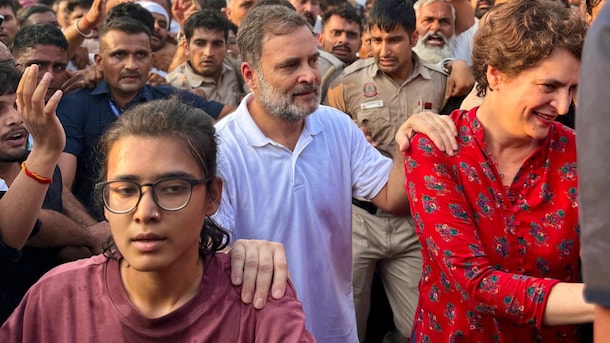
At INDIA bloc's march to Supreme Court, Rahul Gandhi placed himself a step behind two women, hands resting on their shoulders. One was his sister Priyanka. The one on his right was Neha Bora. Here's what the image means for the protest wave now, and for Rahul's politics in general.
-
Opinion | Imran Khan, And The Perils Of Having An 'Opinion' In Bollywood
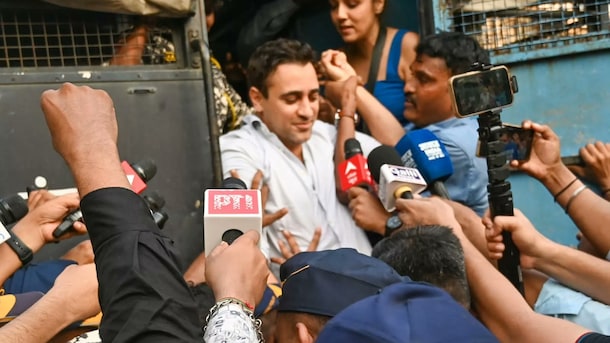
The reality of the industry is quite grimy. More often than not, its inhabitants have been fairweather friends, happy to sing the praises of whoever is in a position of authority.
-
Exclusive: India's Food Safety Problem Goes Beyond Just Dirty Kitchens - By Tukaram Mundhe
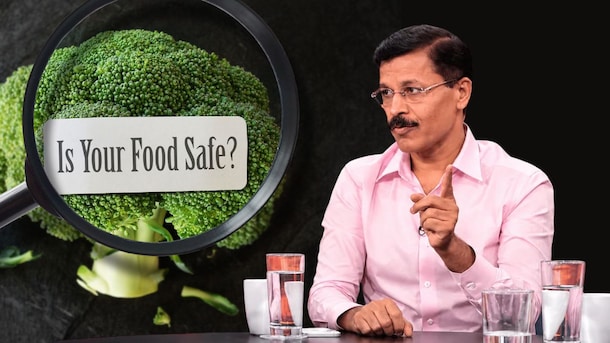
On World Food Day, Maharashtra's Commissioner of Food Safety explains why instead of taking stopgap measures, the entire supply chain in India needs to be held accountable and made transparent.
-
Opinion | India Has Enough Coal. So Why Are Power Plants Running Short? A 76 Million 'Crunch'
As of October 5, as many as 82 of the 191 thermal plants monitored by the Central Electricity Authority were in the 'critical' category