Why Meta Is Suddenly Charging For Facebook, Instagram And WhatsApp
Facebook, Instagram and WhatsApp have long been free. So why is Meta suddenly asking users to pay? The answer may lie in Mark Zuckerberg's expensive AI ambitions.
"Why is WhatsApp asking me to upgrade to a Plus subscription?" I happened to overhear a colleague almost serendipitously as I started on this story. I turned around and asked her about it. She said as she was loading WhatsApp Web on her laptop, there was a little nudge on the screen to buy a subscription to WhatsApp Plus - an optional premium subscription built directly into the official WhatsApp app, offering enhanced customization and organization tools for a small monthly fee.
Meta - the Mark Zuckerberg led company that owns WhatsApp, Instagram and Facebook - recently launched subscription plans globally for its flagship apps. It's also testing new subscriptions for businesses, creators, and Meta AI users including an AI chatbot. Standard Instagram Plus and Facebook Plus subscriptions cost Rs 99 per month, while WhatsApp Plus costs Rs 99 per month (currently available at 50% discount in India for six months). Meta is also testing upgraded tiers for power users.
Meta One Plus costs roughly Rs 775 per month, and Meta One Premium costs Rs 1,939 per month for elevated AI reasoning limits and generation capabilities. Meta has 3.5 billion daily users.
So why Is Meta Suddenly Pushing For Paid Subscriptions?
Analysts believe it's an urgent attempt to offset soaring AI costs as Mark Zuckerberg tries to play catch up in the AI space where it is lagging behind. Meta's $14.3 billion acqui-hire of Scale AI founder Alexandr Wang to lead its Superintelligence Lab has drawn intense scrutiny regarding return on investment due to Meta's skyrocketing artificial intelligence costs. Meta increased its 2026 capital expenditure forecast to an unprecedented $125 billion - $145 billion, primarily to fund AI compute infrastructure, data centres, and higher component costs.
Meta's AI ambitions extend well beyond the US. In India, Meta has entered into a partnership with Reliance Industries to build an AI data centre in Jamnagar, Gujarat. The latest partnership announced last week expands on the two companies' multibillion-dollar partnership from last year to develop enterprise AI solutions for customers in India and overseas markets.
Faisal Kawoosa, Chief Analyst and Founder, Techarc told NDTV, "Meta plans to invest $125 billion+ in AI infrastructure and it needs a predictable and commensurate revenue stream justifying this investment. Ad revenues alone won't do it especially when content discovery and consumption is a new ballgame after the advent of AI.
"Problem I see with Meta is it has not fundamentally been able to gain enterprise trust unlike Microsoft or Google which is why its presence in enterprises is almost non-existent. Individual consumers will see such pricing strategy regressive especially from a platform which has been free. Further, there has to be a compelling reason to pay."
Despite the heavy spending on AI, internal challenges reportedly plague Meta, including cultural friction, reports of human data bottlenecks requiring engineering reassignments, and developer resentment over high compensation packages for incoming talent such as Wang. Multiple reports also suggest increasing resentment within the company after Meta laid off 10% of its staff owing to AI restructuring.
Also read: Even AI's Biggest Names Say Your Job Anxiety Is Justified
According to Truist Securities subscriptions could bring in $20 billion of high-margin revenue annually by 2030. Deutsche Bank notes subscriptions could deliver as much as $15.6 billion of additional revenue next year, per a WSJ report. The Street, however, remains skeptical of these lofty estimates.
One-Trick Pony
According to company data, 97.6% of Meta's revenue last year came from advertising, an alarming sign of the lack of progress it's made in growing beyond its core business in the last two decades since its founding. In contrast, Google, a company also built on the back of ads, had more non-ad revenue a decade ago than Meta had last year. That probably explains Zuckerberg's sudden urgency more than anything else.
Also read: AI Surpassing Humans Debate Heats Up As Google AI Boss Tightens Timeline
In the meantime, users don't seem too enthused by the premium offerings that are more like a pay-to-play bet at the moment. While it's still early days, features like profile customisation, story rewatch counts, secret story viewing, and more chat pins are unlikely to garner huge interest beyond power users and influencers.
AI expert and CTO, AiEnsured Srinivas Padmanabhuni looks at Meta's new monetisation move as a "stopgap."
"Meta's paid plans feel like a power-user upsell and a stopgap to cover AI spending while it chases ROI (return on investment)," he told NDTV.
-
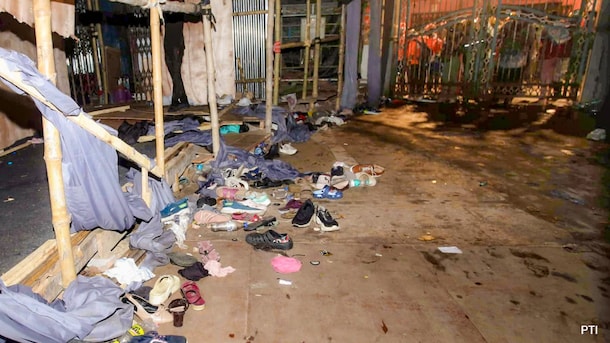
Blog: Kolkata Didn't Learn From 2015. Eleven Years Later, It Proved To Be Fatal

The City of Joy isn't a stranger to crowd control. Be it during Pujo or Christmas at Park Street, Eden Gardens cricket matches, or Derbies between Mohun Bagan and East Bengal. But during Pujo, the entire city is on alert.
-
Opinion | Slurs, Threats, Now A Temple Attack Plot: When Did America Become So Hostile To Indians?
The rising tide of anti-India, anti-Hindu, and racist attacks serves as a stark reminder that economic prosperity does not automatically guarantee social immunity from bigotry.
-
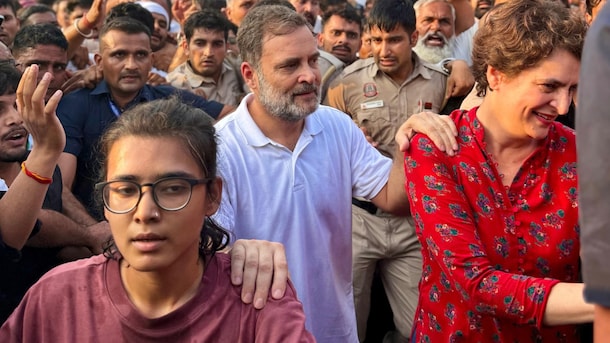
A Step Behind Neha Bora: What Rahul Gandhi's Gesture Says About Congress' Gen-Z Pitch
At INDIA bloc's march to Supreme Court, Rahul Gandhi placed himself a step behind two women, hands resting on their shoulders. One was his sister Priyanka. The one on his right was Neha Bora. Here's what the image means for the protest wave now, and for Rahul's politics in general.
-
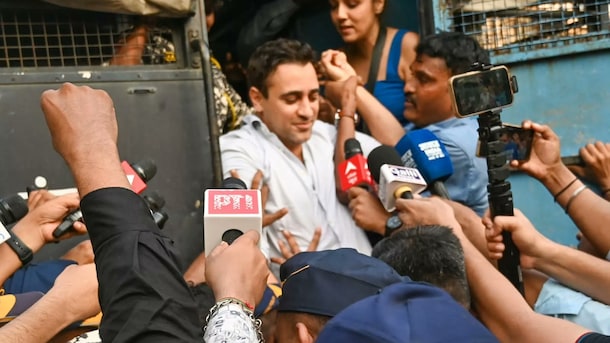
Opinion | Imran Khan, And The Perils Of Having An 'Opinion' In Bollywood
The reality of the industry is quite grimy. More often than not, its inhabitants have been fairweather friends, happy to sing the praises of whoever is in a position of authority.
-
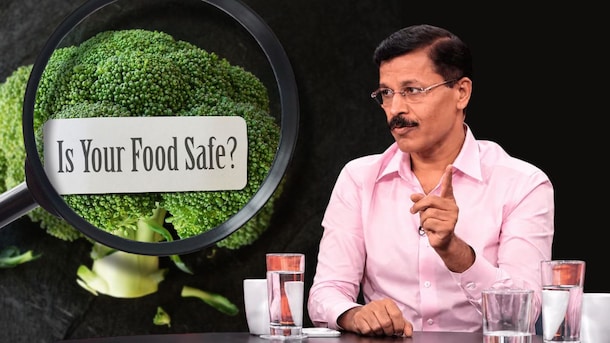
Exclusive: India's Food Safety Problem Goes Beyond Just Dirty Kitchens - By Tukaram Mundhe
On World Food Day, Maharashtra's Commissioner of Food Safety explains why instead of taking stopgap measures, the entire supply chain in India needs to be held accountable and made transparent.
-
Opinion | India Has Enough Coal. So Why Are Power Plants Running Short? A 76 Million 'Crunch'
As of October 5, as many as 82 of the 191 thermal plants monitored by the Central Electricity Authority were in the 'critical' category
-
Opinion | Starlink, India, And Why Elon Musk Must Know His Billionaire Tantrums Won't Work
India should neither be intimidated by Musk's global influence nor distracted by his theatrics.
-
Blog | 'Baap Da Brat': Kerala Mini Cooper Crash, And Why 'Daddy' Can't Keep Saving You
There are three things you should never underestimate in India: the power of 'jugaad', the elasticity of the law, and the confidence of a 'Baap da Brat' who believes his Papa Posh can fix absolutely anything.
-
Opinion | 'Say Our Name': Why A Tiny Island Nation Wants The World To Get Its Name Right
Standing before the UN hall of nations, Naoero President David Adeang asked the world to unlearn its comfortable habits and speak a restored truth.
-
TVS Succession Row Explained: Why Venu Srinivasan's Family Is Divided Over Wealth
TVS Family Dispute: TVS Holdings is a key entity because it owns a controlling stake in TVS Motor Company. It owns 50.26% of TVS Motor.