Why Meta Is Suddenly Charging For Facebook, Instagram And WhatsApp
Facebook, Instagram and WhatsApp have long been free. So why is Meta suddenly asking users to pay? The answer may lie in Mark Zuckerberg's expensive AI ambitions.

"Why is WhatsApp asking me to upgrade to a Plus subscription?" I happened to overhear a colleague almost serendipitously as I started on this story. I turned around and asked her about it. She said as she was loading WhatsApp Web on her laptop, there was a little nudge on the screen to buy a subscription to WhatsApp Plus - an optional premium subscription built directly into the official WhatsApp app, offering enhanced customization and organization tools for a small monthly fee.
Meta - the Mark Zuckerberg led company that owns WhatsApp, Instagram and Facebook - recently launched subscription plans globally for its flagship apps. It's also testing new subscriptions for businesses, creators, and Meta AI users including an AI chatbot. Standard Instagram Plus and Facebook Plus subscriptions cost Rs 99 per month, while WhatsApp Plus costs Rs 99 per month (currently available at 50% discount in India for six months). Meta is also testing upgraded tiers for power users.
Meta One Plus costs roughly Rs 775 per month, and Meta One Premium costs Rs 1,939 per month for elevated AI reasoning limits and generation capabilities. Meta has 3.5 billion daily users.
So why Is Meta Suddenly Pushing For Paid Subscriptions?
Analysts believe it's an urgent attempt to offset soaring AI costs as Mark Zuckerberg tries to play catch up in the AI space where it is lagging behind. Meta's $14.3 billion acqui-hire of Scale AI founder Alexandr Wang to lead its Superintelligence Lab has drawn intense scrutiny regarding return on investment due to Meta's skyrocketing artificial intelligence costs. Meta increased its 2026 capital expenditure forecast to an unprecedented $125 billion - $145 billion, primarily to fund AI compute infrastructure, data centres, and higher component costs.
Meta's AI ambitions extend well beyond the US. In India, Meta has entered into a partnership with Reliance Industries to build an AI data centre in Jamnagar, Gujarat. The latest partnership announced last week expands on the two companies' multibillion-dollar partnership from last year to develop enterprise AI solutions for customers in India and overseas markets.
Faisal Kawoosa, Chief Analyst and Founder, Techarc told NDTV, "Meta plans to invest $125 billion+ in AI infrastructure and it needs a predictable and commensurate revenue stream justifying this investment. Ad revenues alone won't do it especially when content discovery and consumption is a new ballgame after the advent of AI.
"Problem I see with Meta is it has not fundamentally been able to gain enterprise trust unlike Microsoft or Google which is why its presence in enterprises is almost non-existent. Individual consumers will see such pricing strategy regressive especially from a platform which has been free. Further, there has to be a compelling reason to pay."
Despite the heavy spending on AI, internal challenges reportedly plague Meta, including cultural friction, reports of human data bottlenecks requiring engineering reassignments, and developer resentment over high compensation packages for incoming talent such as Wang. Multiple reports also suggest increasing resentment within the company after Meta laid off 10% of its staff owing to AI restructuring.
Also read: Even AI's Biggest Names Say Your Job Anxiety Is Justified
According to Truist Securities subscriptions could bring in $20 billion of high-margin revenue annually by 2030. Deutsche Bank notes subscriptions could deliver as much as $15.6 billion of additional revenue next year, per a WSJ report. The Street, however, remains skeptical of these lofty estimates.
One-Trick Pony
According to company data, 97.6% of Meta's revenue last year came from advertising, an alarming sign of the lack of progress it's made in growing beyond its core business in the last two decades since its founding. In contrast, Google, a company also built on the back of ads, had more non-ad revenue a decade ago than Meta had last year. That probably explains Zuckerberg's sudden urgency more than anything else.
Also read: AI Surpassing Humans Debate Heats Up As Google AI Boss Tightens Timeline
In the meantime, users don't seem too enthused by the premium offerings that are more like a pay-to-play bet at the moment. While it's still early days, features like profile customisation, story rewatch counts, secret story viewing, and more chat pins are unlikely to garner huge interest beyond power users and influencers.
AI expert and CTO, AiEnsured Srinivas Padmanabhuni looks at Meta's new monetisation move as a "stopgap."
"Meta's paid plans feel like a power-user upsell and a stopgap to cover AI spending while it chases ROI (return on investment)," he told NDTV.
-
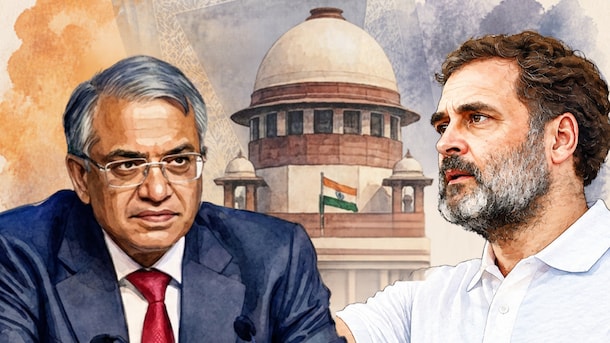
Gyanesh Kumar Has An Immunity Pin. Why A Petition Says He Can't Use It

The Opposition wants the Chief Election Commissioner prosecuted for alleged manipulation of voter rolls, but a 2023 law stands in the way. A petition in the Supreme Court now says the law has a gap.
-
Opinion | Is The World Staring At A Big Stock Market Crash - And Recession? 5 Uneasy Signs
On Wednesday, the US bond market recorded its worst day since Trump's "Liberation Day" tariffs rattled markets in April 2025. The 30-year US Treasury yield topped 5.43%, putting it on track for its highest close since 2004.
-
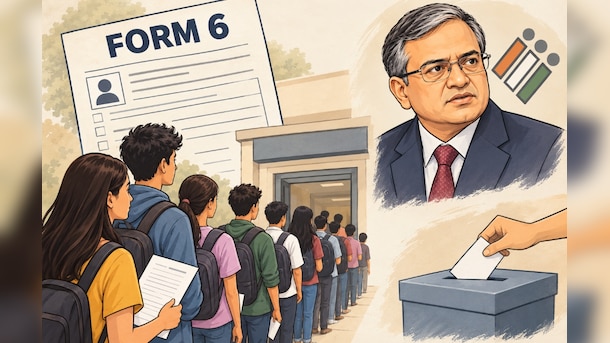
Form 6 For New Voters: When A Small Change Triggered A Big Row
In July 2026, the online version of Form 6 on the ECI's ECINet portal was modified to include a new declaration.
-
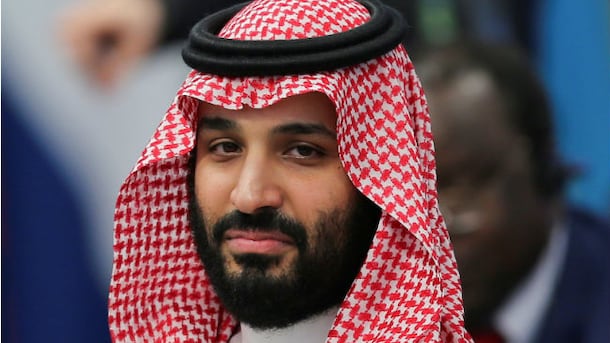
Opinion | Saudi Arabia's China Turn Has Begun - After Learning Much The Hard Way
Leaning on China just makes sense for the Saudis right now. The question is, can its other great 'ally' stomach it?
-
Opinion | Bihar Assault, Hisar Marriage Ban: Who'll Stop The Guardians Of Indian 'Culture'?
Why exactly does the sight of a young couple seeking a bit of alone time somewhere tend to particularly provoke a certain kind of Indian men?
-
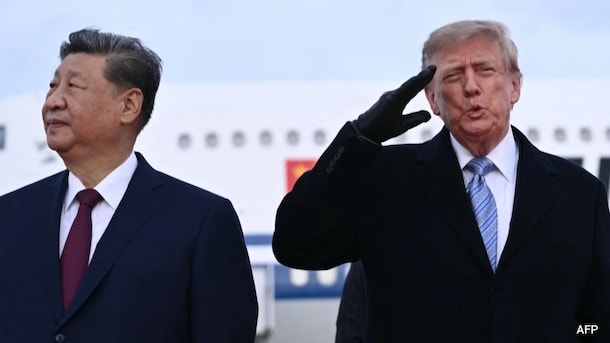
Opinion | The Trump-Xi Summit, And India's Many Worries Of Its Own
Washington and Beijing may have chosen coexistence over confrontation. For India, that could be both a relief and a warning.
-
Opinion | China Claims It Has Cut Troops At The Indian Border. But The Math Doesn't Add Up
The reduction likely has more to do with the deployment along the LAC than the total strength active in the region
-
Opinion | China Is No Longer Waiting For Trump To Set The Rules. And He Knows It
America's old diplomatic tricks with China won't work any longer. Because China has changed, and so has its ambitions.
-
Opinion | As UN Interviews Its Next Chief, The Interviewers Have Some Explaining To Do
On the panel sit governments whose wars, vetoes, and unpaid dues have helped make the organisation ineffective.