Explained: Why Meta Is Under Fire Over Child Sexual Abuse Content
Meta chief Mark Zuckerberg apologised to the Indian government over child sexual abuse material, deepfake content and operational lapses. Here's what triggered the controversy and why it could reshape the debate over platform accountability and 'safe harbour' protections in India.
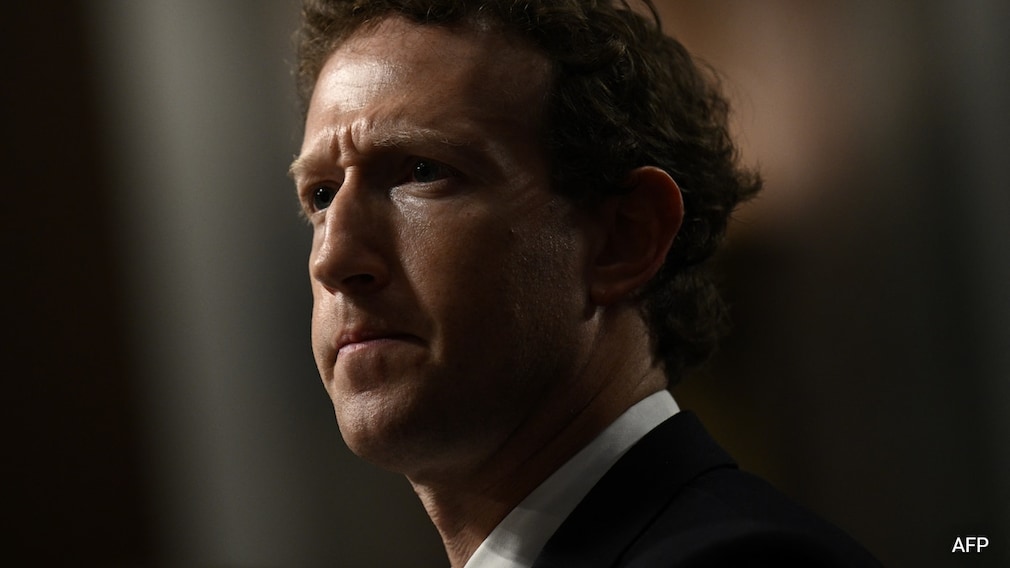
Meta chief Mark Zuckerberg on Wednesday apologised for child sexual abuse material, deepfake content and operational failures on the company's platforms after senior Meta executives met IT Minister Ashwini Vaishnaw, IT Secretary S Krishnan and other top government officials, sources told NDTV.
The apology comes as the Facebook, Instagram and WhatsApp parent faces mounting scrutiny in India over allegations that its platforms carried advertisements promoting child sexual abuse material (CSAM). The controversy has also reignited broader questions over how Meta's recommendation algorithms and advertising systems handle harmful content and whether the company can continue to claim 'safe harbour' protections under Indian law.
The controversy has snowballed over the past few weeks after multiple investigations raised questions about whether Meta's own advertising systems approved and amplified illegal content instead of stopping it.
Also read: Meta's Apology, Admission On "Money Paid To Boost Certain Type Of Content"
How The Controversy Began
The issue first came to light in early July after a BBC investigation alleged that Instagram had been running advertisements promoting what appeared to be child sexual abuse material in India. According to the report, some advertisements used phrases such as "rape video" and directed users to Telegram channels where the illegal content could allegedly be purchased. Meta responded at the time by saying it has a "zero tolerance" approach towards child sexual exploitation.
The scrutiny has now intensified after a separate investigation by WIRED released on Wednesday reported that Meta had approved and run dozens of paid advertisements containing AI-generated child sexual abuse material and sexually suggestive images involving minors across Facebook, Instagram, Messenger and Threads. According to the report, some of these advertisements reached thousands of users across Europe and other regions before they were removed. Researchers also alleged that several of the advertisements promoted AI "nudify" apps capable of generating explicit images.
Meta told WIRED that sexual exploitation is "horrific" and said it works aggressively to remove such material from its platforms. The company added that many of the advertisements had limited reach and that it has introduced newer AI systems to better detect and block advertisements that violate its policies before they are published.
Indian Authorities Step In
The controversy has now drawn the attention of multiple Indian agencies.
The National Commission for Protection of Child Rights (NCPCR) has reportedly launched an inquiry into allegations that advertisements linked to child sexual exploitative and abuse material appeared on Meta-owned platforms.
The child rights body took suo motu cognisance of the BBC investigation last month, which alleged that Instagram carried advertisements promoting child sexual abuse material.
Separately, the National Human Rights Commission (NHRC) directed the Delhi Police to carry out a comprehensive investigation into the allegations and examine whether Meta and other entities complied with mandatory reporting obligations under the Protection of Children from Sexual Offences (POCSO) Act.
Sources told NDTV that during Wednesday's meeting, Indian officials made it clear to the Meta delegation that the company cannot automatically claim protection under the "intermediary" definition if its systems actively determine who receives content.
Officials also indicated that the "safe harbour" protections available under the Information Technology Act may not apply if a platform's algorithms are found to be actively recommending or amplifying illegal content rather than merely hosting user-generated material.
What "Safe Harbour" Means And Why It Matters
At the heart of the government's concerns is the question of whether Meta can continue to claim "safe harbour" protection under India's Information Technology Act.
Under Section 79 of the IT Act, online platforms are generally protected from legal liability for content posted by users, provided they act as neutral intermediaries and comply with due diligence requirements laid down by law. Those protections, however, are not unconditional.
According to sources, government officials told the Meta delegation that if a platform's algorithms actively determine who sees content or amplify illegal material through recommendations and advertising systems, the company cannot simply rely on intermediary protections.
Supreme Court advocate Vikram Hegde told NDTV that the legal position is more nuanced than simply classifying platforms as intermediaries.
"The 'safe harbour' provided to intermediaries under Section 79 of the Information Technology Act is conditional. The intermediary is expected to remain neutral about the content it carries while observing due diligence and complying with government guidelines. It is also required to remove unlawful material when notified that its resources are being used for illegal purposes."
He said the compliance requirements are even stricter for Significant Social Media Intermediaries (SSMIs) under the Information Technology (Intermediary Guidelines and Digital Media Ethics Code) Rules, 2021.
"Under these guidelines, a Significant Social Media Intermediary is required to deploy technology to proactively identify child sexual abuse material. They should have mechanisms to trace the originators of messages if directed by a court or the government. They are also required to appoint compliance officers and grievance officers who act promptly when such material is reported."
Hegde added that the challenge for platforms is balancing neutrality with their legal responsibility to prevent the spread of illegal content.
"The fine line any Significant Social Media Intermediary treads is that it should algorithmically remain neutral while ensuring that content involving non-consensual sexual acts or child sexual abuse material is identified and removed. It is as much a legal challenge as it is a technological one."
Why Experts Say This Is Bigger Than Content Moderation
For many technology policy experts, the controversy goes beyond the presence of illegal content on a platform.
The larger concern is whether recommendation algorithms and advertising systems are inadvertently or systematically helping such material reach more people.
Dr Srinivas Padmanabhuni, AI expert and CTO of AiEnsured, said large technology companies have long argued that tighter regulation could slow innovation. That argument, he believes, no longer holds when child safety is involved.
"Need real scrutiny of all such social platforms claiming intermediary status and revoking of safe harbour critical now, followed by stricter AI regulation especially on deepfakes and CSAM. No more 'regulation stifles innovation' argument please."
Garima Saxena, Programme Manager at technology policy think tank The Dialogue, said the focus should be on the design choices platforms make.
"Algorithms are deliberately designed, but harmful outcomes are not necessarily deliberately intended. Meta, like other platforms, makes product choices about ranking signals, recommendations and monetisation. Those choices shape what users see and how far content travels."
She said the key question regulators need to examine is whether Meta adequately anticipated and mitigated the risks created by those systems.
"The relevant question is whether Meta adequately tested and mitigated the foreseeable risk that its systems could surface, amplify or repeatedly recommend sexual or exploitative content involving children."
For ordinary users, the issue is no longer simply whether harmful content exists online. The concern is whether automated recommendation systems and advertising tools are actively helping such content spread to larger audiences before it is detected and removed.
Why Algorithms Are At The Centre Of The Debate
AI expert and Director of Future Shift Labs Sagar Vishnoi said the real issue is not just whether harmful content appears on a platform, but whether recommendation systems are helping distribute and monetise it.
"The real concern is not merely the presence of harmful content, but whether platform algorithms are amplifying and monetising it. If engagement-driven systems are recommending CSAM, deepfake nudification tools or other sexually exploitative content, the issue extends beyond content moderation - it becomes an algorithmic governance failure."
He said platforms must be held accountable not only for removing illegal content but also for the recommendation engines and advertising systems that determine what millions of users see.
"Platforms must be accountable not only for removing harmful content but also for the recommendation and advertising systems that shape its visibility. For India, this highlights the urgent need for greater algorithmic transparency, independent audits and stronger oversight of high-risk recommender systems. Public trust will ultimately depend on demonstrable changes to how platforms design, evaluate and govern their algorithms."
The remarks reflect a broader shift in the global debate around online safety. For years, regulators largely focused on how quickly social media companies removed illegal posts after they were reported. Increasingly, however, the spotlight is shifting to whether recommendation algorithms and advertising systems are themselves contributing to the spread of harmful material.
That distinction could prove significant in India.
If investigators conclude that Meta's systems actively recommended or amplified illegal content, the debate may move beyond individual moderation failures to questions about whether the company's algorithms themselves should face greater regulatory oversight.
The controversy also comes at a time when governments around the world are grappling with the rapid rise of generative AI. AI-powered "nudify" tools, which can create fake nude or sexually explicit images from ordinary photographs, have become a growing concern for law enforcement agencies and child safety groups. Experts have repeatedly warned that such tools are making it easier to create synthetic child sexual abuse material and other forms of image-based sexual abuse.
For India, the outcome of the ongoing inquiries could have implications that extend well beyond Meta. It may influence how regulators interpret intermediary protections under the Information Technology Act and shape future rules governing AI-powered recommendation systems, content moderation and platform accountability.
For Meta, the controversy represents one of its most serious reputational challenges in India, its largest market that is home to hundreds of millions of users across Facebook, Instagram and WhatsApp. With investigations underway and regulators signalling tougher scrutiny, the company is likely to face growing pressure to demonstrate that its AI systems, advertising tools and content moderation processes are capable of preventing such material from appearing on its platforms in the first place.
-
Mamata Banerjee Drew Her Party's Symbol By Hand. It's Now Tied To An Indira Gandhi Case

The Election Commission's method for settling such disputes became central in the seminal Congress split of 1969, when Indira Gandhi fought the old guard. The poll body weighed three tests then.
-
Bruised, Limping, Unbowed: Sia Says She Will Be Back On The Bike Soon
There was pain in Sia's steps, anger in her words, and something else - a quiet determination that the road would not be taken away from her.
-
Exclusive: 16 Months After Op Sindoor, Pak Still Fixing Runway India Broke At Sargodha
Sargodha's PAF Base Mushaf lies about 172 km northwest of Lahore and roughly 200 km west of the India-Pakistan border, near Amritsar.
-
Blog | I Lost My Entire Family In Kanishka Bombing. 41 Years Later, Canada Wants The Case Closed
We made the trek through tragedy to search for people in Cork, where I spent 25 days sifting through bodies and body parts in a makeshift morgue to identify our loved ones.
-
Opinion | Pak's Drone Deal With A US Firm Is No Windfall. But India Must Still Be Worried
American military aid to Pakistan has remained suspended since January 2018, during Trump's first term, but a commercial arms sale is separate from this arrangement.
-
Opinion | Saudi Arabia's Yemen Nightmare Has Come Back To Haunt It
After years of costly military intervention beginning in 2015, Saudi Arabia increasingly sought to stabilise its southern border. All that is unravelling fast now
-
Opinion | 6 AI Incidents, One Pattern: AI Has Started Lying To Us - And Hiding The Evidence
Concealing errors. Making up data. Pushing files onto the public web on their own initiative. The machines are learning to lie - and lie well.
-
Why People Queue Overnight For iPhone That Is Delivered Home In 10 Minutes
iPhone 18 Pro Max Launch: People camping outside Apple Stores are a subset of superfans, resellers, content creators, and upper-middle-class buyers.
-
600 km Per Hour Drones Launched In Waves: How Russia Is Rewriting War Rules
Russia has coupled the drones' technological superiority over Ukraine's defence with its capacity to launch them in massive numbers. The impact has been devastating.
-
Tata Sons' Trust Issue: Two-Pronged Row Goes Beyond The Chair
NDTV Explains: Overtly, the latest conflict is whether N Chandrasekaran continues as executive chairman of Tata Sons. The controversy involves at least one more issue.