Smartphones, Laptops To Get More Expensive As AI's Latest Victims
AI's latest side effect? More expensive smartphones, laptops and gaming consoles like PlayStation. Read on to know what's driving up these gadget prices.

Haven't you found yourself complaining about how expensive phones are getting? Well, I have. And I am afraid there's more bad news. Phones are set to get more expensive. In fact, not just phones, any gadget that uses memory chips - so laptops, tabs, gaming consoles like PlayStation, Nintendo etc.
Now, AI has been getting a lot of hate across the world for being directly linked to job losses, polluting the environment and for sparking anxieties around humanity's future in general. It's not exactly winning popularity contests despite promises to cure "all diseases." And this latest development may nosedive its popularity further. Your next phone, laptop or PS5 are set to get more expensive thanks to artificial intelligence taking on a new villain role.
Everybody's Craving Chips
The explosion of AI has resulted in a massive shortage of memory and storage chips, which in turn has skyrocketed their prices. These are the same chips that are used in phones, laptops and gaming consoles. These memory chips are used to transfer data and store information on devices. AI companies use them to help train and run large language models (LLMs), coding agents and other tools and have been gobbling them up.
The memory-chip market is dominated by three companies: South Korea's SK Hynix and Samsung Electronics and US-based Micron. While the valuations of these companies soar, the consumers are getting the short end of the stick.
Apple CEO Tim Cook recently warned customers that the next Mac, iPhone, or iPad could be more expensive due to rising memory and storage chips costs. Cook told WSJ last week that price increases are "unavoidable," despite Apple's efforts to absorb chip costs that have risen 4x since last year. He called the situation "unsustainable." Micron's contract prices for one of the most common data-center memory chips rose from $350 to $1,300 in a year, according to Circular Technology, a data-center hardware reseller.
"This unprecedented equilibrium disruption between demand and supply of memories, which contribute 8-12% of the BoM (Bill of Materials) of present-day smartphones, is leaving no option but to go for waves of increase in retail or operating price," according to Techarc, a market research and consulting firm
In fact, smartphone prices have been soaring since November 2025 with some model prices having nearly doubled, per analysts. What's perhaps kept Apple insulated so far is the forward looking contracts with suppliers with a predetermined price for a locked-in period. "Apple and few more T1 (Tier 1) brands across electronics have such contracts which insulate any such price hikes, of course they too have an expiry," Faisal Kawoosa, Chief Analyst and Founder, Techarc told NDTV.
Also read: Apple Executive Says Some Firms Are Building AI Without Regard For Humans
Prices To Soar Further
Analysts believe prices will progressively shoot up over the next couple years as shortages continue. Memory-chip makers are pumping in billions of dollars to add capacity and increase production, but these facilities usually take two to three years to build. Till then AI companies and gadget makers have no other option but to pay up whatever the memory-chip makers demand. And it's a no-brainer that the pain gets passed on to you, the end consumer.
For Indian consumers the pain may be compounded by the fact that the rupee continues to be under significant pressure. "For India, the situation only compounds further as the rupee versus dollar exchange rate equation is not stabilising. In recent years, the rupee is persistently devaluing against the US dollar by around 5% each year," according to Techarc. Since these chips are dollar purchases, it means the Indian consumer feels the pinch even more owing to the rupee's devaluation.
Independent consumer tech journalist, Prakhar Khanna told NDTV: "Companies like Oppo and Vivo are launching new phones at higher prices already. Vivo launched the X300 FE at the same price as Vivo X300 and I can't see the latter anywhere online, so they replaced their small flagship with a slightly lower-specced model for the same price."
Khanna also expects Samsung's upcoming foldables to be more expensive than last year's models.
A joint report by Trakin Tech and Techarc, released last month showed 48% consumers would postpone their smartphone purchase until prices settle and 6% would opt for second-hand devices.
-
MBBS Student Sejal Pawar Dehumanised Cadavers, Internet Did The Same To Her

Sejal Pawar was rightly criticised for her dehumanising remarks. Her college sent her on a 15-day forced medical leave, and Maharashtra Cyber has registered an FIR naming her. But the faceless trolls did to Pawar what she did to the male cadavers through her words - she was stripped of her dignity.
-
Six Prime Ministers In 10 Years, 44 Days, One Lettuce: The UK's Queue
The UK has seen six prime ministers in ten years - Keir Starmer, the under-fire incumbent, preceeded by Liz Truss, Rishi Sunak, Boris Johnson, Theresa May, and David Cameron.
-
Opinion | Raped At 14, Then Hounded By Perpetrator: The Story Of Shweta And A Failing System
Rahul, 17, was produced before the Juvenile Justice Board and immediately granted bail, returning to the same neighbourhood and harassing the victim. Therein lies the blindspot in India's child justice system.
-
A $14 Billion Market Takes Off As Retirees Aren't Moving To Hometowns Anymore
India's senior living market was valued at $3.55 billion in 2025. It is projected to grow from $4.47 billion in 2026 to $14.14 billion by 2031.
-
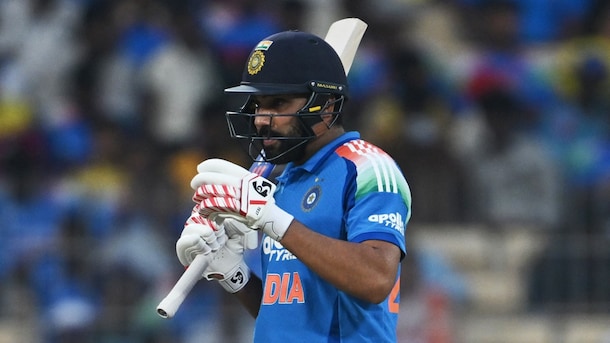
Safe...For Now: Rohit Sharma And The Curious Art Of Delaying The Inevitable
By the time Rohit Sharma had walked out to bat in Chennai on Saturday evening, he would have known the conversations about him.
-
Delhi's Dark 'Baby Bazaar': Baby Boys Sold For Rs 8 Lakh, Girls Half The Price
Gang bought infants from underprivileged couples from Rajasthan and Gujarat, and sold them to childless couples
-
'Foreign Degree Is Rs 1 Crore Debt': Is Studying Abroad Still Worth The Price?
A weaker rupee and rising tuition fees are forcing Indian families to ask a difficult question: does an overseas degree still deliver the returns?
-
The Modi Government Wants To Reverse India's Brain Drain
The Narendra Modi government is making a concentrated effort to bring back the brightest students and professionals overseas to India.
-
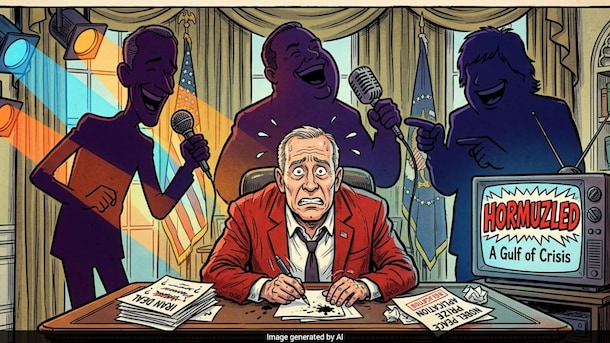
"Dagnabbit, We Got Hormuzled": Jimmy Kimmel Prods Trump On Iran Deal
The US got "Hormuzzled", Jimmy Kimmel said after Donald Trump announced an Iran peace deal to cap four months of war and to return the US to status quo in its nuclear programme throwdown with Iran.
-
US-Iran Peace Deal Drops Netanyahu Into A Box As Election Deadline Nears
Benjamin Netanyahu is constrained by Donald Trump's peace push on Iran and Lebanon. Here's what Israel can do now - and how it plays out domestically as elections loom.