After Sex, Drugs, Alcohol Rehab, Now There's De-Addiction For AI
AI addiction and dependence is reportedly on the rise. There are now support groups similar to Alcoholics Anonymous that can help those in need recover.

"I was talking to ChatGPT 14 hours a day. I stopped showering. Stopped eating regular meals. My girlfriend left. I got fired. I genuinely believed the AI cared about me. I thought I was in love. It took hitting rock bottom to realize I was talking to a computer program," said Mike (name changed), 28, who has been in recovery for six months with Artificial Intelligence Addicts Anonymous (AIAA). AIAA is a grassroots peer-support fellowship for those struggling with compulsive AI use.
We have all heard about de-addiction and rehab for alcohol, drugs, and even sex; now just like Alcoholics Anonymous - the well-known global support group for recovering alcoholics - there are support groups for AI addiction.
Commenting on how the AI addiction sneaks up on you, AIAA explained: "It starts innocently. A helpful AI assistant. A friendly chatbot. Someone who always understands you. Then one day you realize: You've spent 12 hours talking to ChatGPT and haven't spoken to a real human in days."
"You've developed entire relationships with AI. You've stopped going to work. You can't tell what's real anymore."
AI addiction is reportedly on the rise and there have been alleged cases of self-harm as well linked to AI use and dependence. Families and legal representatives have filed several high-profile wrongful death and product liability lawsuits against AI companies such as ChatGPT maker OpenAI, Gemini maker Google, and character.ai (founded by former Google researchers).
A recent survey showed 57% of Indian youth now use AI tools for emotional support. It's not just the youth, this writer personally knows multiple people across age groups who do the same.
In fact, a joint research by OpenAI and MIT Media Labs found that "the older the participant, the more likely they were to be emotionally dependent on AI chatbots."
The study also found that higher daily usage of ChatGPT "correlated with higher loneliness, dependence, and problematic use, and lower socialization."
AI addiction is considered a subset of internet addiction disorder, which was first investigated by the psychologist Dr. Kimberly S. Young, who published the original diagnostic criteria for this mental health disorder in 1998.
Other than AIAA, there's the Internet and Technology Addicts Anonymous (IATAA) which has been around since 2017 and has recently started offering specialised help to recover from AI addiction to chatbots such as ChatGPT, Gemini etc. through a similar 12-step recovery programme.
These dedicated recovery programmes are based on the same 12-step model used to treat other behavioural addictions such as alcohol, sex and drugs.
Beyond these programmes there are also several anonymous support groups on social media platforms such as Reddit.
How To Tell If Someone Is Addicted
According AIAA, the early warning signs may look like this-
You reach for AI first thing in the morning
You prefer talking to AI over real people
You spend multiple hours daily chatting with AI
You feel like AI "gets you" better than humans
You've neglected hobbies or friendships for AI use
You keep your AI use secret from loved ones
You feel guilty or ashamed about your AI usage.
IATAA has a similar addiction questionnaire on its website. AIAA also lists "serious" and "severe" warning signs such as "You choose AI over real-life social interactions" and "You've stopped distinguishing between AI conversations and human ones."
According to IATAA, AI addiction is a condition that can affect people of all ages, from children and teenagers to those later in life. "Our meetings include young adults, college students, working professionals, parents, and retirees, with members of all ages, genders, and ethnicities from around the world," it states on its website.
In addition to a growing number of face-to-face meetings around the world, ITAA has daily online meetings where its global fellowship meets to share experience, strength and hope with each other.
-
Why Doesn't Congress Boycott If Polls Are "Fixed"? Answer Lies Beyond Rahul Gandhi's "Distraction" Quip

The starkest demand for a boycott has come from outside the political Opposition, from the Cockroach Janta Party. But does a boycott help? Here's what research, examples, and expert analysis tell us.
-
'Sully' To Gimli, Sioux To Patna: When Pilots Got It Unbelievably Right
Captain Smit Machchhar fought off his co-pilot after being stabbed and opened the cockpit door, saving 174 people.
-
Opinion | Are Saudi Arabia And UAE Reuniting Again After 10 Years?
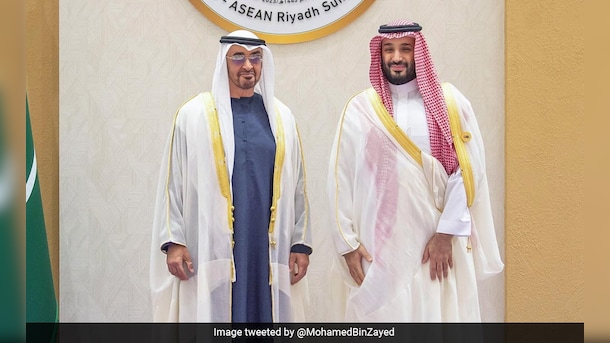
On Tuesday, the UAE's Vice President, Deputy Prime Minister and Chairman of the Presidential Court, Mansour bin Zayed, met Saudi Crown Prince Mohammed bin Salman.
-
Opinion | 'Lies, Damned Lies, Statistics': On The Controversy Around India's GDP Growth Figures
The debate is less about a single figure than about a decade-long erosion of trust in official statistics.
-
Opinion | Why India Cannot Keep 'Overestimating' Its Value To Washington
Some of India's value to Washington came from the tension between the US and China. That is changing now.
-
Opinion | India Has A 'Lobbying' Problem In Washington, And It Has Come Back To Haunt It
While the EU, Japan, the UK and South Korea secured quick deals, India's efforts were getting drained in prolonged negotiations and the wrong kind of lobbying.
-
India Is Getting Old Before Getting Rich, Will Turn 'Aged' In 16 Years: Moody's
Countries with the steepest fertility declines today will age the fastest in the coming decades. India's drop has been steep.
-
Opinion | Why Does Trump Want To Sell Arms To A US 'Adversary'? Inside His Strange Bargain
Trump's aides maintain that no such offer had been made. But the story points to a larger strategy
-
Opinion | The AI Boom Has Run Into A Big 'Debt' Trap Problem. Inside The 5% Danger Line
For most of the AI buildout's first two years, hyperscalers funded it the easy way: out of operating cash flow. That era is over.