3 Indians Died In US Strikes. 10 Others Were Killed When A Jet Fell From Sky
Three Indians were killed in an US strike on a vessel off the coast of Oman. It is not the first time that Indians have come under the line of fire from American miscalculations.
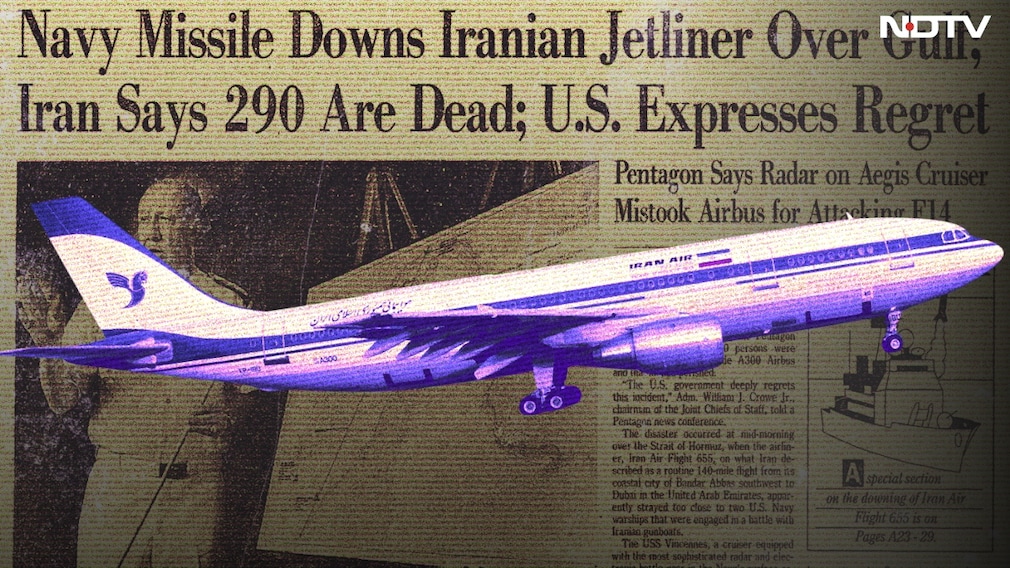
July 1988. The Persian Gulf is a battlefield.
A US Navy warship is exchanging fire with Iranian gunboats near the Strait of Hormuz. On the radar screen, a new contact suddenly appears.
The aircraft is approaching. The operators have minutes to decide.
Friend or foe? Passenger jet or fighter aircraft?
Warnings are transmitted. The blip keeps moving. The range closes.
Then comes the order.
Two missiles leave the deck of the USS Vincennes.
Moments later, 290 people aboard Iran Air Flight 655 are dead.
Nearly four decades later, the waters around the Gulf have once again become the scene of a deadly confrontation involving the United States military and civilians caught in the middle.
This week, India publicly accused the US Navy of carrying out strikes against three commercial vessels carrying Indian crew members off the coast of Oman. Three Indian seafarers were killed. Another tanker was disabled. New Delhi summoned the US charge d'affaires twice in two days and described as a strong protest over the use of "lethal and deadly force" against civilian shipping.
The deaths of the three Indian sailors have reignited an old question that has followed American military operations in the Gulf for decades -- what happens when civilian lives become collateral damage in a region where military commanders operate under the pressure of seconds?
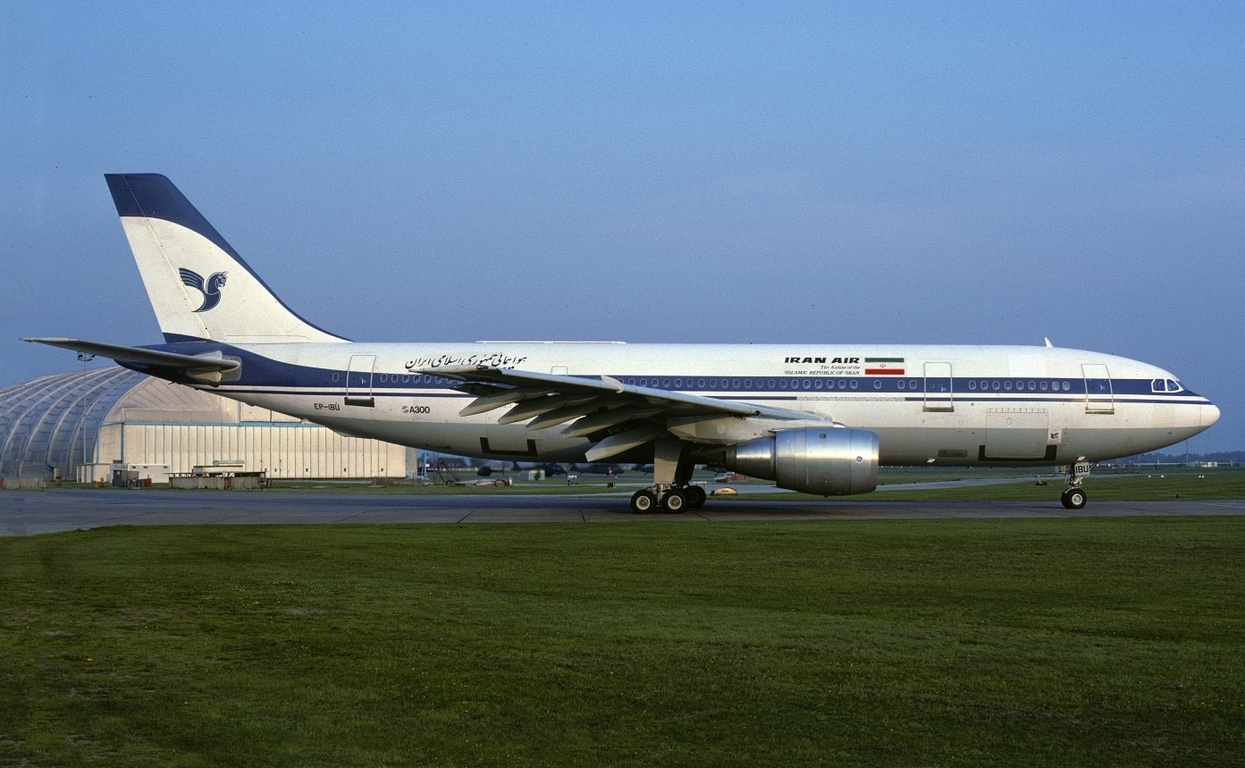
The Iran Air Flight 655.
For many Iranians, the answer arrived on the morning of July 3, 1988, when Iran Air Flight 655, travelling from Tehran to Dubai with a stopover at Bandar Abbas, was blown out of the sky by one of the most sophisticated warships in the US Navy.
All 290 people aboard - 274 passengers and 16 crew -- died.
The aircraft was a civilian Airbus A300 operating a short scheduled flight from Bandar Abbas in Iran to Dubai in the United Arab Emirates.
The tragedy remains one of the deadliest incidents involving the accidental destruction of a civilian airliner by a military force. It also remains one of the most controversial episodes in modern American military history.
Today, as India demands answers over the deaths of three of its citizens in US military actions near Oman, the story of Flight 655 has returned to uncomfortable relevance.
India's Protest
The Ministry of External Affairs on Friday summoned US charge d'affaires Jason Meeks and conveyed what it called deep concern over continuing attacks by American naval forces on commercial vessels carrying Indian mariners in the Gulf of Oman.
The ministry said a strong protest had been lodged regarding attacks that had already resulted in "the tragic and avoidable loss of three Indian lives". It further described the use of lethal force against civilian shipping as unacceptable and warned that such actions undermined the safety and stability of international maritime commerce in a sensitive region.
According to the Centre, three separate merchant vessels carrying Indian crew members came under attack from US forces this week.
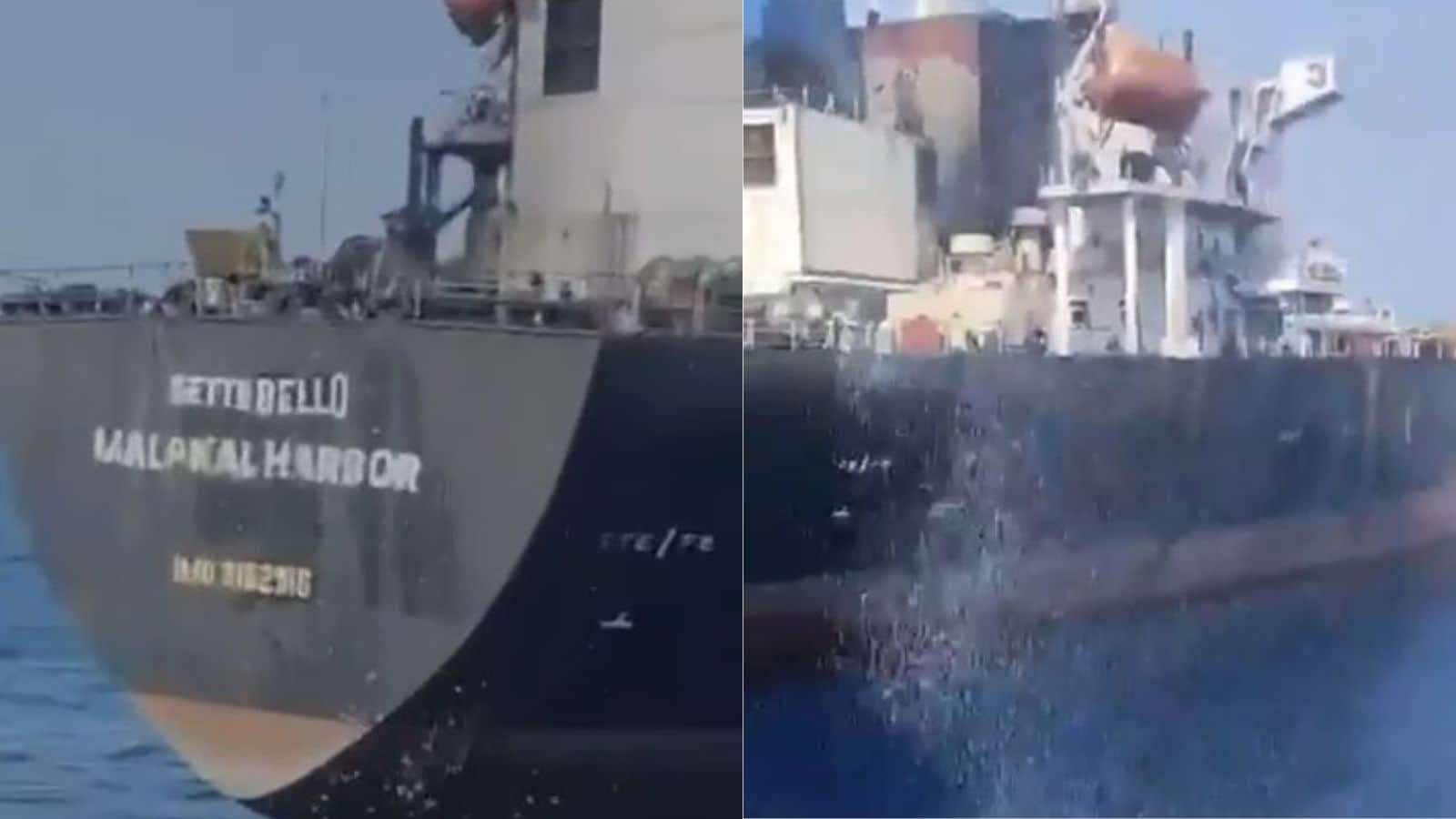
The Palau-flagged oil tanker.
The first was the Palau-flagged tanker Marivex, carrying 24 Indian seafarers. It was disabled by US forces on June 8, though all crew members were rescued safely.
The second vessel, another Palau-flagged tanker named Settebello, was struck on June 10. Three of the 24 Indian sailors aboard were killed.
The third vessel, Jalveer, a Guinea-Bissau-flagged tanker carrying 20 Indian crew members, was attacked on Thursday.
MEA spokesperson Randhir Jaiswal said the strikes came from the US Navy. He added that two of the vessels were under sanctions administered by the US Treasury's Office of Foreign Assets Control (OFAC), while another had been classified as non-compliant. OFAC oversees enforcement of sanctions related to the trade of Iranian and Russian oil.
The Morning Of July 3, 1988
The Iran-Iraq conflict had begun in 1980 and by 1988 had settled into a bloody stalemate. Both sides targeted oil exports and commercial shipping. The Persian Gulf had become one of the most dangerous waterways in the world.
The US had inserted itself into the conflict largely as the supreme watchdog of maritime commerce. More than 30 American warships operated in the region, escorting tankers and attempting to keep shipping lanes open.
One of those vessels was the USS Vincennes.
The ship was not an ordinary cruiser.
It was an Aegis-class warship equipped with some of the most advanced combat systems then available. Its SPY-1 phased-array radar could simultaneously track more than 100 targets at distances exceeding 300 kilometres. The cruiser carried surface-to-air missiles, anti-ship missiles, naval guns and the Phalanx close-in defence system capable of firing thousands of rounds per minute.
Its captain was Will Rogers.
On the morning of July 3, Rogers and his crew expected to be heading toward Bahrain after weeks at sea. Instead, intelligence reports suggested Iranian activity was increasing ahead of the American Independence Day holiday.
Soon came reports that Iranian gunboats were allegedly harassing a merchant vessel near the Strait of Hormuz.
The Vincennes moved north.
American helicopters reported being fired upon by Iranian Boghammar gunboats. The Vincennes and the frigate USS Elmer Montgomery responded. A firefight erupted. Two Iranian gunboats were reportedly sunk and another damaged.
Amid that battle, another event was unfolding.
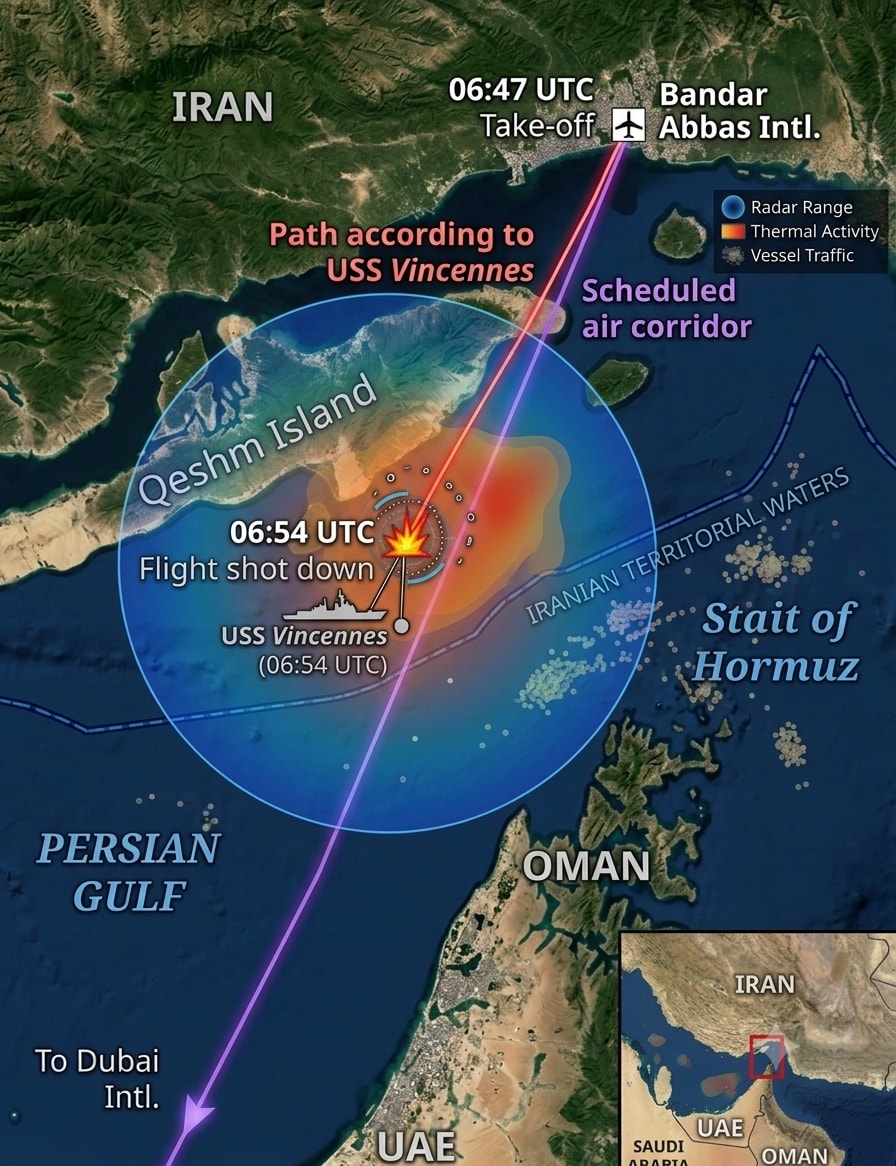
At 12:17 pm Indian Standard Time, Iran Air Flight 655 departed Bandar Abbas.
The flight was routine.
Its destination was Dubai, just 225 km away.
But Bandar Abbas was both a civilian airport and an Iranian military base. It was also home to Iranian F-14 fighter aircraft originally supplied by the US during the Shah's rule.
Two minutes after take-off, the aircraft appeared on the Vincennes' radar.
Seven Minutes
The crew of the Vincennes believed they were observing a hostile aircraft.
The Pentagon later said the cruiser attempted to identify the target electronically through its Identification Friend or Foe system. According to US reports on the incident, no response was received.
Warnings were then transmitted. Some were broadcast on civilian emergency frequencies while others were sent on military channels.
The aircraft did not respond.
US officials later argued that the Airbus appeared to be flying directly toward the cruiser at approximately 450 knots. Crew members interpreted radar information as indicating an Iranian F-14 fighter descending toward the ship in what they considered a threatening profile.
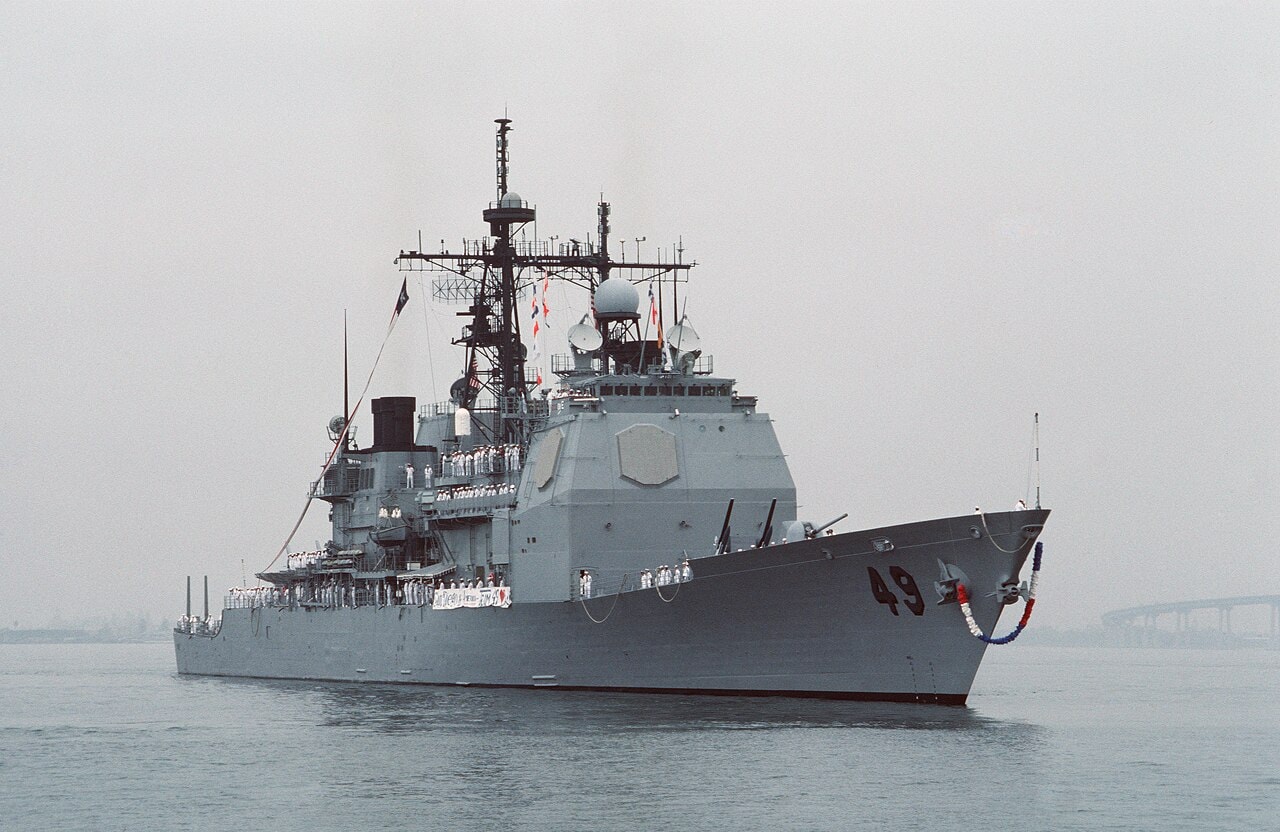
The Vincennes
Visibility was poor and the aircraft itself could not be seen clearly.
At 12:21 pm, the aircraft was declared hostile.
Three minutes later, at 12:24 pm two Standard surface-to-air missiles were launched.
The Airbus was approximately 14 km away.
At least one missile struck the aircraft.
The airliner disintegrated.
Its wreckage fell into Iranian territorial waters.
There were no survivors.
Iranian television soon broadcast images of bodies floating among debris in the Gulf and the world watched in shock.
Relatively unknown to many, there were ten Indians onboard the flight. Till date, details about the passengers have not been shared with the public, neither has there been any accountability received from the Americans.
The American Explanation
The initial American account was confused.
Early reports suggested that the Vincennes had shot down an attacking Iranian F-14 fighter. Only after additional information was reviewed did the Pentagon acknowledge that the destroyed aircraft was a civilian airliner.
Admiral William Crowe, Chairman of the Joint Chiefs of Staff, announced that the US government deeply regretted the incident. President Ronald Reagan expressed condolences to the families of those killed but defended the crew's actions as a defensive response to a perceived threat.

Add image caption here
"I am saddened to report that it appears that in a proper defensive action by the U.S.S. Vincennes this morning in the Persian Gulf an Iranian airliner was shot down over the Strait of Hormuz. This is a terrible human tragedy. Our sympathy and condolences go out to the passengers, crew, and their families. The Defense Department will conduct a full investigation," US President Ronald Reagan said in a statement.
"We deeply regret any loss of life. The course of the Iranian civilian airliner was such that it was headed directly for the U.S.S. Vincennes, which was at the time engaged with five Iranian Boghammar boats that had attacked our forces. When the aircraft failed to heed repeated warnings, the Vincennes followed standing orders and widely publicized procedures, firing to protect itself against possible attack," the statement continued.
Iran saw something different.
Tehran called it a barbaric massacre.
The Investigation
How could one of the most technologically advanced warships in the world mistake a large Airbus A300 for an F-14 fighter?
The International Civil Aviation Organization, the United Nations body responsible for civil aviation standards, assembled an international panel of experts to examine what had happened. The panel concluded that a chain of mistakes contributed to the disaster.
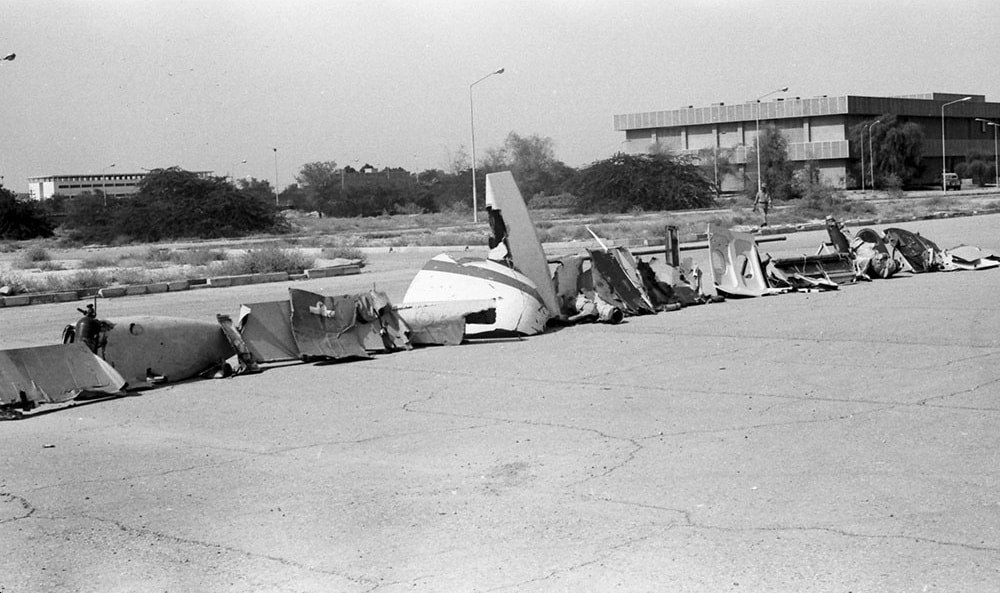
Wreckage of Iran Air Flight 655
It found that American naval procedures for managing civilian air traffic around combat zones were inadequate and created confusion and danger. One of the most striking findings involved communications.
According to the ICAO report, US warships lacked equipment allowing them to monitor civilian air traffic control frequencies. As a result, the Vincennes could not hear conversations between Flight 655 and civilian air traffic controllers that would have identified the aircraft clearly as a commercial flight.
The report also found problems with the warnings issued to the aircraft.
Of 11 warnings transmitted by American warships during the crucial five-minute period before the missiles were launched, seven were sent on military channels inaccessible to the civilian airliner. Of the remaining warnings on civilian distress frequencies, only one was sufficiently clear that the crew might immediately have recognised it as directed toward them.
The panel concluded that the absence of clear procedures for challenging civilian aircraft likely contributed to the failure of Flight 655's crew to react.
-
Opinion | Building BRICS In New Delhi

For India as the host nation, chairing the summit tests the core tenet of its modern foreign policy: strategic autonomy.
-
Can India 'Mediate' Between Iran And UAE At BRICS? Gulf Envoy Suggested It Once
At the very start of the Israel-US war on Iran, it was a UAE diplomat who had suggested as much.
-
Opinion | When The Feed Braves The Flood
NDTV drops the 24x7 and stakes its next chapter on presence as it inaugurates a new identity
-
I Went Looking For A PG In Delhi's Kamla Nagar. Here's What I Found
In every PG visited by NDTV in Delhi's Kamla Nagar, the conversation began with amenities. Nothing in the sales pitch was about how secure the building was.
-
Opinion | How Trump Is Doing More For BRICS Than Its Critics Ever Could
By trying to bully BRICS countries into submission, Trump may be giving the grouping the very relevance he is trying to deny
-
Opinion | BRICS Has Grown Up. Now It Must Behave Like An Adult
The India-China accommodation will be a key driver of the grouping, but a 'non-Western' agenda will work well only if it focuses on ending global conflict as much as on stabilising the global economy
-
Opinion | 9/11, And The Price Of Fighting Terror For A Quarter Century
Twenty-five years later, 9/11 is more than just a lived memory for those who witnessed it in real time, as I did as a UN official
-
Opinion | US Can Threaten, Not Dictate: What India's Iran Message Really Means
If India's Bishkek message was a signal to the US, then Pezeshkian's arrival in New Delhi for BRICS will be a defining note: that India's strategic autonomy is not up for debate