'Tawakkul al-Allah': Meet Sheikh Moussa, The Man Israel Can't Move
Sheikh Moussa refuses to leave his family home in Beirut's Dahieh despite decades of Israeli missile strikes. His faith - tawakkul al-Allah - keeps him rooted amid rubble, memories, and a doctrine designed to break Israel's rivals.
Apartment buildings turned to rubble, their hollowed-out corpses testament to the destruction wrought upon them; street corners covered with debris, a carpet of broken concrete and rocks.
Welcome to Dahieh, a southern suburb of Lebanese capital Beirut.
Meet Sheikh Moussa, 70 years old.
He refused to abandon his family home, his for 45 years, despite heartbreaking stories of loss from the predominantly Shia Muslim neighbourhood that has borne the brunt of Israel missile strikes.
More devastation rained down on Dahieh last week; a barrage of 100+ Israeli missiles, shrieks drowning out the US-Iran ceasefire's call, slamming into the area. A "massacre", Lebanon said.
Yet Moussa remained.
Tawakkul al-Allah - the Islamic concept of absolute trust on Allah.
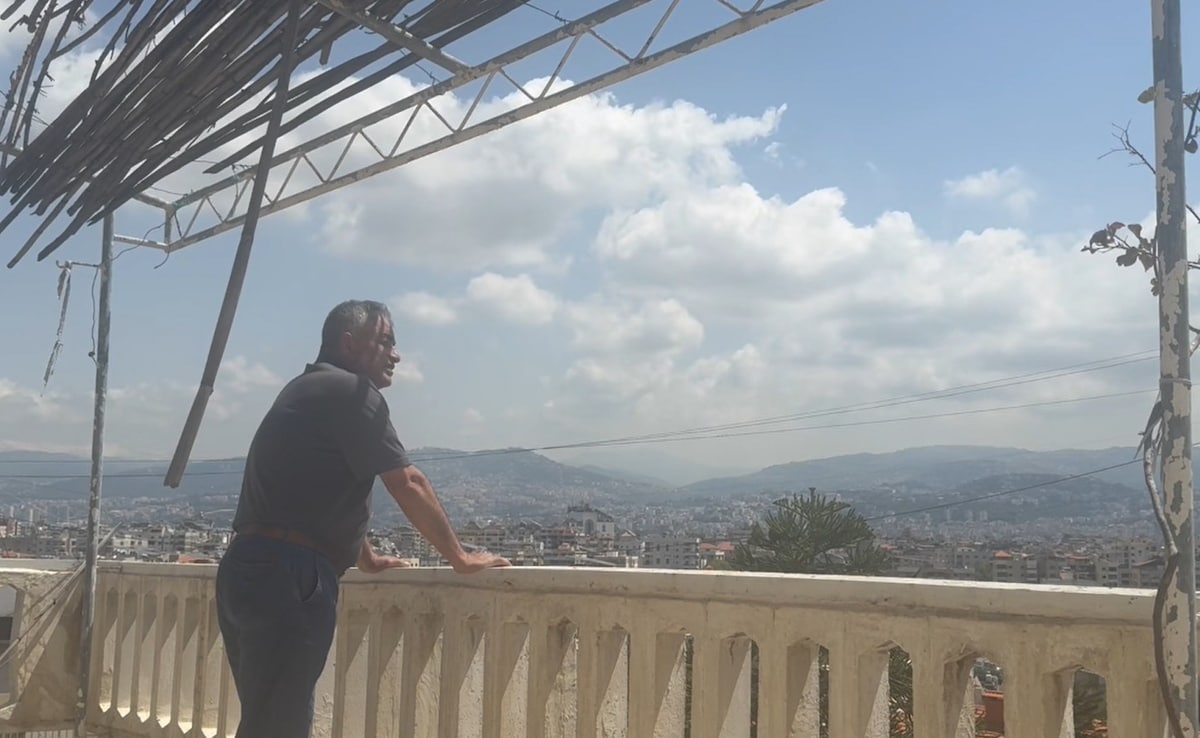
Sheikh Moussa on the roof of his family home
In May 1982 Israeli aircraft attacked Lebanon and captured Beirut. Moussa remained. He led his family to safety, but he returned. The guardian of the family home and a treasure trove within, priceless artifacts and paintings, and hunting trophies, and a cabinet bursting with trophies from his time as a golfer.
"I am here... I've been here for almost 45 years. I am here... my family is here. Everything in this house, everything is a memory," Moussa told NDTV. "Never really leave... never really leave."
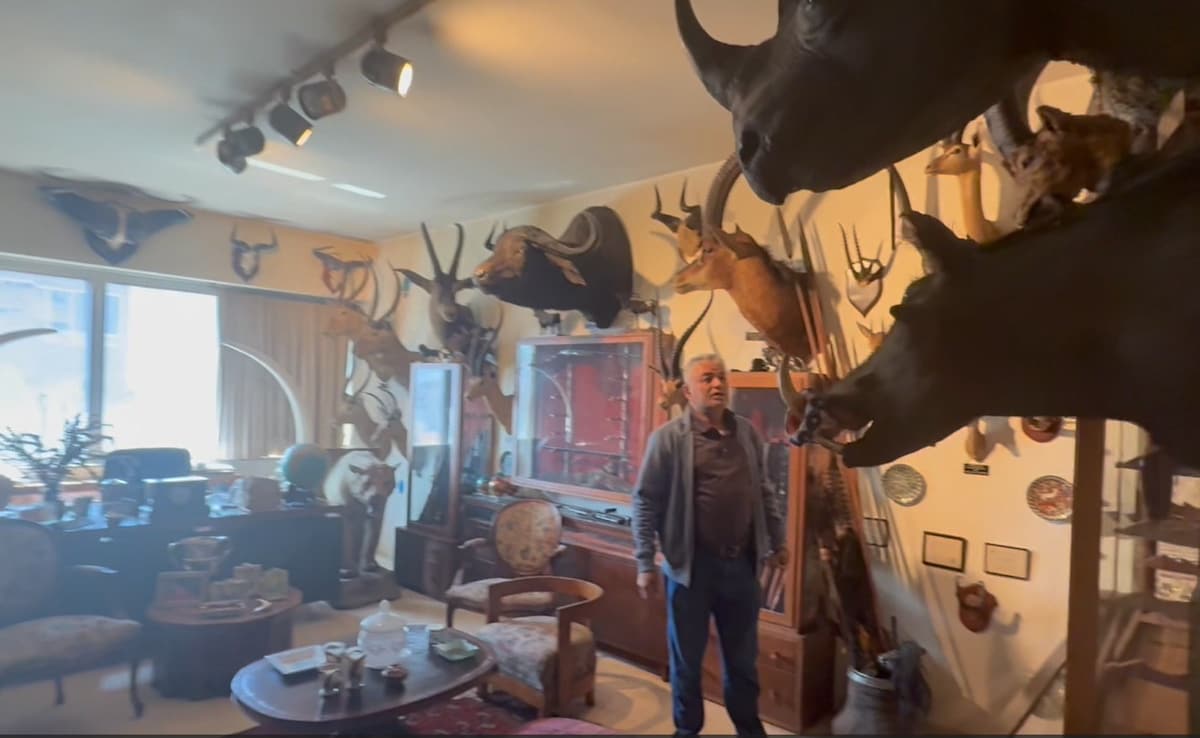
Moussa with a room full of stuffed and mounted animals
"Maybe one, two, or three days when I take my family (to safety). Then I come back," Moussa, in a grey t-shirt and sitting on a comfy couch, said. He worked then for a West Asia-based airline.
Moussa woke one morning to hear of mass murder.
In September 1982 as many as 7,000 civilians, mostly Palestinians and Lebanese, were killed in Beirut's Sabra and Shatila areas. Refugee camps reportedly targeted by an Israel-backed Christian armed group.
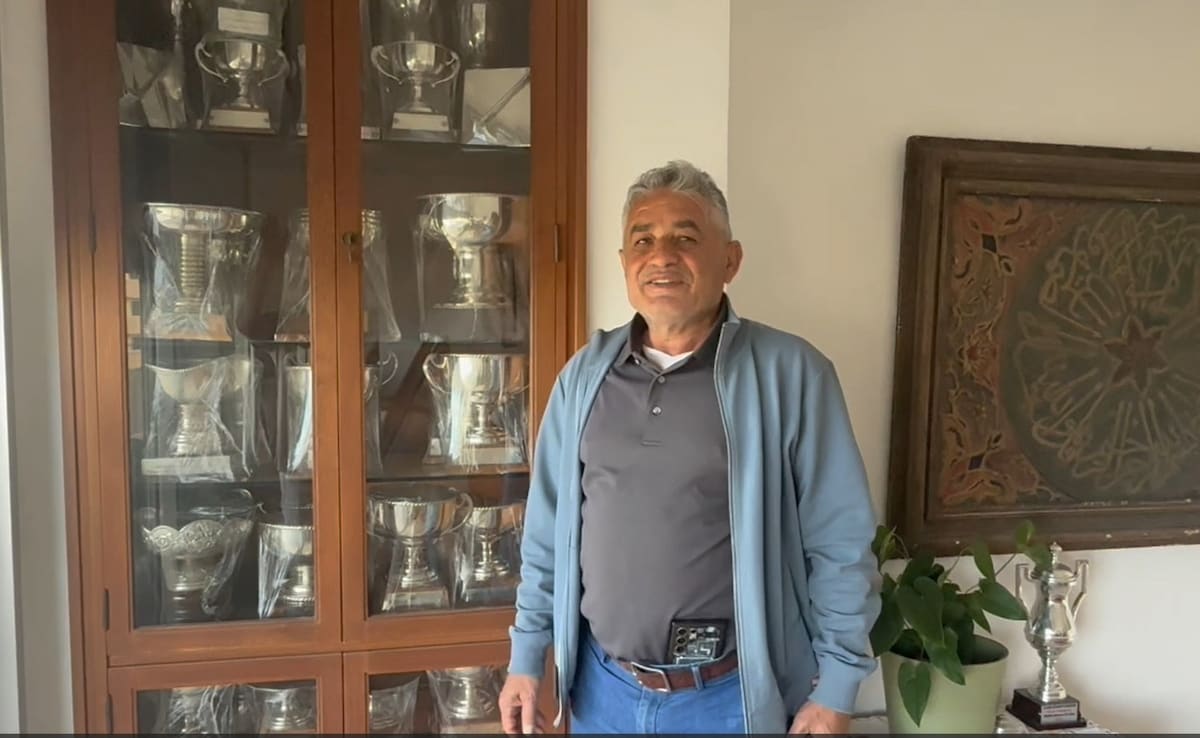
Moussa with his cabinet full of golf trophies.
Israel's stated aim for its Lebanon campaign is to completely dismantle the Hezbollah, a militia founded and funded by Iran. Part of its 'axis of resistance', including Houthis in Yemen, that which is helping Tehran stretch the battlefield.
Moussa was not convinced.
"Before Hezbollah... Hezbollah came in 1982... Israel is here. In 1978, no Hezbollah (but) Israel bomb all Lebanon, Dahieh."
Forty-four years later, having seen off missile strikes, drone attacks, and ground incursions, he has had enough. "There should be peace now... but I don't know. Nobody knows what Israel wants. This is the problem of Israel."
The Dahieh doctrine
Sheikh Moussa's home. The Dahieh neighbourhood. These stand, what is left of them, as proof of Israel's controversial Dahieh doctrine, a military strategy that says 'kill civilians, destroy civilian infrastructure' in a war.
Created by ex-Israel military commander General Gadi Eizenkot, who said: "Israel should target economic interests and centres of civilian power" so the enemy is forced to sue for peace.
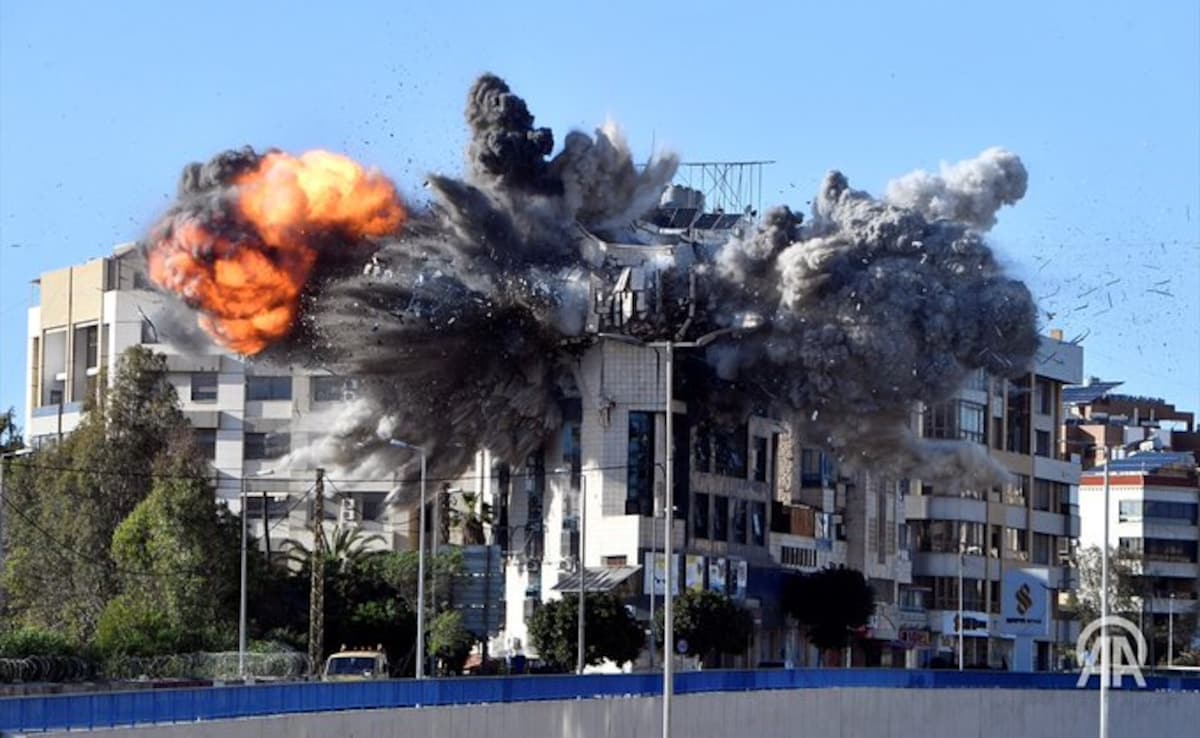
A missile strikes a building in Dahieh. Photo posted on X by @anadoluimages
It was so-named after the Israel military pounded Dahieh almost to oblivion in the 2006 war, another episode in the ruin of Beirut that Moussa has seen off.
The doctrine has been called out. Richard A Falk, a United Nations Special Rapporteur on human rights, as "an (obvious) violation of the most elementary norms of the law of war and of universal morality" and as a "doctrine of violence that needs to be called out by its proper name: state terrorism".
Sheikh Moussa, standing on the roof of his family home, looked out over rubble-strewn Dahieh, awaiting the next round of Israeli missiles.
Dark days, horrific memories. "Tawakkul al-Allah... tawakkul al-Allah," Moussa repeated to NDTV, thanking Allah for seeing him through these horrors and allowing him to smile.
-
Opinion | Jamnagar, Rubio, And Why The US Wants India To 'Obey', Not Negotiate

Marco Rubio's dash to Jamnagar was driven by Trump's hope that India could do something about the shortage of diesel that the world is experiencing and thereby help his mid-term performance. But why the punishing policies then?
-
Opinion | Why China Is Producing More, Selling Cheaper - And Still Not Getting Anywhere
More capital, more capacity, more elaborate technology, and steadily less profit to show for any of it. That's what's happening to China now.
-
Opinion | A Jolt For Trump? How The US May Be Staring At A 'Blue' Wave
Evidence now points firmly to a Democratic majority in the House. The only real surprise is the Senate
-
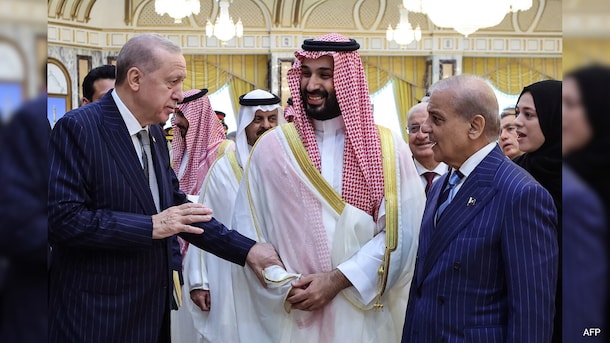
Opinion | Why The Saudi-Pak-Turkey Defence Pact May Actually Be An 'Intel' Network
Rather than a NATO-like construct, the Mecca pact may evolve to become something like the West's Five Eyes alliance.
-
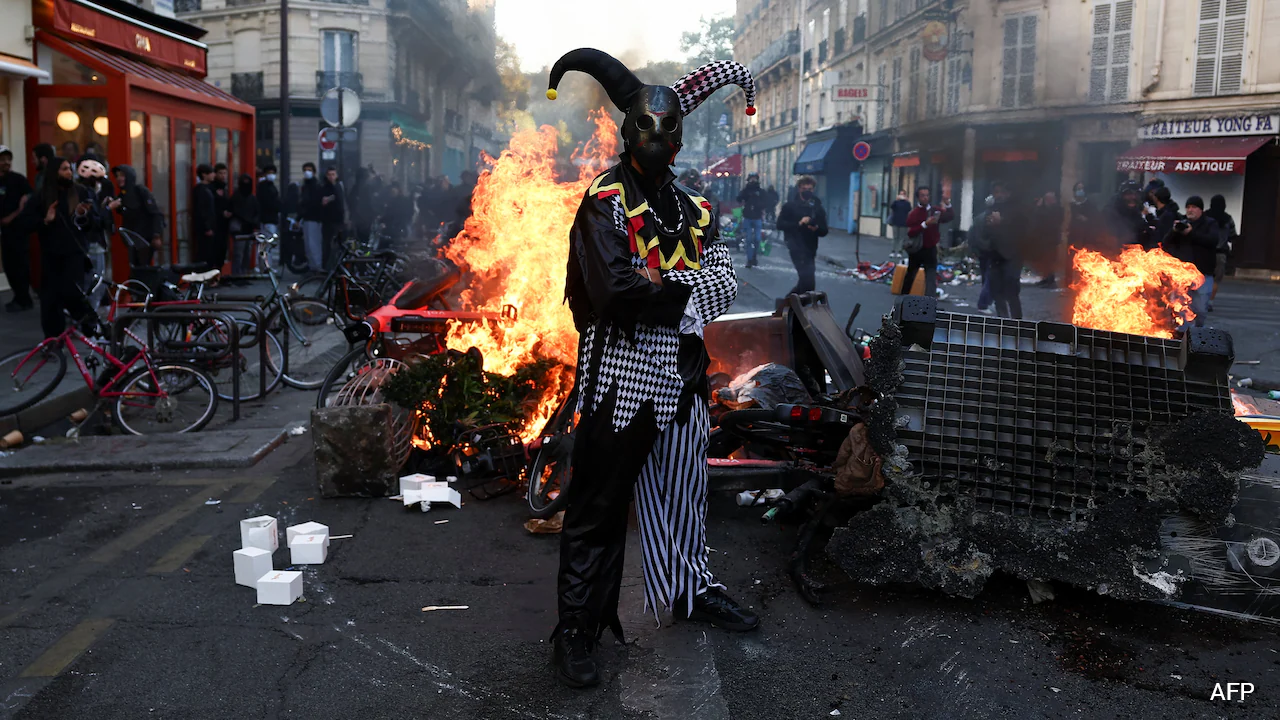
The Real Story Of France's Unrest Is Getting Lost In A Storm Of Online Lies
A man cosplaying Napoleon on the streets, looting at luxury fashion stores like Dior, France is currently confronting one of its most serious episodes of civil unrest in years.
-
Opinion | The Last Bet? What Trump's 'Mother Of All Bombs' Could Actually Do To Iran
Can an MOAB deliver a decisive blow to Iran that may force it to surrender immediately, as Japan did after Hiroshima and Nagasaki in World War 2?
-
Hit Songs, Empty Pockets: The Hidden Math Behind India's Viral Music Boom
Over 80,000 brands and five lakh creators in India make branded content. The opportunity is worth around Rs 1,500 crore.
-
Opinion | Great 'Exceptions': How The Oil India Was Attacked For Is The Oil Trump Now Seeks
A law written to punish the buyers of Russian oil was suspended by the US to protect a purchase of Russian oil. India spent fourteen months being lectured for less.
-
Opinion | Louis Vuitton Loot, Torched Cars: France Protests Have An Unlikely Beneficiary
It's an unbelievable moment. Crowds looting the most exclusive stores in Paris, including the famed Luis Vuitton. But what's behind this meltdown?