Israel Built A Secret Oil Pipeline With Iran. Saudi Arabia May Need It Most
A secret Israeli-Iranian partnership to build an oil pipeline could be key to Saudi Arabia unloading its crude oil to Europe amid repeated attacks by Houthis on Riyadh's oil infrastructure.
Repeated attacks by the Yemeni militant group Houthis on Saudi Arabia's oil infrastructure and shipping have exposed a vulnerability in Riyadh's crude export network. And it has become a growing headache for the Kingdom's decision makers. In recent days, the Iran-backed group claimed strikes on Saudi Aramco facilities at Jazan and Yanbu, while Saudi Arabia said it intercepted multiple drones targeting petroleum installations. The attacks came as commercial shipping through the Red Sea grows increasingly difficult with oil tankers taking longer routes to deliver and exporters facing rising costs to move crude oil to Europe.
According to a Reuters report, Saudi Aramco shut down its 4,00,000-barrel-per-day Jazan refinery on July 27 after an attack which the Houthis took responsibility for. The Reuters report claimed that the strike damaged the refinery's Integrated Gasification Combined Cycle complex and tank farm, with repairs expected to continue until mid-August this year.
Even Saudi Arabia's East-West Pipeline, built to bypass the Strait of Hormuz by carrying crude from the eastern province to Yanbu on the Red Sea, cannot really solve the problem entirely. Once the oil reaches Yanbu, it must still have to sail through the Bab el-Mandeb Strait which, like Hormuz, has also become difficult to navigate. If that gateway remains under sustained Houthi threat, Saudi Arabia may eventually have to look elsewhere.
One alternative already exists, and hidden in plain sight really.
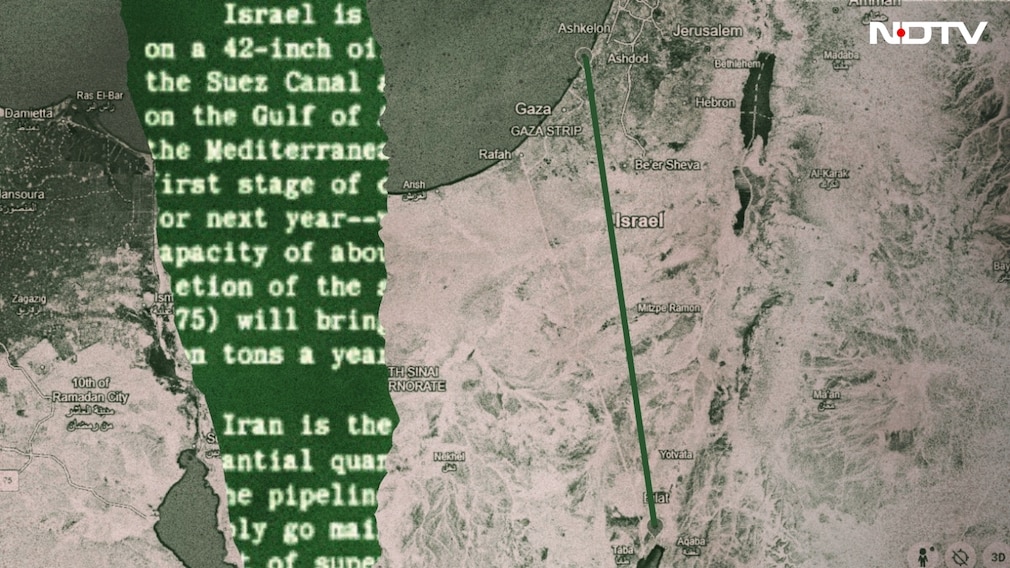
It is a 254-kilometre pipeline that crosses Israel from the Red Sea to the Mediterranean Sea. It was built nearly six decades ago in secret with Iranian money and Israeli engineering, long before the Islamic Revolution transformed the two countries into bitter enemies.
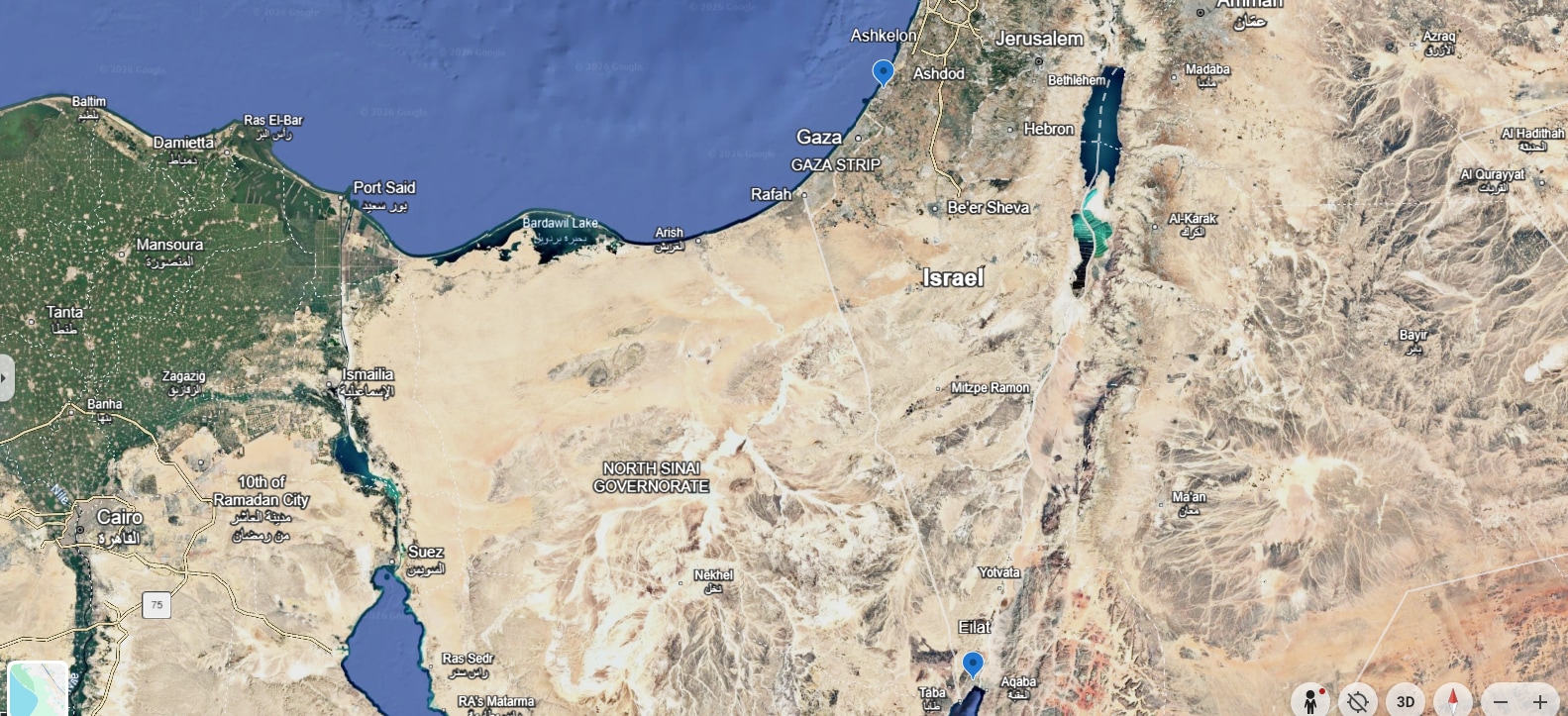
The Israeli cities of Eilat and Ashkelon
Designed to move Iranian crude oil arriving at Eilat across Israel to Ashkelon for onward shipment to Europe, the pipeline bypassed the Suez Canal and became one of the Middle East's least-known strategic energy projects.
Today, as conflict threatens both the Strait of Hormuz and the Bab el-Mandeb, Israeli officials are openly arguing that the same infrastructure could provide Saudi Arabia with another route to European markets. The proposal would have been politically inconceivable only a few years ago. Yet a prolonged disruption to regional shipping is forcing governments and energy planners to revisit assumptions that once seemed immovable. Oil markets tend to have that effect on countries' political undertakings.
The pipeline, however, carries decades of Middle Eastern history and secret diplomacy. It poses a question whether strategic necessity could one day push Saudi crude across Israeli territory despite the absence of any formal diplomatic relations.
What Is The Eilat-Ashkelon Pipeline
Built in the late 1960s as a secret partnership between Israel and Imperial Iran under Shah Mohammad Reza Pahlavi, the pipeline was designed to move Iranian crude arriving at Israel's Red Sea port of Eilat across the country to Ashkelon on the Mediterranean Sea, bypassing the Suez Canal in Egypt before continuing onwards to Europe.
According to declassified CIA documents, American intelligence viewed the project as strategically significant enough to feature in the President's Daily Brief.
The CIA assessed that supertankers would unload Iranian crude at Eilat before the oil crossed Israel through a 42-inch pipeline and was then reloaded onto smaller vessels at Ashkelon for shipment, primarily to Europe. The agency estimated the first phase could transport around 20 million tonnes annually before eventually expanding to between 50 million and 60 million tonnes by the mid-1970s. It also concluded that the route would likely prove cheaper than shipping via the Suez Canal or around the Cape of Good Hope.
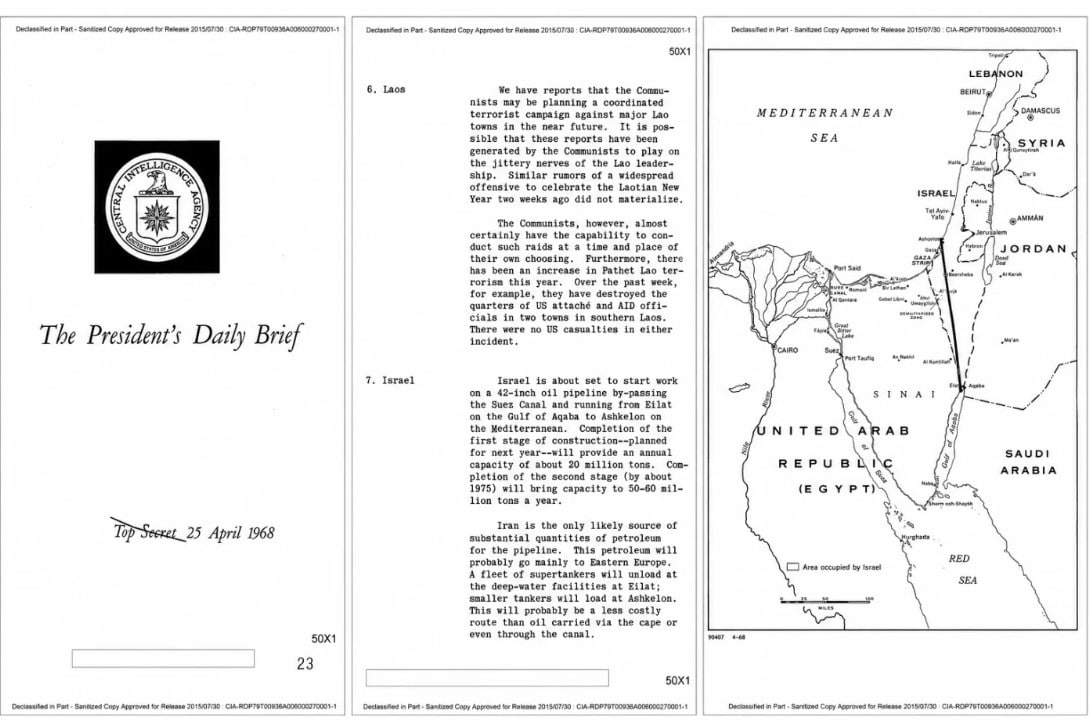
Photo Credit: CIA
The company behind the infrastructure later became known as the Europe Asia Pipeline Company (EAPC), operating pipelines, storage depots and maritime terminals across Israel.
Following Iran's Islamic Revolution, Israel assumed control of the venture after its diplomatic ties with Tehran collapsed.
A Swiss arbitration tribunal later ordered Israel to pay Iran $1.1 billion relating to the former joint venture, although Israel rejected the ruling, arguing that payment would violate its Trading with the Enemy Act.
Today, the company remains one of Israel's most secretive state entities.
Its operations continue under several secrecy provisions introduced in 1968 on national security grounds, with many aspects of its commercial activities shielded from public scrutiny.
Israel's Proposal
US-born, Israel-based open-source intelligence analyst and founder of OSINT613 Jay Letni told NDTV that discussions inside Israel have become considerably more serious than many observers realise. Asked how seriously the possibility of Saudi Arabia using the pipeline is being debated, Letni said: "Very seriously. Israel Energy Minister Eli Cohen publicly pitched a 700 km Saudi Arabia to Eilat pipeline to Washington in early July This is the most concrete Israeli government push since the failed 2020 UAE MoU. It has reached cabinet level advocacy but still hinges entirely on Saudi political will."
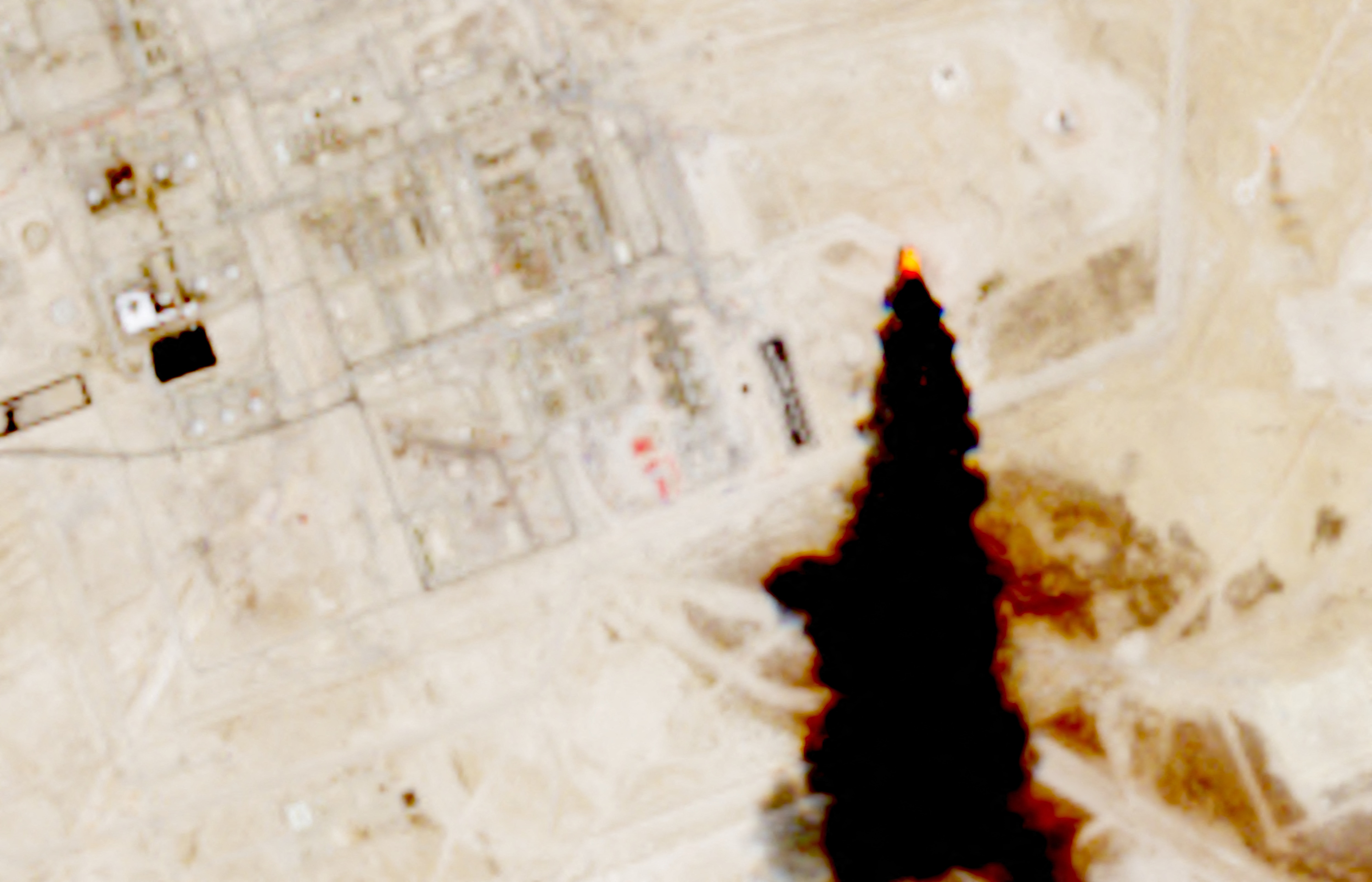
A satellite image shows smoke coming out of an oil facility, as Yemen's Iran-aligned Houthis said on Monday they targeted a number of sensitive crude oil supply and transport sites, according to a statement by the group's military spokesperson Yahya Sare, in Abqaiq, Saudi Arabia July 27, 2026. Courtesy European Union/Copernicus Sentinel-2/Handout via REUTERS
Asked whether Israel increasingly sees itself as a regional energy hub, he replied: "Yes that is Cohen's explicit pitch. Routing Gulf oil through Israel to Europe would reduce Hormuz dependence and make Israeli infrastructure structurally important. to European energy security."
How The Route Would Work
Saudi crude would first move through the Kingdom's East-West Pipeline to Yanbu. From Yanbu, tankers would sail north through the Red Sea into the Gulf of Aqaba before unloading at Israel's port of Eilat. The oil would then travel across Israel via pipeline to Ashkelon before being loaded onto Mediterranean-bound tankers. The northbound configuration is capable of transporting approximately 1.2 million barrels per day.
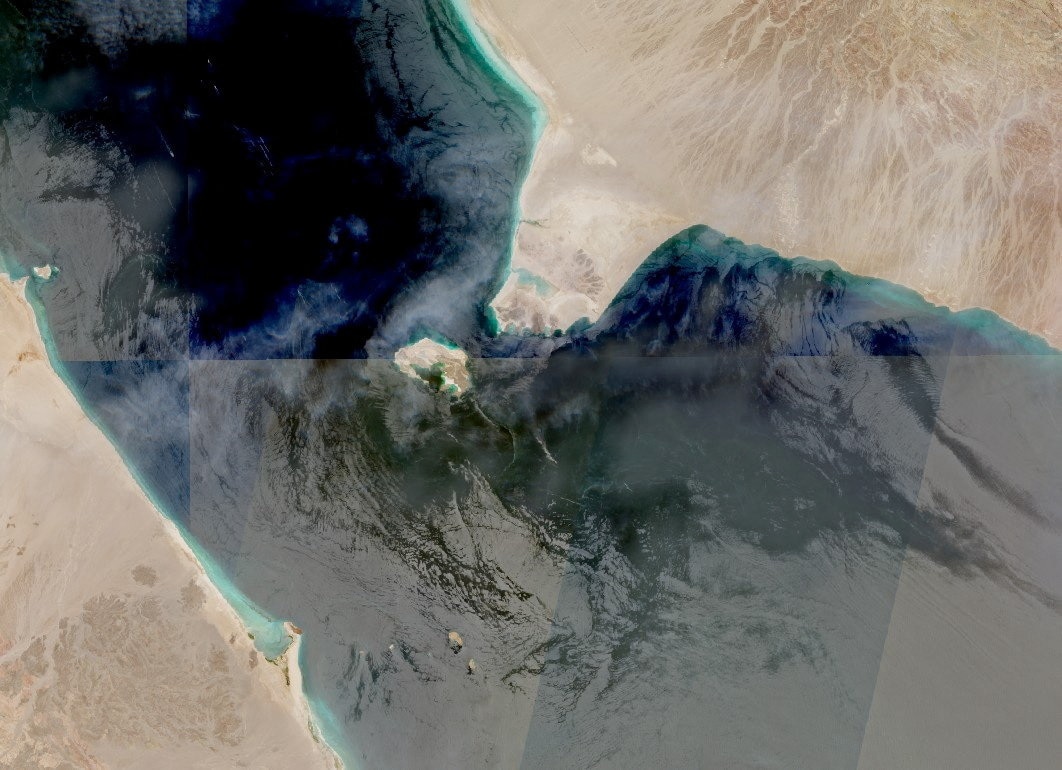
Satellite imagery shows Bab el Mandeb Strait, a key shipping waterway and the gateway to the Red Sea. July 12, 2026. Nasa Worldview/Handout via REUTERS
That represents only a fraction of Saudi Arabia's overall crude exports, estimated in the source at between 6 million and 7.5 million barrels daily, but still significant amid regional disturbance.
"Pipeline could push roughly 4,00,000 bpd one direction up to 1.2 million bpd reverse. Saudi crude exports run roughly 6 to 7.5 million bpd. Even at full reverse capacity it would handle only 5 to 15 per cent of Saudi volumes a useful supplement not a Hormuz or Suez-Mediterranean (SUMED) Pipeline replacement,” Letni told NDTV.
Infrastructure Limitations
According to Letni, Eilat's existing facilities are nowhere near capable of handling Saudi export volumes.
"Eilat port activity collapsed more then 90 per cent under the Houthi campaign and faced effective closure by mid 2025 due to financial collapse. Handling Saudi scale volumes would require major dredging VLCC berths, expanded tank farms and hardened security worth billions before any meaningful flow,” Letni told NDTV.
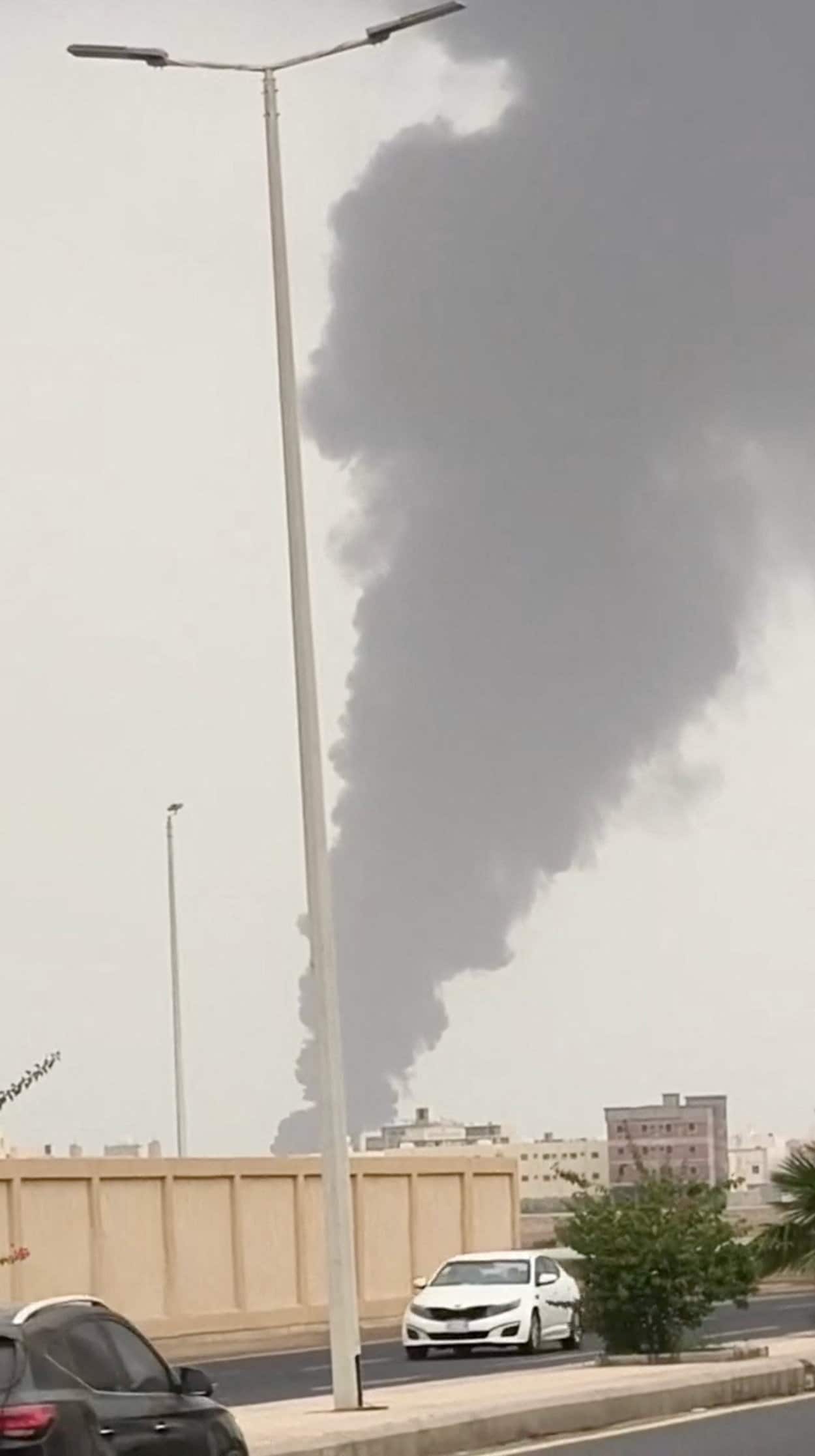
Plume of smoke rises, as Yemen's Iran-aligned Houthis said on Saturday they carried out operations targeting Saudi Aramco facilities in Jizan and Yanbu, according to a statement by the group's military spokesperson Yahya Sare, in Jizan, Saudi Arabia July 25, 2026, in this screen grab obtained from a social media video. Social Media/via REUTERS
The pipeline itself also faces security risks, he added. With the Houthis unrelenting, it would need a major boost in security measures.
“In a five-year period, there were at least 11 equipment failure leaks plus nine sabotage or human error incidents including a 2021 rocket strike. In June 2025, Iranian strikes damaged Bazan facilities and forced temporary halts of Karish and Leviathan gas flows. The 254 km desert route is exposed to precision strikes but Israel does have one of the best air defences in the region. Specifically for drones and obviously not 100 per cent. Against missiles and large UAVs, Israel claims a 92 per cent interception rate against missiles and drones launched by Iran and Hezbollah,” Letni told NDTV.
"SUMED is larger at 2.5 million bpd max and already co owned by Saudi Aramco 15 per cent, Kuwait 15 per cent, UAE 15 per cent and Qatar 5 per cent. The Israeli line is a secondary option not a competitor unless SUMED itself becomes politically compromised,” he added.
Politics The Biggest Obstacle
Saudi Arabia continues to insist that normalisation with Israel depends upon a pathway towards a Palestinian statehood. The ongoing Israeli crackdown on Gaza effectively froze discussions that had gained momentum before October 2023.
Israeli President Isaac Herzog recently reiterated his desire for closer ties, telling Saudi broadcaster Al Arabiya, "It is my dream to see peace between Israel and Saudi Arabia."
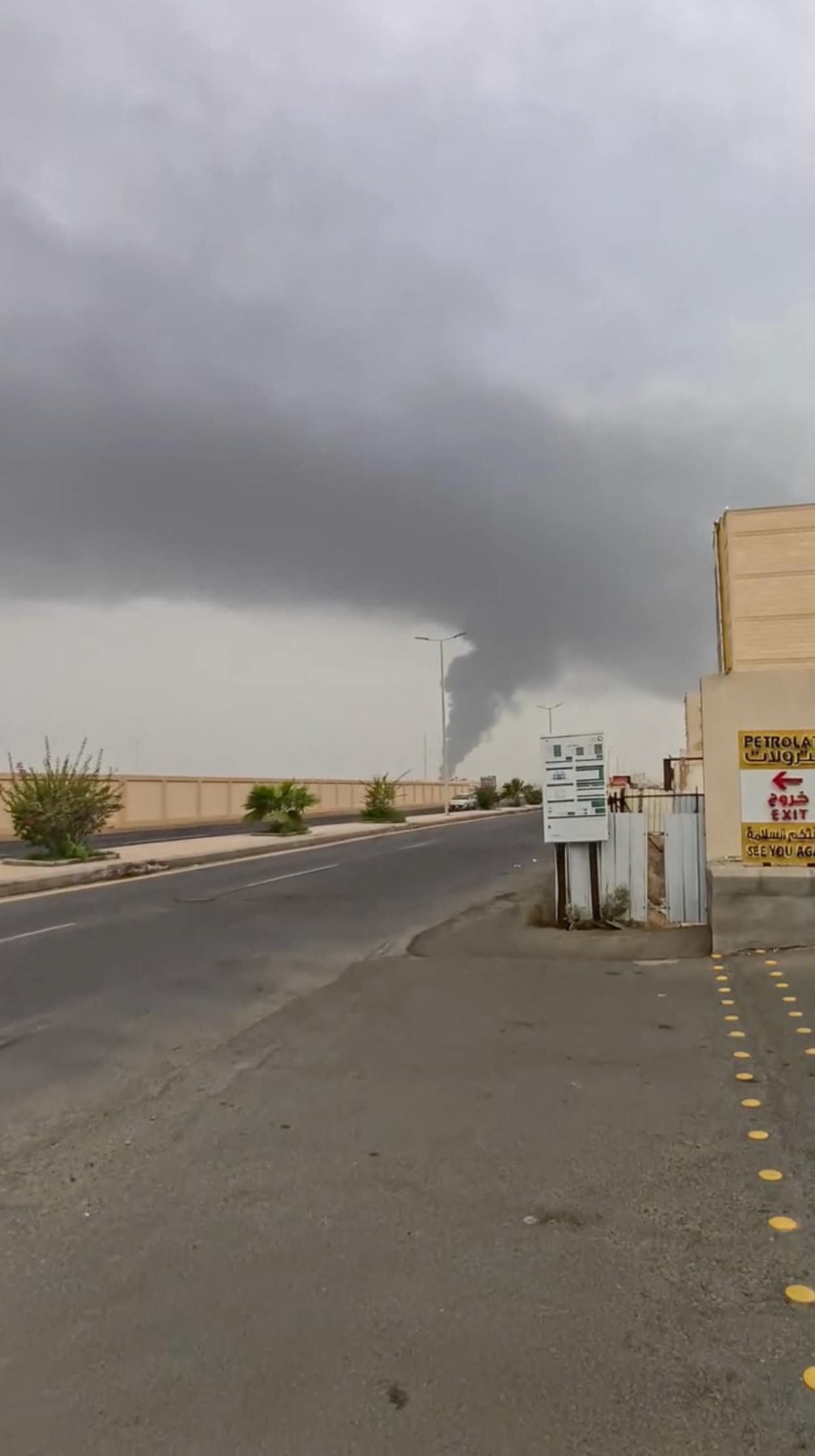
Plume of smoke rises, as Yemen's Iran-aligned Houthis said on Saturday they carried out operations targeting Saudi Aramco facilities in Jizan and Yanbu, according to a statement by the group's military spokesperson Yahya Sare, in Jizan, Saudi Arabia July 25, 2026, in this screen grab obtained from a social media video. Social Media/via REUTERS
But Saudi officials have repeatedly maintained that recognition of Israel requires progress towards an independent Palestinian state, something Israel's current government rejects outrightly.
"The Abraham Accords broke the psychological barrier. Some Israeli planners now treat Saudi normalisation as when not if. Reality check that Riyadh has repeatedly conditioned normalisation on a Palestinian state making it a hard sell today. The pipeline pitch is Israel's workaround, an attempt to make normalisation enough of a materially beneficial through shared infrastructure, intelligence and economic integration that Saudi Arabia may eventually find a way around its own preconditions. Israel minister Cohen actually commented on Tuesday that Saudi Arabia needs Israel more then Israel needs Saudi Arabia. This reveals the current Israeli posture leverage and not courtship. Whether that confidence is strategic clarity or overreach depends entirely on how long the Hormuz crisis lasts,” Letni told NDTV.
Could Such Cooperation Stay Secret?
Given EAPC's longstanding secrecy, one question is whether any commercial arrangement could remain hidden. But that seems unlikely given today's technology.
"For limited volumes yes a secrecy decree or shell companies and ship to ship transfers help. At the scale of today's satellite imagery and commodity flow analysis would expose the pattern relatively quickly,” Letni argued.
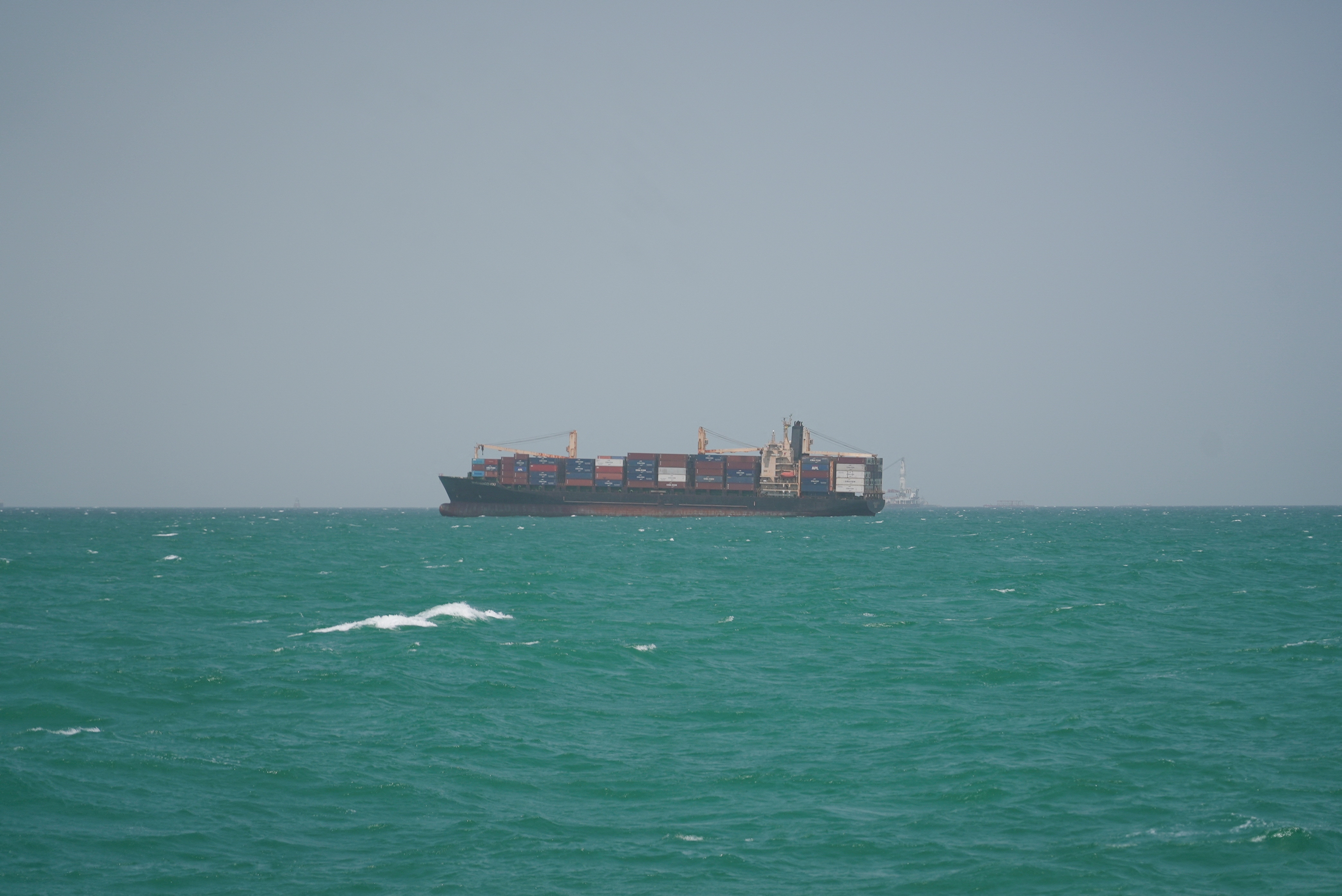
FILE PHOTO: A cargo ship sails in Saudi waters near the Dammam Port in Dammam, Saudi Arabia, May 17, 2026. REUTERS/Mohammed Benmansour/File Photo
"Domestic risk is manageable at small deniable volumes. Regional risk is higher and Iran would exploit any evidence while the Houthis would claim vindication and it would complicate Saudi positioning in the wider Arab Muslim world. The energy security upside has to outweigh the political exposure,” he told NDTV.
How Would Iran And US React
"I would assume Iran would react aggressively. Tehran would frame any deal as a Saudi-Israeli axis, escalate proxy pressure and target the infrastructure. The Houthis have already shown they can deter shipping to Eilat by targeting ships and raise insurance costs without necessarily striking the piers themselves,” Letni said.
But Washington's interests actually align with such a project, given its close ties with Saudi Arabia and even closer ties with Israel.
"Cohen has already floated the idea with the US. American interests align to diversify away from Hormuz, tighten Saudi-Israel ties, reduce the need for constant US naval presence at chokepoints and offer Europe a non-Russian or non-Egyptian option. Washington would prefer to stay off the marquee while removing obstacles behind the scenes,” Letni told NDTV.
-
Opinion | Indian Political Parties Are Now Stuck In An Awkward Gen Z 'Situationship'

For Gen Z to say "Bet" or "No cap", there is a lot of homework ahead for political parties. 'Breadcrumbing' them just won't work.
-
Opinion | Gen Z Can Topple A Minister. Why Can't They Enter Parliament?
India's Gen Z can vote at 18, graduate soon afterwards, and even hold bureaucratic positions after 21. What they still can't do is contest elections before they turn 25.
-
Your CTC Is Dead. Your Company Is Calculating You In Tokens Now
AI is turning years of human skill into tokens that companies can price against salaries. As the cost of machine intelligence falls, the real question is no longer whether AI can do your job, but whether HR will decide it can do enough of it for less.
-
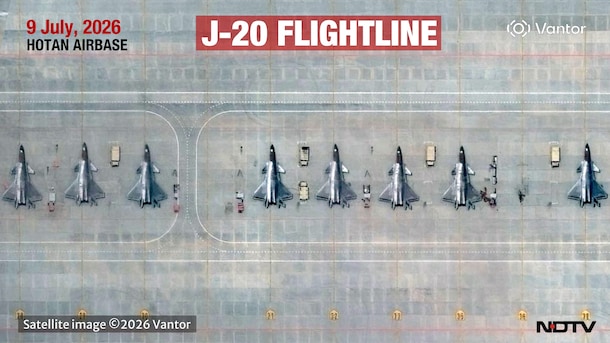
Exclusive: Satellites Show At Least 12 Chinese Stealth Jets Facing India. New Delhi's Answer Is Years Away
What makes the deployment of the J-20 significant are its stealth characteristics which enable it to dominate contested airspace
-
'A Breaking Point': An Open Letter To Nandan Nilekani On How To Fix India's Exams
Congress MP Shashi Tharoor offers a radical blueprint to the man leading the Centre's exam reforms task force.
-
Opinion | Trump's Nuclear 'Gift' To Saudi Arabia Could Haunt Middle East For Years
Trump just signed a '123' deal with the Kingdom. For the Saudis, this could be a big win. But for the region, it can quickly become a source of uncontrolled chaos.
-
An Evening At Student-Led Protest That Pushed Education Minister To Resign: In Pics
We spent the day at Jantar Mantar, located in the heart of New Delhi's Connaught Place area, where the youth-led movement was born and grew into a national call for accountability.
-
Opinion | One Resignation, 3 Headaches: The Bigger Politics Behind Dharmendra Pradhan's Exit
The minister's exit revives an old Congress-era tradition and hands the BJP a very contemporary problem to solve on the road to Uttar Pradesh.
-
Dharmendra Pradhan Resigns: Gen Z's 'Online Habits' Became Protest Strengths
CJP Protests: The movement's most effective tool was not a manifesto. It was Gen Z's instinct to document, joke, post and share with Instagram as its amplifier.
-
Tear Gas Containers And Hope For A Better Future: The Duality Of Protest
The government today assured CJP that police cases filed against students would be withdrawn and no action would be taken against them in future.





-
News Updates
-
Featured
-
More Links
-
Follow Us On
