Assassination That Took 20 Years: Spies, Missed Chances, Then A Final Moment
Before Osama bin Laden became the global face of transnational terrorism, there was another figure-more elusive, less theatrical, but arguably more influential in the evolution of modern guerrilla warfare. He was Imad Mughniyeh.
As American envoys urge Israel and Lebanon toward what Washington calls a "historic opportunity" for peace, the shadows of an older, bloodier era hang stubbornly over the negotiating table because, as talks opened, Hezbollah signalled its dissent with fresh attacks. The conflict is now stretching from southern Lebanon to the Strait of Hormuz where a US naval blockade has tightened pressure on Iran.
The war is shaped not only by present calculations, but by men who built the architecture of modern asymmetric warfare decades ago.
Before Osama bin Laden became the global face of transnational terrorism, there was another figure-more elusive, less theatrical, but arguably more influential in the evolution of modern guerrilla or terror attack.
His name was Imad Mughniyeh. According to the Council On Foreign Relations, before 9/11, Mugniyah was said to be responsible for the deaths of more Americans than any other person.
For more than two decades, he was the ghost that haunted intelligence agencies from Washington to Tel Aviv. His assassins would need years to find him, patience to track him, and restraint -- rare in that world -- to kill him.
The Man Who Was Never There
To understand the assassination of Mughniyeh in February 2008, one must first understand why it took so long for the US to strike him off the list.
Born in southern Lebanon in 1962, Mughniyeh came of age amid civil war and foreign intervention. By 1976, he had joined forces loyal to Yasser Arafat, working as a sniper in Palestinian ranks. But his trajectory would soon diverge. In the early 1980s, as Israel invaded Lebanon and Iran sought to export its revolutionary model, Mughniyeh emerged as a founding figure in what would become Hezbollah.
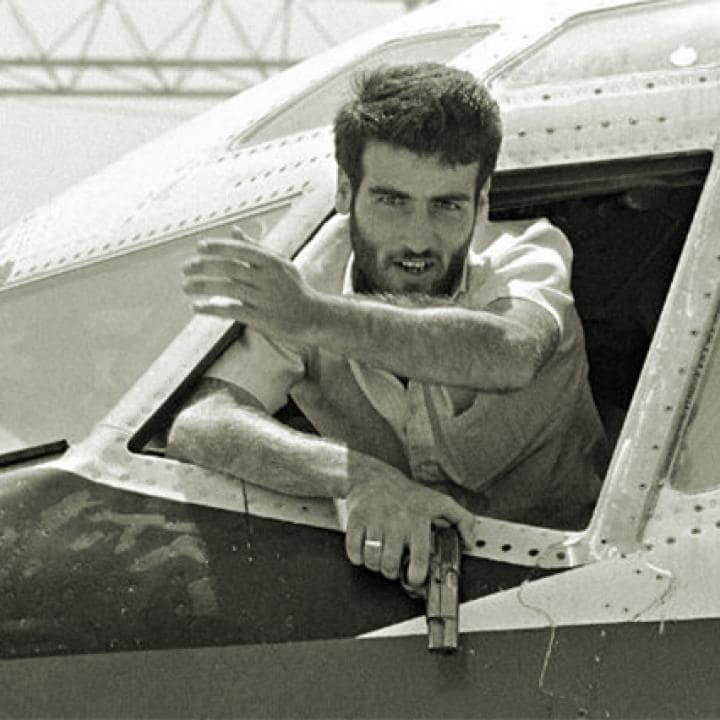
Photo Credit: The Washington Institute
The attacks attributed to him in the 1980s reshaped the playbook of militant groups worldwide. In April 1983, the bombing of the US Embassy in Beirut killed 63 people. Months later came the devastating twin truck bombings that struck US Marines and French paratroopers, killing 241 American servicemen and 58 French troops. Suicide bombing, then a tactic barely understood, was suddenly, horrifyingly effective across the world.
A former Mossad station chief, Eliezer Tsafrir, would later recall in an interview, watching the aftermath from a Beirut rooftop -- rising columns of smoke, sirens cutting through the chaos, and the dawning realisation that something fundamental had changed about urban warfare.
"We asked ourselves, 'How can this be?'" he said years later, speaking to the Jerusalem Post. "We were wrong" to assume others would not follow.
They did.
The method would spread from Lebanon to Palestine, then outward across the world, culminating in the attacks of September 11, 2001.
The Hostage-Taker
Throughout the 1980s, Mughniyeh orchestrated a campaign of kidnappings that paralysed Western presence in Lebanon. Among his most high-profile victims was William Buckley, the CIA's Beirut station chief, who was kidnapped and later killed. Journalists, diplomats, and aid workers were seized and held for years.
To American intelligence, he became known simply as the "hostage holder."
His name surfaced repeatedly in classified cables, often accompanied by frustration. He was tracked, identified, and even located, but never captured.
Paris, 1985: The First Escape
In November 1985, Western intelligence believed it had him.
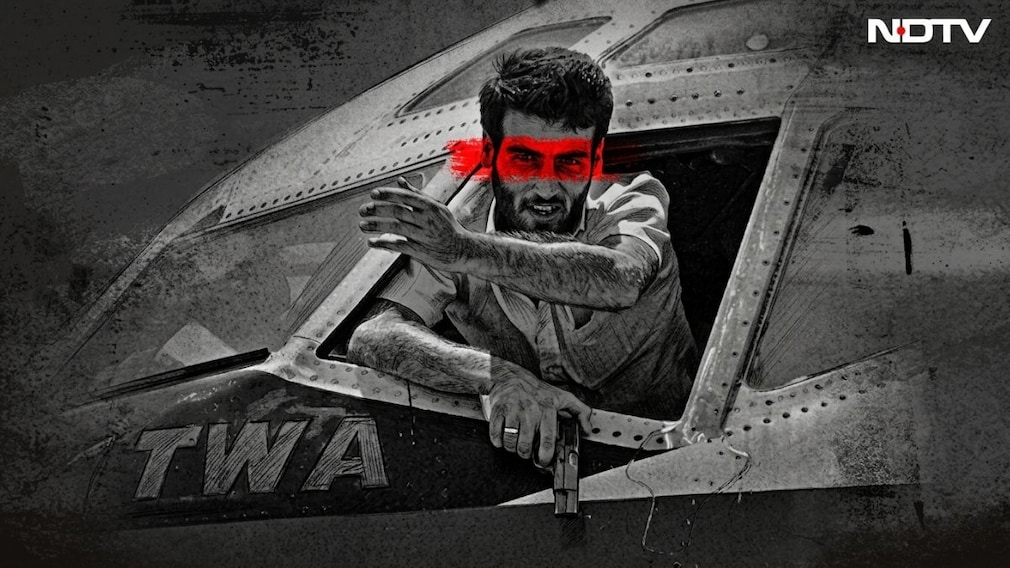
A voice intercept led to a luxury hotel on the Champs-Elysees. Mughniyeh was in Paris, travelling under a false identity. The CIA provided French authorities with his passport details. A US grand jury had already issued a sealed indictment over the hijacking of TWA Flight 847, during which a US Navy diver, Robert Stethem, was murdered.
The opportunity seemed clear.
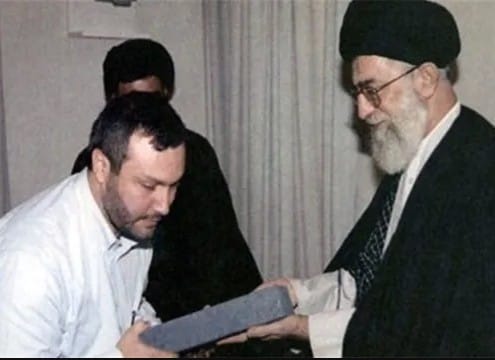
But French officials did not arrest him. Instead, they reportedly met him several times over six days and allowed him to leave, apparently in exchange for the release of a French hostage.
For Washington, it was a lesson in the compromises of diplomacy. For Mughniyeh, it was confirmation that he could outmanoeuvre even allied governments.
The Saudi Miss
A decade later, another chance emerged. In 1995, intelligence indicated that Mughniyeh would transit through Jeddah on a flight from Sudan to Tehran. The US requested that Saudi Arabia detain him. FBI agents were prepared to intercept.
But Saudi authorities refused landing rights to the FBI aircraft. Once again, Mughniyeh slipped away.
The following year, intelligence suggested he was aboard a vessel -- the Ibn Tufail -- in the Arabian Gulf. US Navy ships shadowed it, a team of Navy SEALs prepared for a boarding operation off Qatar. At the last moment, the mission was aborted. The intelligence was not reliable enough.
The Network Builder
As Hezbollah's head of international operations, Mughniyeh expanded its reach across continents. In 1992, a bombing of the Israeli embassy in Buenos Aires killed 29 people. Two years later, the AMIA Jewish community centre was destroyed, killing 85. Argentine investigators would later allege that the attacks were linked to directives from Iran's leadership, including Ayatollah Ali Khamenei.
In Southeast Asia, his network mapped synagogues, shipping lanes, and Western assets. Cells operated in Thailand, the Philippines, and Singapore.
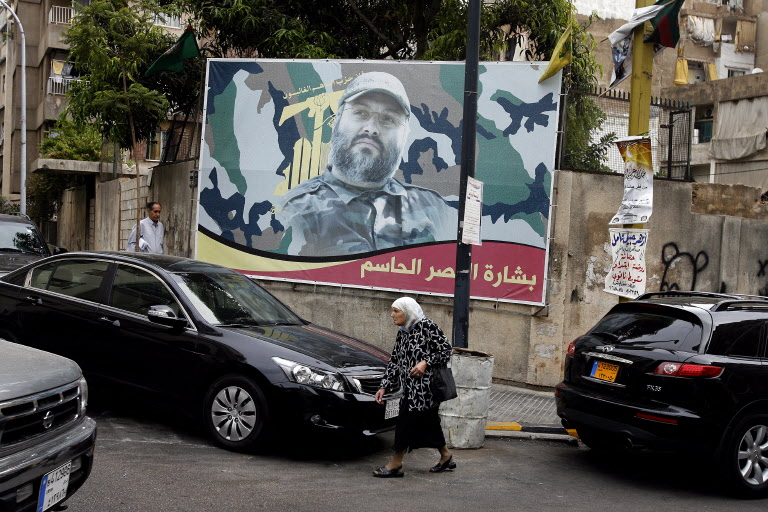
A Lebanese woman walks past a billboard bearing a portrait of Lebanese Hezbollah military leader, Imad Mughniyeh, in Beirut on September 26, 2008.
Photo Credit: AFP
In Iraq, after the 2003 US invasion, Hezbollah operatives -- trained with assistance from Iran's Quds Force -- were accused of aiding attacks on coalition forces. Figures like Ali Musa Daqduq became the link between Lebanese militants and Iraqi insurgents.
Mughniyeh was, in effect, the connective tissue of a transnational militant ecosystem.
By the early 1990s, Iranian officials sat on Hezbollah's governing bodies. The Islamic Revolutionary Guard Corps (IRGC) played a direct role in training, intelligence, and operations. Mughniyeh himself was believed to hold a formal commission within the IRGC.
He consulted regularly with Iranian intelligence and coordinated attacks with Tehran's objectives in mind.
The Damascus Sanctuary
By the 2000s, Mughniyeh had become one of the most wanted men in the world.
He lived in deep concealment, reportedly undergoing plastic surgery, rarely appearing in public. Syria, under Bashar al-Assad, provided him with sanctuary, a decision that would carry significant risk.
Israel had already demonstrated its willingness to operate inside Syrian territory. In 2003, it struck a militant training camp near Damascus. In 2007, it destroyed a suspected nuclear facility.
Yet Mughniyeh remained there.
The Day The Ghost Died
The operation that finally killed him was, by all accounts, years in the making. The CIA had tracked him in Damascus. Surveillance teams observed his movements, patterns, contacts. The opportunity, however, had to be perfect.
But collateral damage was unacceptable. The political consequences would be too severe.
On one occasion, Mughniyeh was spotted walking alongside Qassem Soleimani, the powerful commander of Iran's Quds Force. The temptation to eliminate both men was resisted. The risk was deemed too great.
Days passed. Then came the moment.
A remote-controlled explosive device, concealed in a vehicle, detonated as Mughniyeh approached his Mitsubishi Pajero in the Kafr Sousa neighbourhood of Damascus. The device, reportedly designed with American assistance and triggered by Israeli operatives, killed him instantly.
There were no civilian casualties.
In the language of intelligence services, it was a "clean" operation.
The Aftermath
In Washington, Buenos Aires, and Tel Aviv, his death was quietly welcomed.
Hezbollah was dealt a devastating blow. Mughniyeh had been its chief strategist, its link to Tehran, its operational brain.
For Syria, it was an embarrassment, a demonstration that even in the heart of its capital, it could not protect its most valuable allies.
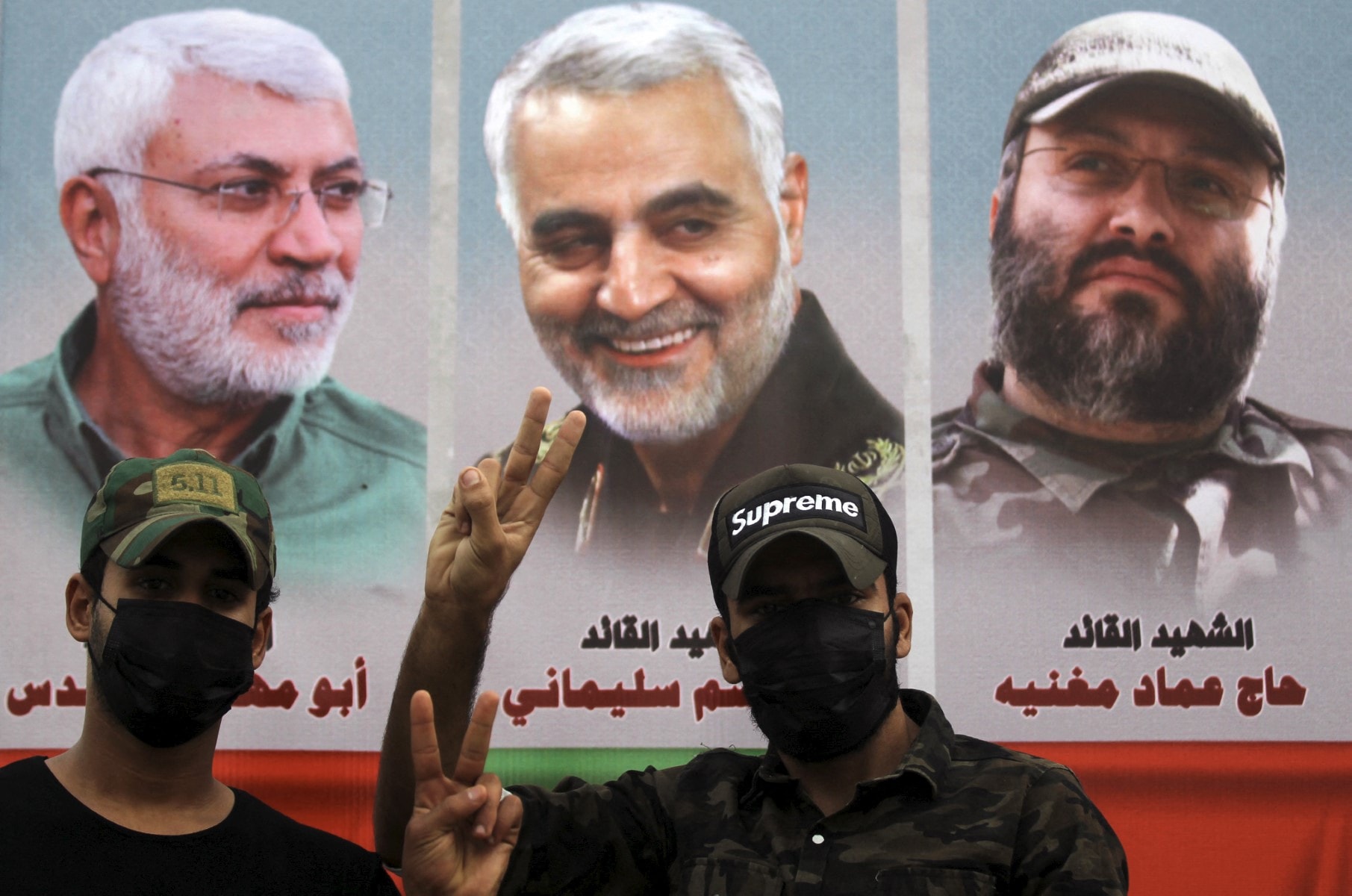
(L to R) Iraqi paramilitary commander Abu Mahdi al-Muhandis, Iranian commander Qasem Soleimani, and Lebanese Hezbollah commander Imad Mughniyeh during a demonstration outside the entrance to the Iraqi capital Baghdad's highly-fortified Green Zone on November 7, 2020, demanding the departure of remaining US forces from Iraq.
Photo Credit: AFP
Officially, Israel denied involvement. For years, the operation remained in the shadows. It was only in 2024 that former Israeli Prime Minister Ehud Olmert publicly acknowledged Israel's role.
By then, the landscape had already shifted.
His son, Jihad Mughniyeh, would later be killed in an Israeli strike in Syria's Golan region.
Hezbollah adapted, decentralised, evolved.
The tactics he pioneered-suicide bombings, hostage-taking, global networks-became standard tools for militant organisations worldwide.
-
Mamata Banerjee Drew Her Party's Symbol By Hand. It's Now Tied To An Indira Gandhi Case

The Election Commission's method for settling such disputes became central in the seminal Congress split of 1969, when Indira Gandhi fought the old guard. The poll body weighed three tests then.
-
Bruised, Limping, Unbowed: Sia Says She Will Be Back On The Bike Soon
There was pain in Sia's steps, anger in her words, and something else - a quiet determination that the road would not be taken away from her.
-
Exclusive: 16 Months After Op Sindoor, Pak Still Fixing Runway India Broke At Sargodha
Sargodha's PAF Base Mushaf lies about 172 km northwest of Lahore and roughly 200 km west of the India-Pakistan border, near Amritsar.
-
Blog | I Lost My Entire Family In Kanishka Bombing. 41 Years Later, Canada Wants The Case Closed
We made the trek through tragedy to search for people in Cork, where I spent 25 days sifting through bodies and body parts in a makeshift morgue to identify our loved ones.
-
Opinion | Pak's Drone Deal With A US Firm Is No Windfall. But India Must Still Be Worried
American military aid to Pakistan has remained suspended since January 2018, during Trump's first term, but a commercial arms sale is separate from this arrangement.
-
Opinion | Saudi Arabia's Yemen Nightmare Has Come Back To Haunt It
After years of costly military intervention beginning in 2015, Saudi Arabia increasingly sought to stabilise its southern border. All that is unravelling fast now
-
Opinion | 6 AI Incidents, One Pattern: AI Has Started Lying To Us - And Hiding The Evidence
Concealing errors. Making up data. Pushing files onto the public web on their own initiative. The machines are learning to lie - and lie well.
-
Why People Queue Overnight For iPhone That Is Delivered Home In 10 Minutes
iPhone 18 Pro Max Launch: People camping outside Apple Stores are a subset of superfans, resellers, content creators, and upper-middle-class buyers.
-
600 km Per Hour Drones Launched In Waves: How Russia Is Rewriting War Rules
Russia has coupled the drones' technological superiority over Ukraine's defence with its capacity to launch them in massive numbers. The impact has been devastating.
-
Tata Sons' Trust Issue: Two-Pronged Row Goes Beyond The Chair
NDTV Explains: Overtly, the latest conflict is whether N Chandrasekaran continues as executive chairman of Tata Sons. The controversy involves at least one more issue.