A New Ebola Strain Is Threatening Fresh Outbreak. What Are Doctors Doing
This is where the Democratic Republic of Congo's latest Ebola outbreak has erupted in the middle of a grinding conflict that has hollowed out public services and displaced millions.
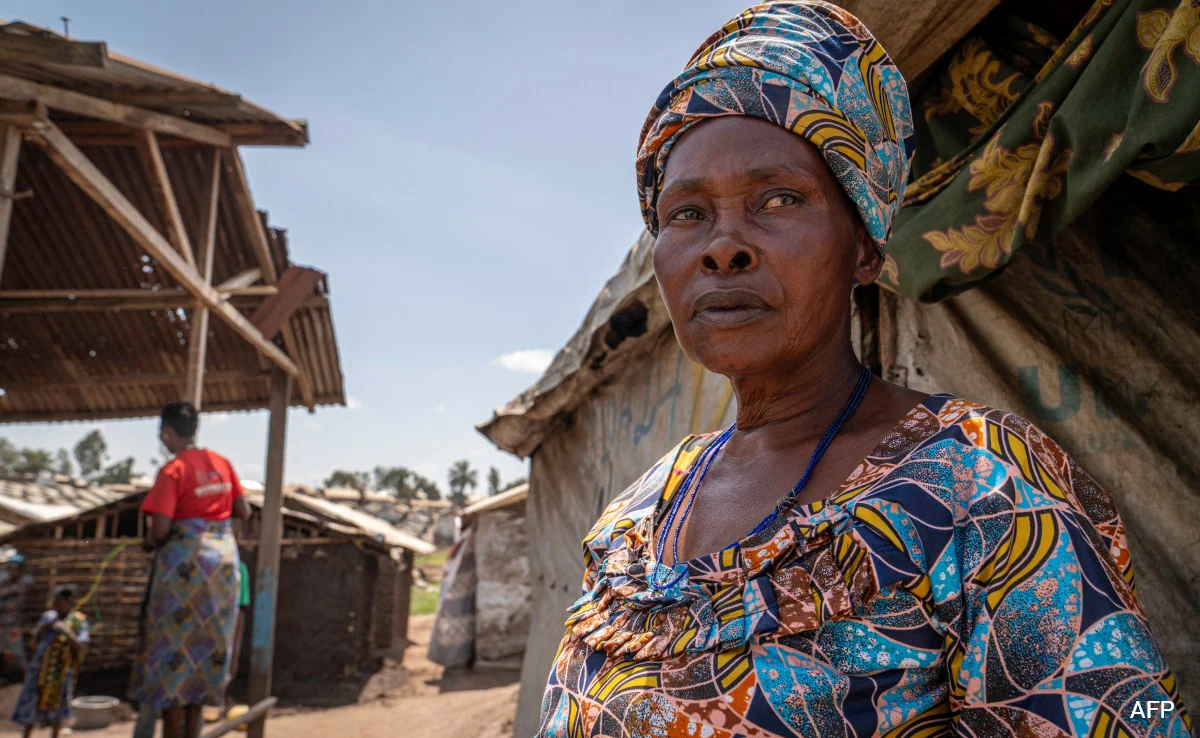
The road into Mongbwalu in the Congo cuts through one of the most contested landscapes in Africa. Trucks carrying minerals crawl past checkpoints manned by armed men. Families displaced by years of conflict move between overcrowded settlements carrying plastic sheets, cooking pots and children weakened by hunger. In remote clinics, nurses already struggling to treat malaria, measles and severe malnutrition now face another enemy. This enemy begins with a fever and can end in haemorrhage, isolation and death.
This is where the Democratic Republic of Congo's latest Ebola outbreak has erupted in the middle of a grinding conflict that has hollowed out public services and displaced millions. And unlike previous outbreaks, this one is caused by the Bundibugyo strain of Ebola, a rarer variant for which there is currently no approved vaccine, no targeted treatment and no rapid diagnostic test designed specifically to identify it quickly.
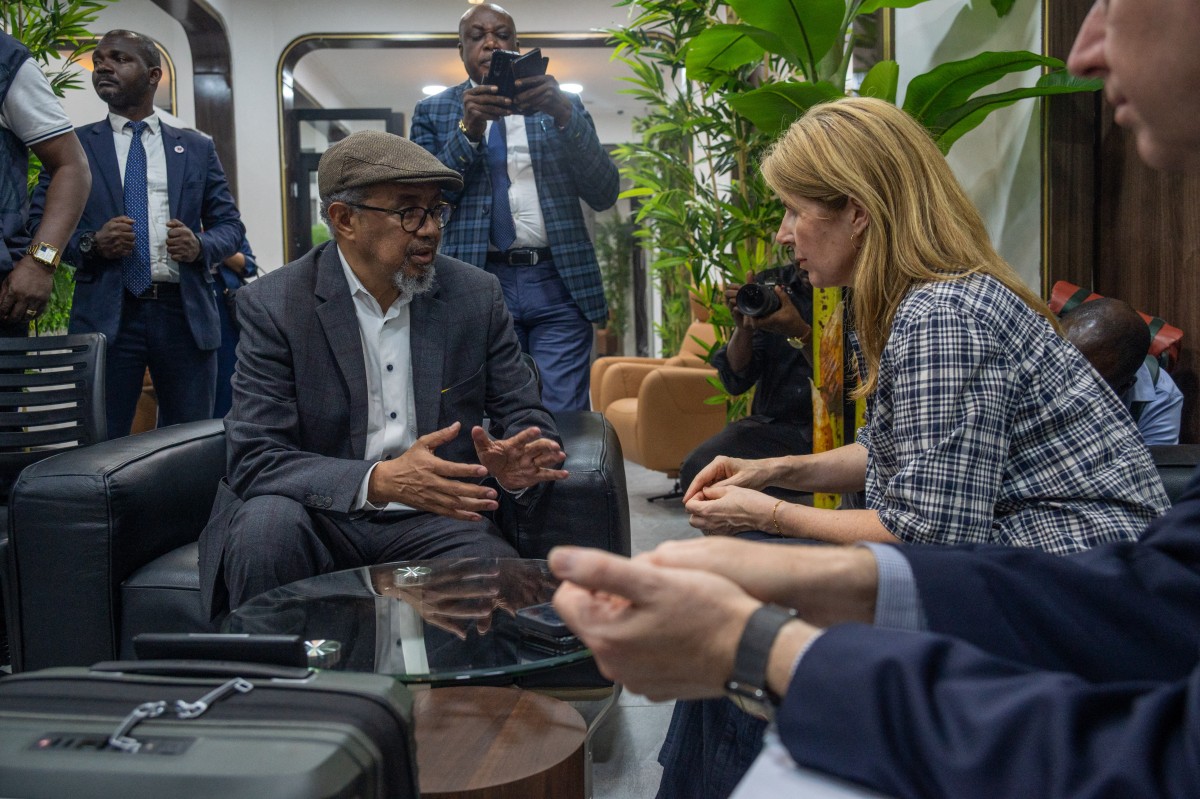
Dr. Tedros Adhanom Ghebreyesus (L), the Director-General of the World Health Organization (WHO), speaks with officials upon his arrival in Kinshasa on May 28, 2026.
Photo Credit: AFP
The World Health Organisation (WHO) has now declared the outbreak a Public Health Emergency of International Concern, warning that the true scale of the epidemic may be far wider than current figures suggest.
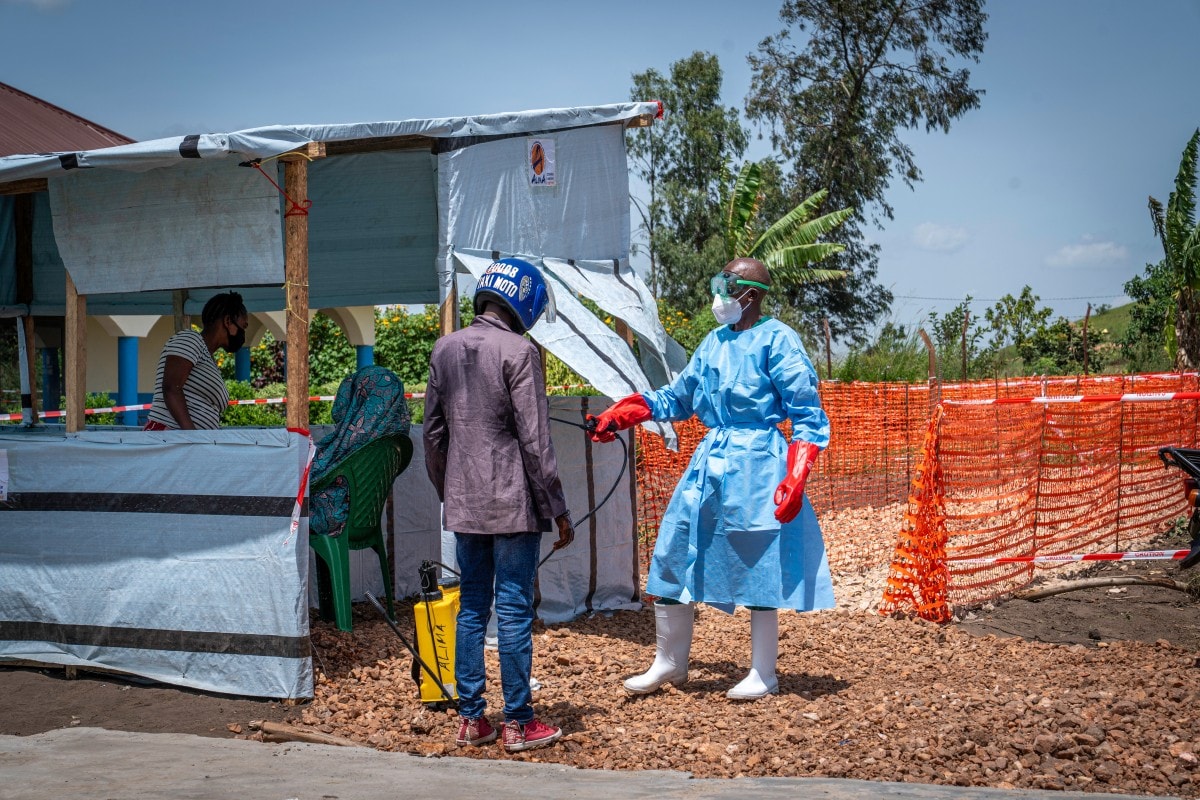
Dieudonné Sezabo, a health worker, decontaminates the clothing of a motorcycle taxi driver who transported a patient suspected of having Ebola to the Rwampara Hospital in Ituri, in the eastern Democratic Republic of the Congo, on May 26, 2026.
Photo Credit: AFP
Doctors Without Borders, known globally by its French acronym MSF or Medecins Sans Frontieres, is among the organisations now attempting to contain the spread in eastern Congo. Speaking to the NDTV, MSF South Asia Director Parthasarathy Rajendran described a response effort racing against time in one of the world's most difficult humanitarian environments.
“Doctors Without Borders, MSF teams are working in Congo for many years, in many, almost everywhere in the country,” Rajendran told NDTV. “The country has large emergencies and also a huge humanitarian medical crisis.”
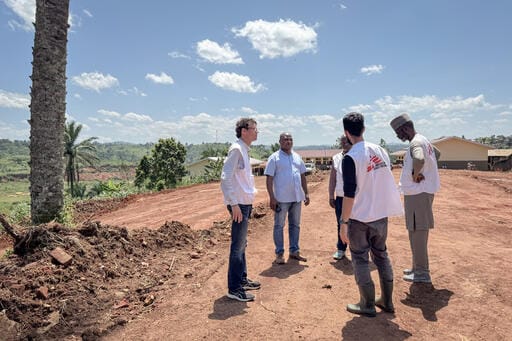
Photo Credit: MSF
He said MSF was currently working with the Congolese Ministry of Health and international partners including the WHO to scale up the Ebola response “as quickly as possible”, particularly in Mongbwalu, which has emerged as the outbreak's epicentre.
There, MSF has begun establishing a 60-bed Ebola treatment centre while simultaneously reinforcing infection prevention and control measures in surrounding clinics and health facilities that continue to provide primary healthcare to rural communities.
“It includes several critical components, such as isolation, supporting care for the patients, contact tracing, laboratory support, safe and dignified burial, community engagement, and awareness activity,” Rajendran said.
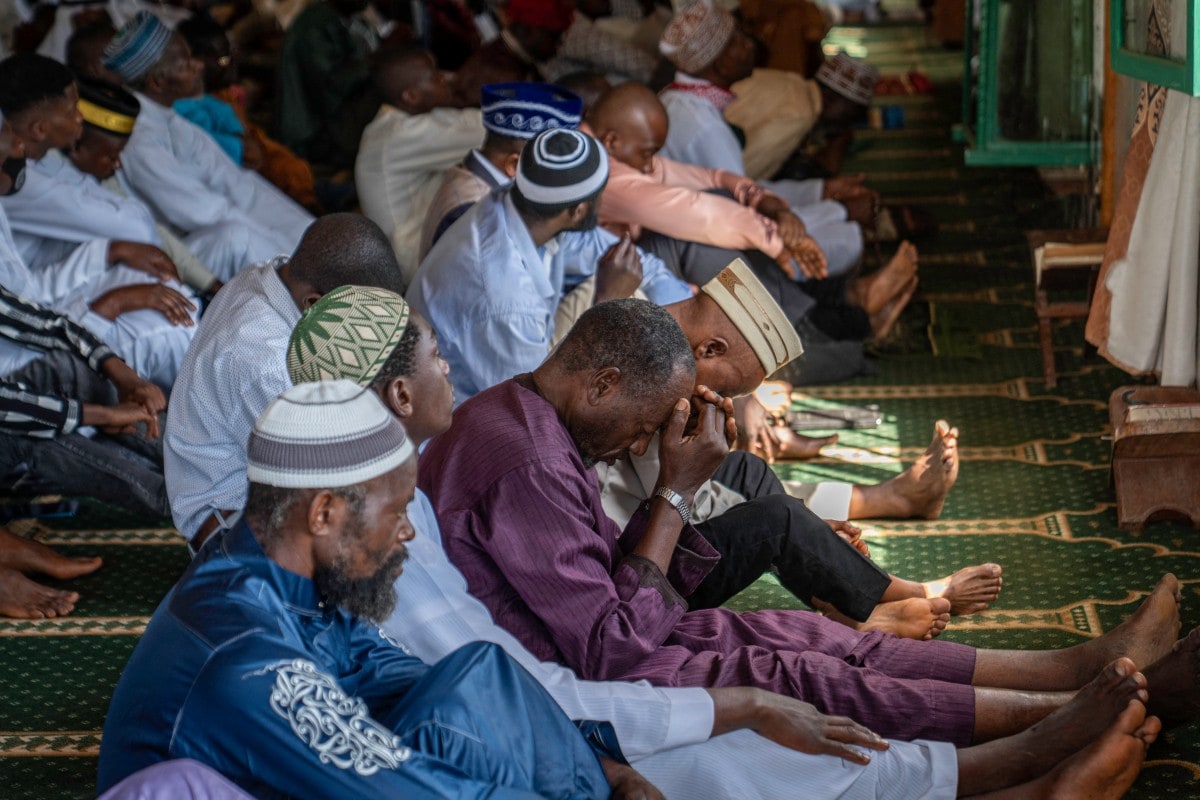
Worshippers gather ahead of performing a prayer at a Mosque in Bunia, in the eastern Democratic Republic of the Congo, on May 27, 2026 the first day of Eid al-Adha, the Feast of Sacrifice. (Photo by Glody MURHABAZI / AFP)
Photo Credit: AFP
Yet even as Ebola spreads, Congo's health crisis continues unabated.
“Diseases such as malaria, measles, malnutrition still remain a major cause of mortality,” he said. “Ebola cannot be just addressed in isolation from other broad humanitarian crisis in DRC.”
The outbreak was formally declared in May, but health officials now believe the virus may have been circulating undetected for weeks. According to WHO figures, more than 1,000 confirmed and suspected cases have already been recorded in Congo, alongside hundreds of deaths.
The WHO has warned that the real numbers are likely substantially higher.
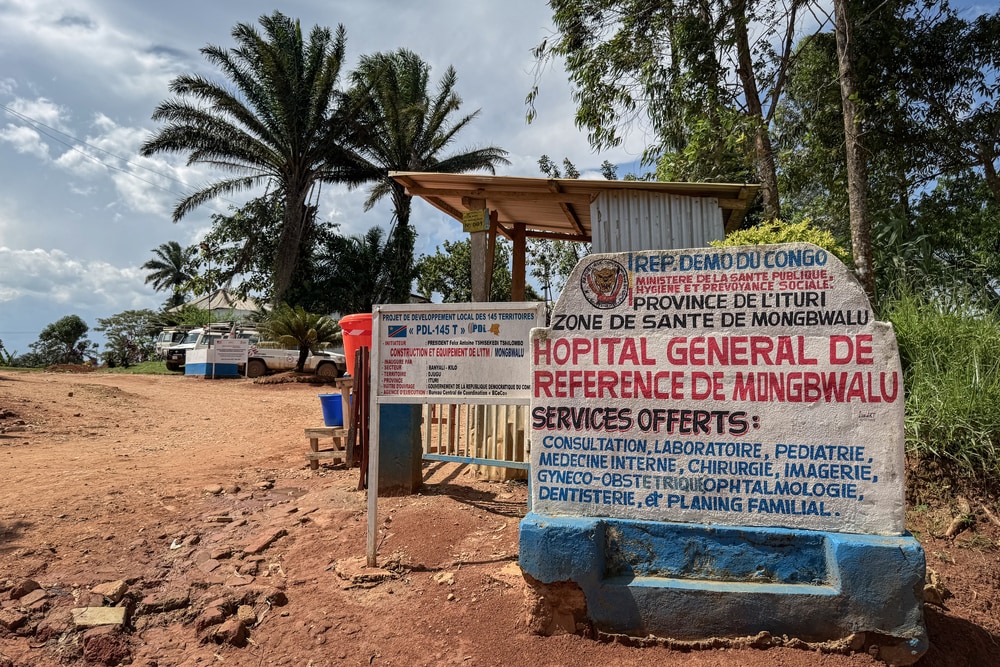
Photo Credit: MSF
The agency's Director-General, Tedros Adhanom Ghebreyesus, travelled to Congo in a public show of support, landing in Kinshasa before heading to the eastern province of Ituri, where the epidemic is centred.
“I want you to know that you are not alone,” Tedros said in a message addressed to the Congolese people. “Together, we will overcome this outbreak.”
But even the WHO chief acknowledged the immense complications posed by the conflict raging across eastern Congo.
“Conflict and displacement make everything harder,” he said, appealing directly to armed groups for a ceasefire. “No cause, no conflict, no grievance is worth condemning innocent people to death from a preventable disease.”
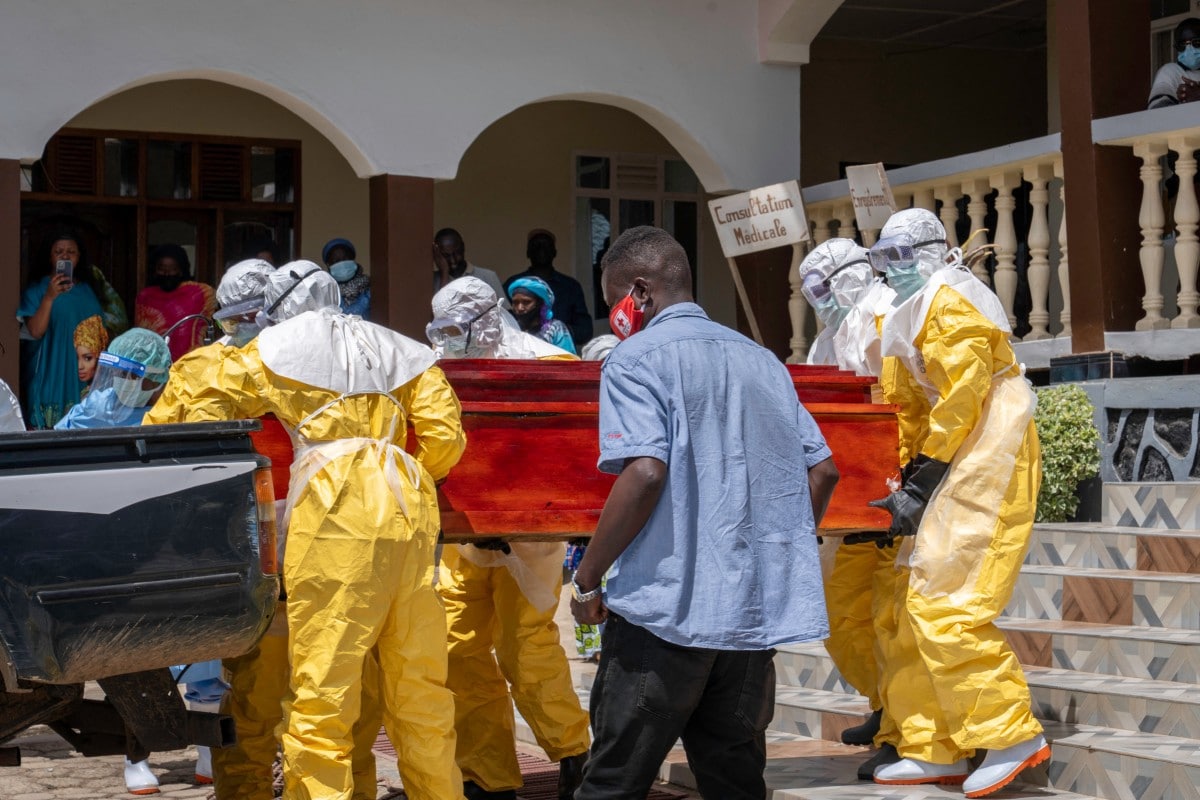
The coffin of a person suspected of having died from Ebola is carried onto a pick up truck by health worker at a hospital in Bunia, in the eastern Democratic Republic of the Congo, on May 25, 2026.
Photo Credit: AFP
The eastern provinces of Congo have been scarred by violence for more than three decades. Numerous armed groups operate in the region, including the Rwanda-backed M23 movement, which has seized significant territory since 2021. The conflict has repeatedly displaced civilians, shattered already fragile infrastructure and undermined basic governance. For public health officials, it creates near-impossible conditions.
“Responding to Ebola disease outbreak in conflict areas is extremely challenging,” Rajendran said. “Insecurity, displacement, population movement, and also overstretched health facilities complicate the whole surveillance, contact tracing, and also timely access to treatment.”
Communities in eastern Congo have already endured repeated cycles of displacement. Entire villages have been uprooted multiple times. Families move across borders seeking safety, trade routes remain active and informal crossings are common.
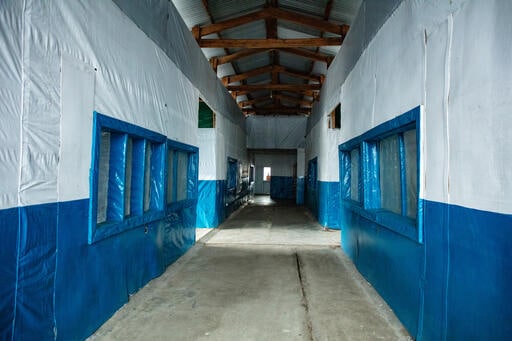
Photo Credit: MSF
Rajendran said one of the most important lessons from previous Ebola outbreaks in Congo was that medical intervention alone cannot stop transmission.
“Public health response are most effective when communities understand and participate in this effort,” he said. “Trust and community engagement are very essential.”
That trust is now being severely tested.
In Ituri province, fear, rumours and disinformation have triggered direct attacks on hospitals and aid workers. Armed groups and local residents alike have expressed suspicion about the Ebola response, sometimes viewing international organisations with hostility.
One attack saw a group storm a hospital in Rwampara to retrieve the body of a person who had died from Ebola. Another assault targeted Mongbwalu General Hospital, where attackers demanded the return of relatives' bodies. During the chaos, eighteen suspected Ebola patients fled after an MSF tent was set on fire. They remain unaccounted for.
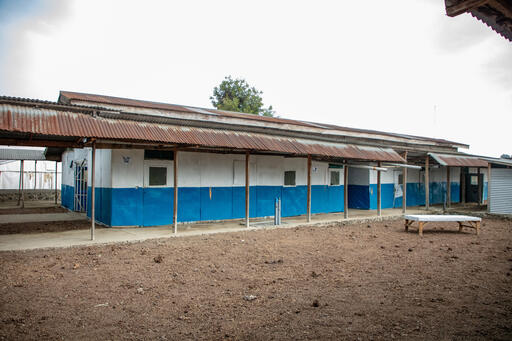
Photo Credit: MSF
Traditional burial practices have become another flashpoint. Ebola victims remain highly infectious after death, making funerals a major driver of transmission. But in many Congolese communities, funeral rites involve washing and spending time beside the body.
Provincial authorities have now ordered that burials be conducted only by specialised teams. Transporting bodies in non-medical vehicles has been prohibited.
But restrictions have fuelled anger and conspiracy theories.
"The lure of 3TGs (Tungsten, Tantalum, Tin and Gold) is attracting a lot of illegal miners who are outcompeting artisanal miners, already under tremendous pressure from large mining corporations. Coupled with unrestricted military and material movements from Rwanda and Uganda add further security complications. As miners fan out into forest streams in search of 3TGs like the ones which run west of Mongbwalu and Bunia near the tributaries of the Ituri river and its network. Reliance on bush meat by these miners can also be a contributing factor to these numerous outbreaks. The Ituri province and its nearby regions are very resource-rich with a fragile economy; any disturbance to this ecosystem will result in the release of new and likely more lethal zoonotic viruses," said Aditya Kiran Nag, independent researcher and OSINT expert.
Some residents reportedly believe Ebola has been fabricated to attract foreign funding or gain access to the region's mineral wealth, including gold deposits around Ituri. Others accuse aid organisations of bringing the disease into the area themselves.
Rajendran said combating misinformation was becoming as important as treating patients.
“There is also a lot of rumours, misinformation, disinformation going around this Ebola spread,” he said. “Therefore, it's important that we really work with the local community, make them understand, and also make sure that there is building the trust, but also ensure the dignity.”
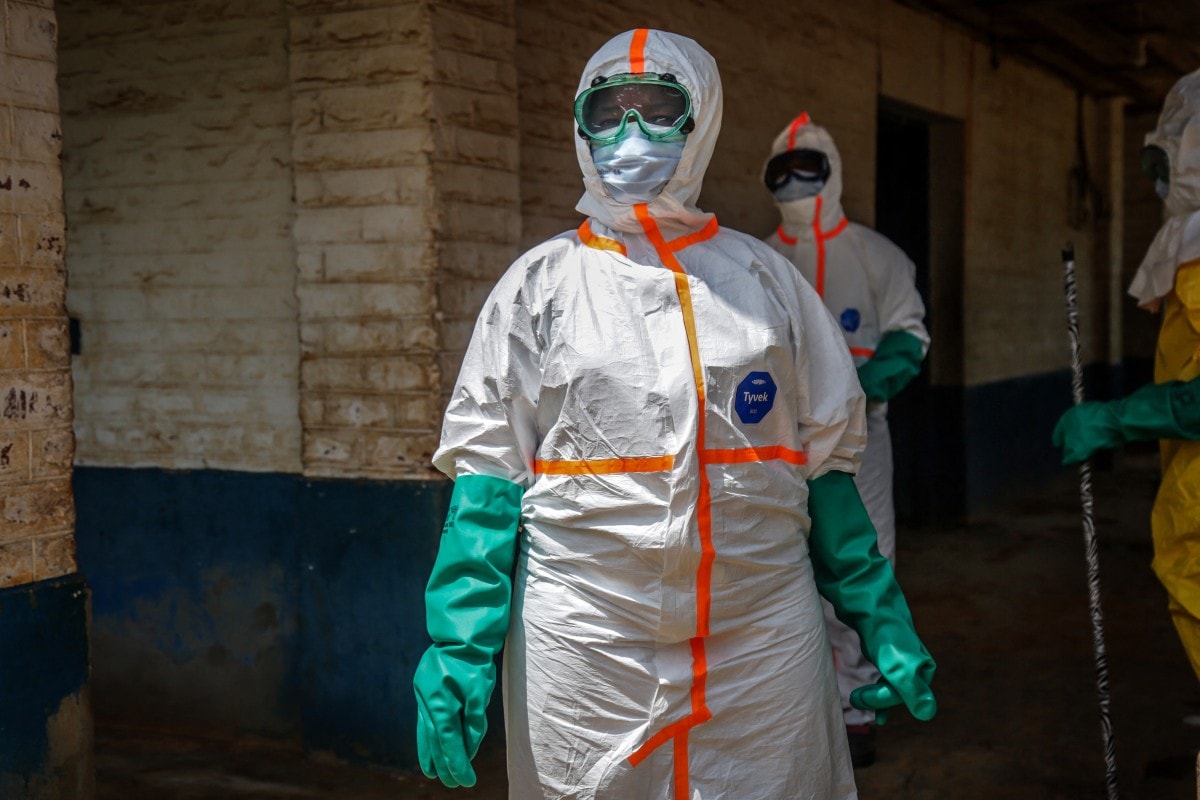
Health workers wearing protective equipment gather to disinfect the isolation area for Ebola patients at the General Referral Hospital of Mongbwalu in Mongbwalu, on May 23, 2026.
Photo Credit: AFP
What makes this outbreak especially alarming for scientists is the virus itself.
The Bundibugyo strain of Ebola was first identified in Uganda in 2007 and has caused outbreaks before. But unlike the more common Zaire strain -- for which vaccines and treatments have been developed -- Bundibugyo remains medically underprepared territory.
“There is no rapid diagnostic tools available to really screen Bundibugyo virus specifically,” Rajendran told NDTV. “This Bundibugyo virus, we don't have vaccine, we don't have treatment, and we don't have actually also proper diagnostic tools.”
That diagnostic gap may have delayed detection of the outbreak itself. Health workers initially used tests designed primarily for the Zaire strain, potentially allowing the virus to circulate unnoticed.
The WHO's emergency declaration described the outbreak as “extraordinary”, citing not only the absence of approved therapeutics and vaccines, but also the uncertainty surrounding the true number of infections and the possibility of wider regional spread.
International spread has already occurred.
Uganda has confirmed Ebola cases linked to travel from Congo, including at least one death. WHO officials say neighbouring countries remain at high risk because of intense cross-border movement driven by trade, displacement and daily economic activity.
Yet Rajendran strongly warned against blanket border closures.
“Putting a blanket restriction on border is actually going to hinder the response,” he said. “It delays the movement of medical teams, laboratory equipment and essential services.”
Instead, he argued, countries should strengthen preparedness systems at border health facilities, improve surveillance and increase diagnostic capacity.
“Closing the border is not going to help,” he said. “Preparedness in neighbouring countries is very important.”
Not all governments agree.
Uganda has announced border closures with Congo. Rwanda has imposed entry restrictions. The United States has tightened screening measures and barred entry for individuals infected with Ebola. Flights carrying passengers recently travelling through affected regions are being funnelled through specific American airports for enhanced screening.
Canada and the Bahamas have also introduced temporary restrictions, while the outbreak is beginning to disrupt international sport and travel ahead of the football World Cup in North America.
For ordinary readers unfamiliar with Ebola, Rajendran described the disease in starkly practical terms.
“Most of the symptoms that initially the patient will get is actually the fever, nausea, vomit, diarrhoea,” he said. “Which is also linked to other diseases like malnutrition, malaria.”
That overlap creates enormous difficulty for frontline healthcare workers. In crowded rural clinics, distinguishing Ebola from common tropical illnesses is often impossible without testing.
This is why, Rajendran said, infection prevention measures are critical.
Healthcare workers require protective equipment, proper triage systems and isolation procedures for suspected cases. Without them, hospitals themselves can become centres of transmission.
The WHO has already reported multiple deaths among healthcare workers in the outbreak zone, raising fears of hospital-based spread.
Unlike previous Ebola outbreaks, however, there is no approved targeted treatment for the Bundibugyo strain. Care therefore focuses largely on supportive treatment — managing dehydration, stabilising patients and treating symptoms while the body attempts to fight the infection.
Rajendran noted that mortality rates for previous Bundibugyo outbreaks ranged between 25 and 40 percent — lower than some other Ebola strains — but cautioned strongly against complacency.
“There is no evidence saying that the virus is weakening,” he said.
He added that outcomes depend heavily on how quickly patients are identified and how rapidly they receive supportive medical care.
The international response is now accelerating.
WHO says it has already delivered tonnes of medical supplies into the region, while UNICEF is sending hundreds more tonnes of aid.
Meanwhile, the Africa Centres for Disease Control and Prevention says it hopes to have a vaccine and treatment ready for the Bundibugyo strain by the end of 2026.
“What we can tell you for sure, by the end of this year, 2026, Africa CDC will make sure that we have a vaccine and medicine against Bundibugyo,” Jean Kaseya told reporters.
But developing vaccines in the middle of an expanding outbreak is an immense scientific and logistical challenge.
Rajendran warned that years of underinvestment in diseases affecting poorer countries had left the world dangerously exposed.
“We know that the Bundibugyo virus is more than a decade old, but still there is no approved vaccines or treatment specific for this virus,” he said.
Funding cuts, he added, have already weakened surveillance systems and reduced the ability to detect outbreaks early.
“What we also seen that because of the large funding cut, that also reduced the capacity to do this kind of rapid surveillance,” he said.
The WHO's recommendations now call for massive international coordination: strengthened laboratories, cross-border screening, emergency operations centres, rapid response teams, intensive community engagement and the expansion of specialised treatment centres close to outbreak zones.
Yet on the ground in eastern Congo, the realities remain brutal.
Roads are insecure. Armed groups still operate. Villages remain displaced. Hospitals are overstretched. Aid workers face suspicion. Patients disappear. And every unexplained fever now carries terrifying implications.
In Mongbwalu, the 60-bed MSF treatment centre has become more than a medical facility. It is a frontline in a broader battle involving science, war, trust and political neglect.
“Ebola responses only succeed when communities are trusted partners in the response,” Rajendran said. “Building trust, ensuring dignity, and also maintaining access to healthcare are very fundamental to control the outbreaks.”
For now, that may be the central challenge confronting Congo and the world alike.
-
DK Shivakumar Comes With Mastery Of Delhi Networks And Karnataka Grassroots

DK Shivakumar is a politician who mastered the art of networking in Delhi's high-power circuits just as effortlessly as he managed the grassroots electoral math in his home constituency, where he has won eight straight terms
-
Opinion | Siddaramaiah: The Man Who Has Never Believed In Bowing Out Quietly
Old habits die hard. Siddaramaiah is a grassroots socialist, an anarchist who has always thrived in chaos. Don't expect him to retire to a life of a quiet, elderly statesman - not yet, at least.
-
Opinion | Karnataka Tussle: Is This Where Congress Finally Understands The Value Of 'Timing'?
For years, Rahul Gandhi's critics have accused him of being a moral commentator rather than a commander. Karnataka may be where this changes.
-
Opinion | A 'Bangarappa' Redux? How Another Karnataka Chief Minister Was Asked To Resign In 1992
The images flashing on the TV screens on Tuesday reminded this author of a similar scenario in 1992, when S Bangarappa, Karnataka's first OBC Chief Minister, was asked to resign by PV Narasimha Rao.
-
Opinion | How Pak And Bangladeshi Vote Blocs Are Becoming UK's New 'Kingmakers'
Tower Hamlets, a London town that once was predominantly White, just re-elected Lutfur Rahman as mayor for the third time. But this is just part of a bigger shift.
-
Ringside View | Fall Of The Legacy Teams In IPL 2026: What Ails KKR, CSK, And MI?
With a year still left for the mega auction, all three legacy teams have to press the reset button if they want to rise above the mid-table.
-
Opinion | Pakistan's Dangerous Dance With America Is Finally Starting To Haunt It
Although Pakistanis have put up a brave face against Trump's Abraham Accords ask, in reality, it puts them in a difficult position at home.
-
Exclusive: World's Newest Country Is Without Medicine. And It's Getting Worse
For the people of South Sudan, the destruction of an MSF-run hospital meant the disappearance of the only secondary healthcare facility serving nearly 250,000 people across the region.
-
Opinion | The Quad Is Slowly Going Quiet - But For A Reason
Questions have grown with Trump's renewed contacts with Xi Jinping and ongoing uncertainty about US commitments in Asia.