"It's Ethnic Cleansing": Syria's Druze To NDTV As Violence Escalates
The Syrian Observatory for Human Rights, a UK-based monitoring group, reported that more than 940 people had been killed in Suwayda province in the past week.
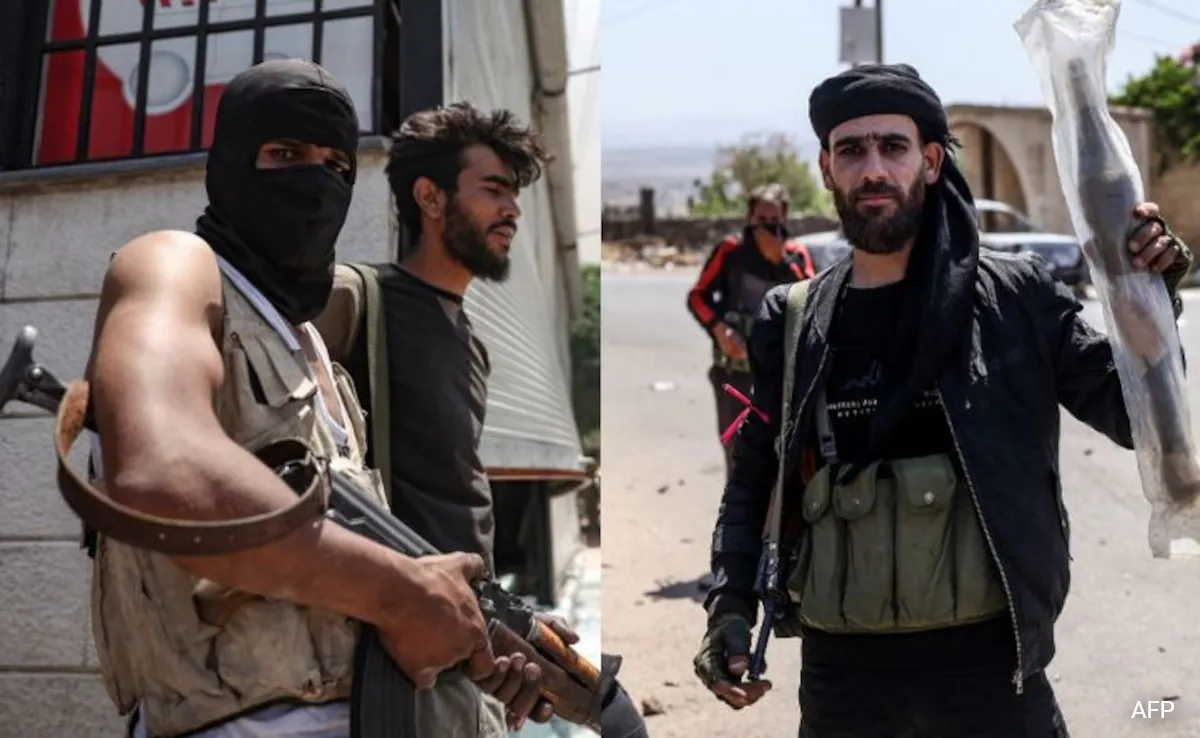
In Syria's southern province of Al-Suwayda, the Druze community is facing what its members have described as an "ethnic cleansing campaign" amidst a rapidly deteriorating security situation that has claimed the lives of hundreds over the past week. Reports of targeted killings, forced religious humiliations, and sectarian clashes are emerging from a region that has seen continual tensions following the fall of Bashar al-Assad.
"This is not a conflict anymore, this is extermination," Majd Al-Shaer, a 21-year-old Druze man, told NDTV. "They are humiliating our elderly, killing our women and children. This is a campaign to wipe us out. An ethnic cleansing campaign is taking place against the Druze."
In Al-Suwayda, a cycle of tit-for-tat detentions between Sunni and Druze civilians escalated quickly. It began with the beating and robbery of a Druze vegetable vendor by Sunni men, spiralling into violence across the region.
NDTV Exclusive | Not Muslims Or Christians - Another Syrian Ethnic Group Caught In Crossfire
The Syrian Observatory for Human Rights, a UK-based monitoring group, reported that more than 940 people had been killed in Suwayda province in the past week. The dead include 326 Druze fighters, 262 Druze civilians (165 of whom were summarily executed), 312 government security personnel, and 21 Sunni Bedouins - including three civilians allegedly executed by Druze gunmen.
"It started when a group of Sunnis detained a Druze vegetable driver, beat him, and stole his car and money. Then a group of Druze detained a group of Sunnis, and vice versa. Then the Sunnis began to provoke the Druze by insulting the prisoners, which sparked the war, and the government and Sunnis from all over Syria began to attack the Druze," Al-Shaer told NDTV.
Sectarian Fault Lines
The Druze -- a religious and ethnic minority with distinct beliefs rooted in Islamic, Greek and other philosophical traditions -- are concentrated primarily in Suwayda and the mountainous Jabal al-Druze region. While the group maintained an uneasy relationship with the Syrian state under Assad, they had been largely spared from targeted violence during the country's civil war.
That changed this month.
Despite reports of a ceasefire agreement last night, brokered by the Syrian Government in Damascus, major clashes between Druze-majority militias and the Bedouin/tribal militias are continuing in and around Suwayda in Southern Syria. Forces from the Syrian Defense and Interior… pic.twitter.com/D5i8XljDYQ
— OSINTdefender (@sentdefender) July 19, 2025
Following the collapse of Assad's regime in December 2024 and the rise of interim president Ahmad al-Sharaa -- a former terrorist known as Abu Mohammad al-Julani -- Suwayda has become a flashpoint. Al-Sharaa's past leadership of Hayat Tahrir al-Sham (HTS), a terror group, has heightened fears among Syria's minorities. The Druze, in particular, see him as a threat.
"Al-Sharaa is seen as a terrorist by the Druze," Al-Shaer NDTV. "His government is now participating in attacks on us."
Targeted Attacks
Druze civilians have reported a series of deliberate acts intended to insult their identity. One common practice, according to multiple eyewitnesses and videos shared on social media, has involved the forced shaving of elderly Druze men's moustaches.
"It's not just killing," Al-Shaer said. "They shave our moustaches to humiliate us. They record it on camera." Such acts, he said, are part of a campaign of degradation aimed at "erasing the Druze" from Syria.
Videos circulating online also depict public executions. In one particular video, Druze men are being lined up on a street and then fired at using machine guns.
Suwayda Military Council
NDTV had reported back in March when armed Druze factions in Suwayda declared the formation of the Suwayda Military Council. The coalition, led by Tareq al-Shoufi, comprised various local self-defence units and sought to coordinate protection for civilians and prevent incursions by government forces or Islamist factions.
The council says its objectives include the protection of public property, the restoration of regional stability, and the promotion of a secular Syrian state. In public statements, it has called for integration into a new national army based on democratic principles.
"The situation during Assad's rule was bad economically, but these attacks had never happened before," Al-Shaer told NDTV.
However, the council has not received universal support from the Druze community. Sheikh Hikmat al-Hajri, the spiritual leader of Syria's Druze, condemned the council as a separatist group.
Israeli and US Involvement
As reports of mass killings, executions, and sectarian abuses mounted, Israel launched airstrikes against Syrian government positions in Suwayda and Damascus.
Israeli Prime Minister Benjamin Netanyahu cited the need to protect Druze civilians as justification. "We demand the full demilitarisation of southern Syria. We will not tolerate any threat to the Druze community in southern Syria."
Israel's actions drew criticism from Damascus. Syrian President al-Sharaa, in a televised address on Saturday, denounced the Israeli strikes as interference. Yet just hours later, a US-brokered ceasefire was announced by Tom Barrack, Washington's envoy to Turkey and Syria.
According to Mr Barrack, the ceasefire agreement was reached in coordination with Turkey, Jordan, and Israel. "We call upon Druze, Bedouins and Sunnis to put down their weapons and, together with other minorities, build a new and united Syrian identity," he said.
Al-Sharaa confirmed the ceasefire in his own address, stating that the Syrian state remained committed to protecting minorities, though he appeared to shift blame for the violence onto Druze militias.
In response to the violence, US Secretary of State Marco Rubio has called for an immediate end to the violence.
"The US has remained heavily involved over the last three days with Israel, Jordan and authorities in Damascus on the horrifying & dangerous developments in southern Syria. The rape and slaughter of innocent people which has and is still occurring, must end," Mr Rubio said in a statement.
"If authorities in Damascus want to preserve any chance of achieving a unified, inclusive and peaceful Syria free of ISIS and of Iranian control they must help end this calamity by using their security forces to prevent ISIS and any other violent jihadists from entering the area and carrying out massacres. And they must hold accountable and bring to justice anyone guilty of atrocities including those in their own ranks. Furthermore the fighting between Druze and Bedouin groups inside the perimeter must also stop immediately," he said.
On Friday, Israeli officials confirmed they had allowed limited Syrian troop deployments into Suwayda for 48 hours under the terms of the ceasefire. The Syrian interior ministry claimed the area had been "cleared of Bedouin tribal fighters" by Saturday evening.
Still, reports of mortar attacks and looting continued to emerge.
The UN estimates that over 87,000 people have been displaced from Suwayda in recent days. For many within the Druze community, the events of the past week have confirmed long-standing fears of ethnic cleansing.
-
Opinion | CJP Protest And Opposition's Never-Ending Search For 'Readymade' Revolts

The Opposition cannot simply saunter in after anger has been created, and ask to become its beneficiary
-
Opinion | A Rs 5,000 Fine Can't Fix India's 'Babu' Raj. But It's A Start
A new bill in Delhi imposes a fine of Rs 250 a day on bureaucrats, with a Rs 5,000 ceiling, if their service for citizens is delayed without a valid justification. Can this fix India's great 'Babu' bottleneck?
-
Opinion | Kaveri To J-20, How China Overtook India In A 40-Year-Old Race To Build Fighter Jets
Both launched ambitious military jet engine programmes during the 1980s. Both depended heavily on Soviet and Russian technology. Four decades later, however, the finish line tells two dramatically different stories.
-
Opinion | US Attack On Chabahar, And Why It's Time India Stopped Playing By Others' Whims
As the US destroys Chabahar in Iran, one thing is clear: India cannot wait eternally for the whims of others to do what is vital for its own interests.
-
Beyond Low Cost: Why Foreigners Choose India's Healthcare Over The West
India's medical tourism industry is estimated to be worth $12.32 billion in 2026. It is growing much faster than the country's overall tourism sector.
-
Opinion | Is Sharad Pawar Planning To Merge NCP With NDA? Behind The Ongoing Calculations
The NCP patriarch, turning 86 this year, will have to take a decision soon - before someone else takes it for him.
-
Opinion | Maa Behen, Obsession, And The Gaze That Eats Itself
Every society has a woman it has already judged. Every man has a story about her. Cinema has long inherited both.
-
'School Fees Are Just The Beginning': The Hidden Cost Of Educating Children
Tuition classes, digital devices, transport, uniforms, extracurricular activities, and competitive exam coaching have made education a costly affair.
-
NDTV Probe: CSAM, Sexually Suggestive Content, Gun Culture On Social Media
The probe has uncovered a wider pattern of exploitative and illegal content slipping past moderation, raising questions about the consistency and effectiveness of enforcement.
-
Ice Stupas To Education Reforms: The 'Fast' Evolution Of Sonam Wangchuk
Sonam Wangchuk remains a prominent figure whose activism spans climate change, education reform, democratic rights and environment conservation.