Opinion | Trump Tariffs: Diplomacy Is Dead. Long Live Social Media Theatrics
Trump's playbook is vintage. He first extends his hand as a friend, then strikes with the force of a bully. His tariffs are not about the principle of fairness. They are a blunt instrument wielded for selfish reasons, for dominance and spectacle.
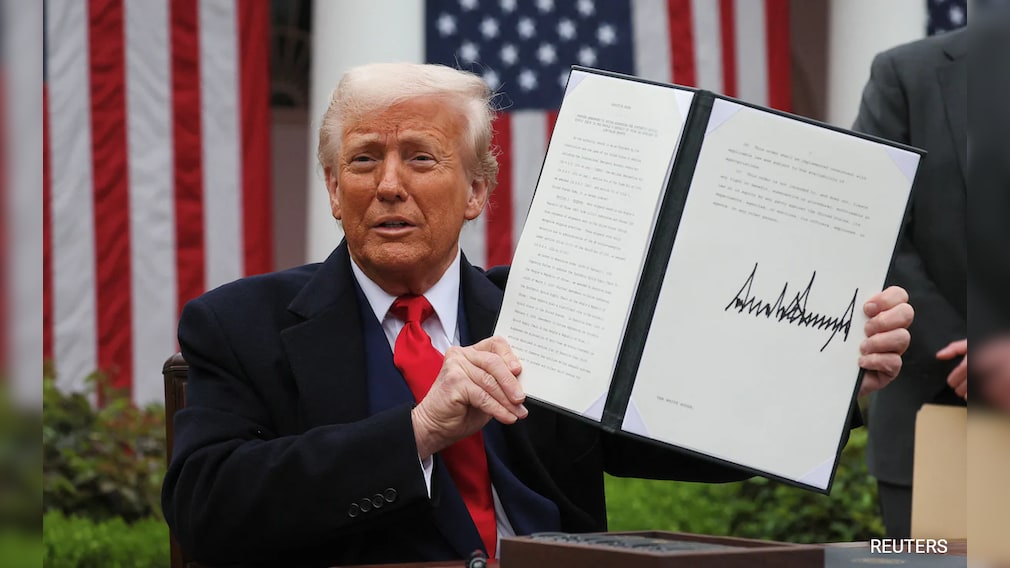
It was an otherwise routine Wednesday until President Donald Trump, most likely on an impulse, opened his Truth Social app and dropped a bombshell that rippled far beyond mere social media theatrics. The headline was stark and unmistakable: a 25% tariff on all Indian imports to the United States, threatening to isolate USD120 billion in goods and services from the world's fifth-largest economy.
True to form, Trump began with a familiar bait-and-switch. India, he declared, was a "friend", only to deliver the economic equivalent of a sucker punch moments later. To paraphrase what he said, 'while India is our friend, we have, over the years, done relatively little business with them because of their tariffs'. And then came the declaration: starting August 1, all Indian imports would face a 25% tariff. To add to the theatricality, he threatened additional, unspecified "penalties" targeting India's ongoing purchases of Russian oil and weapons.
All For Performance
By now, we can safely say he has become predictable by being unpredictable. The message was less a policy announcement and more a display of raw geopolitical muscle, heavy on posturing and light on nuance.
The Indian government responded with a measured and dignified calm, emphasising that negotiations with the US were still ongoing. Yet, behind this diplomatic poise, diplomats, policymakers and markets in India were caught off guard. Industries that form the backbone of the Indian economy - textiles, gems, jewellery, electronics - could face huge uncertainties. India's exports to the US, with a 25% tariff from August 1, would face competitors, such as Vietnam, Bangladesh and Indonesia in the US markets, with less tariffs, competing with Indian goods. Economists warn of a potential 0.2 percentage point drag on India's GDP growth in the coming year, a significant blow for a country striving to maintain its economic momentum.
The complexity deepens with India's agricultural sector - a domain sacrosanct in both political and economic terms. The farm and dairy industries employ millions and form the very backbone of rural India. Trump's insistence that India open these sectors to American companies was never about trade parity but a thinly veiled attempt at coercion. Any democratic government worth its salt would reject the idea of inundating local markets with foreign products, particularly in a nation where roughly half the workforce depends on agriculture for a livelihood. To allow otherwise would be political and economic folly of the highest order.
This is not unfamiliar territory. Trump's playbook is vintage. He first extends his hand as a friend, then strikes with the force of a bully. His tariffs are not about the principle of fairness. They are a blunt instrument wielded for selfish reasons, for dominance and for spectacle.
Later the same day, he imposed an overall 50% tariff on Brazil. Earlier in July, Trump's trade deals had sent countries like Indonesia and Vietnam scrambling to decipher what a "trade deal" meant in Trump's lexicon. The pattern is unmistakable: America first, others second or not at all.
Not A Zero-Sum Game
The figures Trump flaunted, the "massive trade deficit" with India, are part and parcel of the political theatre. India exports approximately USD 87 billion in goods and USD 33 billion in services to the US, while importing USD 42 billion in return - yielding a goods surplus of about USD 45 billion for India. Yet, this is far from a zero-sum game. US companies derive immense benefits from Indian IT services, pharmaceuticals and outsourcing. Strategically, a stronger India provides Washington with a crucial counterbalance in the Asian theatre, with the Chinese shadows looming large. This indeed is a nuance lost in the bluster of tariffs and social media posts.
Trump's tariff threats carry a broader message - a reassertion of unilateral American muscle at the expense of multilateral diplomacy. Allies from Seoul to Brussels perceive a clear signal: America under Trump is unpredictable, transactional, and at times, capricious. India may be in the crosshairs today, but no trading partner is immune from this brand of economic brinkmanship.
A Step Backwards
Faced with this challenge, India must tread carefully. It cannot afford to retaliate by raising tariffs on American exports. It only risks escalating tensions. It's a lesson for the future. One cannot be dependent mostly on exports, and one cannot rely on any single country for its exports. One hopes India deepens efforts to diversify trade relations with Southeast Asia, Latin America, Central Asia and the Middle East. This could prove to be a prudent strategy, albeit one that unfolds over time. Or, it could maintain a steady course, focusing on quiet diplomacy and strengthening domestic manufacturing and competitiveness.
Adding complexity to this are Trump's threats related to India's long-standing defence and energy ties with Russia. Decades of military cooperation and contracts underpin these relationships, and Indian reliance on discounted Russian oil - often transacted outside the US dollar system - helps meet soaring energy needs. Punishing India for such pragmatism smacks of hypocrisy, particularly as some Western nations continued their own Russian energy imports well after sanctions were imposed.
What we witness is a throwback to a bygone era, where power was projected through swagger and coercion rather than subtle diplomacy and multilateral consensus. The Global South - including India, Brazil, Vietnam and Indonesia - increasingly recognises that "deals" can mask demands, alliances may be transactional and sovereignty frequently questioned. Perhaps it is time for these nations to think collectively to protect their national interests. Forums such as G20, SCO and BRICS need teeth. They need to demand partnerships grounded in fairness and transparency.
Child's Play, Literally
Announcing a 25% tariff via social media is hardly the mark of a responsible global leader or a mature power. It is economic blackmail, disrupting months of painstaking negotiations and jeopardising millions of jobs on both sides of the equation. India, seasoned by numerous geopolitical and economic storms, must take heed, especially in an age when posts and tweets can overshadow treaties, strategic resilience and diversified alliances are indispensable.
India is far from powerless. If the Trumpian threat is put into practice, it will adapt, diversify and advance - because it must. India's rise as a big global economy has been nothing short of meteoric - from a colonial past to a digital and industrial powerhouse with ambitions that stretch well beyond its borders. Yet the India-US trade relationship is riddled with contradictions. On one hand, the US views India as a vital strategic counterweight to China's growing sway in Asia; on the other, lingering economic concerns over trade deficits and market access sour the atmosphere in diplomatic circles.
This tension is the clash of old-school diplomacy and modern nationalism writ large. Trump's tariff threat epitomises that clash - bluster over deliberation, tweets over treaties. It also exposes the limits of relying solely on bilateral trade deals in an era of intertwined global supply chains. Indian pharmaceuticals and IT services, critical to the US economy, employ millions and help lower healthcare costs. Tariffs here risk boomeranging back onto American consumers and businesses.
Safeguarding the farmers
India Should Adapt
Indian policymakers, meanwhile, must balance competing pressures - safeguarding farmers and small-scale manufacturers while remaining open to integration and growth. India's strength has always lain in balancing tradition with adaptation. The Green Revolution embraced modern agricultural techniques without discarding the social fabric. Now, India must similarly embrace manufacturing and digital innovation in a much bigger way.
On the global stage, the US, once the uncontested architect of the rules-based order, shows cracks. These unilateral tariff moves recall an earlier era, before multilateral frameworks like the WTO sought to tame mercantilism. For India, this reality demands renewed focus on alliances and trade blocs. Regional agreements or forums, like BRICS, offer counterweights to the unpredictable American approach.
India's massive domestic market and demographic dividend provide a cushion. With over 1.4 billion people and a growing middle class, the country is less reliant on any single partner. The "Make in India" initiative aims to transform the nation into a manufacturing hub, lessening import dependency and boosting exports. It, however, needs a more vigorous push.
Beyond The Noise
Looking forward, rediscovering old-school virtues - patience, respect, reciprocity - may offer the surest path. Face-to-face diplomacy, mutual understanding and gradual progress may lack the spectacle of viral tweets, or TV headlines, but they build durable trust. Trust that is desperately short in supply in today's fractious trade environment.
Trump's tariff tantrum is loud, disruptive and unsettling. Yet beneath the noise lies a timeless truth: old-fashioned diplomacy remains the cornerstone of progress. Tweets and social media posts may trend and vanish, but history remembers the deals, dialogues and dignity that forge a better world.
(Syed Zubair Ahmed is a London-based senior Indian journalist with three decades of experience with the Western media)
Disclaimer: These are the personal opinions of the author
-
Opinion | Sydney Sweeney And The Obsession With Asking Sportswomen To 'Take The Clothes Off'

There is a world of difference between an athlete choosing to be sexy and an advertiser deciding that sex is the most interesting thing about her
-
Opinion | The 'AIPC' Was Once Congress' Boldest Idea. What Happened To It?
Tharoor, to Chakravarti, to Yaskhi now, the fate of a Congress 'experiment' that started in 2017 will tell you a lot
-
Woman Biker Hit, Air Force Veteran Attacked: The Lawlessness In Gurugram
What gives confidence to some elements in Gurugram to break the law again and again in full public view and on camera?
-
Opinion | When The Feed Braves The Flood
NDTV drops the 24x7 and stakes its next chapter on presence as it inaugurates a new identity
-
The Politics Of Blue: Why Akhilesh Yadav-vs-Mayawati Over A Colour Is Just One Shade Of History
A movie starring Rajinikanth tells us how colours can carry meaning beyond what meets the eye. The latest row over Akhilesh Yadav's party adopting blue, and Mayawati objecting, can be a starting point for understanding the many shades of history.
-
2 Indians Survived 9/11, Then American Justice System Became Their Nightmare
Pulled off a Texas train hours after 9/11, two Indian men were plunged into America's largest terror manhunt.
-
Opinion | Building BRICS In New Delhi
For India as the host nation, chairing the summit tests the core tenet of its modern foreign policy: strategic autonomy.
-
Can India 'Mediate' Between Iran And UAE At BRICS? Gulf Envoy Suggested It Once
At the very start of the Israel-US war on Iran, it was a UAE diplomat who had suggested as much.