Opinion | To Understand Musk-Trump Splitsville, You Must Look At Mamdani
To understand the peculiar three-way conflict involving Trump, Musk, and Mamdani, you have to understand what makes America prosperous and yet the Average Joe or Jane unhappy.

What is going on between Donald Trump and Elon Musk? Is this a principled shadow war about how to cut government expenditure, or a negotiating position between the world's wealthiest man and its most powerful one in a crony capitalist plot gone wrong?
To understand this, you may be well advised to look at a third individual who is bitterly opposed to Trump in a major ideological controversy: Zohran Mamdani, who has just been elected by the Democrats as a frontrunner to be the mayor of New York, the financial capital of the United States. All three have been in the news this month, and their contrasting views and positions give us an idea of what is right with America - and what is wrong.
Keeping It Open
First up, we cannot be sure if Musk and Trump will patch up after their fallout. The co-founder and CEO of electric car maker Tesla and the President of the United States are officially in a conflict over how to cut government expenditure, but with some caveats that suggest they want to keep the options open (Read: Backroom negotiations to arrive at a truce).
After Trump's ambitious "One Big, Beautiful Bill" cleared the Senate, Musk tweeted about the betrayal of Americans and mulled over prospects. "So tempting to escalate this. So, so tempting. But I will refrain for now," Musk wrote on X. He had tweeted earlier: "If the insane spending bill passes, the America Party will be formed the next day."
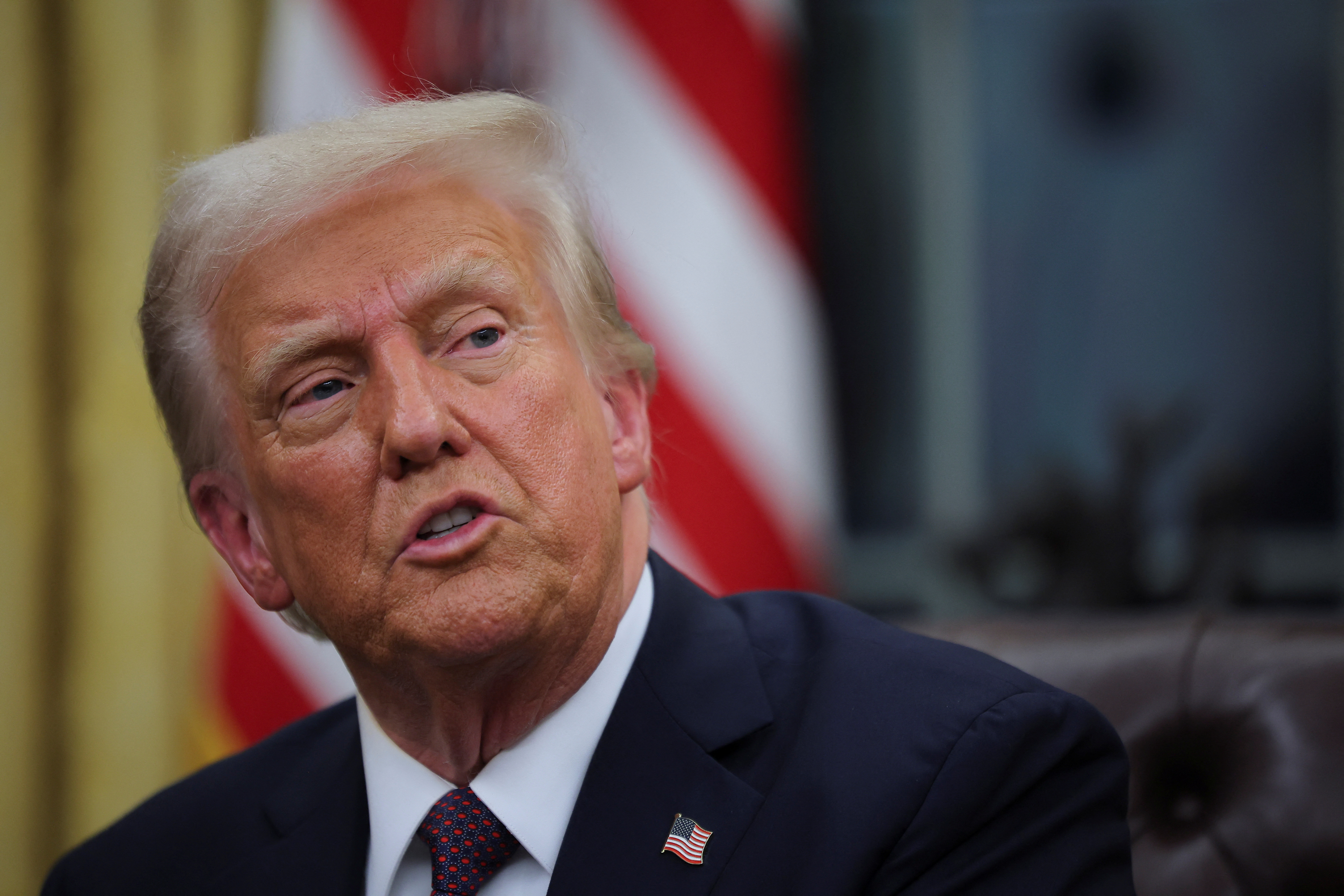
Trump left little to imagination as he ranted against electric cars and suggested that if anything at all needs to be done to slash government expenditure - after a disenchanted Musk left the axe-wielding Department of Government Efficiency, a.k.a. DOGE - it would be to cut back on governments subsidies and/or demand support for electric cars and space missions. That is right down the business street of Musk, whose SpaceX and Tesla are the planet's technology darlings. "No more Rocket launches, Satellites, or Electric Car Production, and our Country would save a FORTUNE., [sic]" Trump said on TruthSocial, his favourite ranting site.
Where Is This Going?
We can't be too sure of where this will end because both Musk and Trump are business people who like to cut a midway deal. But Musk's talk of launching a new political party is something that shows that, push comes to shove, he may just up the ante on the President.
The fact is that at 122% of the GDP, the US has one of the highest levels of government debt in the developed world, surpassed only by Japan and Italy, unless one counts the tiny island nation of Singapore. Trump's 940-page bill seeks to restrict healthcare and food support programmes for the poor and the disabled, and is controversial enough. But alongside, there is a broad consensus on phasing out tax breaks for clean energy, which translates in plain English as "less demand for Musk's cars".
"We might have to put DOGE on Elon. You know what DOGE is? DOGE is the monster that might have to go back and eat Elon," Trump said. "I don't think he should be playing that game with me."
Enter Mamdani
Where does all this leave the average American? To understand this, look no further than New York, where Zohran Mamdani has emerged as an unlikely frontrunner to become the city mayor. Mamdani is an immigrant Muslim of Asian origin, born to Delhi-bred filmmaker Mira Nair. He is also an avowed socialist in a capitalist haven.
Trump has been carping about Mamdani as a "communist lunatic", while in Mamdani's words, Trump has been creating divides to divert attention from issues like the high cost of living for "working people". This squarely challenges the President. Mamdani says he is only trying to do what Trump set out to do, to help such people, but is sounding different now. "I fight for the same people that he says he has been fighting for."
To understand this peculiar three-way conflict involving Trump, Musk, and Mamdani, you have to understand what makes America prosperous and yet the Average Joe or Jane unhappy.
The Two Immigrants In America
The US attracts immigrants of two contrasting hues - one is the highly educated PhDs, engineers and MBAs who are treasured by companies like Microsoft, Google, Tesla. The others are backdoor illegals who risk their lives because chasing the American dream is worthwhile, while citizenship provides new opportunities for growth.
Notably, Facebook founder Mark Zuckerberg this week unveiled 11 names of prominent artificial intelligence (AI) researchers for his Meta Superintelligence Labs, poached from competitors such as OpenAI, Anthropic and Google DeepMind. That list is full of immigrants of Asian origin, including India's Tripti Bansal, who studied at IIT Kanpur.
Rich vs Poor
The problem is that the rich in America hate taxes, and the wealthiest of them, like Musk and other Wall Street favourites, enjoy big loopholes and pay a capital gains tax only when they sell their shares.
Inheritance tax is largely a state subject in the US and is levied only by a handful of states. A study showed that a tax law enacted under Trump reduced the reach of the federal estate tax to historic lows. In 2019, only eight of every 10,000 people who died left an estate large enough to trigger the tax. If a US citizen inherits an asset (that is not cash), there is no capital gains tax owed until the asset is sold, and that too applies only on the appreciation of an asset that accrues after the property is inherited.
Such loopholes enable the transfer of property without much cost to the wealth earner or inheritor. A rich person can practically live on credit and pay off the credit only when required by selling a small portion of his assets. But such loopholes or easy laws for wealthy people also upset socialists. The lifestyles of the rich and the famous contrast ordinary voters who are now being charmed by the likes of Mamdani.
Playing On Fear
Trump, on the other hand, feeds into the mindset that does not like immigrants: the more educated white Americans who feel threatened by highly competent immigrants especially from Asian countries like India, and the vulnerable, poorer white Americans who are either fed racist propaganda or feel a xenophobic cultural scare from Hispanics and Asians who have different looks and lifestyles.
America's rich tend to invest in high technology and wealth-creating ventures, but there is no mechanism through which such wealth is shared with poorer workers who contribute to the wealth creation indirectly by their toil and employment for companies shaped by new technologies.
What Mamdani Brings To The Table
Mamdani is promising economic incentives to protect the lifestyles or livelihoods of poorer people, while Trump feeds on their fears. Musk feels the villain is a bloated government bureaucracy or expenses that do not threaten his own tech-fuelled, space rocket ambitions.
Trump cannot overdo the DOGE act to please Musk because that might hurt government employees further. More than 1.2 lakh federal government employees left or were sacked by the Trump administration in his first 100 days in power.
Trump's stated aim is to protect the ordinary tax-paying American, not high-tech moneybags.
What Mamdani is doing, perhaps, is to bring the immigrant chutzpah, so far restricted mostly to technology and business, to the world of US politics and political economy - not counting the half-white, Harvard-educated Barack Obama, whose father is of Kenyan origin.
Why should ordinary Americans vote for a project or party that sends rockets to space but offers little for their own pockets? That is the big question that is being slowly but surely warmed in the boiling cauldron of US politics.
(Madhavan Narayanan is a senior editor, writer and columnist with more than 30 years of experience, having worked for Reuters, The Economic Times, Business Standard, and Hindustan Times after starting out in the Times of India Group.)
Disclaimer: These are the personal opinions of the author
-
Opinion | As UN Interviews Its Next Chief, The Interviewers Have Some Explaining To Do

On the panel sit governments whose wars, vetoes, and unpaid dues have helped make the organisation ineffective.
-
Opinion | Trump-Xi Meet: What China Can Give America, And What India Could Lose
If Trump can secure some of what he wants directly from Beijing, India's immediate value to Washington could change in particular areas.
-
A New 'Axis'? 87 Years After Pact Of Steel, A New European Far-Right Tie-Up
Nearly nine decades after Nazi Germany and Fascist Italy formalised their alliance, senior figures from Germany and Italy's far-right appeared together at a political rally on Sunday.
-
Opinion | 'Blackmail' Diplomacy: Why India Can't Be A Pawn In US' War On Russia
The new sanctions bill is both blackmail and hypocritical: blackmail because it seeks to change India's principled stand, and hypocritical because the US has provided exemptions to others, and itself.
-
Blog | Katrina Kaif, And The Very Indian Problem Of Too Much 'Audacity'
The remarkable thing about many Indian trolls is not that they have opinions, but that they expect - get this, Katrina Kaif, no less - to care about them.
-
Mamata Banerjee Drew Her Party's Symbol By Hand. It's Now Tied To An Indira Gandhi Case
The Election Commission's method for settling such disputes became central in the seminal Congress split of 1969, when Indira Gandhi fought the old guard. The poll body weighed three tests then.
-
Bruised, Limping, Unbowed: Sia Says She Will Be Back On The Bike Soon
There was pain in Sia's steps, anger in her words, and something else - a quiet determination that the road would not be taken away from her.
-
Exclusive: 16 Months After Op Sindoor, Pak Still Fixing Runway India Broke At Sargodha
Sargodha's PAF Base Mushaf lies about 172 km northwest of Lahore and roughly 200 km west of the India-Pakistan border, near Amritsar.
-
Blog | I Lost My Entire Family In Kanishka Bombing. 41 Years Later, Canada Wants The Case Closed
We made the trek through tragedy to search for people in Cork, where I spent 25 days sifting through bodies and body parts in a makeshift morgue to identify our loved ones.
-
Opinion | Pak's Drone Deal With A US Firm Is No Windfall. But India Must Still Be Worried
American military aid to Pakistan has remained suspended since January 2018, during Trump's first term, but a commercial arms sale is separate from this arrangement.