Blog | Sky-High Rent, Choked Roads: How Bengaluru, Mumbai, Delhi Became India's Chaos Capitals
Your office may be cool and your home furnishings plush, but there is little you can do about the confusion outside.
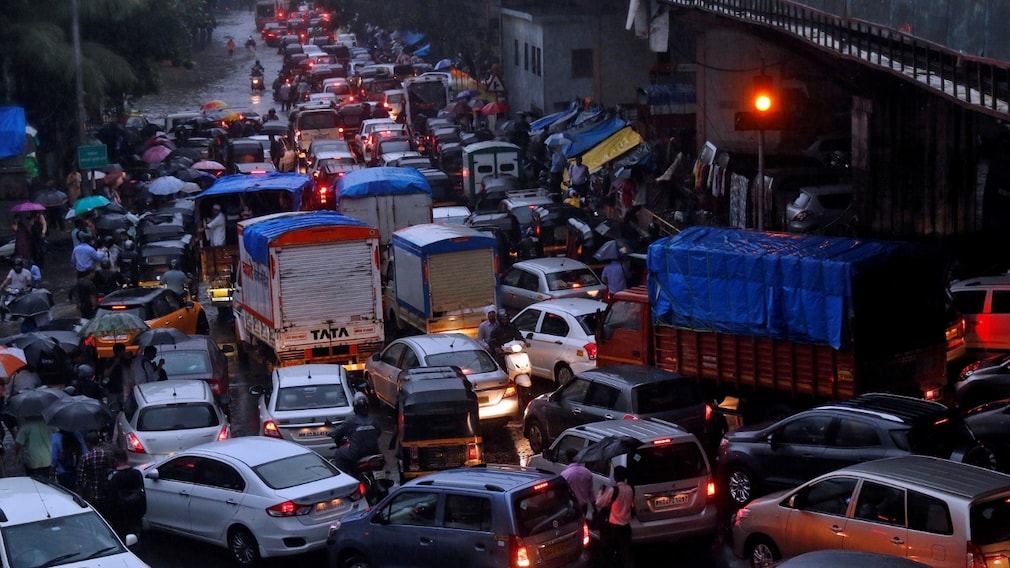
'Room With A View' probably has a whole new meaning if you are a resident of Gurugram, Bangalore, Chennai or Mumbai. You may be in a high-rise apartment or office building, leaning out of a spacious balcony. But it is not a mountain or park or lake that strikes your eye, but rows and rows of automobiles on the roads below - some trying to get in and some out.
Your office may be cool and your home furnishings plush, but there is little you can do about the confusion outside.
In India's leading metropolises, the jam on your tongue is increasingly not the one you spread on a bread slice, but the noun that connotes messy traffic, or its varying causes or cousins: flooded streets, clueless administration or foul air/smog. Then you have VIP movement or loud processions that have ostensibly spiritual purpose, but one in which reckless youths play DJ music and bash up the occasional Samaritan asking them to tone it down.
Urban Without The Urbane
Oh, darling, this is modern India, in which the urbane has departed from the urban. A combination of economic growth, high-tech education, foreign investment, nouveau riche vanity, greedy politicians, and ruthless realtors has created a metropolitan landscape that is bittersweet and surreal.
In Bengaluru, traffic has replaced pleasant weather as the conversation starter. Inclement London may have cast its evil eye and transferred its climate envy into the southern city that in its previous lives has been called the Garden City and Pensioners' Paradise. Mumbai was always a coalition of islands peopled by varying degrees of matchbox apartments and their attendant slums. It is now extra-tormented by linguistic chauvinists unmindful of its cosmopolitan richness. Chennai is a tad better, but its new refugees prefer the Bay of Bengal coastline to the city. Noida is better than Gurugram, but the expressway linking it to Greater Noida is already crowded, even though driving alongside it gives you a ringside view of unsold apartments, half-built malls and empty offices.
You get the picture.
Stopgap Measures
Our cities are simply not what they seem to be. Band-aid solutions are being applied without much contemplation on how we can set this mess right.
The standard of living has gone up, but the quality of life has gone down. Ask yourself why.
I can hear you, dear taxpayer, as you moan about your top-dog salary slice that goes to the exchequer, or about the GST you dole out on most of the things you buy. But admit it, you may be part of the problem. At the least, you need to snap out of the presumption that the quality of life is not something you order from your favourite online app. It is time for the citizen inside the consumer to wake up and shoulder a responsibility, beyond the smug 'I-have-paid-my-taxes' comfort zone.
Flyovers Can't Solve Your Problems
India's urban mess involves ecological, political, demographic, cultural, and administrative dimensions. Reckless economic growth is no panacea to lifestyle issues that crop up after short-lived honeymoons. More flyovers or roads do not solve problems any more than a bypass surgery is considered a cure for cardiological issues. What we have is a country in which administrations have bypassed town planning, politicians have bypassed policies, bureaucrats have bypassed long-term thinking, and citizens have bypassed quality of living in their pursuit of illusory vanity.
When you try for a Silicon Valley life in the Aravalli hills, life is bound to get rocky. The roads of central Bangalore tell their own story. Kamaraj Road used to be called Cavalry Road. Mahatma Gandhi Road was South Parade. Streets meant for horse carriages in the colonial era are now stuffed with Audis, BMWs and Mercs, thanks to new money. Suburbs are slightly better, but growth has outpaced everything and everyone.
Overkill?
Guiding me in rural Madhya Pradesh decades ago, a local politician said in profound Hindi: "Har ek cheez apne hadh se maari jaati hai." (Everything gets killed by its own overdoing). Have we overdone urban growth? A 150-crore-nation in demographic transition needs more planning, not less, because no amount of smart private entrepreneurship can substitute for long-term policy design.
Network economics teaches us that a road to somewhere also becomes a path to exiting from there, and we need to build facilities on both sides to ease congestion. But what we have is a hub-and-spoke model of cities in which everybody is trying to converge on a centre in EMI-d vehicles. In New York, it is famously said that even high-paid Wall Street kids making money by the ton travel in metro trains. In India, the car you own is a status symbol, though the environs you live in may be a messy climbdown from your childhood home.
It's Not Entirely About The Taxpayer
Infrastructure is best built to attract traffic - not address the one that is already there. We need more small cities, carefully nurtured by town planners and funded by the central government. Better still, villages need to get better at arresting migration. Everything is not about the taxpayer. Water supply, sewage systems, auditoriums, stadiums, schools, hospitals - everything is better done in advance than added as an afterthought, as is common in India today. Thinking city administrations are rare (Do you know the name of your city's mayor and what her duties are? - Don't use Google now!).
Delhi did foresee some issues and tried to do something about it - with mixed results. The Delhi Urban Arts Commission (DUAC) was established by an act of Parliament in 1973 to advise the central government on "preserving, developing and maintaining the aesthetic quality of urban and environmental design within Delhi". But it is rarely in the news, and sometimes when it is, it's for the wrong reasons. Its recommendations are often ignored. What we need are bodies that think of the long-term for each city in a manner that anticipates problems. But this is difficult where business and builder lobbies capture policies.
Take Some Responsiblity
It is not fashionable to talk of taxing cars or odd-even-number schemes to restrict automobile movement of the kind experimented with by the defeated AAP government in Delhi. But zoning laws and better public bus services may just help. Suburban cities like Noida and Gurugram have practically no public transport unless you count cabs and metro trains.
We could do with citizens who are not merely high-end consumers. They could forego a few weekends in a year to contribute to NGOs or political parties that take up their cause. Bangalore has groups like the Janaagraha, which works on issues related to active citizenship, systemic reforms, governance, water, sanitation, and public health.
Whatever the detail, it is clear that long-term thinking and proper planning by government agencies are badly needed. Without meaningful state parenting, the current system is like an unruly teenager driving a parent's car at high speed. With understandable results.
(Madhavan Narayanan is a senior editor, writer and columnist with more than 30 years of experience, having worked for Reuters, The Economic Times, Business Standard, and Hindustan Times after starting out in the Times of India Group.)
Disclaimer: These are the personal opinions of the author
-
Opinion | As UN Interviews Its Next Chief, The Interviewers Have Some Explaining To Do

On the panel sit governments whose wars, vetoes, and unpaid dues have helped make the organisation ineffective.
-
Opinion | Trump-Xi Meet: What China Can Give America, And What India Could Lose
If Trump can secure some of what he wants directly from Beijing, India's immediate value to Washington could change in particular areas.
-
A New 'Axis'? 87 Years After Pact Of Steel, A New European Far-Right Tie-Up
Nearly nine decades after Nazi Germany and Fascist Italy formalised their alliance, senior figures from Germany and Italy's far-right appeared together at a political rally on Sunday.
-
Opinion | 'Blackmail' Diplomacy: Why India Can't Be A Pawn In US' War On Russia
The new sanctions bill is both blackmail and hypocritical: blackmail because it seeks to change India's principled stand, and hypocritical because the US has provided exemptions to others, and itself.
-
Blog | Katrina Kaif, And The Very Indian Problem Of Too Much 'Audacity'
The remarkable thing about many Indian trolls is not that they have opinions, but that they expect - get this, Katrina Kaif, no less - to care about them.
-
Mamata Banerjee Drew Her Party's Symbol By Hand. It's Now Tied To An Indira Gandhi Case
The Election Commission's method for settling such disputes became central in the seminal Congress split of 1969, when Indira Gandhi fought the old guard. The poll body weighed three tests then.
-
Bruised, Limping, Unbowed: Sia Says She Will Be Back On The Bike Soon
There was pain in Sia's steps, anger in her words, and something else - a quiet determination that the road would not be taken away from her.
-
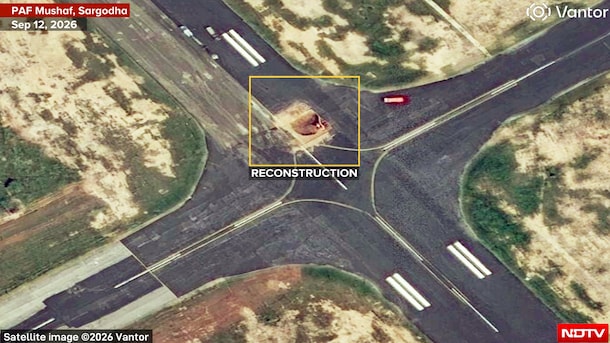
Exclusive: 16 Months After Op Sindoor, Pak Still Fixing Runway India Broke At Sargodha
Sargodha's PAF Base Mushaf lies about 172 km northwest of Lahore and roughly 200 km west of the India-Pakistan border, near Amritsar.
-
Blog | I Lost My Entire Family In Kanishka Bombing. 41 Years Later, Canada Wants The Case Closed
We made the trek through tragedy to search for people in Cork, where I spent 25 days sifting through bodies and body parts in a makeshift morgue to identify our loved ones.
-
Opinion | Pak's Drone Deal With A US Firm Is No Windfall. But India Must Still Be Worried
American military aid to Pakistan has remained suspended since January 2018, during Trump's first term, but a commercial arms sale is separate from this arrangement.