Blog | Severance: Are You An 'Innie' Or An 'Outie'?
Perhaps the AppleTV show's popularity is a sign of our times. Maybe all of us are so sick and tired of our jobs that a science-fiction show about a larger-than-life corporation psychologically abusing its employees hits too close to home.

Nobody would've expected Severance to become the kind of pop-culture phenomenon it is today. Back in 2022, when the show premiered on AppleTV+, it was met with barely a whimper. But why is the series, critiquing worker exploitation and corporate greed, getting such rave reviews three years after its first season appeared? What gives?
Perhaps its popularity is a sign of our times. Maybe all of us are so sick and tired of our jobs that a science-fiction show about a larger-than-life corporate entity psychologically abusing its employees hits too close to home. Or perhaps being severed' seems strangely appealing to some of us so that our workplace trauma doesn't spill into our personal lives.
Fans have been writing lengthy threads dissecting the visual cues in Severance. Conspiracy theorists have put on their tin foil hats and made intelligent guesses about the unfolding mystery, which culminates in the season finale releasing on March 21. Severance is to the 2020s what Game of Thrones was to the previous decade. Theme parties, cosplays, fan edits and podcasts analysing the plot twists are proof that Ben Stiller's show will go down as one of the greatest in pop-culture history.
Perhaps the reason the show resonates so much with viewers today is because it exposes the sinister nature of corporate drudgery while simultaneously urging them to be the champions of an inevitable work revolution.
Let Them Rebel
It is no surprise that the most rebellious employee on the severed floor, Helly R (played by a phenomenal Britt Lower), got the loudest cheers and hoots when she locked horns with her boss, Seth Milchick (Tramell Tillman) in last week's episode. But she's not the only rebel on the floor. At one point, Milchick himself asks Mr Drummond—who had earlier been critical of his usage of big words—to "devour feculence", or, to be clearer, "eat shit". The moment even inspired yours truly to go on LinkedIn and call out their toxic boss.
In another scene from the same episode, Milchick calls up Mark, who is reintegrating and trying to free his wife, Gemma, from the Lumon building. At first, Mark lies about being sick. But then, he quickly backtracks and says, "I am not sick—I just need the day. You know, life stuff". The moment is monumental in TV history for multiple reasons. Not only did Mark S stand up for himself and risk being locked out of the Lumon building, but he, unknowingly, inspired Milchick to rebel too. In a scene, Milchick tears up realising Lumon promised him work-life balance. Much like his subordinate, Milchick, too, is consumed by work. He has been loyal to Lumon all these years, only for him to find a cathartic release in Mark-Helly's anti-work rhetoric.
You Own Nothing
Much to the dismay of Severance fans, Episode 8 focused entirely on Ms Cobel (Patricia Arquette), the ex-floor manager at Lumon who has lived a difficult life herself. Fans were still on a sun-induced high from last week's episode Chikhai Bardo', so the stunning revelations in episode 8 flew under the radar. A lesser-appreciated reveal in the episode focused on how Ms Cobel not only worked for Lumon as a child (the legal violation of it all!) and on how she had also designed the severance chip but wasn't given credit for it because "Kier said knowledge is for all. That if I sought credit, I would be banished".
It's a sad reminder for all kinds of creators working across industries—whatever intellectual property we create for a company is owned by it. Ms Cobel realises much later that the Eagens exploited her intellectual capabilities for their sick, twisted experiment. But she isn't the only child Lumon exploits for labour. In the ninth episode, we see a young receptionist, Ms Huang (Sarah Bock), enter a bus (presumably meant for kids) and leave the Lumon building after completing her winter fellowship, pointing to a possible network of underage employees working at apprentice shops. Such is the corrosive nature of corporate greed that it may not spare even kids.
Can You Speak?
Severance also touches on the realities of race. It consciously and very clearly demarcates employees who are brainwashed and would do just about anything to support Lumon/Eagans, from the rebels. Case in point: Seth Milchick. Milchick is indeed a black man in a white man's world. While the success of the MDR department depends solely on Mark's number-refining, Milchick is tasked with the responsibility of making sure none of his predominantly white innies stray from Kier's path and finish the tasks to their completion. For many, Stiller's gaze on people of colour is problematic. This couldn't be further from the truth.
Unlike Mark and Helly, the white, rebellious innies of the MDR department, Milchick cannot afford to raise his voice against the Eagens/Kiers owing to his racial identity, the same way a white employee might find it easier to call out their white boss at the workplace than a black employee. It is no surprise that Gemma, a woman of colour, is not only denied her bodily autonomy but suffers the most out of all the female characters in the show. On the surface, it might seem that all the faces of the 'Severance Reform' are white men and women, but a closer look reveals that the gender and racial identities of Lumon's employees decide who gets to rebel, and how much.
Perhaps The World Ends Here
Severance isn't just a genre-defying sci-fi mystery drama that makes you want to nerd out. At its core, it urges us to question the corporations that are slowly taking over our lives bit by bit, leaving us with barely any space to breathe. Being able to afford to take the elevator itself might soon feel like a privilege in India, what with industrialists asking their employees to work 70, 90 hours a week now. Perhaps the employees can just take a leaf out of Gemma's (Dichen Lachman) book and stay in the office building forever. The work won't end, and neither will capitalist greed.
How much of Severance is science fiction, and how much of it is already a reality? Sure, a corporate entity like Lumon building entire towns to control workers and their families may be hard to imagine in the real world. Or, is it? Given how tightly all of our paychecks—and therefore, survival—are controlled by the elite, is Severance's dystopian world really that fantastical? Or is it already here?
Think about it. But don't forget to log in on time—and praise your Kier!
(The author is a film and culture writer)
Disclaimer: These are the personal opinions of the author
-
Blog: Kolkata Didn't Learn From 2015. Eleven Years Later, It Proved To Be Fatal

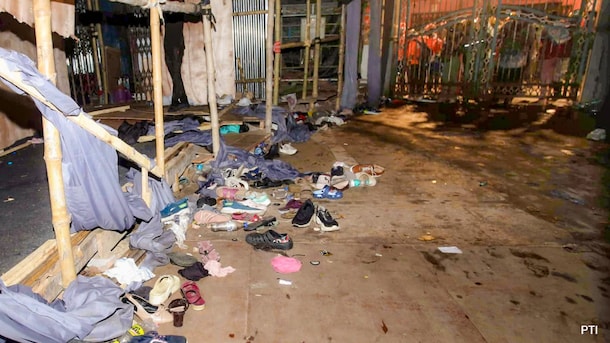
The City of Joy isn't a stranger to crowd control. Be it during Pujo or Christmas at Park Street, Eden Gardens cricket matches, or Derbies between Mohun Bagan and East Bengal. But during Pujo, the entire city is on alert.
-
Opinion | Slurs, Threats, Now A Temple Attack Plot: When Did America Become So Hostile To Indians?
The rising tide of anti-India, anti-Hindu, and racist attacks serves as a stark reminder that economic prosperity does not automatically guarantee social immunity from bigotry.
-
A Step Behind Neha Bora: What Rahul Gandhi's Gesture Says About Congress' Gen-Z Pitch
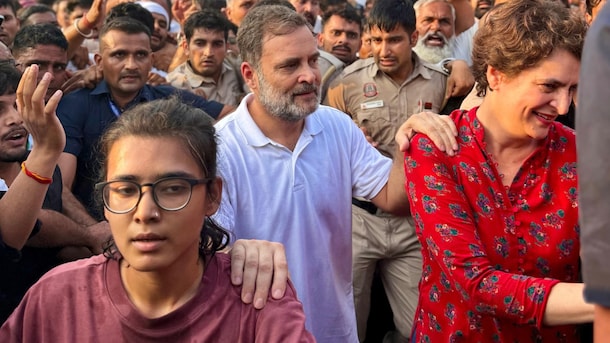
At INDIA bloc's march to Supreme Court, Rahul Gandhi placed himself a step behind two women, hands resting on their shoulders. One was his sister Priyanka. The one on his right was Neha Bora. Here's what the image means for the protest wave now, and for Rahul's politics in general.
-
Opinion | Imran Khan, And The Perils Of Having An 'Opinion' In Bollywood
The reality of the industry is quite grimy. More often than not, its inhabitants have been fairweather friends, happy to sing the praises of whoever is in a position of authority.
-
Exclusive: India's Food Safety Problem Goes Beyond Just Dirty Kitchens - By Tukaram Mundhe
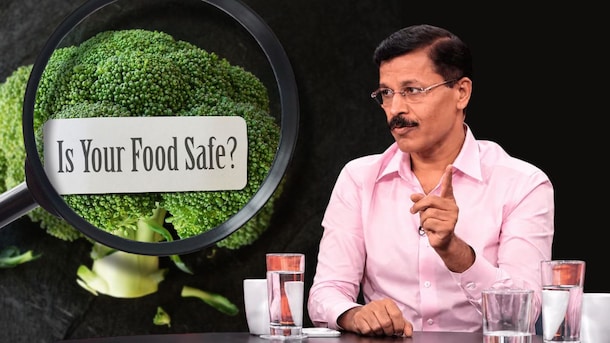
On World Food Day, Maharashtra's Commissioner of Food Safety explains why instead of taking stopgap measures, the entire supply chain in India needs to be held accountable and made transparent.
-
Opinion | India Has Enough Coal. So Why Are Power Plants Running Short? A 76 Million 'Crunch'
As of October 5, as many as 82 of the 191 thermal plants monitored by the Central Electricity Authority were in the 'critical' category
-
Opinion | Starlink, India, And Why Elon Musk Must Know His Billionaire Tantrums Won't Work
India should neither be intimidated by Musk's global influence nor distracted by his theatrics.
-
Blog | 'Baap Da Brat': Kerala Mini Cooper Crash, And Why 'Daddy' Can't Keep Saving You
There are three things you should never underestimate in India: the power of 'jugaad', the elasticity of the law, and the confidence of a 'Baap da Brat' who believes his Papa Posh can fix absolutely anything.
-
Opinion | 'Say Our Name': Why A Tiny Island Nation Wants The World To Get Its Name Right
Standing before the UN hall of nations, Naoero President David Adeang asked the world to unlearn its comfortable habits and speak a restored truth.
-
TVS Succession Row Explained: Why Venu Srinivasan's Family Is Divided Over Wealth
TVS Family Dispute: TVS Holdings is a key entity because it owns a controlling stake in TVS Motor Company. It owns 50.26% of TVS Motor.