Opinion | Delimitation: Don't Let Politics Get In The Way
If mishandled, the delimitation exercise could rekindle old regional tensions, much like the linguistic and statehood agitations of the past. India can't afford to get it wrong.

India, as defined under Article 1 of the Constitution, is a “Union of States”, a phrase deliberately chosen by the framers to signify its indestructible nature. Unlike a federation formed through voluntary association of sovereign units, India's structure is quasi-federal, where sovereignty is indivisibly vested in the Union, though power is devolved constitutionally to the States under Schedules VII and XI-XII. The Sarkaria Commission (1988) and the Punchhi Commission (2010) further explored this dynamic, noting that while States enjoy significant functional autonomy, the Union retains overriding authority, especially under Articles 256, 356, and Parliament's residuary powers under Article 248. This constitutional design ensures unity in diversity while allowing decentralised governance.
The Complaint In The South
Yet, recent developments suggest a deliberate political engineering of Centre-State fissures. Over the past weeks, the sparring between Tamil Nadu Chief Minister MK Stalin and the Centre has amplified narratives on education policy, language imposition, fiscal devolution, and regional economic disparities, reinforcing a North vs. South dichotomy. The latest in this series is delimitation, where Stalin has positioned Tamil Nadu, and by extension, Southern states, as victims of an unjust reapportionment exercise that he says penalises them for their demographic prudence.
The next Delimitation Commission, whenever constituted, will face an exceptionally delicate task, balancing constitutional mandates, demographic realities, and political sensitivities. The core challenge lies in reconciling Article 81's principle of population-proportional representation with the regional disparities arising from differential fertility rates and demographic transitions.
Where It All Started
The constitutional basis for delimitation in India lies in Article 81, which outlines how Lok Sabha seats are divided into territorial constituencies, ensuring that the ratio of seats to population is the same for each state and the number of people per constituency is constant within a state. Similarly, Article 170(3) mandates the periodic readjustment of State Legislative Assembly constituencies. The process is further governed by laws enacted by the Parliament, primarily the Delimitation Act, 2002. India has had Delimitation Commissions constituted in 1952, 1963, 1973, and 2002. However, this regular 10-year cycle was interrupted by the 42nd Constitution Amendment Act, 1976, which froze the population figures to the 1971 census and deferred further delimitation until 2000. This freeze was later extended until 2026 by the 84th Amendment Act, 2001, as a measure to encourage states to pursue population stabilisation. The last major delimitation exercise in India was based on the 2001 census figures and was conducted around 2008, after a gap of about 30 years since the previous one. This exercise, while not increasing the total number of seats, redrew the boundaries of constituencies within states.
Looking ahead to 2026, the constitutional freeze on delimitation based on the 1971 census is set to expire. This means that a fresh delimitation exercise is widely anticipated, likely based on the population figures of the next census (this is also an issue as the census is yet to be carried out). This could lead to a redistribution of Lok Sabha and State Assembly seats among states to reflect the significant demographic changes since 1971.
Imbalances Will Pinch
The 2026 delimitation exercise can potentially expose and exacerbate several fissures within Indian federalism, primarily stemming from the uneven patterns of population growth across states since the last delimitation exercise based on the 1971 census for seat allocation.
Firstly, a significant point of contention revolves around political representation in the Lok Sabha. States that have achieved greater success in population control, predominantly in the South, fear a reduction in their number of parliamentary seats if delimitation is based on current population figures. This could lead to a perceived imbalance of political power, where states with larger populations, primarily in the north, gain more seats, at the expense of Southern states. This situation can create a North-South divide in terms of political influence within the Union government.
Secondly, the potential redistribution of Lok Sabha seats also has implications for state finances. Given India's fiscal centralisation, states rely on the Union government for significant revenue. Strong political representation in Parliament is seen as vital for securing adequate financial resources. A reduction in parliamentary seats could therefore lead to anxieties among certain states that their ability to advocate for and receive sufficient financial allocations from the Centre might be weakened.
Thirdly, the delimitation exercise could amplify existing regional, linguistic, and socio-economic disparities. If states with higher population growth are also those lagging in socio-economic indicators, an increase in their parliamentary representation might be perceived by other states as further marginalising their concerns and priorities within the national political discourse. The issue could take on linguistic dimensions if states with a higher proportion of Hindi speakers gain more influence, potentially exacerbating sensitivities in non-Hindi-speaking states.
No Straight Road
But how will the delimitation commission deal with this issue? The easiest and lazy way to deal with this issue is to further postpone the delimitation exercise and freeze it again for another few decades. This is precisely what is being suggested by MK Stalin. This solution, while convenient for everyone, has its own issues. Consider a scenario where two constituencies send one MP each to Parliament. If one constituency has 1 million voters and another has 2 million, a vote in the smaller constituency has twice the impact in electing a representative as a vote in the larger one. This imbalance contradicts the democratic principle of equal representation, where every citizen's vote should influence election outcomes equally.
The second solution could be to increase the total number of seats in the Lok Sabha proportionally, ensuring that states retain their existing representation while accommodating demographic changes. This method aims to prevent the dilution of political influence for states that have successfully implemented population control measures, thereby maintaining the current balance of power. But again, the problem with this is what has been already discussed. The proportion of seats held by Northern states (Uttar Pradesh, Bihar, Madhya Pradesh, Rajasthan, etc.) would still increase more than that of Southern states (Tamil Nadu, Kerala, Karnataka, Andhra Pradesh, Telangana), given the differential population growth. This would still mean a relative erosion of influence for states that successfully controlled their population. The Rajya Sabha is currently a counterbalancing force, with seats allocated based on states' existing political weight. If the Lok Sabha expands disproportionately in favour of high-population states, Southern states could demand an expansion in Rajya Sabha powers to counterbalance the demographic shift.
No Room For Missteps
Revising Article 82 to incorporate non-population-based criteria, such as per capita income, literacy rates, healthcare outcomes, and infrastructure development, into the delimitation process could align political representation with governance rather than mere demographic weight. This would mitigate the moral hazard problem, where high-fertility states accrue disproportionate representation and fiscal benefits without undertaking structural reforms. A parallel exists in the Finance Commission's devolution formula, which factors in governance metrics to allocate resources. Extending this principle to parliamentary representation would encourage lagging states to invest in economic productivity and social development. Such a framework can nudge Northern states towards institutional and policy reforms, ensuring that seat allocation reflects developmental performance rather than sheer population growth. This will help in preserving federal equilibrium while enhancing national governance standards.
Irrespective of whatever approach is adopted, this exercise, if mishandled, could rekindle old regional tensions, much like the linguistic and statehood agitations of the past. The challenge concerns fairness, trust, and the future of India's federal balance. Without broad consensus, every election could turn into a battle over legitimacy. Get it right, and India evolves. Get it wrong, and the cracks could run deep.
(Aditya Sinha is a public policy professional.)
Disclaimer: These are the personal opinions of the author
-
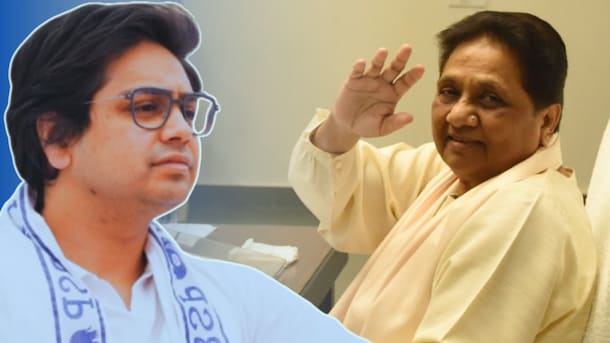
Mayawati's Tough Love: Nephew Akash Anand Benched Again. What It Means For BSP

Akash Anand, the 31-year-old foreign-educated nephew of BSP boss Mayawati, finds himself out of favour, for at least the third time in three years, with the latest turn coming in Lucknow on September 3.
-
Opinion | The Insider's Warning: Why Anthropic Researcher's Resignation Is Big
AI's builders have a problem: everyone fears what happens if they stop, and everyone fears what happens if they don't
-
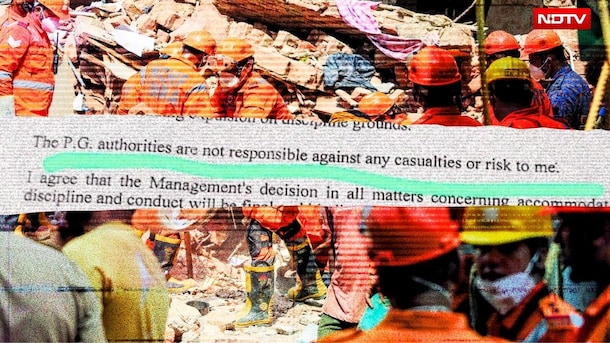
Blog | I Lived In Satya Niketan. And I Was Too Young To See What It Did To Us
Sparking switches, falling ceilings, cardboard-partitioned rooms. Satya Niketan had been crumbling for years. I just didn't know when it would collapse.
-
Opinion | A New 'Subsea Cable' Is Coming To India. But It's A Wake-Up Call For Something
Backed by some of the biggest names in tech - Microsoft, Singapore's Singtel, Tata Communications, and Japan's NEC - the 'I-2SEA' will carry high-speed data traffic that AI systems need to function
-
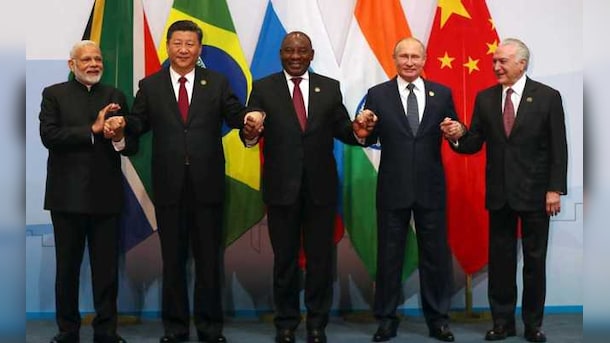
Opinion | India Faces A BRICS Challenge. Can It Find A Way Through?
The Delhi Summit is being held at a challenging time. Such circumstances have not been encountered since the BRICS Summits started in 2009 in Russia
-
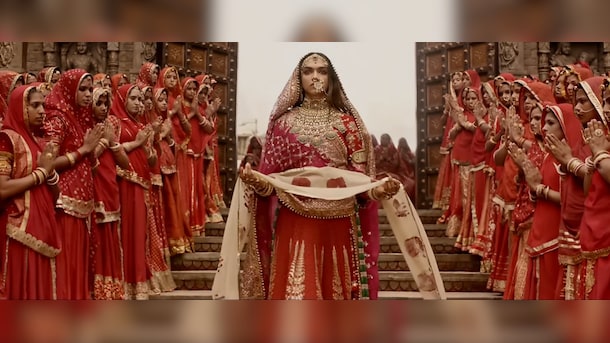
Opinion | Why The Jauhar Scene In Padmaavat Needs To Be Seen For What It Does
The practice of 'jauhar' was certainly abolished long ago. But that does not mean that it should be romanticised or glorified in mass culture.
-
Opinion | Sachin Pilot's Long Wait Is Over. Can Congress Finally Use Him?
The grand old party is now betting that the man who turned 'waiting' into a virtue can deliver Punjab
-
Ground Report | Sunlight Is A Luxury In Delhi Students' Hub Where Building Collapse Killed 7
The civic infrastructure in Delhi's Satya Niketan hasn't caught up with the pace of development and appears to be crumbling under the weight of the influx of tenants and the greed of landlords.
-
Blog | Why You Should Care Whether Schrodinger's Cat Is Dead Or Alive
Imagine going on a romantic Alpine getaway and returning with the equation that runs the modern world. The only snag: nobody can quite agree on what it says about reality.
-
Promote, Punish, Repeat: Decoding Mayawati's Akash Anand Puzzle
The development in the BSP is unprecedented. Never before has any Indian party elevated a family member and dumped him or her unceremoniously thrice within a span of three years.