Opinion | Congress May Have Finally Solved Its Tharoor Dilemma In Kerala
With the Nilambur by-election in the bag, maybe the Congress can finally put the sordid Tharoor saga behind it and concentrate on the challenging panchayat and assembly elections looming ahead.

The Congress party's victory in Kerala's Nilambur by-election has pretty much sealed the fate of its high-profile dissident Lok Sabha MP from the state capital, Shashi Tharoor. The Thiruvananthapuram MP had deliberately boycotted the campaign on the plea that he was "not invited" to address any rallies. The Congress won anyway, wresting the seat back from the Communist Party of India (Marxist) (CPI-M) with a handsome margin of more than 11,000 votes.
The outcome is a huge morale booster for the Congress, coming as it does a few months before next year's crucial assembly polls, which the party hopes to win and end its losing streak in the state elections that followed the big 2024 battle last summer.
The 'Tharoor Effect'
The verdict also lays to rest fears of the Tharoor effect in Kerala, because of which the Congress leadership had been handling him with care despite his flirtation with the Bharatiya Janata Party (BJP) and his defiant admission of "differences" with his party.
One swallow does not make a summer. The win in Nilambur is no guarantee of a state-wide victory for the Congress in Kerala's complex demographic landscape. The next big hurdle for the Congress is the upcoming panchayat polls due towards the end of the year.
Five years ago, the CPI(M)-led Left Democratic Front (LDF) had swept these elections, paving the way for its stunning second consecutive victory in the assembly face-off that followed a few months later.
The LDF is no pushover, and as the numbers in Nilambur show, it put up a strong fight despite the presence of a rebel candidate who cut into its votes. The Congress, therefore, dare not rest on its Nilambur laurels and depend on anti-incumbency - visible in the by-poll - to see it through the panchayat elections first and then the assembly face-off.
However, what the Congress party's success in Nilambur has done is to render Tharoor less relevant in its political calculations for both battles. Congress circles are confident that he has lost his damage potential and that going ahead, they can afford to ignore him.
The Post-Op Sindoor Outreach
Perhaps Tharoor had an inkling of the Nilambur outcome and read the writing on the wall. It is significant that on the morning of the result day, an article penned by him appeared in an English newspaper widely read in the South, in which he called Prime Minister Modi "a prime asset for India on the global stage".
The article was ostensibly about the Modi government's post-Op Sindoor outreach, in which Tharoor led one of the seven international delegations that travelled across the world. There, he heaped praises on the Prime Minister for "his energy, dynamism and willingness to engage". In what is being seen as an oblique disapproval of his party's repeated criticism of the government, Tharoor said the PM "deserves greater backing".
Congress Indifferent?
Perhaps the Congress was busy celebrating its Nilambur win because, for the first time since Tharoor began his campaign to needle his party, regular baiters like Jairam Ramesh did not carp about the fulsome compliments for Modi from one of their own MPs. In fact, few bothered to respond to what Tharoor wrote.
This was in sharp contrast to the daily war of words that broke out between Tharoor and his critics in the party, such as Ramesh and Pawan Khera, to name a few, while the Thiruvanthapuram MP was jetting his way around the American continent extolling the virtues of Operation Sindoor.
Congress spokespersons lost no opportunity to mock Tharoor, and he responded in kind. The petty level of the exchanges caused much mirth in BJP circles, which could not hide their glee that yet another favourite of the Gandhi family had turned rogue and was giving his party sleepless nights.
What's Next?
Many in the Congress feel that the Nilambur verdict may be a wake-up call for Tharoor. Is he on the margins of irrelevance in Kerala?
Tharoor's main dilemma now is this: he's lost his exalted status in the Congress, and the CPI(M) will not have him. But is the BJP ready to accommodate him, and if yes, in what capacity? At one point, there was speculation that Tharoor would be useful for the BJP to make a breakthrough in Kerala, which has been off-limits to the party since the state's inception despite an active RSS and ABVP presence.
Why A BJP Journey Won't Be Smooth
There are two difficulties here. One is Tharoor's own diminished stature in the state after he butted heads with his party in Nilambur and came off badly. The other is the BJP's politics. The party ran a polarising campaign in Nilambur, in which it accused both the Congress and the CPI(M) of pandering to Islamic fundamentalists and extremist elements. It had hoped to woo both Hindu and Christian votes in the constituency through high-voltage propaganda. However, voters weren't happy. The BJP's candidate, Mohan George, not only polled marginally fewer votes than in the last election but even lost his security deposit.
Congress Gets Some Breathing Space
Nilambur is an assembly segment in Priyanka Vadra's Wayanad Lok Sabha constituency. It has been a traditional Congress stronghold, but in the last two assembly elections, the seat was won by the LDF.
It is populated by Hindus and Muslims in roughly equal numbers and has a sizable Christian population as well. An initial study of the results suggests the Muslims consolidated in large numbers behind the Congress. The party also retained the support of the Christians.
Congress circles hope that if this pattern repeats itself in other parts of Kerala, it will be able to recapture the state after a decade out in the cold.
With the Nilambur by-election in the bag, maybe the Congress can finally put the sordid Tharoor saga behind it and concentrate on the challenging panchayat and assembly elections looming ahead. For the party to retain political relevance, it is vital that it wins both polls and proves that it is still a force to reckon with, at least in the southern states.
(The author is a senior Delhi-based journalist)
Disclaimer: These are the personal opinions of the author
-
Blog | 'Baap Da Brat': Kerala Mini Cooper Crash, And Why 'Daddy' Can't Keep Saving You

There are three things you should never underestimate in India: the power of 'jugaad', the elasticity of the law, and the confidence of a 'Baap da Brat' who believes his Papa Posh can fix absolutely anything.
-
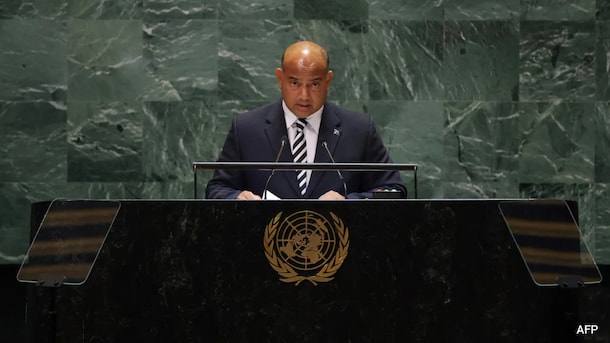
Opinion | 'Say Our Name': Why A Tiny Island Nation Wants The World To Get Its Name Right
Standing before the UN hall of nations, Naoero President David Adeang asked the world to unlearn its comfortable habits and speak a restored truth.
-
TVS Succession Row Explained: Why Venu Srinivasan's Family Is Divided Over Wealth
TVS Family Dispute: TVS Holdings is a key entity because it owns a controlling stake in TVS Motor Company. It owns 50.26% of TVS Motor.
-
Opinion | The US Is Showing India Just How Cheap Its 'Friendship' Is
Can local talent fully replace Indian contribution? Why is the US leading in setting up Global Capability Centres in India - over 60% - and pocketing the IP?
-
Jantar Mantar Tells Time. The Clock Just Stopped On Its Time As An Iconic Protest Site
On Monday, October 12, 2026, Delhi Police denotified Jantar Mantar Road as a designated site for demonstrations. The Supreme Court had given it a nudge. Here's how history met politics on that street for decades.
-
Opinion | Saudi Airport Attack, And Why Pakistan Keeps Biting Off More Than It Can Chew
For all those who were envious of Pakistan's 'new status' as "mediator extraordinaire", here is a reality check
-
Opinion | Visa Shocks To Racist Attacks, When Did America Come To Hate Indians So?
Sometimes it is about H-1B visas. Sometimes it is jobs. Sometimes it is "foreigners." Sometimes it is about temples. The language of the attack varies, but the message is consistent
-
How El Nino And Warming Oceans Could Shape Earth's Climate In 2027
From changing ocean currents to extreme weather, scientists are watching a combination of climate signals that could influence temperatures, rainfall and ecosystems in the months ahead.
-
Blog | Nana Patekar, And The Sharp, Lasting Sting Of His 'Plain-Speak'
"Subah ghar se niklo, bheed ka hissa bano..." Nana Patekar's characters often spoke with the bluntness of men who had little patience for pretence. Just like Nana himself.